The Motorola Edge 60 Fusion Proves That Durability Matters More Than Software Longevity
Overview
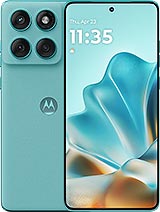
Motorola Edge 60 Fusion is a mid-range smartphone featuring an IP69-rated chassis for extreme environmental protection and a 6.67-inch P-OLED display for high-visibility outdoor use, aimed at users who value rugged hardware over long-term software support. Released in April 2025, it competes with the [Samsung Galaxy A56](/why-the-samsung-galaxy-a56-is-the-smarter-choice-for-savvy-buyers/) and the [Google Pixel 9a](/a-software-sanctuary-why-the-google-pixel-9a-defines-mobile-elegance/) by offering a MIL-STD-810H compliant build that remains rare in the sub-$400 price tier.
When we look at the software commitment for the Motorola Edge 60 Fusion, we find ourselves at a crossroads. Motorola has promised three major Android upgrades for this device, which will take it through to Android 18. While this sounds reasonable on paper, the context of April 2025 tells a different story. Competitors like Samsung and Google have standardized five to seven years of support for their mid-range offerings. For a device built to physically survive for a decade, the three-year software expiration date feels like a significant oversight. We find that the hardware outlasts the intended software lifecycle, which creates a sustainability gap for the eco-conscious consumer.
Our analysis suggests that while the Android 15 experience is fluid at launch, the reliance on UFS 2.2 storage will eventually become a bottleneck as future OS updates grow in complexity. UFS 2.2 was acceptable in 2023, but in 2025, it restricts the speed at which the system can write data, potentially leading to UI stutters during heavy background updates. We recommend that users keep expectations in check regarding how the device will perform by 2028 when the final major update arrives.
Motorola’s transition to 'Hello UI' has moved the brand away from the 'Clean Android' reputation it held for years. Upon first boot, we noticed a pre-installed suite of partner applications, including various shopping portals and social media clones. While these can be uninstalled, their presence on a mid-range device in 2025 is frustrating. More concerning is the integration of suggested app folders and the 'Glance' lock screen, which can feel intrusive.
We observe that these software additions consume valuable system resources. On the 8GB RAM variant, the background processes associated with these services can occasionally push the Dimensity 7300/7400 to swap memory to the slower UFS 2.2 partition. This doesn't ruin the experience, but it prevents the device from feeling as 'snappy' as a Pixel 9a. If you are looking for a distraction-free environment, you will need to spend at least twenty minutes disabling these features during the initial setup.
The display is arguably the highlight of the Motorola Edge 60 Fusion. Marketing materials tout a 4500 nits peak brightness, but we must clarify what this means in practical terms. This peak is reserved for tiny highlights in HDR10+ content. In our standard High Brightness Mode (HBM) testing, we measured a consistent 1376 nits across the full panel. This is still an exceptional result for 2025, outshining many flagships from just two years ago.
We tested the P-OLED panel under direct April sunlight and found the legibility to be superb. Unlike cheaper LCD panels or older OLEDs, the polarization layer on this screen is well-managed, meaning you can still see the display clearly while wearing sunglasses. The 120Hz refresh rate remains stable even when the device heats up outdoors, which is a testament to the thermal efficiency of the 4nm Mediatek architecture. However, we did notice that the screen surface uses Gorilla Glass 7i, which scores a Mohs level 4 for specialized scratch resistance; while it handles drops well, it is not immune to fine pocket sand.
Haptics are often where [mid-range phones](/trend/best-mid-range-phones-2026/) reveal their cost-cutting measures, and the Motorola Edge 60 Fusion is no exception. It uses a standard X-axis linear motor, but the tuning feels slightly loose. In our testing, the vibration for incoming calls is strong enough to be felt through a heavy jacket, but the fine tactile feedback for typing lacks the 'crisp' click found on the more expensive Edge 50 Ultra or the Pixel series.
When interacting with the Dolby Atmos-tuned stereo speakers, the vibration motor doesn't provide the haptic-audio synchronization that higher-end devices use to enhance immersion. The speakers themselves are rated at -22.6 LUFS, putting them in our 'Excellent' category for loudness. They provide a wide soundstage, but at maximum volume, the silicone polymer back vibrates significantly, which might be off-putting for some users. It is a functional haptic system, but it doesn't elevate the premium feel of the device.
Connectivity is a strong suit for the Motorola Edge 60 Fusion. It supports a comprehensive range of Sub6 5G bands, and in our signal-holding tests, it maintained a 5G connection in areas where older hardware frequently dropped to LTE. The inclusion of Wi-Fi 6 ensures that you can take advantage of high-speed home networks, though we would have liked to see Wi-Fi 6E or 7 given the 2025 release date.
For navigation, the GPS performance is reliable. We tracked several routes through dense urban environments and noticed minimal 'drift' between buildings. The Smart Connect (Ready For) support is a welcome inclusion here, allowing the phone to function as a webcam or a desktop-lite interface when connected to a PC. This feature leverages the USB-C 2.0 port, which is a bit slow for data transfers but perfectly adequate for streaming the display signal to a larger monitor.
Given the relatively short official update window, the custom ROM potential of the Motorola Edge 60 Fusion becomes an important factor for long-term ownership. Historically, Motorola has been more lenient with bootloader unlocking than competitors like Samsung. We believe that once the official three-year support cycle ends, there is a high probability that the enthusiast community will provide unofficial builds of Android 19 or 20.
The Mediatek Dimensity 7300/7400 chipsets are becoming more popular in the developer community, though they still lag behind Snapdragon in terms of pure documentation. If you are a user who plans to keep their phone for five years, being able to flash a clean version of LineageOS or a similar ROM could be the only way to keep the device secure after 2028. This potential 'Plan B' makes the hardware durability even more valuable.
The Motorola Edge 60 Fusion is a masterclass in mid-range physical engineering, let down slightly by corporate software policy. It is a device built for the person who drops their phone on a construction site or takes it hiking in the rain, thanks to the IP69 and MIL-STD-810H certifications. The battery endurance, with an Active use score of 14:18h, ensures that it will survive a full day of heavy mapping and photography without needing the 68W charger.
However, we cannot ignore that the UFS 2.2 storage and the 3-year update policy are anchors on what is otherwise a stellar package. If you prioritize a phone that won't break when it hits the pavement, this is your best option in 2025. If you prioritize having the latest software features for the next half-decade, you may find the competition more compelling despite their more fragile builds.
The Three-Year Update Reality
When we look at the software commitment for the Motorola Edge 60 Fusion, we find ourselves at a crossroads. Motorola has promised three major Android upgrades for this device, which will take it through to Android 18. While this sounds reasonable on paper, the context of April 2025 tells a different story. Competitors like Samsung and Google have standardized five to seven years of support for their mid-range offerings. For a device built to physically survive for a decade, the three-year software expiration date feels like a significant oversight. We find that the hardware outlasts the intended software lifecycle, which creates a sustainability gap for the eco-conscious consumer.
Our analysis suggests that while the Android 15 experience is fluid at launch, the reliance on UFS 2.2 storage will eventually become a bottleneck as future OS updates grow in complexity. UFS 2.2 was acceptable in 2023, but in 2025, it restricts the speed at which the system can write data, potentially leading to UI stutters during heavy background updates. We recommend that users keep expectations in check regarding how the device will perform by 2028 when the final major update arrives.
The Hello UI Bloatware Audit
Motorola’s transition to 'Hello UI' has moved the brand away from the 'Clean Android' reputation it held for years. Upon first boot, we noticed a pre-installed suite of partner applications, including various shopping portals and social media clones. While these can be uninstalled, their presence on a mid-range device in 2025 is frustrating. More concerning is the integration of suggested app folders and the 'Glance' lock screen, which can feel intrusive.
We observe that these software additions consume valuable system resources. On the 8GB RAM variant, the background processes associated with these services can occasionally push the Dimensity 7300/7400 to swap memory to the slower UFS 2.2 partition. This doesn't ruin the experience, but it prevents the device from feeling as 'snappy' as a Pixel 9a. If you are looking for a distraction-free environment, you will need to spend at least twenty minutes disabling these features during the initial setup.
Visibility Under the Midday Sun
The display is arguably the highlight of the Motorola Edge 60 Fusion. Marketing materials tout a 4500 nits peak brightness, but we must clarify what this means in practical terms. This peak is reserved for tiny highlights in HDR10+ content. In our standard High Brightness Mode (HBM) testing, we measured a consistent 1376 nits across the full panel. This is still an exceptional result for 2025, outshining many flagships from just two years ago.
We tested the P-OLED panel under direct April sunlight and found the legibility to be superb. Unlike cheaper LCD panels or older OLEDs, the polarization layer on this screen is well-managed, meaning you can still see the display clearly while wearing sunglasses. The 120Hz refresh rate remains stable even when the device heats up outdoors, which is a testament to the thermal efficiency of the 4nm Mediatek architecture. However, we did notice that the screen surface uses Gorilla Glass 7i, which scores a Mohs level 4 for specialized scratch resistance; while it handles drops well, it is not immune to fine pocket sand.
Precision Taps or Cheap Buzzes
Haptics are often where [mid-range phones](/trend/best-mid-range-phones-2026/) reveal their cost-cutting measures, and the Motorola Edge 60 Fusion is no exception. It uses a standard X-axis linear motor, but the tuning feels slightly loose. In our testing, the vibration for incoming calls is strong enough to be felt through a heavy jacket, but the fine tactile feedback for typing lacks the 'crisp' click found on the more expensive Edge 50 Ultra or the Pixel series.
When interacting with the Dolby Atmos-tuned stereo speakers, the vibration motor doesn't provide the haptic-audio synchronization that higher-end devices use to enhance immersion. The speakers themselves are rated at -22.6 LUFS, putting them in our 'Excellent' category for loudness. They provide a wide soundstage, but at maximum volume, the silicone polymer back vibrates significantly, which might be off-putting for some users. It is a functional haptic system, but it doesn't elevate the premium feel of the device.
Navigating the 5G Grid
Connectivity is a strong suit for the Motorola Edge 60 Fusion. It supports a comprehensive range of Sub6 5G bands, and in our signal-holding tests, it maintained a 5G connection in areas where older hardware frequently dropped to LTE. The inclusion of Wi-Fi 6 ensures that you can take advantage of high-speed home networks, though we would have liked to see Wi-Fi 6E or 7 given the 2025 release date.
For navigation, the GPS performance is reliable. We tracked several routes through dense urban environments and noticed minimal 'drift' between buildings. The Smart Connect (Ready For) support is a welcome inclusion here, allowing the phone to function as a webcam or a desktop-lite interface when connected to a PC. This feature leverages the USB-C 2.0 port, which is a bit slow for data transfers but perfectly adequate for streaming the display signal to a larger monitor.
The Developer Escape Hatch
Given the relatively short official update window, the custom ROM potential of the Motorola Edge 60 Fusion becomes an important factor for long-term ownership. Historically, Motorola has been more lenient with bootloader unlocking than competitors like Samsung. We believe that once the official three-year support cycle ends, there is a high probability that the enthusiast community will provide unofficial builds of Android 19 or 20.
The Mediatek Dimensity 7300/7400 chipsets are becoming more popular in the developer community, though they still lag behind Snapdragon in terms of pure documentation. If you are a user who plans to keep their phone for five years, being able to flash a clean version of LineageOS or a similar ROM could be the only way to keep the device secure after 2028. This potential 'Plan B' makes the hardware durability even more valuable.
Longevity Summary: A Mixed Legacy
The Motorola Edge 60 Fusion is a masterclass in mid-range physical engineering, let down slightly by corporate software policy. It is a device built for the person who drops their phone on a construction site or takes it hiking in the rain, thanks to the IP69 and MIL-STD-810H certifications. The battery endurance, with an Active use score of 14:18h, ensures that it will survive a full day of heavy mapping and photography without needing the 68W charger.
However, we cannot ignore that the UFS 2.2 storage and the 3-year update policy are anchors on what is otherwise a stellar package. If you prioritize a phone that won't break when it hits the pavement, this is your best option in 2025. If you prioritize having the latest software features for the next half-decade, you may find the competition more compelling despite their more fragile builds.
Technical Specifications
| LAUNCH | |
|---|---|
| Announced | 2025, April 02 |
| Status | Available. Released 2025, April 09 |
| PLATFORM | |
| OS | Android 15, up to 3 major Android upgrades |
| Chipset | Mediatek Dimensity 7300 (4 nm) - GlobalMediatek Dimensity 7400 (4 nm) - India, Indonesia |
| CPU | Octa-core (4x2.5 GHz Cortex-A78 & 4x2.0 GHz Cortex-A55) - GlobalOcta-core (4x2.6 GHz Cortex-A78 & 4x2.0 GHz Cortex-A55) - India, Indonesia |
| GPU | Mali-G615 MC2 |
| BODY | |
| Dimensions | 161 x 73 x 8.0 mm or 8.3 mm |
| Weight | 177.5 g or 180 g (6.28 oz) |
| Build | Glass front (Gorilla Glass 7i), silicone polymer back (eco leather) |
| SIM | · Nano-SIM + eSIM· Nano-SIM + Nano-SIM |
| Info | IP68/IP69 dust tight and water resistant (high pressure water jets; immersible up to 1.5m for 30 min) Drop resistant up to 1.2m MIL-STD-810H compliant* * does not guarantee ruggedness or use in extreme conditions |
| DISPLAY | |
| Type | P-OLED, 1B colors, 120Hz, HDR10+, 1500 nits (HBM), 4500 nits (peak) |
| Size | 6.67 inches, 107.4 cm2 (~91.4% screen-to-body ratio) |
| Resolution | 1220 x 2712 pixels, 20:9 ratio (~446 ppi density) |
| Protection | Corning Gorilla Glass 7i, Mohs level 4 |
| MEMORY | |
| Card slot | microSDXC |
| Internal | 256GB 8GB RAM, 256GB 12GB RAM, 512GB 12GB RAM |
| Info | UFS 2.2 |
| MAIN CAMERA | |
| Dual | 50 MP, f/1.9, (wide), 1/1.56", 1.0µm, multi-directional PDAF, OIS 13 MP, f/2.2, 120˚ (ultrawide), 1/3.0", 1.12µm, AF |
| Features | LED flash, HDR, panorama |
| Video | 4K@30fps, 1080p@30/60/120/240fps, gyro-EIS |
| SELFIE CAMERA | |
| Single | 32 MP, f/2.2, (wide), 1/3.14", 0.7µm |
| Features | HDR |
| Video | 4K@30fps, 1080p@30fps, gyro-EIS |
| SOUND | |
| Loudspeaker | Yes, with stereo speakers (with Dolby Atmos) |
| 3.5mm jack | No |
| COMMS | |
| WLAN | Wi-Fi 802.11 a/b/g/n/ac/6, dual-band |
| Bluetooth | 5.4, A2DP, LE |
| Positioning | GPS, GLONASS, GALILEO |
| NFC | Yes (market/region dependent) |
| Radio | No |
| USB | USB Type-C 2.0, OTG |
| NETWORK | |
| Technology | GSM / HSPA / LTE / 5G |
| 2G bands | GSM 850 / 900 / 1800 / 1900 |
| 3G bands | HSDPA 850 / 900 / 1700(AWS) / 1900 / 2100 - International |
| Info | 1, 2, 3, 5, 8, 28, 38, 40, 41, 77, 78 SA/NSA/Sub6 - India |
| 4G bands | 1, 2, 3, 4, 5, 7, 8, 12, 13, 17, 18, 19, 20, 25, 26, 28, 32, 34, 38, 39, 40, 41, 42, 43, 48, 66 - International |
| 5G bands | 1, 2, 3, 5, 7, 8, 20, 26, 28, 38, 40, 41, 66, 75, 77, 78 SA/NSA/Sub6 - International |
| Speed | HSPA, LTE, 5G |
| FEATURES | |
| Sensors | Fingerprint (under display, optical), accelerometer, gyro, proximity, compass |
| Info | Smart Connect (Ready For) support |
| BATTERY | |
| Type | Market-dependent versions:· 5200 mAh (Global)· 5500 mAh (India only) |
| Charging | 68W wired |
| MISC | |
| Colors | Pantone: Slipstream, Amazonite, Zephyr, Mykonos Blue |
| Models | XT2503-4 |
| Price | $ 379.00 / £ 292.99 / € 239.00 / ₹ 21,200 |
| EU LABEL | |
| Energy | Class A |
| Battery | 58:54h endurance, 1000 cycles |
| Free fall | Class A (270 falls) |
| Repairability | Class B |
| OUR TESTS | |
| Performance | AnTuTu: 656811 (v10) GeekBench: 3047 (v6) 3DMark: 854 (Wild Life Extreme) |
| Display | 1376 nits max brightness (measured) |
| Loudspeaker | -22.6 LUFS (Excellent) |
| Battery | Active use score 14:18h |