The Motorola Moto E14 Proves That Ultra Low Cost Devices Can Still Provide a Functional Experience
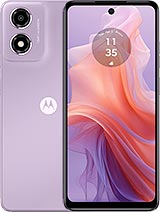
Overview
Analyzing the Bottom Dollar
The Motorola Moto E14 is an entry-level smartphone featuring a 90Hz IPS LCD for smooth interactions and a 5000 mAh battery for multi-day endurance, aimed at budget-conscious consumers. Released in June 2024, it competes with other ultra-budget options by offering Corning Gorilla Glass 3 and UFS 2.2 storage at a sub-£60 price point. In an era where inflation has pushed even basic technology into higher price brackets, finding a device that remains functional while staying under the £60 mark is a rarity. This unit targets a specific demographic: those who require the most basic digital utility without any superfluous overhead.
From a fiscal perspective, this model represents a calculated gamble by the manufacturer. They have stripped away every non-essential feature—there is no 5G, no multi-lens camera array, and no premium materials. Instead, we see a focus on durability and baseline usability. The inclusion of UFS 2.2 storage is perhaps the most significant economic win here. Most competitors in this basement-tier price range still rely on aging eMMC storage, which slows down significantly as it fills up. By opting for UFS 2.2, the manufacturer ensures that the device maintains a level of responsiveness that belies its meager price tag.
The Structural Compromise
When we look at where the manufacturing budget was allocated, the results are quite telling. The body is entirely plastic, which is the standard for this class. However, the water-repellent design suggests a level of consideration for real-world accidents that we don't always see at this price. While it lacks a formal IP rating, the protective coating provides a safety net against light rain or a spilled glass of water. This is a pragmatic choice for a device intended for long-term utility rather than fashion. The plastic frame and back are prone to scuffs, so a case is advisable, yet the material choice keeps the weight down to a manageable 178.8 grams.
One of the most surprising additions is the Corning Gorilla Glass 3 protection. At a price point where many brands use generic 'strengthened glass' that can be prone to micro-scratches, having a named brand for the display protection adds a layer of consumer trust. This choice implies that the device is built to survive the rigors of a two-year upgrade cycle, even if the user isn't particularly careful. The display itself is a 720p panel, which yields a pixel density of 269 ppi. While not razor-sharp, it is more than adequate for reading text and watching YouTube videos at standard definition.
Lightweight Software for Heavy Lifting
Software efficiency is paramount when working with limited hardware. This handset ships with Android 14 (Go edition), a version of the operating system specifically optimized for devices with low RAM. The Go edition reduces the footprint of the OS and pre-installs lighter versions of core apps like Google Maps Go and Gmail Go. This is a necessary trade-off. Running the full version of Android 14 on 2GB or even 4GB of RAM would lead to significant system-level stutters and background app crashes. The Go edition ensures that the core interface remains fluid, even if you lose some of the fancy animations found in more expensive models.
In our assessment of the daily experience, the 90Hz refresh rate plays a massive role. Even though the Mali-G57 MP1 GPU isn't powerful enough to run high-end games at 90 frames per second, the extra frames during system navigation and web scrolling make the phone feel significantly faster than its 60Hz peers. It is a clever psychological trick that improves the perceived value of the device. However, users should be prepared for some limitations in multitasking. If you have several tabs open in Chrome and try to switch to a messaging app, there is a distinct possibility that the background tab will reload due to the tight memory management.
The Marathon Runner with a Slow Start
Battery endurance is the primary selling point for many buyers in this segment. The 5000 mAh battery is generous, especially when paired with the power-efficient Unisoc T606 chipset and a 720p screen. In standard usage scenarios—checking emails, scrolling through news feeds, and occasional messaging—this model can easily stretch into a second day of use. This makes it an excellent choice for a secondary device or a phone for someone who doesn't want to worry about daily charging. The 12nm manufacturing process of the chipset might not be the most advanced, but it manages heat remarkably well during prolonged tasks.
Charging, however, is where the budget constraints are felt most acutely. The 15W wired charging speed is significantly behind the 33W or 67W standards seen in the mid-range market. To fully replenish a 5000 mAh cell at 15W takes over two hours. This is not a phone for someone who needs a quick 15-minute top-up before heading out for the night. It is designed for overnight charging. While the slow speed might be frustrating for power users, it does have the unintended benefit of being gentler on the battery cells over the long term, potentially extending the overall lifespan of the hardware.
Basic Sonics and Buzzing Motors
Audio performance is functional but uninspired. The single loudspeaker produces clear enough audio for voice calls and podcasts, but it lacks the depth and bass required for a satisfying music experience. At high volumes, some distortion is noticeable, which is typical for this tier. The presence of a 3.5mm headphone jack is a major win for the value-conscious consumer. It allows the use of affordable wired headphones without needing expensive adapters, and it also enables the use of the device as a dedicated MP3 player or FM radio receiver (though radio functionality varies by region).
Regarding haptic feedback, the vibration motor is basic. It provides a standard 'buzz' rather than the nuanced 'taps' found in premium devices. This can make the typing experience feel a bit mushy if haptics are left on. Most users will likely find it acceptable for notification alerts, but we recommend turning off keyboard vibrations to save a bit of battery and improve the tactile feel. Connectivity-wise, the lack of NFC means no contactless payments via Google Wallet. This is a significant omission for urban users in 2024, but it is a standard cut in the sub-£60 price bracket to keep costs down.
The Reality of the Unisoc T606
The heart of the device is the Unisoc T606. This octa-core processor uses two Cortex-A75 performance cores and six Cortex-A55 efficiency cores. For the uninitiated, this configuration is a step above the quad-core or all-A53 chips often found in the cheapest phones. The A75 cores handle the heavy lifting when opening apps or loading complex webpages, preventing the device from feeling completely bogged down. It handles basic social media apps and web browsing with relative ease, though you should expect a few seconds of loading time for larger applications.
Gaming performance is strictly for casual titles. Puzzle games, card games, and 2D platformers run without issue. However, attempting to play graphically intensive 3D titles like Genshin Impact or Call of Duty Mobile will result in low frame rates and significant graphical downgrades. This isn't a failure of the phone, but rather a reflection of its intended use case. This is a tool for communication and information access, not a portable gaming console. The Mali-G57 MP1 GPU is designed for efficiency first, ensuring that graphical tasks don't drain the battery instantly.
Final Economic Appraisal
The Motorola Moto E14 represents the baseline of what a modern smartphone can be. It makes no apologies for its humble specs because it offers a price-to-utility ratio that is hard to beat. By focusing on a smooth 90Hz screen, decent battery life, and relatively fast UFS 2.2 storage, the manufacturer has created a device that handles the basics better than many 'premium' handsets did just a few years ago. It is a pragmatic choice for anyone looking to maximize their purchasing power without descending into the world of unusable, lag-heavy generic phones.
Ultimately, the Motorola Moto E14 is a triumph of engineering constraints. It identifies the most critical components for a modern mobile experience and preserves them while ruthlessly cutting everything else. While it won't turn heads or win any performance benchmarks, it fulfills its promise as a reliable, affordable communication tool. For the budget-conscious buyer in mid-2024, this represents one of the safest investments in the ultra-low-cost segment. It is a clear reminder that technology doesn't always need to be expensive to be useful.
Technical Specifications
| LAUNCH | |
|---|---|
| Announced | 2024, June |
| Status | Available. Released 2024, June |
| PLATFORM | |
| OS | Android 14 (Go edition) |
| Chipset | Unisoc T606 (12 nm) |
| CPU | Octa-core (2x1.6 GHz Cortex-A75 & 6x1.6 GHz Cortex-A55) |
| GPU | Mali-G57 MP1 |
| BODY | |
| Dimensions | 163.5 x 74.5 x 8 mm (6.44 x 2.93 x 0.31 in) |
| Weight | 178.8 g (6.31 oz) |
| Build | Glass front (Gorilla Glass 3), plastic frame, plastic back |
| SIM | Nano-SIM + Nano-SIM |
| Info | Water-repellent design |
| DISPLAY | |
| Type | IPS LCD, 90Hz |
| Size | 6.56 inches, 103.4 cm2 (~84.9% screen-to-body ratio) |
| Resolution | 720 x 1612 pixels, 20:9 ratio (~269 ppi density) |
| Protection | Corning Gorilla Glass 3 |
| MEMORY | |
| Card slot | microSDXC |
| Internal | 64GB 2GB RAM, 64GB 4GB RAM |
| Info | UFS 2.2 |
| MAIN CAMERA | |
| Single | 13 MP, f/2.2, (wide), 1.12µm, PDAF |
| Features | LED flash, HDR |
| Video | 1080p@30fps |
| SELFIE CAMERA | |
| Single | 5 MP, f/2.2, (wide), 1/5.0", 1.12µm |
| Features | HDR |
| Video | 1080p@30fps |
| SOUND | |
| Loudspeaker | Yes |
| 3.5mm jack | Yes |
| COMMS | |
| WLAN | Wi-Fi 802.11 a/b/g/n/ac, dual-band |
| Bluetooth | 5.0, A2DP, LE |
| Positioning | GPS, GALILEO, GLONASS |
| NFC | No |
| Radio | Unspecified |
| USB | USB Type-C 2.0 |
| NETWORK | |
| Technology | GSM / HSPA / LTE |
| 2G bands | GSM 850 / 900 / 1800 / 1900 |
| 3G bands | HSDPA 850 / 900 / 2100 |
| 4G bands | 1, 3, 5, 7, 8, 20, 28, 38, 40, 41 |
| Speed | HSPA, LTE |
| FEATURES | |
| Sensors | Accelerometer, proximity |
| BATTERY | |
| Type | 5000 mAh |
| Charging | 15W wired |
| MISC | |
| Colors | Pastel Green, Graphite Gray, Pastel Purple |
| Price | £ 57.99 / € 69.79 |