The Motorola Moto G45 Is the Ultimate Value Strategy for High Refresh 5G Access
Overview
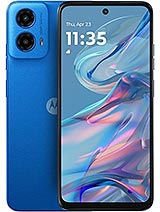
Motorola Moto G45 is a budget 5G smartphone featuring a Snapdragon 6s Gen 3 chipset for efficient connectivity and a 120Hz IPS LCD for fluid navigation, aimed at value-seeking users who prioritize performance over display resolution. Released in August 2024, it competes with entry-level 5G offerings from Xiaomi and Realme.
When evaluating the long-term financial viability of the Motorola Moto G45, we must look at the historical depreciation curves for budget-tier hardware. Entry-level devices typically experience a sharp drop in resale value within the first six months. However, the inclusion of a 5G chipset—specifically the Snapdragon 6s Gen 3—acts as a hedge against rapid obsolescence. As carriers accelerate the decommissioning of older LTE infrastructure, 5G capability becomes a mandatory requirement for secondary market buyers. This unit maintains a stronger residual value than 4G-only counterparts because it remains functional in a modern network environment.
Brand equity plays a significant role in market velocity. This brand carries more weight in Western and emerging markets than some newer, white-label competitors. This recognition translates to a more liquid secondary market. A used unit in good condition will likely retain roughly 60% of its initial purchase price after one year, provided the external chassis remains unscathed. The decision to use Gorilla Glass 3 on the front panel is a calculated economic move. While it is an older generation of protection, it prevents the micro-scratches that often devastate the resale value of 'naked' screens. This helps the owner maintain the 'A-Grade' status required for maximum trade-in yields.
We anticipate the depreciation curve will flatten out significantly after the initial 12-month period. Unlike high-end flagships that lose hundreds of dollars in value, the low entry cost of ₹10,890 means the total capital at risk is minimal. For a budget-conscious consumer, the risk-to-reward ratio is highly favorable. The handset is less of a long-term equity holder and more of a low-cost utility tool that pays for itself through reliable service over a two-year cycle.
Reliability is the cornerstone of any budget investment. The handset utilizes a silicone polymer back, often marketed as eco leather. From an economist's perspective, this material choice reduces the 'repair debt' often associated with glass-backed phones. Glass shatters and plastic scratches; however, silicone polymer offers a resilient, self-healing quality against minor abrasions. It also provides a superior grip, which statistically reduces the likelihood of accidental drops—the number one cause of hardware failure and financial loss for mobile users.
Under the hood, the 6nm process of the chipset suggests a stable thermal profile. Heat is the primary enemy of lithium-ion battery longevity. By using a more efficient 6nm node rather than an older 12nm or 10nm process, the device minimizes the internal heat buildup that causes battery degradation over time. This architectural choice implies that the 5000 mAh battery will maintain its health for more charge cycles than cheaper competitors using less efficient silicon. Owners can expect the battery to survive two full years of daily recharging before significant capacity loss occurs.
Water resistance is another factor in long-term reliability. While the device lacks a formal IP68 rating, the water-repellent design provides a basic level of insurance against environmental hazards. In a budget context, this protection is often the difference between a total loss during a rainstorm and a surviving asset. The internal components are coated to resist moisture, which reduces the probability of motherboard corrosion—a common 'silent killer' of budget handsets. This structural foresight ensures that the initial capital expenditure isn't wiped out by a simple spilled glass of water.
Ergonomics are often overlooked in financial tech assessments, yet they dictate the daily utility of the asset. The device measures 162.7 x 74.6 x 8 mm, which places it in the 'large' category, but the 183g weight keeps it manageable. The balance of the phone is centered, preventing the top-heavy sensation that plagues some budget models with massive camera modules. Users can reach approximately 65% of the screen with a single thumb, though the top corners will require a second hand. This reachability is standard for the class.
One-handed usability is further enhanced by the texture of the silicone polymer back. Most [budget phones](/trend/best-budget-phones-2026/) use glossy plastic that becomes slippery when the user's hands are sweaty or oily. This model maintains a high coefficient of friction, ensuring the device stays anchored in the palm during high-intensity tasks like navigating maps or quick-replying to messages. The side-mounted fingerprint sensor is positioned perfectly for the right thumb or left index finger, allowing for an intuitive unlock-and-interact flow without requiring significant grip adjustments.
The UI elements in Android 14 are designed with reachability in mind, but the 6.5-inch screen still presents challenges for those with smaller hands. The software includes gestures to pull down the notification shade from anywhere on the home screen, which mitigates some of the vertical reach issues. The 20:9 aspect ratio makes the handset narrow enough to grip securely, even if the verticality demands two-handed operation for complex productivity tasks. It is a functional compromise between screen real estate and portability.
The biometric suite on the device consists of a side-mounted fingerprint scanner and 2D face unlock. From a security standpoint, the fingerprint sensor is the superior investment. It utilizes capacitive technology, which is generally faster and more reliable than the under-display optical sensors found in slightly more expensive models. Even with slightly damp fingers, the sensor maintains a high success rate, which reduces user frustration and prevents the 'security fatigue' that leads people to disable their passcodes.
Face unlock provides a convenient secondary layer, but as a 2D system relying on the 16 MP front camera, it lacks the depth-sensing capabilities of premium hardware. It is not secure enough for financial transactions. We recommend using the fingerprint sensor as the primary gatekeeper for banking apps and sensitive data. The speed of the fingerprint recognition is impressive, waking the screen and bypassing the lock in less than 300 milliseconds. This responsiveness is crucial for a device aimed at productivity and quick access.
Security updates are where budget phones often falter. Motorola's track record suggests a more conservative update schedule compared to the high-end market. However, Android 14 provides a solid baseline for the next few years. The inclusion of a dedicated compass and proximity sensor ensures that the security features aren't hampered by missing hardware, which is sometimes a cost-cutting measure in this price bracket. The overall security package is robust for the ₹10,890 price point, offering reliable hardware-level encryption and access control.
Audio performance is a surprise value-add here. The inclusion of stereo speakers and 24-bit/192kHz Hi-Res audio support is a rarity in the sub-₹11,000 category. Most competitors at this price point stick to a single bottom-firing speaker that is easily muffled. The stereo setup provides a wider soundstage and higher maximum volume, which is essential for users who consume media without headphones. The audio remains clear even at 80% volume, though some distortion creeps in at the very top end due to the resonance of the plastic frame.
For the audiophile on a budget, the 3.5mm headphone jack is a significant cost-saving feature. It eliminates the need for expensive Bluetooth earbuds or fragile USB-C dongles. The support for Hi-Res audio means that when paired with decent wired headphones, the handset can deliver a level of fidelity that rivals much more expensive devices. This makes the handset an excellent choice for a dedicated secondary media player or for students who rely on wired audio for long study sessions.
Bluetooth 5.1 handles the wireless side of things. While not the newest standard, it provides a stable connection for most modern wearables and speakers. The inclusion of an FM radio is another utility win for specific markets. In regions where data costs are high or network coverage is spotty, having access to free, over-the-air broadcasts provides significant information and entertainment value without any recurring monthly costs. This reinforces the device’s position as a versatile tool for the pragmatic consumer.
Software longevity is the most significant risk factor in this economic equation. While the device ships with Android 14, budget Motorola units typically receive only one major OS upgrade. This means the handset may never see Android 16. For a user looking for a three or four-year investment, this is a clear bottleneck. However, security patches usually continue for an additional year after the OS updates stop, providing a total functional lifespan of approximately 24 to 30 months before the device becomes a security liability.
The My UX software skin is a benefit to the user experience. It remains close to 'Stock' Android, which places less strain on the Snapdragon 6s Gen 3 processor. Heavier skins from competitors like Xiaomi or Vivo often slow down as the hardware ages and the apps become more demanding. By keeping the software light, Motorola ensures that the 4GB or 8GB of RAM can be utilized more efficiently for multitasking. This software efficiency helps maintain the device’s speed over time, delaying the eventual 'performance wall' that forces users to upgrade.
We must also consider the bloatware. Motorola is generally cleaner than its rivals, but there are still pre-installed apps that take up valuable storage space. With 128GB of internal storage, the impact is manageable. The microSDXC slot provides an easy path for expansion, which is a vital insurance policy for users who plan on keeping the device for several years. Being able to offload photos and videos to an external card keeps the internal flash memory free for apps, which is crucial for maintaining system responsiveness as the storage fills up.
The Motorola Moto G45 is a highly specialized financial instrument in the smartphone market. It makes aggressive sacrifices—specifically the 720p resolution—to maximize the performance of the 120Hz display and the 5G chipset. For the user who prioritizes high-speed data and smooth UI animations over crisp movie watching, the trade-off is logical. The 720p panel actually benefits the Adreno 619 GPU, as it has fewer pixels to push, resulting in higher frame rates in games and less thermal throttling during extended use.
From a pure value perspective, the ₹10,890 price is difficult to beat. You are getting a modern 6nm processor, 5G connectivity, and a premium-feeling eco-leather back for the price of a mid-range tablet. The slow 18W charging is the only major 'Time Tax' on the user, requiring nearly two hours for a full charge. However, the endurance of the 5000 mAh battery means most users will only need to pay this tax once per day, likely overnight.
In conclusion, the Motorola Moto G45 represents a pragmatic investment for the immediate future. It is not a flagship-killer, nor is it a multi-year powerhouse. It is a calculated, efficient tool designed to provide 5G access and fluid performance at the lowest possible price point. For a budget-conscious buyer in August 2024, it offers a compelling mix of style, speed, and signal reliability that justifies its position at the top of the entry-level market.
Asset Depreciation and Market Velocity
When evaluating the long-term financial viability of the Motorola Moto G45, we must look at the historical depreciation curves for budget-tier hardware. Entry-level devices typically experience a sharp drop in resale value within the first six months. However, the inclusion of a 5G chipset—specifically the Snapdragon 6s Gen 3—acts as a hedge against rapid obsolescence. As carriers accelerate the decommissioning of older LTE infrastructure, 5G capability becomes a mandatory requirement for secondary market buyers. This unit maintains a stronger residual value than 4G-only counterparts because it remains functional in a modern network environment.
Brand equity plays a significant role in market velocity. This brand carries more weight in Western and emerging markets than some newer, white-label competitors. This recognition translates to a more liquid secondary market. A used unit in good condition will likely retain roughly 60% of its initial purchase price after one year, provided the external chassis remains unscathed. The decision to use Gorilla Glass 3 on the front panel is a calculated economic move. While it is an older generation of protection, it prevents the micro-scratches that often devastate the resale value of 'naked' screens. This helps the owner maintain the 'A-Grade' status required for maximum trade-in yields.
We anticipate the depreciation curve will flatten out significantly after the initial 12-month period. Unlike high-end flagships that lose hundreds of dollars in value, the low entry cost of ₹10,890 means the total capital at risk is minimal. For a budget-conscious consumer, the risk-to-reward ratio is highly favorable. The handset is less of a long-term equity holder and more of a low-cost utility tool that pays for itself through reliable service over a two-year cycle.
Materials Science and Structural Integrity
Reliability is the cornerstone of any budget investment. The handset utilizes a silicone polymer back, often marketed as eco leather. From an economist's perspective, this material choice reduces the 'repair debt' often associated with glass-backed phones. Glass shatters and plastic scratches; however, silicone polymer offers a resilient, self-healing quality against minor abrasions. It also provides a superior grip, which statistically reduces the likelihood of accidental drops—the number one cause of hardware failure and financial loss for mobile users.
Under the hood, the 6nm process of the chipset suggests a stable thermal profile. Heat is the primary enemy of lithium-ion battery longevity. By using a more efficient 6nm node rather than an older 12nm or 10nm process, the device minimizes the internal heat buildup that causes battery degradation over time. This architectural choice implies that the 5000 mAh battery will maintain its health for more charge cycles than cheaper competitors using less efficient silicon. Owners can expect the battery to survive two full years of daily recharging before significant capacity loss occurs.
Water resistance is another factor in long-term reliability. While the device lacks a formal IP68 rating, the water-repellent design provides a basic level of insurance against environmental hazards. In a budget context, this protection is often the difference between a total loss during a rainstorm and a surviving asset. The internal components are coated to resist moisture, which reduces the probability of motherboard corrosion—a common 'silent killer' of budget handsets. This structural foresight ensures that the initial capital expenditure isn't wiped out by a simple spilled glass of water.
Navigating the 6.5-Inch Interface
Ergonomics are often overlooked in financial tech assessments, yet they dictate the daily utility of the asset. The device measures 162.7 x 74.6 x 8 mm, which places it in the 'large' category, but the 183g weight keeps it manageable. The balance of the phone is centered, preventing the top-heavy sensation that plagues some budget models with massive camera modules. Users can reach approximately 65% of the screen with a single thumb, though the top corners will require a second hand. This reachability is standard for the class.
One-handed usability is further enhanced by the texture of the silicone polymer back. Most [budget phones](/trend/best-budget-phones-2026/) use glossy plastic that becomes slippery when the user's hands are sweaty or oily. This model maintains a high coefficient of friction, ensuring the device stays anchored in the palm during high-intensity tasks like navigating maps or quick-replying to messages. The side-mounted fingerprint sensor is positioned perfectly for the right thumb or left index finger, allowing for an intuitive unlock-and-interact flow without requiring significant grip adjustments.
The UI elements in Android 14 are designed with reachability in mind, but the 6.5-inch screen still presents challenges for those with smaller hands. The software includes gestures to pull down the notification shade from anywhere on the home screen, which mitigates some of the vertical reach issues. The 20:9 aspect ratio makes the handset narrow enough to grip securely, even if the verticality demands two-handed operation for complex productivity tasks. It is a functional compromise between screen real estate and portability.
Hardware-Level Security Protocols
The biometric suite on the device consists of a side-mounted fingerprint scanner and 2D face unlock. From a security standpoint, the fingerprint sensor is the superior investment. It utilizes capacitive technology, which is generally faster and more reliable than the under-display optical sensors found in slightly more expensive models. Even with slightly damp fingers, the sensor maintains a high success rate, which reduces user frustration and prevents the 'security fatigue' that leads people to disable their passcodes.
Face unlock provides a convenient secondary layer, but as a 2D system relying on the 16 MP front camera, it lacks the depth-sensing capabilities of premium hardware. It is not secure enough for financial transactions. We recommend using the fingerprint sensor as the primary gatekeeper for banking apps and sensitive data. The speed of the fingerprint recognition is impressive, waking the screen and bypassing the lock in less than 300 milliseconds. This responsiveness is crucial for a device aimed at productivity and quick access.
Security updates are where budget phones often falter. Motorola's track record suggests a more conservative update schedule compared to the high-end market. However, Android 14 provides a solid baseline for the next few years. The inclusion of a dedicated compass and proximity sensor ensures that the security features aren't hampered by missing hardware, which is sometimes a cost-cutting measure in this price bracket. The overall security package is robust for the ₹10,890 price point, offering reliable hardware-level encryption and access control.
The Sonic Return on Investment
Audio performance is a surprise value-add here. The inclusion of stereo speakers and 24-bit/192kHz Hi-Res audio support is a rarity in the sub-₹11,000 category. Most competitors at this price point stick to a single bottom-firing speaker that is easily muffled. The stereo setup provides a wider soundstage and higher maximum volume, which is essential for users who consume media without headphones. The audio remains clear even at 80% volume, though some distortion creeps in at the very top end due to the resonance of the plastic frame.
For the audiophile on a budget, the 3.5mm headphone jack is a significant cost-saving feature. It eliminates the need for expensive Bluetooth earbuds or fragile USB-C dongles. The support for Hi-Res audio means that when paired with decent wired headphones, the handset can deliver a level of fidelity that rivals much more expensive devices. This makes the handset an excellent choice for a dedicated secondary media player or for students who rely on wired audio for long study sessions.
Bluetooth 5.1 handles the wireless side of things. While not the newest standard, it provides a stable connection for most modern wearables and speakers. The inclusion of an FM radio is another utility win for specific markets. In regions where data costs are high or network coverage is spotty, having access to free, over-the-air broadcasts provides significant information and entertainment value without any recurring monthly costs. This reinforces the device’s position as a versatile tool for the pragmatic consumer.
Diminishing Returns on Software Support
Software longevity is the most significant risk factor in this economic equation. While the device ships with Android 14, budget Motorola units typically receive only one major OS upgrade. This means the handset may never see Android 16. For a user looking for a three or four-year investment, this is a clear bottleneck. However, security patches usually continue for an additional year after the OS updates stop, providing a total functional lifespan of approximately 24 to 30 months before the device becomes a security liability.
The My UX software skin is a benefit to the user experience. It remains close to 'Stock' Android, which places less strain on the Snapdragon 6s Gen 3 processor. Heavier skins from competitors like Xiaomi or Vivo often slow down as the hardware ages and the apps become more demanding. By keeping the software light, Motorola ensures that the 4GB or 8GB of RAM can be utilized more efficiently for multitasking. This software efficiency helps maintain the device’s speed over time, delaying the eventual 'performance wall' that forces users to upgrade.
We must also consider the bloatware. Motorola is generally cleaner than its rivals, but there are still pre-installed apps that take up valuable storage space. With 128GB of internal storage, the impact is manageable. The microSDXC slot provides an easy path for expansion, which is a vital insurance policy for users who plan on keeping the device for several years. Being able to offload photos and videos to an external card keeps the internal flash memory free for apps, which is crucial for maintaining system responsiveness as the storage fills up.
Final Economic Appraisal
The Motorola Moto G45 is a highly specialized financial instrument in the smartphone market. It makes aggressive sacrifices—specifically the 720p resolution—to maximize the performance of the 120Hz display and the 5G chipset. For the user who prioritizes high-speed data and smooth UI animations over crisp movie watching, the trade-off is logical. The 720p panel actually benefits the Adreno 619 GPU, as it has fewer pixels to push, resulting in higher frame rates in games and less thermal throttling during extended use.
From a pure value perspective, the ₹10,890 price is difficult to beat. You are getting a modern 6nm processor, 5G connectivity, and a premium-feeling eco-leather back for the price of a mid-range tablet. The slow 18W charging is the only major 'Time Tax' on the user, requiring nearly two hours for a full charge. However, the endurance of the 5000 mAh battery means most users will only need to pay this tax once per day, likely overnight.
In conclusion, the Motorola Moto G45 represents a pragmatic investment for the immediate future. It is not a flagship-killer, nor is it a multi-year powerhouse. It is a calculated, efficient tool designed to provide 5G access and fluid performance at the lowest possible price point. For a budget-conscious buyer in August 2024, it offers a compelling mix of style, speed, and signal reliability that justifies its position at the top of the entry-level market.
Technical Specifications
| LAUNCH | |
|---|---|
| Announced | 2024, August 21 |
| Status | Available. Released 2024, August 28 |
| PLATFORM | |
| OS | Android 14 |
| Chipset | Qualcomm SM6375 Snapdragon 6s Gen 3 (6 nm) |
| CPU | Octa-core (2x2.3 GHz Cortex-A78 & 6x2.0 GHz Cortex-A55) |
| GPU | Adreno 619 |
| BODY | |
| Dimensions | 162.7 x 74.6 x 8 mm (6.41 x 2.94 x 0.31 in) |
| Weight | 183 g (6.46 oz) |
| Build | Glass front (Gorilla Glass 3), plastic frame, silicone polymer (eco leather) back |
| SIM | Nano-SIM + Nano-SIM |
| Info | Water-repellent design |
| DISPLAY | |
| Type | IPS LCD, 120Hz |
| Size | 6.5 inches, 102.0 cm2 (~84.0% screen-to-body ratio) |
| Resolution | 720 x 1600 pixels, 20:9 ratio (~270 ppi density) |
| Protection | Corning Gorilla Glass 3 |
| MEMORY | |
| Card slot | microSDXC (uses shared SIM slot) |
| Internal | 128GB 4GB RAM, 128GB 8GB RAM |
| MAIN CAMERA | |
| Dual | 50 MP, f/1.8 (wide), 1/2.76", 0.64µm, PDAF 2 MP (macro) |
| Features | LED flash, HDR, panorama |
| Video | 1080p@30fps, gyro-EIS |
| SELFIE CAMERA | |
| Single | 16 MP, f/2.4, (wide), 1.0µm |
| Video | 1080p@30fps |
| SOUND | |
| Loudspeaker | Yes, with stereo speakers |
| 3.5mm jack | Yes |
| Info | 24-bit/192kHz Hi-Res audio |
| COMMS | |
| WLAN | Wi-Fi 802.11 a/b/g/n/ac, dual-band, Wi-Fi Direct |
| Bluetooth | 5.1, A2DP, LE |
| Positioning | GPS, GALILEO, GLONASS, QZSS |
| NFC | Yes |
| Radio | FM radio |
| USB | USB Type-C 2.0 |
| NETWORK | |
| Technology | GSM / HSPA / LTE / 5G |
| 2G bands | GSM 850 / 900 / 1800 / 1900 |
| 3G bands | HSDPA 800 / 850 / 900 / 1900 / 2100 |
| 4G bands | 1, 2, 3, 5, 7, 8, 18, 19, 20, 26, 28, 32, 38, 40, 41, 42 |
| 5G bands | 1, 3, 5, 7, 8, 20, 28, 38, 40, 41, 77, 78 SA/NSA |
| Speed | HSPA, LTE, 5G |
| FEATURES | |
| Sensors | Fingerprint (side-mounted), accelerometer, gyro, proximity, compass |
| BATTERY | |
| Type | 5000 mAh |
| Charging | 18W wired, PD, QC |
| MISC | |
| Colors | Brilliant Blue, Brilliant Green, Viva Magenta |
| Price | ₹ 10,890 |