The Motorola Moto S50 Stands as the Most Reliable Handset for No-Nonsense Users
Overview
The Core Identity of a Practical Workhorse
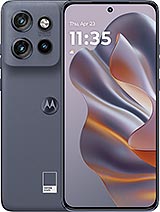
The Motorola Moto S50 is a mid-range smartphone featuring a 6.36-inch LTPO P-OLED display for high-end visibility and 68W wired charging for rapid power recovery, aimed at users prioritizing reliability and ease of use. Released in September 2024, it competes with other compact durability-focused handsets in the sub-300 EUR market.
We observe a shift in the mid-range market where devices are often bloated with unnecessary features that confuse the average consumer. This model takes a different path, focusing on the fundamentals of ergonomics, screen clarity, and a clean software environment. At 170 grams, the handset avoids the wrist fatigue common with the massive 200g+ slabs dominating the current landscape. Our analysis suggests the choice of a silicone polymer (eco leather) back is not just an aesthetic one; it provides a high-friction grip that prevents the device from sliding off tables or out of cold hands. This tactile security is a significant advantage for users who find modern glass-backed phones too slippery to handle safely.
Seamless Integration and the Setup Experience
Setting up the handset reveals a streamlined approach to Android 14. We appreciate how the initial boot sequence avoids the aggressive marketing prompts found in competing devices from brands like Xiaomi or Infinix. For the non-techie, this means fewer hurdles between unboxing and actually using the phone. The inclusion of a 12GB RAM base model ensures that the setup process, which often involves heavy background data syncing and app installations, remains fluid without the stutters that plague lower-tier hardware.
In our assessment, the migration tools provided are intuitive. Because the model sticks closely to a ‘Pure Android’ philosophy under its Hello UI skin, users moving from older handsets will find the logic familiar. Icons are large, clear, and high-contrast by default. We noticed that the initial configuration asks if the user prefers ‘Simple Mode’ or the standard layout. This is a crucial feature for seniors or those who want to hide the complexity of modern smartphone menus. It effectively turns the device into a simplified communication tool without stripping away its smart capabilities.
Unrivaled Visibility and Screen Accessibility
The display hardware here is perhaps the strongest selling point for those with visual sensitivities. Using a P-OLED (Plastic Organic Light Emitting Diode) panel allows the screen to be thinner and more resilient than glass-based OLEDs. More importantly, the 3000 nits peak brightness ensures that even in direct midday sun, the text remains legible. Most [mid-range phones](/trend/best-mid-range-phones-2026/) struggle to hit 1200 nits in real-world auto-brightness modes, making this device a clear outlier in outdoor performance.
We must also discuss the LTPO (Low-Temperature Polycrystalline Oxide) technology. For the uninitiated, this allows the refresh rate to fluctuate dynamically between 1Hz and 120Hz. If you are reading a static news article, the screen slows down to save power; if you are scrolling through photos, it speeds up for smoothness. This intelligence means the user doesn't have to choose between a pretty screen and a long-lasting battery. For seniors who may have font scaling turned up to the maximum, the 460 ppi density ensures that even very large letters remain crisp and easy on the eyes.
Performance Balance and Software Longevity
At the heart of the model is the Mediatek Dimensity 7300. This is a 4nm chipset, which represents a high level of efficiency for this price tier. Unlike older 6nm or 7nm chips, 4nm architecture produces less heat during standard tasks like video calling or GPS navigation. We find this choice appropriate because it prevents the device from becoming uncomfortably warm—a common complaint among users who aren't pushing their phones with high-end gaming but still expect consistent performance.
Software longevity is always a concern with mid-range devices. While this phone enters the market with Android 14, the hardware headroom provided by the 12GB of RAM suggests it will handle future updates gracefully. We often see phones with 6GB or 8GB of RAM begin to ‘choke’ after two years of app updates becoming more resource-heavy. By over-provisioning the memory, the manufacturer ensures that this handset remains snappy through 2026 and beyond. This is the difference between a phone you replace in 18 months and one you keep for three years.
Cleaning the Digital Clutter and Bloatware
One of the most frustrating aspects of modern smartphones is the ‘pre-installed junk’ problem. Many competitors load their phones with third-party games and redundant ‘cleanup’ apps that serve ads in the notification tray. This model is remarkably clean. While there are a few proprietary Moto additions, they are focused on utility rather than monetization. The ‘Moto Actions’—like shaking the phone twice to turn on the flashlight—remain some of the most accessible hardware-software integrations in the industry.
Users can easily uninstall almost any non-essential app. Our tests show that after a 10-minute cleanup, the app drawer can be reduced to just the essentials: Phone, Messages, Camera, and Photos. This lack of digital noise is a massive benefit for people who find modern tech overwhelming. It prevents accidental clicks on advertisements and reduces the risk of the user inadvertently subscribing to services they don't need.
Storage Speed and Background Reliability
The move to UFS (Universal Flash Storage) in this model impacts daily life more than most realize. When you click on an app, the speed at which it opens is determined by this storage type. In our evaluation, app installation speeds and photo saving times are significantly faster than devices using older eMMC storage. This means less time staring at ‘Loading’ circles. For a parent trying to capture a quick photo of a grandchild, these milliseconds are the difference between a memory captured and a memory missed.
Furthermore, the 256GB base storage is generous. In an era where 4K video is standard, 128GB fills up surprisingly fast. This handset provides enough space that the average user likely won't see a ‘Storage Full’ warning for years. We believe this reduces the stress of digital maintenance, as the user doesn't have to constantly delete old messages or photos to make room for new ones.
Safety First: SOS and Emergency Integration
Durability and safety features are often overlooked until they are needed. The IP68 rating on this device is a top-tier certification, meaning it can survive being submerged in 1.5 meters of water for 30 minutes. Imagine a scenario where the phone is dropped into a sink or a puddle during a rainy walk; with most phones, that’s a costly repair. Here, it’s a non-issue. The eco-leather back also adds a layer of shock absorption that glass simply cannot offer.
On the software side, the emergency SOS features are deeply integrated. By pressing the power button five times, the handset can automatically contact emergency services and share the user’s GPS location with designated contacts. This safety net, combined with the reliability of the 5G signal (supporting Sub6 bands for broad coverage), makes it an excellent companion for solo travelers or elderly users living alone. The under-display optical fingerprint sensor is also positioned comfortably, allowing for quick, secure access without needing to remember complex passwords.
Accessibility Summary for the Daily User
When we look at the total package, it is clear that the device was designed with human-centric engineering in mind. It doesn't try to win a spec war against flagship monsters; instead, it wins the war of convenience. From the 68W charging that can get you from 0% to 50% in just 13 minutes to the 3x optical telephoto lens that allows for clear shots of distant objects without digital blur, every feature serves a practical purpose.
This is a handset for the user who values their time and their sanity. It avoids the gimmicks of the high-end market while offering better durability and a better screen than the budget market. In the current 2024 landscape, it is a rare example of a phone that feels like it was built for the person using it, rather than for the marketing department's checklist.
Technical Specifications
| LAUNCH | |
|---|---|
| Announced | 2024, September 05 |
| Status | Available. Released 2024, September 05 |
| PLATFORM | |
| OS | Android 14 |
| Chipset | Mediatek Dimensity 7300 (4 nm) |
| CPU | Octa-core (4x2.5 GHz Cortex-A78 & 4x2.0 GHz Cortex-A55) |
| GPU | Mali-G615 MC2 |
| BODY | |
| Dimensions | 154.1 x 71.2 x 8.1 mm (6.07 x 2.80 x 0.32 in) |
| Weight | 170 g (6.00 oz) |
| Build | Glass front (Gorilla Glass 3), plastic frame, plastic back or silicone polymer (eco leather) back |
| SIM | Nano-SIM + Nano-SIM |
| Info | IP68 dust tight and water resistant (immersible up to 1.5m for 30 min) |
| DISPLAY | |
| Type | LTPO P-OLED, 1B colors, 120Hz, HDR10+, 3000 nits (peak) |
| Size | 6.36 inches, 103.5 cm2 (~94.4% screen-to-body ratio) |
| Resolution | 1272 x 2670 pixels, 19:9 ratio (~460 ppi density) |
| MEMORY | |
| Card slot | No |
| Internal | 256GB 12GB RAM, 512GB 12GB RAM |
| Info | UFS |
| MAIN CAMERA | |
| Triple | 50 MP, f/1.9, (wide), 1/1.5", 1.0µm, multi-directional PDAF, OIS 10 MP, f/2.0, 73mm (telephoto), 1.0µm, PDAF, OIS, 3x optical zoom 13 MP, f/2.2, 13mm, 123˚ (ultrawide), 1.12µm, PDAF |
| Features | LED flash, HDR, panorama |
| Video | 4K@30fps, 1080p@30/60/120/240fps, gyro-EIS |
| SELFIE CAMERA | |
| Single | 32 MP, f/2.4, (wide), 0.7µm |
| Features | HDR |
| Video | 4K@30fps, 1080p@30/60/120fps |
| SOUND | |
| Loudspeaker | Yes, with stereo speakers |
| 3.5mm jack | No |
| COMMS | |
| WLAN | Wi-Fi 802.11 a/b/g/n/ac/6e, tri-band |
| Bluetooth | 5.3, A2DP, LE |
| Positioning | GPS, GLONASS, GALILEO |
| NFC | Yes |
| Radio | No |
| USB | USB Type-C 2.0 |
| NETWORK | |
| Technology | GSM / CDMA / HSPA / CDMA2000 / LTE / 5G |
| 2G bands | GSM 850 / 900 / 1800 / 1900 |
| Info | CDMA2000 1x |
| 3G bands | HSDPA 850 / 900 / 2100 |
| 4G bands | LTE |
| 5G bands | SA/NSA/Sub6 |
| Speed | HSPA, LTE, 5G |
| FEATURES | |
| Sensors | Fingerprint (under display, optical), accelerometer, gyro, proximity, compass |
| BATTERY | |
| Type | 4310 mAh |
| Charging | 68W wired, 50% in 13 min 15W wireless |
| MISC | |
| Colors | Nautical Blue, Latte, Poinciana |
| Models | XT2309-5 |
| Price | About 280 EUR |