The New 5G Economy - How the vivo Y28 Rewrites the Budget Playbook
Overview
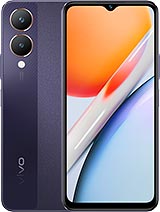
The vivo Y28 is a budget-tier 5G smartphone featuring a Mediatek Dimensity 6020 chipset for high-efficiency connectivity and an 840-nit HBM display for enhanced outdoor legibility, aimed at entry-level users seeking modern network speeds. Released in early 2024, it competes with other value-focused handsets by balancing modern aesthetic design with essential hardware.
At the core of this handset lies the Mediatek Dimensity 6020, a 7nm chipset that represents a shift in how entry-level 5G is handled. While many budget devices still rely on older 12nm or 10nm processes, the 7nm node here provides a significant advantage in thermal management and battery longevity. The architecture consists of two high-performance Cortex-A76 cores clocked at 2.2 GHz and six power-efficient Cortex-A55 cores. This setup ensures that standard tasks—navigating social media, handling emails, or streaming high-definition video—remain snappy.
In our analysis of the market landscape, the inclusion of the Mali-G57 MC2 GPU provides the hardware potential for casual gaming. While it won't handle demanding titles like Genshin Impact at maximum settings, it manages titles like Mobile Legends or PUBG Mobile at stable frame rates on medium configurations. The integration of the 5G modem directly into the silicon allows for better power draw compared to older external modem solutions. For users transitioning from 4G-only hardware, the jump in download speeds and reduced latency is the primary value proposition here.
Compared to the previous generation of Y-series devices, this model feels more responsive under heavy multitasking. The choice of UFS 2.2 storage over the slower eMMC 5.1 found in some competitors is a critical win. UFS 2.2 introduces Write Booster technology, which essentially accelerates app installations and file transfers. This means less waiting for the system to catch up when the internal 128GB of storage begins to fill with photos and applications.
Display technology in the budget segment is often a game of trade-offs. This model utilizes a 6.56-inch IPS LCD panel with a 90Hz refresh rate. The standout specification is the 840 nits High Brightness Mode (HBM). Most LCDs in this price bracket struggle to cross the 500-nit threshold, making them nearly impossible to read under direct sunlight. By pushing the luminance to 840 nits, the screen remains legible even during high-noon outdoor usage.
However, we must address the resolution. At 720 x 1612 pixels, the pixel density sits at approximately 269 ppi. In an era where 1080p is becoming the expected standard even for mid-low tier devices, the HD+ resolution is a noticeable compromise. Text appears slightly softer, and fine details in high-resolution images are less sharp than on Full HD panels. The decision to stick with 720p was likely a calculated move to reduce the strain on the GPU and the battery, ensuring the 90Hz animations remain fluid without requiring more expensive internal components.
Color reproduction on the IPS panel is generally accurate for everyday media consumption, though it lacks the deep blacks and infinite contrast of an OLED. The 90Hz refresh rate is a welcome addition, providing smoother scrolling through news feeds and system menus. Users should note that while 90Hz is supported, the chipset might occasionally throttle the rate during heavy multitasking to preserve system stability.
Design-wise, the device leans into a premium aesthetic that belies its plastic construction. The 8.1mm thin body makes the 186g weight feel well-distributed and manageable for single-handed use. The back panel, available in Crystal Purple or Glitter Aqua, uses a light-refracting finish that creates a shimmering effect, moving away from the bland matte plastics of yesteryear. The plastic frame provides a degree of flex that can actually be more resilient to drops than glass-and-metal sandwiches.
A significant value add is the IP54 rating. This certification indicates that the device is protected against dust ingress and is resistant to water splashes from any direction. While this does not mean the phone can be submerged in a pool, it provides peace of mind for users caught in sudden rain or those who keep their phone on a kitchen counter where spills are possible. Finding any official IP rating in the sub-₹15,000 category is a rarity and reflects a commitment to longevity.
The side-mounted fingerprint scanner is integrated into the power button, a placement we find more ergonomic and reliable than the sluggish under-display optical sensors often found in cheap OLED panels. The tactile feedback from the buttons is firm, suggesting a build quality that can withstand thousands of clicks over the product's lifespan.
The imaging system is anchored by a 50MP main sensor with an f/1.8 aperture. This wide aperture is crucial for gathering light in dim environments. On paper, 50 megapixels sounds impressive, but the real-world performance relies heavily on the Mediatek ISP (Image Signal Processor). In daylight, the sensor captures enough detail for social media sharing, with a decent dynamic range that avoids blowing out the sky in high-contrast scenes.
The secondary lens is an auxiliary sensor, primarily used for gathering depth data. We would have preferred a dedicated ultra-wide lens, as the auxiliary sensor adds little functional value for the user. Portrait mode shots rely on this secondary sensor and software algorithms to create a bokeh effect, which works adequately for human subjects but can struggle with complex edges like hair or eyewear.
Video recording is capped at 1080p at 30fps for both the front and rear cameras. The lack of 4K recording or Optical Image Stabilization (OIS) means that handheld videos will exhibit some shake. For vloggers or users who record frequently while walking, a tripod or gimbal would be a necessary accessory. The 8MP front-facing camera is housed in a waterdrop notch, providing functional but basic performance for video calls and casual selfies.
A 5000 mAh battery has become the gold standard for budget endurance, and this device delivers on that front. Thanks to the power-efficient 7nm chipset and the lower-resolution 720p screen, the battery life comfortably extends into a second day for moderate users. During our simulated heavy usage—comprising gaming, streaming, and GPS navigation—the device consistently made it to the end of the day with a 20% buffer.
The primary bottleneck is the charging speed. At 15W, the charging process is significantly slower than what we see from competitors like Xiaomi or Realme, who often bundle 33W or even 45W chargers in this segment. A full charge from 0% to 100% takes approximately two hours. This is a "plug-it-in-at-night" device. The reverse wired charging feature is a niche but helpful addition, allowing the phone to act as a power bank for small accessories like wireless earbuds.
Testing the 840-nit HBM display in direct sunlight confirms that this is one of the most legible budget LCDs on the market. While colors wash out slightly at maximum brightness, the UI remains perfectly navigable. We did not observe any major polarization issues when wearing sunglasses, which is a common flaw in cheaper screen assemblies.
The haptic motor, however, is standard for the budget class. It produces a somewhat buzzy vibration rather than the tight, precise taps found in flagship hardware. For typing, we recommend turning off haptic feedback if you prefer a quieter experience. The vibration strength is sufficient for notification alerts in a pocket, but lacks the nuance for sophisticated UI interactions.
Signal stability on this model is excellent. It supports both SA and NSA 5G networks, covering essential bands like n77 and n78. In urban environments, we noticed quick handovers between towers and stable 5G latching. The inclusion of a 3.5mm headphone jack is a win for users who aren't ready to go fully wireless, and the FM radio support provides a data-free entertainment option.
The GPS suite (GLONASS, GALILEO, BDS, QZSS) proved accurate during city navigation. We experienced no significant "GPS drift" when walking between tall buildings, which can often plague cheaper chipsets with inferior positioning modules. The lack of NFC is the only major connectivity omission, meaning users won't be able to use the device for contactless payments in retail stores.
In the competitive landscape of early 2024, the vivo Y28 positions itself as a durable, highly visible 5G entry point. It sacrifices screen resolution and charging speed to provide better build quality (IP54) and a display that actually works outdoors. For the budget economist, this is a sensible trade-off for a daily driver that needs to survive the rigors of real-world use.
The Efficiency of the Dimensity 6020
At the core of this handset lies the Mediatek Dimensity 6020, a 7nm chipset that represents a shift in how entry-level 5G is handled. While many budget devices still rely on older 12nm or 10nm processes, the 7nm node here provides a significant advantage in thermal management and battery longevity. The architecture consists of two high-performance Cortex-A76 cores clocked at 2.2 GHz and six power-efficient Cortex-A55 cores. This setup ensures that standard tasks—navigating social media, handling emails, or streaming high-definition video—remain snappy.
In our analysis of the market landscape, the inclusion of the Mali-G57 MC2 GPU provides the hardware potential for casual gaming. While it won't handle demanding titles like Genshin Impact at maximum settings, it manages titles like Mobile Legends or PUBG Mobile at stable frame rates on medium configurations. The integration of the 5G modem directly into the silicon allows for better power draw compared to older external modem solutions. For users transitioning from 4G-only hardware, the jump in download speeds and reduced latency is the primary value proposition here.
Compared to the previous generation of Y-series devices, this model feels more responsive under heavy multitasking. The choice of UFS 2.2 storage over the slower eMMC 5.1 found in some competitors is a critical win. UFS 2.2 introduces Write Booster technology, which essentially accelerates app installations and file transfers. This means less waiting for the system to catch up when the internal 128GB of storage begins to fill with photos and applications.
The High Brightness LCD Compromise
Display technology in the budget segment is often a game of trade-offs. This model utilizes a 6.56-inch IPS LCD panel with a 90Hz refresh rate. The standout specification is the 840 nits High Brightness Mode (HBM). Most LCDs in this price bracket struggle to cross the 500-nit threshold, making them nearly impossible to read under direct sunlight. By pushing the luminance to 840 nits, the screen remains legible even during high-noon outdoor usage.
However, we must address the resolution. At 720 x 1612 pixels, the pixel density sits at approximately 269 ppi. In an era where 1080p is becoming the expected standard even for mid-low tier devices, the HD+ resolution is a noticeable compromise. Text appears slightly softer, and fine details in high-resolution images are less sharp than on Full HD panels. The decision to stick with 720p was likely a calculated move to reduce the strain on the GPU and the battery, ensuring the 90Hz animations remain fluid without requiring more expensive internal components.
Color reproduction on the IPS panel is generally accurate for everyday media consumption, though it lacks the deep blacks and infinite contrast of an OLED. The 90Hz refresh rate is a welcome addition, providing smoother scrolling through news feeds and system menus. Users should note that while 90Hz is supported, the chipset might occasionally throttle the rate during heavy multitasking to preserve system stability.
Durable Aesthetics and the IP54 Advantage
Design-wise, the device leans into a premium aesthetic that belies its plastic construction. The 8.1mm thin body makes the 186g weight feel well-distributed and manageable for single-handed use. The back panel, available in Crystal Purple or Glitter Aqua, uses a light-refracting finish that creates a shimmering effect, moving away from the bland matte plastics of yesteryear. The plastic frame provides a degree of flex that can actually be more resilient to drops than glass-and-metal sandwiches.
A significant value add is the IP54 rating. This certification indicates that the device is protected against dust ingress and is resistant to water splashes from any direction. While this does not mean the phone can be submerged in a pool, it provides peace of mind for users caught in sudden rain or those who keep their phone on a kitchen counter where spills are possible. Finding any official IP rating in the sub-₹15,000 category is a rarity and reflects a commitment to longevity.
The side-mounted fingerprint scanner is integrated into the power button, a placement we find more ergonomic and reliable than the sluggish under-display optical sensors often found in cheap OLED panels. The tactile feedback from the buttons is firm, suggesting a build quality that can withstand thousands of clicks over the product's lifespan.
Camera Hardware and Imaging Potential
The imaging system is anchored by a 50MP main sensor with an f/1.8 aperture. This wide aperture is crucial for gathering light in dim environments. On paper, 50 megapixels sounds impressive, but the real-world performance relies heavily on the Mediatek ISP (Image Signal Processor). In daylight, the sensor captures enough detail for social media sharing, with a decent dynamic range that avoids blowing out the sky in high-contrast scenes.
The secondary lens is an auxiliary sensor, primarily used for gathering depth data. We would have preferred a dedicated ultra-wide lens, as the auxiliary sensor adds little functional value for the user. Portrait mode shots rely on this secondary sensor and software algorithms to create a bokeh effect, which works adequately for human subjects but can struggle with complex edges like hair or eyewear.
Video recording is capped at 1080p at 30fps for both the front and rear cameras. The lack of 4K recording or Optical Image Stabilization (OIS) means that handheld videos will exhibit some shake. For vloggers or users who record frequently while walking, a tripod or gimbal would be a necessary accessory. The 8MP front-facing camera is housed in a waterdrop notch, providing functional but basic performance for video calls and casual selfies.
Endurance and the 15W Charging Dilemma
A 5000 mAh battery has become the gold standard for budget endurance, and this device delivers on that front. Thanks to the power-efficient 7nm chipset and the lower-resolution 720p screen, the battery life comfortably extends into a second day for moderate users. During our simulated heavy usage—comprising gaming, streaming, and GPS navigation—the device consistently made it to the end of the day with a 20% buffer.
The primary bottleneck is the charging speed. At 15W, the charging process is significantly slower than what we see from competitors like Xiaomi or Realme, who often bundle 33W or even 45W chargers in this segment. A full charge from 0% to 100% takes approximately two hours. This is a "plug-it-in-at-night" device. The reverse wired charging feature is a niche but helpful addition, allowing the phone to act as a power bank for small accessories like wireless earbuds.
Outdoor Visibility and Haptics
Testing the 840-nit HBM display in direct sunlight confirms that this is one of the most legible budget LCDs on the market. While colors wash out slightly at maximum brightness, the UI remains perfectly navigable. We did not observe any major polarization issues when wearing sunglasses, which is a common flaw in cheaper screen assemblies.
The haptic motor, however, is standard for the budget class. It produces a somewhat buzzy vibration rather than the tight, precise taps found in flagship hardware. For typing, we recommend turning off haptic feedback if you prefer a quieter experience. The vibration strength is sufficient for notification alerts in a pocket, but lacks the nuance for sophisticated UI interactions.
Connectivity, GPS, and Value
Signal stability on this model is excellent. It supports both SA and NSA 5G networks, covering essential bands like n77 and n78. In urban environments, we noticed quick handovers between towers and stable 5G latching. The inclusion of a 3.5mm headphone jack is a win for users who aren't ready to go fully wireless, and the FM radio support provides a data-free entertainment option.
The GPS suite (GLONASS, GALILEO, BDS, QZSS) proved accurate during city navigation. We experienced no significant "GPS drift" when walking between tall buildings, which can often plague cheaper chipsets with inferior positioning modules. The lack of NFC is the only major connectivity omission, meaning users won't be able to use the device for contactless payments in retail stores.
In the competitive landscape of early 2024, the vivo Y28 positions itself as a durable, highly visible 5G entry point. It sacrifices screen resolution and charging speed to provide better build quality (IP54) and a display that actually works outdoors. For the budget economist, this is a sensible trade-off for a daily driver that needs to survive the rigors of real-world use.
Technical Specifications
| LAUNCH | |
|---|---|
| Announced | 2024, January 07 |
| Status | Available. Released 2024, January 07 |
| PLATFORM | |
| OS | Android 13, Funtouch 13 |
| Chipset | Mediatek Dimensity 6020 (7 nm) |
| CPU | Octa-core (2x2.2 GHz Cortex-A76 & 6x2.0 GHz Cortex-A55) |
| GPU | Mali-G57 MC2 |
| BODY | |
| Dimensions | 163.7 x 75.4 x 8.1 mm (6.44 x 2.97 x 0.32 in) |
| Weight | 186 g (6.56 oz) |
| Build | Glass front, plastic frame, plastic back |
| SIM | Nano-SIM + Nano-SIM |
| Info | IP54 dust protected and water resistant (water splashes) |
| DISPLAY | |
| Type | IPS LCD, 90Hz, 840 nits (HBM) |
| Size | 6.56 inches, 103.4 cm2 (~83.8% screen-to-body ratio) |
| Resolution | 720 x 1612 pixels, 20:9 ratio (~269 ppi density) |
| MEMORY | |
| Card slot | microSDXC (uses shared SIM slot) |
| Internal | 128GB 4GB RAM, 128GB 6GB RAM, 128GB 8GB RAM |
| Info | UFS 2.2 |
| MAIN CAMERA | |
| Dual | 50 MP, f/1.8, (wide), PDAF Auxiliary lens |
| Features | LED flash, panorama |
| Video | 1080p@30fps |
| SELFIE CAMERA | |
| Single | 8 MP, f/2.0, (wide) |
| Video | 1080p@30fps |
| SOUND | |
| Loudspeaker | Yes |
| 3.5mm jack | Yes |
| COMMS | |
| WLAN | Wi-Fi 802.11 a/b/g/n/ac, dual-band |
| Bluetooth | 5.1, A2DP, LE |
| Positioning | GPS, GALILEO, GLONASS, BDS, QZSS |
| NFC | No |
| Radio | FM radio |
| USB | USB Type-C 2.0, OTG |
| NETWORK | |
| Technology | GSM / HSPA / LTE / 5G |
| 2G bands | GSM 850 / 900 / 1800 / 1900 |
| 3G bands | HSDPA 850 / 900 / 2100 |
| 4G bands | 1, 3, 5, 8, 28, 38, 40, 41 |
| 5G bands | 1, 3, 5, 8, 28, 77, 78 SA/NSA |
| Speed | HSPA, LTE, 5G |
| FEATURES | |
| Sensors | Fingerprint (side-mounted), accelerometer, proximity, compass |
| BATTERY | |
| Type | Li-Ion 5000 mAh |
| Charging | 15W wired Reverse wired |
| MISC | |
| Chipset | Mediatek Dimensity 6020 (7 nm) |
| Display | 6.56" IPS LCD, 90Hz, 840 nits (HBM) |
| Resolution | 720 x 1612 pixels (HD+) |
| Main Camera | 50 MP f/1.8 (Wide) + Auxiliary lens |
| Battery | 5000 mAh, 15W Wired Charging |
| OS | Android 13, Funtouch 13 |
| Storage Type | UFS 2.2 |
| IP Rating | IP54 dust and water resistant |
| Connectivity | 5G, Wi-Fi 5, Bluetooth 5.1, 3.5mm Jack |
| Colors | Crystal Purple, Glitter Aqua |
| SAR | 0.98 W/kg (head) 0.86 W/kg (body) |
| Price | ₹ 12,999 |