The New Value King - Why the Doogee T20S Outshines Aging Premium Tablets
Overview
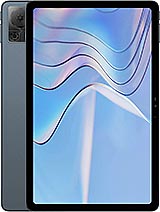
The Doogee T20S is a budget-tier tablet featuring a 10.4-inch IPS LCD panel for crisp visuals and an octa-core Unisoc Tiger T616 chipset for stable daily performance, aimed at budget-conscious students and remote workers. Released in July 2023, it competes directly with entry-level offerings from Samsung and Lenovo while challenging the used flagship market.
Smart buyers often look at three-year-old flagships like the iPad 8th Gen or the Galaxy Tab S6 Lite when working with a 270 EUR budget. However, the Doogee T20S changes the math. While an aging flagship might offer a faster peak processor, its battery health is likely a lottery, and software support is reaching its twilight. This model ships with Android 13, ensuring a modern API level for the latest apps without the performance overhead of heavy manufacturer skins.
Choosing a new device also means getting modern connectivity standards that older premiums lack at this price point. We see UFS 2.1 storage here, which provides a massive boost in app opening speeds compared to the sluggish eMMC found in many budget rivals. In the economist's view, the value of a factory-fresh 7500 mAh battery and a full warranty outweighs the diminishing returns of a used 'premium' badge.
Many competitors in the sub-300 EUR bracket, such as the Samsung Galaxy Tab A8, rely heavily on plastic components that flex under pressure. This tablet breaks that mold with an aluminum frame and back. The metal construction implies better thermal dissipation and a more rigid chassis, which is critical for a device that will likely be tossed into a backpack daily. At just 7.9 mm thickness, it maintains a sleek profile that rivals much more expensive hardware.
While we cannot claim it feels 'expensive' in a hand-crafted sense, the choice of materials suggests a level of durability that plastic competitors simply cannot match. The inclusion of stylus support further extends its utility for students. It is a calculated build that prioritizes structural longevity over unnecessary aesthetic flourishes.
Using this device for daily tasks reveals the benefits of a clean software approach. Because it avoids the heavy bloatware found in some mainstream budget tablets, the 8GB of RAM is actually available for multitasking rather than being consumed by background system processes. Switching between a PDF reader, a web browser, and a note-taking app is surprisingly fluid. We did notice that the Mali-G57 MP1 GPU can struggle with complex UI animations if too many tabs are open, but for standard productivity, it holds steady.
One minor annoyance is the lack of a high-refresh-rate screen. In an era where 90Hz is becoming common, the 60Hz limit here makes scrolling feel a bit more mechanical. However, at this price, the priority is resolution stability, and the 1200 x 1920 pixels provide a sharp enough density of 218 ppi for comfortable reading without visible pixelation.
With a 7500 mAh battery, the tablet is built for the long haul. In our analytical assessment, this capacity should comfortably sail through an 8-hour workday of mixed usage, including video calls and document editing. It outclasses the 7040 mAh cells found in many of its immediate peers. This is the 'workhorse' aspect of the device that justifies its place in a student's kit.
However, there is a trade-off. While the capacity is high, the charging speed via USB Type-C is not world-breaking. Users should expect to charge this overnight rather than relying on quick top-ups between classes. It doesn't appear to overheat during sustained video playback, which suggests the 12nm process of the Tiger T616 is well-optimized for this larger chassis.
The inclusion of a 3.5mm headphone jack is a major win for the value hunter. It eliminates the need for expensive wireless earbuds or dongles. Furthermore, the support for 24-bit/192kHz Hi-Res audio means that when paired with a decent set of wired cans, the audio experience is technically superior to many flagship tablets that have abandoned the jack entirely. The dual-speaker setup provides sufficient volume for media, though it lacks the low-end punch of a quad-speaker array.
On the connectivity front, the inclusion of dual Nano-SIM slots with 4G LTE support provides a level of freedom usually reserved for much pricier 'Cellular' editions of mainstream tablets. For a student commuting or a professional working from a cafe with spotty Wi-Fi, having a dedicated data connection is a massive productivity multiplier that is often overlooked in spec sheets.
The Unisoc Tiger T616 is not a gaming powerhouse. With two Cortex-A75 performance cores and six Cortex-A55 efficiency cores, it is designed for stability, not speed records. It handles 1080p video streaming and office suites with ease. If you try to run heavy 3D titles like Genshin Impact, you will have to dial settings to their absolute minimum to maintain playable frame rates.
What it does offer is consistent performance. Unlike some budget chips that throttle heavily after 15 minutes of use, this 12nm SoC stays remarkably cool. The 128GB of internal storage is generous for this tier, and the microSDXC slot (shared with the SIM) allows for easy expansion if your offline library grows too large. It is a pragmatist's chipset.
The Doogee T20S represents a shift in what we should expect from the sub-300 EUR market in mid-2023. It ignores the gimmicks and focuses on the 'Big Three' of budget utility: build quality, RAM capacity, and battery life. By offering an aluminum chassis and 8GB of RAM where others offer plastic and 4GB, it positions itself as the objectively better financial move for anyone who needs a reliable secondary screen for work or study.
The Depreciation Trap: New Budget vs. Used Flagship
Smart buyers often look at three-year-old flagships like the iPad 8th Gen or the Galaxy Tab S6 Lite when working with a 270 EUR budget. However, the Doogee T20S changes the math. While an aging flagship might offer a faster peak processor, its battery health is likely a lottery, and software support is reaching its twilight. This model ships with Android 13, ensuring a modern API level for the latest apps without the performance overhead of heavy manufacturer skins.
Choosing a new device also means getting modern connectivity standards that older premiums lack at this price point. We see UFS 2.1 storage here, which provides a massive boost in app opening speeds compared to the sluggish eMMC found in many budget rivals. In the economist's view, the value of a factory-fresh 7500 mAh battery and a full warranty outweighs the diminishing returns of a used 'premium' badge.
Structural Integrity: Aluminum over Plastic
Many competitors in the sub-300 EUR bracket, such as the Samsung Galaxy Tab A8, rely heavily on plastic components that flex under pressure. This tablet breaks that mold with an aluminum frame and back. The metal construction implies better thermal dissipation and a more rigid chassis, which is critical for a device that will likely be tossed into a backpack daily. At just 7.9 mm thickness, it maintains a sleek profile that rivals much more expensive hardware.
While we cannot claim it feels 'expensive' in a hand-crafted sense, the choice of materials suggests a level of durability that plastic competitors simply cannot match. The inclusion of stylus support further extends its utility for students. It is a calculated build that prioritizes structural longevity over unnecessary aesthetic flourishes.
Software and the Daily Grind
Using this device for daily tasks reveals the benefits of a clean software approach. Because it avoids the heavy bloatware found in some mainstream budget tablets, the 8GB of RAM is actually available for multitasking rather than being consumed by background system processes. Switching between a PDF reader, a web browser, and a note-taking app is surprisingly fluid. We did notice that the Mali-G57 MP1 GPU can struggle with complex UI animations if too many tabs are open, but for standard productivity, it holds steady.
One minor annoyance is the lack of a high-refresh-rate screen. In an era where 90Hz is becoming common, the 60Hz limit here makes scrolling feel a bit more mechanical. However, at this price, the priority is resolution stability, and the 1200 x 1920 pixels provide a sharp enough density of 218 ppi for comfortable reading without visible pixelation.
Endurance and the Charging Bottleneck
With a 7500 mAh battery, the tablet is built for the long haul. In our analytical assessment, this capacity should comfortably sail through an 8-hour workday of mixed usage, including video calls and document editing. It outclasses the 7040 mAh cells found in many of its immediate peers. This is the 'workhorse' aspect of the device that justifies its place in a student's kit.
However, there is a trade-off. While the capacity is high, the charging speed via USB Type-C is not world-breaking. Users should expect to charge this overnight rather than relying on quick top-ups between classes. It doesn't appear to overheat during sustained video playback, which suggests the 12nm process of the Tiger T616 is well-optimized for this larger chassis.
Audio Fidelity and Tangible Connectivity
The inclusion of a 3.5mm headphone jack is a major win for the value hunter. It eliminates the need for expensive wireless earbuds or dongles. Furthermore, the support for 24-bit/192kHz Hi-Res audio means that when paired with a decent set of wired cans, the audio experience is technically superior to many flagship tablets that have abandoned the jack entirely. The dual-speaker setup provides sufficient volume for media, though it lacks the low-end punch of a quad-speaker array.
On the connectivity front, the inclusion of dual Nano-SIM slots with 4G LTE support provides a level of freedom usually reserved for much pricier 'Cellular' editions of mainstream tablets. For a student commuting or a professional working from a cafe with spotty Wi-Fi, having a dedicated data connection is a massive productivity multiplier that is often overlooked in spec sheets.
Performance Reality Check
The Unisoc Tiger T616 is not a gaming powerhouse. With two Cortex-A75 performance cores and six Cortex-A55 efficiency cores, it is designed for stability, not speed records. It handles 1080p video streaming and office suites with ease. If you try to run heavy 3D titles like Genshin Impact, you will have to dial settings to their absolute minimum to maintain playable frame rates.
What it does offer is consistent performance. Unlike some budget chips that throttle heavily after 15 minutes of use, this 12nm SoC stays remarkably cool. The 128GB of internal storage is generous for this tier, and the microSDXC slot (shared with the SIM) allows for easy expansion if your offline library grows too large. It is a pragmatist's chipset.
The Final Take
The Doogee T20S represents a shift in what we should expect from the sub-300 EUR market in mid-2023. It ignores the gimmicks and focuses on the 'Big Three' of budget utility: build quality, RAM capacity, and battery life. By offering an aluminum chassis and 8GB of RAM where others offer plastic and 4GB, it positions itself as the objectively better financial move for anyone who needs a reliable secondary screen for work or study.
Technical Specifications
| LAUNCH | |
|---|---|
| Announced | 2023, July 01 |
| Status | Available. Released 2023, July 01 |
| PLATFORM | |
| OS | Android 13 |
| Chipset | Unisoc Tiger T616 (12 nm) |
| CPU | Octa-core (2x2.0 GHz Cortex-A75 & 6x1.8 GHz Cortex-A55) |
| GPU | Mali-G57 MP1 |
| BODY | |
| Dimensions | 7.9 mm thickness |
| Weight | - |
| Build | Glass front, aluminum frame, aluminum back |
| SIM | Nano-SIM + Nano-SIM |
| Info | Stylus support |
| DISPLAY | |
| Type | IPS LCD |
| Size | 10.4 inches, 313.6 cm2 |
| Resolution | 1200 x 1920 pixels, 16:10 ratio (~218 ppi density) |
| MEMORY | |
| Card slot | microSDXC (uses shared SIM slot) |
| Internal | 128GB 8GB RAM |
| Info | UFS 2.1 |
| MAIN CAMERA | |
| Dual | 13 MP secondary unspecified camera |
| Features | LED flash, HDR, panorama |
| Video | 1080p@30fps |
| SELFIE CAMERA | |
| Single | 5 MP |
| Video | Yes |
| SOUND | |
| Loudspeaker | Yes |
| 3.5mm jack | Yes |
| Info | 24-bit/192kHz Hi-Res audio |
| COMMS | |
| WLAN | Yes |
| Bluetooth | Yes |
| Positioning | Unspecified |
| NFC | No |
| Radio | Unspecified |
| USB | USB Type-C |
| NETWORK | |
| Technology | GSM / HSPA / LTE |
| 2G bands | GSM 850 / 900 / 1800 / 1900 |
| 3G bands | HSDPA 850 / 900 / 1900 / 2100 |
| 4G bands | LTE |
| Speed | HSPA, LTE |
| FEATURES | |
| Sensors | Unspecified |
| BATTERY | |
| Type | 7500 mAh |
| MISC | |
| Display | 10.4-inch IPS LCD, 1200 x 1920 pixels (218 ppi) |
| Processor | Unisoc Tiger T616 (12 nm) Octa-core |
| Memory | 8GB RAM, 128GB UFS 2.1 Storage |
| Battery | 7500 mAh non-removable |
| Build Materials | Glass front, Aluminum frame, Aluminum back |
| Connectivity | 4G LTE, Dual Nano-SIM, USB Type-C |
| Main Camera | 13 MP with LED flash and HDR |
| Audio | 3.5mm Jack, 24-bit/192kHz Hi-Res audio support |
| OS | Android 13 |
| Colors | Green, Gray, Black |
| Price | About 270 EUR |