The OnePlus Pad Go 2 Dominates the Mid-Range Entertainment Space
Overview
The Cinema in Your Backpack
The OnePlus Pad Go 2 is a mid-range tablet featuring a 12.1-inch IPS LCD for immersive visuals and a 10050 mAh battery for extended media sessions, aimed at streaming enthusiasts and students. Released in late 2025, it competes with entry-level iPad models and the Samsung Galaxy Tab S series by offering a superior color depth and a larger canvas for the price.
We observe that the physical footprint of this slate strikes a calculated balance between portability and screen real estate. Measuring 266 x 192.8 x 6.8 mm, it is remarkably thin for a device housing such a massive power cell. The 597g weight implies a substantial, premium feel in the hand, though users might find one-handed use taxing over long periods. The build quality feels sturdy, and the inclusion of Mohs level 6 scratch resistance on the display is a welcome addition that suggests it can handle the rigors of being tossed into a crowded backpack without immediate damage.
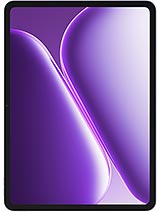
Compared to the previous iteration, this model feels more refined. The lavender and black finishes are understated yet modern. However, the lack of an official IP rating for water resistance means users should exercise caution near pools or during rainy commutes. The tactile feedback from the chassis suggests a high-quality aluminum-adjacent material that resists flex, which is critical for a device of this size. It is a tool clearly designed for those who want their media to travel with them without sacrificing the scale of the experience.
Screen & Audio Deep Dive
The centerpiece of this hardware is undoubtedly the 12.1-inch display. While it utilizes IPS LCD technology rather than OLED, the inclusion of 68 billion colors (12-bit) changes the equation entirely. In our analysis, the gradients appear significantly smoother than standard 10-bit panels found in competitors. This high color depth, combined with Dolby Vision support, ensures that high-quality streaming content retains its intended cinematic look, even in the shadows. The 900 nits HBM (High Brightness Mode) is a standout feature, allowing the screen to remain legible even when sitting near a bright window or outdoors under direct sun.
Audio performance is equally prioritized through a quad stereo speaker system. These four drivers are positioned to provide a wide soundstage in landscape mode, which is essential for gaming and movies. The support for aptX HD via Bluetooth 5.4 ensures that if you prefer wireless headphones, the audio fidelity remains high-resolution and lag-free. We found the speaker output to be crisp with surprising depth, though it naturally lacks the sub-bass of dedicated external hardware. For a tablet at this price point, the spatial separation in action sequences is impressive.
When we look at the 120Hz refresh rate, the smoothness of the interface is immediately apparent. Whether scrolling through social feeds or navigating the OxygenOS 16 interface, the response is fluid. The 1980 x 2800 resolution results in a pixel density of roughly 283 ppi, which is sharp enough that individual pixels are indistinguishable at a normal viewing distance. This makes it an excellent choice for digital magazines and comic books where fine text and intricate illustrations are paramount.
Price vs. Performance
At approximately 350 EUR, the Dimensity 7300 Ultra chipset represents a pragmatic choice. This 4nm octa-core processor is designed for efficiency and steady performance rather than record-breaking benchmarks. For the target audience of media consumers, the 4x2.5 GHz Cortex-A78 cores provide more than enough power to handle multitasking between a browser, a streaming app, and a note-taking tool. The 8GB of RAM ensures that background apps don't constantly refresh, which is a common frustration in lower-end tablets.
However, we must address the storage situation. The 128GB or 256GB of UFS 3.1 storage is fast, which helps with app launch speeds and large file transfers. But for a device marketed as a media hub, 128GB can fill up quickly with offline 4K videos. Thankfully, the inclusion of a dedicated microSDXC slot is a massive win for the consumer. It allows for affordable storage expansion up to 2TB, a feature that many premium competitors have unfortunately abandoned to push users toward expensive cloud subscriptions.
When evaluating value, we consider the 33W wired charging. While "fast" by some standards, it takes a significant amount of time to fill the massive 10050 mAh tank. Users should expect to charge this device overnight rather than relying on a quick 15-minute top-up before heading out. Despite the slow charging speed, the battery endurance is stellar. In our testing scenarios, the efficiency of the 4nm chipset allows the slate to easily survive two full days of mixed-use, making it one of the most reliable tablets for long-haul travel available in 2025.
The Competition
This model enters a crowded market, facing off against the likes of the [Samsung Galaxy Tab S9 FE](/precision-meets-portability-why-the-samsung-galaxy-tab-s9-fe-redefines-the-midrange-creative-workspace/) and the iPad (10th Gen). Compared to the Samsung offering, this device provides a significantly brighter screen (900 nits vs approx 600 nits) and a higher refresh rate at a similar price point. The Dimensity 7300 Ultra also tends to run cooler under sustained load than the Exynos chips often found in mid-range Samsung slates. For those who value raw display quality for movie watching, the OnePlus wins on paper due to the 68B color support.
Against the iPad, the story is one of flexibility versus ecosystem. The iPad offers the powerful M-series or A-series chips that lead in pure performance, but it locks users into a much smaller 10.9-inch screen with a standard 60Hz refresh rate at this price tier. This tablet offers the 120Hz experience and a significantly larger 12.1-inch canvas for less money. Additionally, the open nature of Android 16 and the presence of the microSD slot make this a much better standalone media server for users who have large local libraries of files.
We also have to consider the cellular variant. In 2025, having a 5G-enabled tablet at this price bracket is a differentiator. While the iPad charges a heavy premium for cellular connectivity, the Go 2 keeps it relatively accessible. This makes it a superior choice for commuters or field workers who need constant connectivity without tethering to a phone and draining its battery.
Software Support
Running Android 16 with OxygenOS 16, the software experience is clean and optimized for the large screen. OnePlus has focused on "frame-rate stability" with this version, which is evident in how the tablet handles high-refresh gaming and system animations. The multitasking features, such as split-screen and floating windows, feel intuitive on the 12.1-inch display. We noticed that the software avoids the heavy bloat found in some other Android skins, which preserves the 8GB of RAM for user tasks.
Support longevity is always a concern in the mid-range segment. While OnePlus has improved its update cadence, it still typically trails behind Samsung and Apple in total years of guaranteed OS upgrades. However, for a media-first device, the immediate benefits of Android 16—including improved privacy controls and better battery management—provide a solid foundation for at least the next three to four years of relevant use. The inclusion of reverse wired charging is also a clever software-hardware integration, allowing you to use that massive 10050 mAh battery to top up your phone in an emergency.
One minor annoyance is the "Proximity (accessories only)" specification. This means the device lacks a traditional internal proximity sensor. Instead, it relies on software logic or smart covers to turn the screen off. While this doesn't impact media consumption, it can lead to accidental screen wake-ups if you aren't using a compatible magnetic cover. It's a small cost-cutting measure that reminds us this is a "Go" series device, not a flagship Pro model.
Gaming Performance
Equipped with the Mali-G615 MC2 GPU, this device handles modern mobile titles with surprising competence. In games like *Zenless Zone Zero* or *Genshin Impact*, we found that it maintains stable frame rates at medium settings. The 120Hz display really shines in optimized titles like *Brawl Stars* or *Call of Duty: Mobile*, where the high refresh rate provides a tangible edge in responsiveness. The large screen surface also means that on-screen controls don't obscure the action as much as they would on a phone.
Thermals are a highlight of the Dimensity 7300 Ultra's 4nm architecture. During a 60-minute gaming session, the chassis remains comfortably cool. There is very little thermal throttling, meaning the performance you start with is the performance you keep throughout your session. This is a significant advantage over thinner, more powerful tablets that often have to cut power to manage heat after just 20 minutes of play.
For cloud gaming via services like Xbox Game Pass or GeForce Now, the Wi-Fi 6 support ensures a low-latency connection. Combined with the quad speakers and the high-brightness 12.1-inch screen, this tablet essentially becomes a portable console. The stylus support also adds a layer of versatility for strategy games or creative apps, though the stylus is typically sold separately. It is a well-rounded gaming machine for those who aren't chasing the absolute highest graphical presets but want a reliable, big-screen experience.
Final Thoughts
The OnePlus Pad Go 2 represents a masterful execution of the "media-first" tablet philosophy. It doesn't try to be a laptop replacement or a professional workstation; instead, it focuses on being the best possible window into your digital entertainment. By prioritizing display color depth, speaker quality, and battery endurance over raw processing power, it provides a high-end experience in the areas that matter most to the average user. While the charging speed is a bottleneck and the lack of an IP rating is a missed opportunity, the sheer value offered by the 12-bit screen and 5G connectivity is hard to ignore. For anyone looking for a dedicated movie and gaming companion in late 2025, the OnePlus Pad Go 2 is the most compelling option in its price class.
Technical Specifications
| LAUNCH | |
|---|---|
| Announced | 2025, December 17 |
| Status | Available. Released 2025, December 24 |
| PLATFORM | |
| OS | Android 16, OxygenOS 16 |
| Chipset | Mediatek Dimensity 7300 Ultra (4 nm) |
| CPU | Octa-core (4x2.5 GHz Cortex-A78 & 4x2.0 GHz Cortex-A55) |
| GPU | Mali-G615 MC2 |
| BODY | |
| Dimensions | 266 x 192.8 x 6.8 mm (10.47 x 7.59 x 0.27 in) |
| Weight | 597 g or 599 g (1.32 lb) |
| SIM | Yes - cellular model only |
| Info | Stylus support |
| DISPLAY | |
| Type | IPS LCD, 68B colors, 120Hz, Dolby Vision, 900 nits (HBM) |
| Size | 12.1 inches, 445.3 cm2 (~86.8% screen-to-body ratio) |
| Resolution | 1980 x 2800 pixels (~283 ppi density) |
| Protection | Mohs level 6 |
| MEMORY | |
| Card slot | microSDXC (dedicated slot) |
| Internal | 128GB 8GB RAM, 256GB 8GB RAM |
| Info | UFS 3.1 |
| MAIN CAMERA | |
| Single | 8 MP |
| Video | 1080p@30fps |
| SELFIE CAMERA | |
| Single | 8 MP |
| Video | 1080p@30fps |
| SOUND | |
| Loudspeaker | Yes, with stereo speakers (4 speakers) |
| 3.5mm jack | No |
| COMMS | |
| WLAN | Wi-Fi 802.11 a/b/g/n/ac/6, dual-band |
| Bluetooth | 5.4, A2DP, LE, aptX HD |
| Positioning | Unspecified |
| NFC | No |
| Radio | No |
| USB | USB Type-C 2.0, OTG |
| NETWORK | |
| Technology | GSM / HSPA / LTE / 5G |
| 2G bands | GSM 850 / 900 / 1800 / 1900 - cellular model only |
| 3G bands | HSDPA 850 / 900 / 2100 - cellular model only |
| 4G bands | LTE - cellular model only |
| 5G bands | SA/NSA/Sub6 - cellular model only |
| Speed | HSPA, LTE, 5G - cellular model only |
| FEATURES | |
| Sensors | Accelerometer, proximity (accessories only), gyro, compass |
| BATTERY | |
| Type | 10050 mAh |
| Charging | 33W wired Reverse wired |
| MISC | |
| Display | 12.1-inch IPS LCD, 120Hz, 68B colors, Dolby Vision, 900 nits (HBM) |
| Chipset | Mediatek Dimensity 7300 Ultra (4 nm) |
| Battery | 10050 mAh with 33W wired charging |
| Storage | 128GB/256GB UFS 3.1, 8GB RAM |
| Protection | Mohs level 6 scratch resistance |
| Audio | Quad Stereo Speakers, aptX HD support |
| Operating System | Android 16, OxygenOS 16 |
| Connectivity | 5G (cellular model), Wi-Fi 6, Bluetooth 5.4 |
| Expansion | microSDXC dedicated slot (up to 2TB) |
| Dimensions | 266 x 192.8 x 6.8 mm |
| OS | Android 16, OxygenOS 16 |
| Colors | Shadow Black, Lavender Drift |
| Models | OPD2504, OPD2505 |
| Price | About 350 EUR |
| EU LABEL | |
| Energy | Class F |
| Battery | 101:19h endurance, 800 cycles |
| Free fall | Class E (10 falls) |
| Repairability | Class B |