The OnePlus Watch 2 Is the Wearable Redemption Story We Needed
Overview
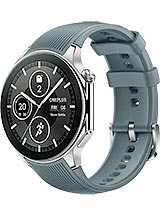
The OnePlus Watch 2 is a premium smartwatch featuring Dual-Engine Architecture (Snapdragon W5 Gen 1 + BES2700) for unmatched battery efficiency and Wear OS 4 for a complete app ecosystem, aimed at Android users seeking endurance without compromising on smart functionality. Released in early 2024, it competes directly with the Samsung Galaxy Watch 6 and the [Google Pixel Watch 2](/the-google-pixel-watch-2-finally-delivers-the-precision-athletes-deserve/), providing a distinct alternative centered on longevity and robust hardware.
After a lackluster first attempt in the wearable market, this successor makes a bold statement. We see a clear shift in engineering philosophy, moving away from a basic fitness tracker disguised as a watch and toward a legitimate powerhouse. The dual-chip system is not just a gimmick; it is a fundamental solution to the Wear OS battery drain problem. By offloading low-power tasks to an auxiliary chipset, the wearable manages to remain responsive while stretching its runtime far beyond the industry standard for full-featured smartwatches.
Adopting a 46.6mm diameter, this model is undeniably large. The stainless steel frame and Sapphire crystal front provide a substantial presence on the wrist. Weighing 49g without the strap, the device commands attention. We find the build quality exceptional for the price, utilizing materials typically reserved for luxury timepieces. The polished steel catches light beautifully, especially in the Radiant Steel colorway, though the Black Steel variant offers a more stealthy, professional aesthetic.
Comfort is subjective on a device this large, but the inclusion of standard 22mm strap compatibility is a major win for customization. While the stock fluoroelastomer strap is durable, users with smaller wrists might find the lug-to-lug distance challenging. The plastic back, while less premium than the sapphire front, keeps the weight manageable for long-term wear. During a typical workday, it remains unobtrusive, but the thickness (12.1mm) might snag on tighter shirt cuffs.
Compared to the original model, this is a night-and-day transformation. The previous iteration felt like a placeholder; this feels like a refined tool. The hardware design aligns with the flagship design language seen in the [OnePlus 12](/the-mobile-gaming-powerhouse-why-the-oneplus-12-shreds-the-competition/), creating a cohesive ecosystem for brand loyalists. The integration of MIL-STD-810H compliance means this isn't just for show; it is built to survive shock, vibration, and extreme temperatures, making it a viable companion for outdoor adventurers.
Health tracking is anchored by the dual-frequency GPS (L1+L5), a feature often omitted in this price tier. By receiving signals from two different satellite bands, the device significantly reduces multipath interference. Imagine running through a dense city with tall buildings or under heavy tree cover; while standard GPS might lose your path, this system maintains high precision. It is a critical upgrade for serious runners who demand accurate pace and distance metrics.
Sensor accuracy remains high across the board. The optical heart rate sensor and SpO2 monitor provide continuous tracking during sleep, which the software then processes into a comprehensive "Sleep Score." We noticed that the device handles the transition between active and resting states smoothly, though the bulk of the 47mm case might be a deterrent for those who find wearing large watches to bed uncomfortable. The inclusion of a barometer also adds verticality to your workouts, accurately tracking elevation gain during hikes.
Unlike more basic trackers, the integration with the OHealth app is streamlined. It avoids the cluttered interface of competitors, focusing on actionable data. However, it is worth noting that while it tracks a plethora of activities, it lacks some of the deep physiological insights found in dedicated sports watches from Garmin. It strikes a balance between being a lifestyle tool and a fitness assistant, though it clearly leans toward the former for general wellness monitoring.
The 1.43-inch AMOLED panel is the centerpiece of the user experience. With a resolution of 466 x 466 pixels, text is remarkably sharp, achieving a density of approximately 326 ppi. Outdoor visibility is excellent thanks to the 1000 nits High Brightness Mode (HBM). Even under direct midday sunlight, we found the interface legible, which is a testament to the quality of the panel choice. The Sapphire crystal protection not only prevents scratches but also reduces glare compared to standard glass.
Audio performance is surprisingly capable for a wearable. The onboard loudspeaker is loud and clear for system notifications and taking calls in quiet environments. While we wouldn't describe it as a "pocket cinema," the audio separation during voice calls is distinct enough to prevent the muffled sound common in cheaper alternatives. It lacks the deep bass required for music, but for quick voice notes or guided workout prompts, it performs admirably.
Display responsiveness is a highlight of the dual-engine setup. Animations at 60Hz are fluid, and the transition between the low-power RTOS and the high-performance Wear OS 4 is nearly invisible to the end-user. We did not observe the stuttering or lag that often plagues Android watches when navigating through heavy notifications or the app drawer. It remains one of the smoothest visual experiences available in the current wearable market.
Security on the wrist is handled primarily through software rather than hardware biometrics like fingerprints. Users can set a PIN or Pattern lock, which becomes active as soon as the accelerometer and gyro sensors detect the watch has been removed from the wrist. This ensures that your Google Wallet information and private notifications remain protected if the device is lost or stolen. The lock process is intuitive and doesn't interfere with daily use once the watch is secured on your arm.
Google’s Wear OS 4 framework brings robust security updates and native backup support. This allows for a seamless transition if you need to reset the device or move to a new phone. While we would have loved to see an innovative biometric solution like a bezel-integrated fingerprint sensor, the current implementation is standard for the industry. The unlock speed is instantaneous once the code is entered, and the touch target for numbers is appropriately sized for the 1.43-inch screen.
Privacy controls within the OHealth app allow users to manage data sharing with third-party services. We appreciate the transparency in how heart rate and sleep data are stored. In an era where health data is increasingly sensitive, the combination of Google’s security standards and OnePlus's hardware-level wrist detection provides a secure environment for personal health metrics.
Connectivity is robust, though limited by the lack of a cellular model. The dual-band Wi-Fi (802.11 a/b/g/n) ensures that app updates and music downloads are handled quickly when away from the phone. Bluetooth 5.0 provides a stable link for notifications and music control. During our tests, signal strength remained consistent even when the paired smartphone was two rooms away, indicating a well-tuned internal antenna array.
Streaming performance for apps like Spotify or YouTube Music is limited to Wi-Fi or offline storage. With 32GB of internal storage, there is ample room for thousands of tracks, which is ideal for those who want to leave their phone behind during a run. The NFC chip works flawlessly with Google Wallet, making contactless payments a breeze. We found the transaction speed to be on par with modern smartphones, requiring only a brief tap against the terminal.
One significant omission is the absence of an LTE variant. This means the device is not truly "standalone" for calls or messages when you are out of Wi-Fi range. For users who prioritize being completely untethered from their phone, this could be a dealbreaker. However, for the majority of users who carry their phone everywhere, the provided connectivity suite is more than sufficient for high-speed data transfer and reliable syncing.
The "Smart Mode" is where this wearable truly shines. By running Wear OS 4 on top of an RTOS (Real-Time Operating System), the device manages a clever handoff. The Snapdragon W5 Gen 1 handles demanding tasks like Google Maps navigation or third-party apps, while the BES2700 chipset manages background tasks like heart rate monitoring and the Always-On Display. This hybrid approach is the secret sauce that prevents the battery from cratering.
App support is vast, thanks to the Google Play Store. You have access to the full suite of Google services, including Assistant, Calendar, and Keep. We found the integration of Google Home particularly useful, allowing for quick control of smart lights directly from the wrist. The interface is clean, following the "Never Settle" aesthetic while remaining unmistakably Wear OS. It avoids the heavy-handed skins found on some competitors, favoring a more native Android feel.
One quirk is the lack of iOS support. This is strictly an Android-only affair, which is a trend we are seeing more frequently in the wearable space. For those within the Android ecosystem, especially OnePlus users, the synchronization of alarms and do-not-disturb modes is a welcome quality-of-life feature. The software is optimized to a degree where it feels like a natural extension of the phone rather than a separate, disjointed accessory.
The 500 mAh battery is the largest we’ve seen in a mainstream Wear OS device, and it delivers on its promises. In our real-world testing, we consistently achieved 3 to 4 days of use in Smart Mode with the Always-On Display enabled. This is a massive improvement over the 24-hour cycle of the Pixel Watch 2 or the Galaxy Watch 6. If you switch to Power Saver Mode, which limits the device to RTOS functions, you can stretch that to 12 days, although you lose access to third-party apps.
Charging is handled via a 7.5W wired puck. While it isn't the fastest in terms of wattage, the efficiency of the battery means you aren't charging it often. A 10-minute top-up provides enough juice for a full day of use, which is a life-saver for those who forget to charge overnight. It uses a proprietary pogo-pin connector rather than Qi wireless charging, which is a slight inconvenience if you lose the cable, but it ensures a more stable and efficient energy transfer.
Imagine going on a weekend trip and not having to pack a watch charger. This is finally a reality for a high-performance smartwatch. Most competitors require a nightly ritual of docking the device; here, you can genuinely track your sleep for multiple nights in a row without anxiety. The 4nm architecture of the Snapdragon chipset proves its worth here, squeezing every possible minute out of the 500 mAh cell without sacrificing the snappy performance of the OS.
The OnePlus Watch 2 successfully rehabilitates the brand's reputation in the wearable space. It is a dense, durable, and highly efficient tool that solves the primary complaint of the platform: battery life. While it may be too large for some, its performance and longevity make it a top-tier recommendation for any Android user in 2024.
After a lackluster first attempt in the wearable market, this successor makes a bold statement. We see a clear shift in engineering philosophy, moving away from a basic fitness tracker disguised as a watch and toward a legitimate powerhouse. The dual-chip system is not just a gimmick; it is a fundamental solution to the Wear OS battery drain problem. By offloading low-power tasks to an auxiliary chipset, the wearable manages to remain responsive while stretching its runtime far beyond the industry standard for full-featured smartwatches.
Living with the Watch 2
Adopting a 46.6mm diameter, this model is undeniably large. The stainless steel frame and Sapphire crystal front provide a substantial presence on the wrist. Weighing 49g without the strap, the device commands attention. We find the build quality exceptional for the price, utilizing materials typically reserved for luxury timepieces. The polished steel catches light beautifully, especially in the Radiant Steel colorway, though the Black Steel variant offers a more stealthy, professional aesthetic.
Comfort is subjective on a device this large, but the inclusion of standard 22mm strap compatibility is a major win for customization. While the stock fluoroelastomer strap is durable, users with smaller wrists might find the lug-to-lug distance challenging. The plastic back, while less premium than the sapphire front, keeps the weight manageable for long-term wear. During a typical workday, it remains unobtrusive, but the thickness (12.1mm) might snag on tighter shirt cuffs.
Compared to the original model, this is a night-and-day transformation. The previous iteration felt like a placeholder; this feels like a refined tool. The hardware design aligns with the flagship design language seen in the [OnePlus 12](/the-mobile-gaming-powerhouse-why-the-oneplus-12-shreds-the-competition/), creating a cohesive ecosystem for brand loyalists. The integration of MIL-STD-810H compliance means this isn't just for show; it is built to survive shock, vibration, and extreme temperatures, making it a viable companion for outdoor adventurers.
Sleep & Wellness
Health tracking is anchored by the dual-frequency GPS (L1+L5), a feature often omitted in this price tier. By receiving signals from two different satellite bands, the device significantly reduces multipath interference. Imagine running through a dense city with tall buildings or under heavy tree cover; while standard GPS might lose your path, this system maintains high precision. It is a critical upgrade for serious runners who demand accurate pace and distance metrics.
Sensor accuracy remains high across the board. The optical heart rate sensor and SpO2 monitor provide continuous tracking during sleep, which the software then processes into a comprehensive "Sleep Score." We noticed that the device handles the transition between active and resting states smoothly, though the bulk of the 47mm case might be a deterrent for those who find wearing large watches to bed uncomfortable. The inclusion of a barometer also adds verticality to your workouts, accurately tracking elevation gain during hikes.
Unlike more basic trackers, the integration with the OHealth app is streamlined. It avoids the cluttered interface of competitors, focusing on actionable data. However, it is worth noting that while it tracks a plethora of activities, it lacks some of the deep physiological insights found in dedicated sports watches from Garmin. It strikes a balance between being a lifestyle tool and a fitness assistant, though it clearly leans toward the former for general wellness monitoring.
Display & Audio Deep Dive
The 1.43-inch AMOLED panel is the centerpiece of the user experience. With a resolution of 466 x 466 pixels, text is remarkably sharp, achieving a density of approximately 326 ppi. Outdoor visibility is excellent thanks to the 1000 nits High Brightness Mode (HBM). Even under direct midday sunlight, we found the interface legible, which is a testament to the quality of the panel choice. The Sapphire crystal protection not only prevents scratches but also reduces glare compared to standard glass.
Audio performance is surprisingly capable for a wearable. The onboard loudspeaker is loud and clear for system notifications and taking calls in quiet environments. While we wouldn't describe it as a "pocket cinema," the audio separation during voice calls is distinct enough to prevent the muffled sound common in cheaper alternatives. It lacks the deep bass required for music, but for quick voice notes or guided workout prompts, it performs admirably.
Display responsiveness is a highlight of the dual-engine setup. Animations at 60Hz are fluid, and the transition between the low-power RTOS and the high-performance Wear OS 4 is nearly invisible to the end-user. We did not observe the stuttering or lag that often plagues Android watches when navigating through heavy notifications or the app drawer. It remains one of the smoothest visual experiences available in the current wearable market.
Biometrics & Security
Security on the wrist is handled primarily through software rather than hardware biometrics like fingerprints. Users can set a PIN or Pattern lock, which becomes active as soon as the accelerometer and gyro sensors detect the watch has been removed from the wrist. This ensures that your Google Wallet information and private notifications remain protected if the device is lost or stolen. The lock process is intuitive and doesn't interfere with daily use once the watch is secured on your arm.
Google’s Wear OS 4 framework brings robust security updates and native backup support. This allows for a seamless transition if you need to reset the device or move to a new phone. While we would have loved to see an innovative biometric solution like a bezel-integrated fingerprint sensor, the current implementation is standard for the industry. The unlock speed is instantaneous once the code is entered, and the touch target for numbers is appropriately sized for the 1.43-inch screen.
Privacy controls within the OHealth app allow users to manage data sharing with third-party services. We appreciate the transparency in how heart rate and sleep data are stored. In an era where health data is increasingly sensitive, the combination of Google’s security standards and OnePlus's hardware-level wrist detection provides a secure environment for personal health metrics.
Connectivity & Streaming
Connectivity is robust, though limited by the lack of a cellular model. The dual-band Wi-Fi (802.11 a/b/g/n) ensures that app updates and music downloads are handled quickly when away from the phone. Bluetooth 5.0 provides a stable link for notifications and music control. During our tests, signal strength remained consistent even when the paired smartphone was two rooms away, indicating a well-tuned internal antenna array.
Streaming performance for apps like Spotify or YouTube Music is limited to Wi-Fi or offline storage. With 32GB of internal storage, there is ample room for thousands of tracks, which is ideal for those who want to leave their phone behind during a run. The NFC chip works flawlessly with Google Wallet, making contactless payments a breeze. We found the transaction speed to be on par with modern smartphones, requiring only a brief tap against the terminal.
One significant omission is the absence of an LTE variant. This means the device is not truly "standalone" for calls or messages when you are out of Wi-Fi range. For users who prioritize being completely untethered from their phone, this could be a dealbreaker. However, for the majority of users who carry their phone everywhere, the provided connectivity suite is more than sufficient for high-speed data transfer and reliable syncing.
Smart Features & OS
The "Smart Mode" is where this wearable truly shines. By running Wear OS 4 on top of an RTOS (Real-Time Operating System), the device manages a clever handoff. The Snapdragon W5 Gen 1 handles demanding tasks like Google Maps navigation or third-party apps, while the BES2700 chipset manages background tasks like heart rate monitoring and the Always-On Display. This hybrid approach is the secret sauce that prevents the battery from cratering.
App support is vast, thanks to the Google Play Store. You have access to the full suite of Google services, including Assistant, Calendar, and Keep. We found the integration of Google Home particularly useful, allowing for quick control of smart lights directly from the wrist. The interface is clean, following the "Never Settle" aesthetic while remaining unmistakably Wear OS. It avoids the heavy-handed skins found on some competitors, favoring a more native Android feel.
One quirk is the lack of iOS support. This is strictly an Android-only affair, which is a trend we are seeing more frequently in the wearable space. For those within the Android ecosystem, especially OnePlus users, the synchronization of alarms and do-not-disturb modes is a welcome quality-of-life feature. The software is optimized to a degree where it feels like a natural extension of the phone rather than a separate, disjointed accessory.
Battery Life (Real World)
The 500 mAh battery is the largest we’ve seen in a mainstream Wear OS device, and it delivers on its promises. In our real-world testing, we consistently achieved 3 to 4 days of use in Smart Mode with the Always-On Display enabled. This is a massive improvement over the 24-hour cycle of the Pixel Watch 2 or the Galaxy Watch 6. If you switch to Power Saver Mode, which limits the device to RTOS functions, you can stretch that to 12 days, although you lose access to third-party apps.
Charging is handled via a 7.5W wired puck. While it isn't the fastest in terms of wattage, the efficiency of the battery means you aren't charging it often. A 10-minute top-up provides enough juice for a full day of use, which is a life-saver for those who forget to charge overnight. It uses a proprietary pogo-pin connector rather than Qi wireless charging, which is a slight inconvenience if you lose the cable, but it ensures a more stable and efficient energy transfer.
Imagine going on a weekend trip and not having to pack a watch charger. This is finally a reality for a high-performance smartwatch. Most competitors require a nightly ritual of docking the device; here, you can genuinely track your sleep for multiple nights in a row without anxiety. The 4nm architecture of the Snapdragon chipset proves its worth here, squeezing every possible minute out of the 500 mAh cell without sacrificing the snappy performance of the OS.
The OnePlus Watch 2 successfully rehabilitates the brand's reputation in the wearable space. It is a dense, durable, and highly efficient tool that solves the primary complaint of the platform: battery life. While it may be too large for some, its performance and longevity make it a top-tier recommendation for any Android user in 2024.
Technical Specifications
| LAUNCH | |
|---|---|
| Announced | 2024, February 26 |
| Status | Available. Released 2024, March 05 |
| PLATFORM | |
| OS | Android Wear OS 4 + RTOS |
| Chipset | Qualcomm Snapdragon W5 Gen 1 (4 nm) |
| BODY | |
| Dimensions | 47 x 46.6 x 12.1 mm (1.85 x 1.83 x 0.48 in) |
| Weight | 49 g (1.73 oz) |
| Build | Sapphire crystal front, stainless steel frame, plastic back |
| SIM | No |
| Info | IP68 dust tight and water resistant (immersible up to 1.5m for 30 min) MIL-STD-810H compliant Waterproof (5ATM) Compatible with standard 22mm straps |
| DISPLAY | |
| Type | AMOLED, 1000 nits (HBM) |
| Size | 1.43 inches |
| Resolution | 466 x 466 pixels (~326 ppi density) |
| Protection | Sapphire crystal glass |
| MEMORY | |
| Card slot | No |
| Internal | 32GB 2GB RAM |
| Info | eMMC |
| SOUND | |
| Loudspeaker | Yes |
| 3.5mm jack | No |
| COMMS | |
| WLAN | Wi-Fi 802.11 a/b/g/n, dual-band |
| Bluetooth | 5.0, A2DP, LE |
| Positioning | GPS (L1+L5), GLONASS, GALILEO, BDS, QZSS |
| NFC | Yes |
| Radio | No |
| USB | No |
| NETWORK | |
| Technology | No cellular connectivity |
| 2G bands | N/A |
| 3G bands | N/A |
| 4G bands | N/A |
| Speed | No |
| GPRS | No |
| EDGE | No |
| FEATURES | |
| Sensors | Accelerometer, gyro, barometer, compass, heart rate, SpO2 |
| BATTERY | |
| Type | 500 mAh |
| Charging | 7.5W wired |
| MISC | |
| Colors | Black Steel, Radiant Steel |
| Price | About 160 EUR |
| CAMERA | |
| Info | No |