The Oscal Pad 70 WiFi Proves That Entry Level Does Not Mean Low Value
Overview
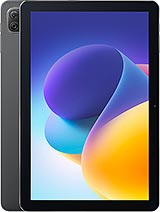
Oscal Pad 70 WiFi is a budget-tier tablet featuring a 10.1-inch IPS display for casual media consumption and 128GB of internal storage for extensive file management, aimed at students and value-conscious home users. Released in early 2025, it competes with other entry-level offerings by prioritizing connectivity and modern software over raw processing power.
When we analyze the economics of the budget tablet market, we usually expect to see corners cut in every possible direction. However, the Oscal Pad 70 WiFi breaks the mold by including Wi-Fi 6 (802.11ax) support. For those unfamiliar with the standard, Wi-Fi 6 offers much better performance in crowded environments like dormitories or busy households. It handles multiple device connections with greater efficiency than the older Wi-Fi 5 standard found in most competitors. This makes the slate a much more reliable companion for streaming or video calls where signal stability is paramount.
Another significant win for the consumer is the 128GB of internal storage. Most manufacturers in this price bracket still try to get away with 64GB, which fills up almost immediately after a few app installations and some downloaded media. By providing double that capacity, this model ensures a longer lifespan before the user has to worry about file management. The use of eMMC 5.1 storage is a standard cost-saving measure, but combined with a dedicated microSDXC slot, it provides enough flexibility for a massive library of offline content.
The engine under the hood is the Rockchip RK3562, a quad-core processor clocked at 2.0 GHz. We must be realistic about what this hardware can do. Utilizing Cortex-A53 cores, which are designed for power efficiency rather than raw speed, the chipset is built for light tasks. Think web browsing, reading PDFs, and watching YouTube. If you try to run heavy 3D games or complex video editing software, the Mali-G52 GPU and 4GB of RAM will quickly reach their limits. This isn't a powerhouse; it is a specialized tool for basic digital consumption.
The 800 x 1280 resolution on a 10.1-inch panel results in a pixel density of approximately 149 ppi. In an era where 1080p is the baseline, this lower resolution is the most obvious compromise. Text will not look as sharp as it does on a high-end smartphone, and users may notice slight pixelation if they hold the device too close. However, for watching movies or attending online classes, the screen remains functional and bright enough for indoor use. The inclusion of Asahi glass protection adds a layer of durability that we don't always see in the entry-level tier.
While many budget tablets ignore the camera system entirely, the 13 MP main camera with an f/2.0 aperture and Autofocus is a pleasant surprise. It won't replace a flagship phone for photography, but the hardware potential is there for clear document scanning—a vital feature for students. The 8 MP front camera is similarly adequate for video conferencing, providing a much better image than the grainy 2 MP or 5 MP sensors often found in this category.
The software experience is another area where this model punches above its weight. Running Android 14 out of the box with Doke OS_P 4.0, the tablet feels modern. Newer software versions are crucial because they ensure compatibility with apps for the next several years. The interface includes several productivity-focused features that make the most of the large screen real estate, such as improved split-screen multitasking for light research tasks.
With a thickness of 9.9 mm and a weight of 520.5 g, this is a substantial piece of hardware. It lacks the ultra-slim profiles of premium slates, but the extra heft suggests a sturdy build. The back panel, available in Grey or Blue, is functional but tends to attract fingerprints and smudges fairly easily. We recommend using a folio case not just for protection, but to keep the exterior looking clean. The 246.5 x 163 mm dimensions mean it is strictly a two-handed device or one that needs a stand for long-term use.
One of the best decisions made here was the inclusion of stereo speakers. Many budget tablets revert to a single speaker, which results in a tinny, lopsided audio experience. The dual-speaker setup provides a much wider soundstage for movies. Furthermore, the inclusion of a 3.5mm headphone jack is a major win for users who prefer wired earbuds or those who don't want to deal with the latency and battery drain of Bluetooth audio. It’s a simple feature, but one that is increasingly disappearing from modern tech.
Powering everything is a 6580 mAh battery. In our analysis, this capacity is sufficient for a full day of mixed-use, covering about 6 to 7 hours of screen-on time for browsing and video. The drawback is the 10W wired charging. Charging a battery of this size at such a low wattage takes time—roughly 3 to 4 hours from empty to full. This is a device you plug in overnight rather than one you top up quickly during a lunch break.
The Oscal Pad 70 WiFi represents a calculated series of trade-offs that favor the practical user over the power user. By sacrificing screen resolution and charging speed, the manufacturer was able to provide Wi-Fi 6, 128GB of storage, and Android 14. These features contribute more to the daily usability and longevity of the device than a slightly sharper screen would. For those who need a reliable secondary screen for the home or a basic study tool, the math heavily favors this tablet.
The Connectivity and Storage Anomaly
When we analyze the economics of the budget tablet market, we usually expect to see corners cut in every possible direction. However, the Oscal Pad 70 WiFi breaks the mold by including Wi-Fi 6 (802.11ax) support. For those unfamiliar with the standard, Wi-Fi 6 offers much better performance in crowded environments like dormitories or busy households. It handles multiple device connections with greater efficiency than the older Wi-Fi 5 standard found in most competitors. This makes the slate a much more reliable companion for streaming or video calls where signal stability is paramount.
Another significant win for the consumer is the 128GB of internal storage. Most manufacturers in this price bracket still try to get away with 64GB, which fills up almost immediately after a few app installations and some downloaded media. By providing double that capacity, this model ensures a longer lifespan before the user has to worry about file management. The use of eMMC 5.1 storage is a standard cost-saving measure, but combined with a dedicated microSDXC slot, it provides enough flexibility for a massive library of offline content.
Navigating the Performance Trade-offs
The engine under the hood is the Rockchip RK3562, a quad-core processor clocked at 2.0 GHz. We must be realistic about what this hardware can do. Utilizing Cortex-A53 cores, which are designed for power efficiency rather than raw speed, the chipset is built for light tasks. Think web browsing, reading PDFs, and watching YouTube. If you try to run heavy 3D games or complex video editing software, the Mali-G52 GPU and 4GB of RAM will quickly reach their limits. This isn't a powerhouse; it is a specialized tool for basic digital consumption.
The 800 x 1280 resolution on a 10.1-inch panel results in a pixel density of approximately 149 ppi. In an era where 1080p is the baseline, this lower resolution is the most obvious compromise. Text will not look as sharp as it does on a high-end smartphone, and users may notice slight pixelation if they hold the device too close. However, for watching movies or attending online classes, the screen remains functional and bright enough for indoor use. The inclusion of Asahi glass protection adds a layer of durability that we don't always see in the entry-level tier.
Underrated Hardware Touches
While many budget tablets ignore the camera system entirely, the 13 MP main camera with an f/2.0 aperture and Autofocus is a pleasant surprise. It won't replace a flagship phone for photography, but the hardware potential is there for clear document scanning—a vital feature for students. The 8 MP front camera is similarly adequate for video conferencing, providing a much better image than the grainy 2 MP or 5 MP sensors often found in this category.
The software experience is another area where this model punches above its weight. Running Android 14 out of the box with Doke OS_P 4.0, the tablet feels modern. Newer software versions are crucial because they ensure compatibility with apps for the next several years. The interface includes several productivity-focused features that make the most of the large screen real estate, such as improved split-screen multitasking for light research tasks.
The Fingerprint Magnet and Handling Test
With a thickness of 9.9 mm and a weight of 520.5 g, this is a substantial piece of hardware. It lacks the ultra-slim profiles of premium slates, but the extra heft suggests a sturdy build. The back panel, available in Grey or Blue, is functional but tends to attract fingerprints and smudges fairly easily. We recommend using a folio case not just for protection, but to keep the exterior looking clean. The 246.5 x 163 mm dimensions mean it is strictly a two-handed device or one that needs a stand for long-term use.
Audio Experience and Endurance
One of the best decisions made here was the inclusion of stereo speakers. Many budget tablets revert to a single speaker, which results in a tinny, lopsided audio experience. The dual-speaker setup provides a much wider soundstage for movies. Furthermore, the inclusion of a 3.5mm headphone jack is a major win for users who prefer wired earbuds or those who don't want to deal with the latency and battery drain of Bluetooth audio. It’s a simple feature, but one that is increasingly disappearing from modern tech.
Powering everything is a 6580 mAh battery. In our analysis, this capacity is sufficient for a full day of mixed-use, covering about 6 to 7 hours of screen-on time for browsing and video. The drawback is the 10W wired charging. Charging a battery of this size at such a low wattage takes time—roughly 3 to 4 hours from empty to full. This is a device you plug in overnight rather than one you top up quickly during a lunch break.
Final Value Assessment
The Oscal Pad 70 WiFi represents a calculated series of trade-offs that favor the practical user over the power user. By sacrificing screen resolution and charging speed, the manufacturer was able to provide Wi-Fi 6, 128GB of storage, and Android 14. These features contribute more to the daily usability and longevity of the device than a slightly sharper screen would. For those who need a reliable secondary screen for the home or a basic study tool, the math heavily favors this tablet.
Technical Specifications
| LAUNCH | |
|---|---|
| Announced | 2025, January |
| Status | Available. Released 2025, January |
| PLATFORM | |
| OS | Android 14, Doke OS_P 4.0 |
| Chipset | Rockchip RK3562 |
| CPU | Quad-core 2.0 GHz Cortex-A53 |
| GPU | Mali-G52 |
| BODY | |
| Dimensions | 246.5 x 163 x 9.9 mm (9.70 x 6.42 x 0.39 in) |
| Weight | 520.5 g (1.15 lb) |
| SIM | No |
| DISPLAY | |
| Type | IPS LCD |
| Size | 10.1 inches, 295.8 cm2 (~73.6% screen-to-body ratio) |
| Resolution | 800 x 1280 pixels, 16:10 ratio (~149 ppi density) |
| Protection | Asahi glass |
| MEMORY | |
| Card slot | microSDXC (dedicated slot) |
| Internal | 128GB 4GB RAM |
| Info | eMMC 5.1 |
| MAIN CAMERA | |
| Single | 13 MP, f/2.0, AF |
| Features | LED flash |
| Video | 720p@30fps |
| SELFIE CAMERA | |
| Single | 8 MP |
| Video | 480p@30fps |
| SOUND | |
| Loudspeaker | Yes, with stereo speakers |
| 3.5mm jack | Yes |
| COMMS | |
| WLAN | Wi-Fi 802.11 a/b/g/n/ac/6, dual-band |
| Bluetooth | 5.0, A2DP, LE |
| Positioning | No |
| NFC | No |
| Radio | No |
| USB | USB Type-C, OTG |
| NETWORK | |
| Technology | GSM |
| 2G bands | GSM 850 / 900 / 1800 / 1900 N/A |
| 3G bands | N/A |
| 4G bands | N/A |
| GPRS | No |
| EDGE | No |
| FEATURES | |
| Sensors | Accelerometer |
| BATTERY | |
| Type | 6580 mAh |
| Charging | 10W wired |
| MISC | |
| Display | 10.1-inch IPS LCD, 800 x 1280 pixels (~149 ppi) |
| Processor | Rockchip RK3562 Quad-core 2.0 GHz Cortex-A53 |
| Memory | 128GB Storage, 4GB RAM (eMMC 5.1) |
| OS | Android 14, Doke OS_P 4.0 |
| Main Camera | 13 MP, f/2.0 with AF and LED Flash |
| Selfie Camera | 8 MP (480p@30fps video) |
| Connectivity | Wi-Fi 6 (802.11ax), Bluetooth 5.0, USB Type-C |
| Battery | 6580 mAh with 10W wired charging |
| Audio | Stereo speakers, 3.5mm headphone jack |
| Operating System | Android 14, Doke OS_P 4.0 |
| Dimensions | 246.5 x 163 x 9.9 mm, 520.5 g |
| Colors | Grey, Blue |