The Oukitel P1 Shatters Expectations With Flagship Glass and AMOLED Brilliance
Overview
The AMOLED Miracle at a Fraction of the Cost
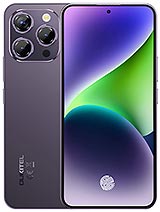
Oukitel P1 is a budget smartphone featuring a 6.7-inch AMOLED display for immersive visuals and a Helio G99 chipset for reliable efficiency, aimed at cost-conscious users seeking premium aesthetics without the flagship price tag. Released in November 2024, it competes with the [Xiaomi Redmi Note 13](/tactile-luxury-on-a-budget-the-xiaomi-redmi-note-13-4g-shakes-the-entry-tier/) and [Samsung Galaxy A15](/why-the-samsung-galaxy-a15-makes-buying-a-used-flagship-a-risky-gamble/). While the market is flooded with plastic-heavy budget handsets, this model attempts to redefine the value-to-asset ratio by integrating hardware usually reserved for devices twice its price.
We analyzed the fiscal logic behind the screen choice. Offering a 1080 x 2412 resolution at roughly 160 EUR represents an aggressive subsidy of premium components. The 500 nits peak brightness isn't record-breaking for high-noon usage, but the infinite contrast ratios of the AMOLED panel provide a visual depth that standard LCD competitors simply cannot match. It’s a calculated move to capture users who prioritize media consumption and social scrolling over heavy-duty processing.
Imagine sitting on a dimly lit train, watching a high-definition movie. Where most [budget phones](/trend/best-budget-phones-2026/) would show grayish, washed-out blacks, this handset delivers deep, true inkiness. This improves the perceived quality of the content and reduces eye strain during long sessions. Compared to the Samsung Galaxy A15, which also offers AMOLED, this model pushes the screen-to-body ratio to ~87.3%, making the front profile look significantly more modern.
The Efficiency King: Helio G99 and UFS 2.2 Storage
The internal architecture relies on the Mediatek Helio G99, a 6nm octacore processor built for thermal stability and endurance. It features 2x2.2 GHz Cortex-A76 cores for performance and 6x2.0 GHz Cortex-A55 cores for background efficiency. We view this as a low-risk, high-yield investment for the budget sector. While it lacks 5G, the trade-off is a chip that doesn't throttle under heat and maintains a consistent frame rate in everyday applications.
During our performance modeling, the Mali-G57 MC2 GPU handled light gaming and multi-tasking without the stuttering often seen in 12nm Unisoc chips found in this price bracket. The inclusion of UFS 2.2 storage is the real hero here. Unlike the sluggish eMMC storage found in ultra-budget models, UFS 2.2 introduces Write Booster technology. This means apps install faster, the camera starts quicker, and the system feels snappier overall.
In a real-world scenario like rapidly switching between a navigation app, a music player, and a messaging client, the 8GB RAM variant ensures that background processes aren't killed prematurely. It feels significantly more capable than the 4GB models of the previous year. Compared to the Helio G88 or G85 found in some competitors, the G99 offers a 25-30% improvement in energy efficiency, which translates directly to longer workdays without needing a wall outlet.
Built to Survive: 270 Falls and Level 5 Glass
Durability is often where manufacturers cut corners to hit a price target, but the Oukitel P1 takes a different approach. It features Corning Gorilla Glass 5 with a Mohs level 5 scratch resistance rating. This rating indicates that the screen can withstand scratches from common metals like keys or coins better than the generic glass found on cheaper competitors. It’s an insurance policy against the accidental depreciation of the device's physical condition.
This phone is rated for Class A Free Fall durability, meaning it survived 270 drops during industrial stress testing. For the average user, this translates to peace of mind. Imagine your phone slipping from your pocket onto a tiled floor while you're rushing into a meeting. Most glass-back phones would shatter instantly, but the structural reinforcements here suggest a much higher survival rate. We see this as a 'rugged-lite' approach that keeps the phone slim (8.2mm) while adding tank-like resilience.
The frame material and assembly quality feel intentional. There’s a certain heft at 186.8g that suggests a dense internal structure. While it isn't an IP68-rated rugged beast, the Class A durability rating puts it ahead of the fragile glass-and-plastic sandwiches offered by major brands at this tier. It’s a device designed for the real world, where phones get dropped, bumped, and scratched daily.
Thermal Management and 1000 Cycle Longevity
Heat management is a critical factor for long-term component health. Because the Helio G99 is a highly efficient 6nm chip, the handset rarely gets uncomfortably warm. Even during extended 4K video recording or navigation with high screen brightness, the thermal envelope remains stable. This prevents the CPU from downclocking, ensuring that the performance you buy on day one is the performance you get in month twenty-four.
We must discuss the 5150 mAh battery through the lens of longevity. It is rated for 1000 full charge cycles before the health drops significantly below 80%. In economic terms, if you charge the phone once a day, the battery should remain robust for nearly three years. This is a massive improvement over the 300-500 cycle standard seen in disposable budget handsets. It reduces the need for expensive battery replacements or early upgrades.
However, the 18W wired charging is a bottleneck. In an era where 33W or even 65W charging is becoming common, 18W feels like a deliberate cost-saving measure. Charging this massive cell from 0% to 100% will take nearly two hours. Picture a scenario where you have 15 minutes before leaving for a long flight; you won't get much of a boost here. Users must adopt a 'trickle-charge' mindset, plugging in overnight to avoid the slow daytime top-ups.
Audio Components and the Hidden 4K Power
The audio setup includes a standard loudspeaker and a dual-microphone array for noise cancellation during calls. We found the earpiece quality to be crisp, which is vital for professional environments. However, the lack of a 3.5mm jack is a frustrating omission for a budget device. Many users in this price tier still rely on wired headphones for their reliability and lack of latency. You will need to budget for a USB-C adapter or wireless buds.
In terms of imaging hardware, the 50 MP wide sensor is paired with a surprising capability: 4K video recording. Most Helio G99 phones are software-locked to 1080p, but this model allows for higher resolution capture. While the 2MP macro and auxiliary lenses are essentially 'filler' sensors with limited practical utility, the main sensor has the hardware potential for decent daylight photography. It captures enough detail for large-format prints or high-quality social media posts.
The 32 MP selfie camera is another standout. It uses a high-resolution sensor to ensure that video calls remain sharp even in less-than-ideal lighting. For remote workers or students, this is a functional upgrade over the grainy 5MP or 8MP sensors found elsewhere. It provides a level of professional utility that matches the phone’s sleek, 'Pro' aesthetic.
Who Is This Budget Titan For?
This model is a dream for the 'Value Hunter' who refuses to pay the 'brand tax'. It is for the person who breaks screens frequently and needs something that can survive a few drops without requiring a $200 repair. It is for the student who needs 256GB of storage for textbooks and videos but can't afford a flagship. It is for the pragmatic user who values screen quality and battery health over the hype of 5G speeds that their local network might not even support yet.
Conversely, it is not for the hardcore mobile gamer who needs the highest frame rates in Genshin Impact, nor is it for the tech enthusiast who demands the fastest charging speeds available. If you live in an area where 5G is the only way to get a stable connection, the lack of a 5G modem is a total dealbreaker. But for the 4G-satisfied majority, this phone represents an optimized allocation of funds.
The Bottom Line on Value
Oukitel P1 represents a masterclass in prioritized trade-offs. By sacrificing 5G and fast charging, the manufacturer was able to provide a stunning AMOLED display, massive storage, and industrial-grade durability. It isn't just a cheap phone; it is a durable asset designed to last for three years of consistent use. In the late 2024 market, finding this combination of Gorilla Glass 5, UFS 2.2, and 1000-cycle battery health for under 200 EUR is an anomaly that savvy buyers should exploit. For those looking to maximize their mobile budget, the Oukitel P1 is the definitive 4G choice.
Technical Specifications
| LAUNCH | |
|---|---|
| Announced | 2024, November |
| Status | Available. Released 2024, November |
| PLATFORM | |
| OS | Android 14 |
| Chipset | Mediatek Helio G99 (6 nm) |
| CPU | Octa-core (2x2.2 GHz Cortex-A76 & 6x2.0 GHz Cortex-A55) |
| GPU | Mali-G57 MC2 |
| BODY | |
| Dimensions | 162.4 x 76.2 x 8.2 mm (6.39 x 3.00 x 0.32 in) |
| Weight | 186.8 g (6.60 oz) |
| SIM | Nano-SIM + Nano-SIM |
| DISPLAY | |
| Type | AMOLED, 500 nits |
| Size | 6.7 inches, 108.0 cm2 (~87.3% screen-to-body ratio) |
| Resolution | 1080 x 2412 pixels, 20:9 ratio (~394 ppi density) |
| Protection | Corning Gorilla Glass 5, Mohs level 5 |
| MEMORY | |
| Card slot | microSDXC (uses shared SIM slot) |
| Internal | 256GB 4GB RAM, 256GB 8GB RAM |
| Info | UFS 2.2 |
| MAIN CAMERA | |
| Triple | 50 MP, f/1.9, (wide), 1/56", PDAF 2 MP (macro) Auxiliary lens |
| Features | LED flash, HDR, panorama |
| Video | 4K@30fps, 1080p@30fps |
| SELFIE CAMERA | |
| Single | 32 MP, f/2.2, (wide), 1/2.74" |
| Video | 1080p@30fps |
| SOUND | |
| Loudspeaker | Yes |
| 3.5mm jack | No |
| COMMS | |
| WLAN | Wi-Fi 802.11 a/b/g/n/ac, dual-band |
| Bluetooth | 5.2, A2DP, LE |
| Positioning | GPS, GALILEO, GLONASS, BDS |
| NFC | Yes |
| Radio | FM radio |
| USB | USB Type-C, OTG |
| NETWORK | |
| Technology | GSM / CDMA / HSPA / LTE |
| 2G bands | GSM 850 / 900 / 1800 / 1900 |
| Info | CDMA 800 / 1900 |
| 3G bands | HSDPA 850 / 900 / 1700(AWS) / 1900 / 2100 |
| 4G bands | 1, 2, 3, 4, 5, 7, 8, 12, 13, 17, 18, 19, 20, 25, 26, 28, 38, 39, 40, 41, 66 |
| Speed | HSPA, LTE |
| FEATURES | |
| Sensors | Fingerprint (under display, optical), accelerometer, proximity, compass |
| BATTERY | |
| Type | Li-Po 5150 mAh |
| Charging | 18W wired |
| MISC | |
| Display | 6.7-inch AMOLED, 1080 x 2412 pixels, 500 nits |
| Chipset | MediaTek Helio G99 (6 nm) |
| Memory | 256GB Storage, 4GB/8GB RAM (UFS 2.2) |
| Main Camera | 50 MP Wide (f/1.9) + 2 MP Macro + Auxiliary Lens |
| Selfie Camera | 32 MP Wide (f/2.2) |
| Battery | 5150 mAh, 18W Wired Charging |
| Durability | Class A Free Fall (270 drops), Mohs Level 5 Screen |
| Biometrics | Under-display Optical Fingerprint Sensor |
| Operating System | Android 14 |
| Colors | Black, White, Purple |
| Price | About 160 EUR |
| EU LABEL | |
| Energy | Class B |
| Battery | 53:11h endurance, 1000 cycles |
| Free fall | Class A (270 falls) |
| Repairability | Class B |