The Oukitel WP100 Titan - Industrial Power and Unmatched Battery Efficiency
Overview
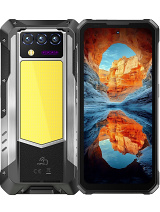
The Oukitel WP100 Titan is an ultra-rugged flagship smartphone featuring a 33,000 mAh battery for record-breaking endurance and a built-in 100-lumens projector for professional utility, aimed at industrial workers and extreme explorers. Released in February 2025, it competes with specialized heavy-duty hardware by prioritizing sheer survival capacity and tool integration over traditional mobile ergonomics.
The Economics of Extreme Endurance
Analyzing the value proposition of the Oukitel WP100 Titan requires a shift in perspective. At approximately 780 EUR, this is not a budget device in the traditional sense, but an industrial investment. Most flagship smartphones in early 2025 offer batteries between 5,000 and 6,000 mAh. This model delivers more than six times that capacity. From a cost-per-milliampere-hour standpoint, it sits in a league of its own. It effectively eliminates the need for carrying heavy 30,000 mAh power banks, which often retail for 60 to 100 EUR alone. By consolidating a high-capacity power cell, a 100-lumens pico-projector, and a 1200-lumens camping light into a single chassis, the hardware justifies its premium through utility consolidation.
The Dimensity 7300 chipset inside is a strategic choice for a value hunter. Built on a 4nm process, it focuses on efficiency rather than raw benchmark scores. The architecture consists of four high-performance Cortex-A78 cores and four energy-efficient Cortex-A55 cores. In a device this size, thermal throttling is rarely an issue because the massive internal volume acts as a heat sink. This ensures that performance remains stable during sustained tasks like navigation or projecting video for extended periods. While it won't outpace the Snapdragon 8 Gen 4 in gaming, it provides the reliability needed for professional environments where a device crash is more than just an inconvenience.
Identifying the Compromises
No device reaches this level of specialization without significant trade-offs. The most glaring compromise is the display. In a world moving toward 2000-nit LTPO OLED panels, this handset utilizes a 6.8-inch IPS LCD capped at 450 nits. For a device intended for outdoor use, 450 nits is underwhelming. Users will struggle to see the screen clearly under direct high-noon sunlight. The choice of LCD over OLED was likely a durability and cost-saving measure, as LCDs are generally more resilient to impact and cheaper to replace, but it remains the weakest link in the spec sheet for 2025.
Weight is the other undeniable factor. At 876.6 grams, the handset is nearly four times the weight of a standard iPhone or Galaxy. It is effectively a brick. It will not fit comfortably in standard pocket linings and requires heavy-duty belt holsters or backpack storage. Carrying this requires a conscious lifestyle adjustment. Additionally, while the 66W wired charging sounds fast, filling a 33,000 mAh tank takes hours. You aren't 'topping up' this phone for 15 minutes before leaving the house; you are docking it overnight for a long-haul mission.
The Out of Box Experience and Setup
Unboxing this model is a physical event. The weight is the first thing users notice. The packaging typically includes the heavy-duty 66W charging block and a reinforced USB-C to USB-C cable. Because of the Android 14 baseline, the software setup is standard, but the initial update patch in early 2025 is roughly 1.2GB, primarily focusing on camera optimization and projector calibration. There is very little bloatware, which is a refreshing change in this price tier. Most pre-installed tools are functional, such as the digital toolbox (compass, gradienter, sound meter) designed to work with the internal sensors.
Setting up the projector requires a dark or dim environment. The 100 lumens of brightness are sufficient for a 50-inch image in a dark room, but it won't replace a dedicated home theater. For work presentations on-site or watching a movie in a tent, it functions perfectly. The Mohs level 5 glass protection on the display feels incredibly dense. While it provides excellent scratch resistance against metals, users should still be wary of sand and quartz which can scratch surfaces at higher Mohs levels.
Navigation and Interface Fluidity
Despite the heft, the 120Hz refresh rate makes navigating Android 14 feel surprisingly nimble. The Mali-G615 MP2 GPU handles UI animations and basic multitasking without stuttering. Gestures like swiping back or returning home are responsive, though the thick bezels and protective 'lips' of the rugged frame can sometimes interfere with edge-swiping. The device handles false touches well, which is vital given the width of the frame where a user's palm is likely to wrap around the edges during one-handed use.
The side-mounted fingerprint sensor is snappy. It is positioned at a natural resting point for the thumb, though left-handed users may find the reach awkward given the 35.6 mm thickness of the body. Face recognition via the 32MP selfie camera works well in daylight but struggles in low light, making the physical sensor the primary biometric choice. Connectivity-wise, the inclusion of Wi-Fi 6e and a wide range of 5G bands (including N77 and N78) ensures that signal penetration is excellent, even in fringe coverage areas where the massive internal antennas likely provide a slight reception advantage over slim glass-and-metal flagships.
Hardware Capabilities and 200MP Potential
The 200MP wide sensor is a headline feature that requires context. In mobile photography, more megapixels do not always mean better photos. However, the 1/1.4-inch sensor size is respectable. It captures high-detail stills in daylight that allow for significant cropping—useful for reading distant site signage or documenting industrial damage. In low light, the sensor uses pixel binning, but the real star of the show for nighttime use is the 20MP Night Vision camera. It uses infrared emitters to see in total darkness, a feature that is indispensable for security personnel or midnight hikers.
Video recording is capped at 4K@30fps. In 2025, the lack of 60fps at 4K resolution might seem like a limitation, but for the intended audience, the focus is on documentation rather than cinematography. The stabilization is electronic (EIS) rather than optical (OIS), so walking while filming results in some noticeable jitter. However, for static shots or slow pans of a work site, the output is sharp enough for professional reporting.
Durability and Long-Term Reliability
The MIL-STD-810H and IP69K certifications are not just marketing buzzwords here. The IP69K rating specifically protects against high-pressure water jets and high-temperature steam cleaning. This makes the handset one of the few devices you can literally wash with a hose after a day in the mud. The EU Label
Conclusion: The Industrial Verdict
Is it worth the 780 EUR? If you are a standard consumer, the answer is a firm no. The weight alone makes it impractical for casual use. However, for a specific niche—surveyors, forestry workers, long-distance overlanders, and emergency responders—the value is immense. It replaces a phone, a tablet, a power bank, a flashlight, and a projector. By combining these into a single MIL-STD-810H chassis, it simplifies the gear loadout for people whose lives depend on their technology staying powered.
The Oukitel WP100 Titan is a brutalist piece of engineering that ignores modern design trends to solve a single problem: power anxiety. It is the ultimate insurance policy for your digital life in environments where a wall outlet is a distant luxury. While the display brightness and weight are notable drawbacks, they are the necessary trade-offs for a device that offers essentially infinite battery life for the average work week. If your priority is utility over vanity, the Oukitel WP100 Titan stands as a unique champion of the rugged category in 2025.
Technical Specifications
| LAUNCH | |
|---|---|
| Announced | 2025, February 18 |
| Status | Available. Released 2025, February 18 |
| PLATFORM | |
| OS | Android 14 |
| Chipset | Mediatek Dimensity 7300 (4 nm) |
| CPU | Octa-core (4x2.5 GHz Cortex-A78 & 4x2.0 GHz Cortex-A55) |
| GPU | Mali-G615 MP2 |
| BODY | |
| Dimensions | 178.3 x 84.3 x 35.6 mm (7.02 x 3.32 x 1.40 in) |
| Weight | 876.6 g (1.93 lb) |
| Build | Glass front, aluminum with plastic frame and back |
| SIM | Nano-SIM + Nano-SIM |
| Info | IP68/IP69K dust tight and water resistant (high pressure water jets; immersible up to 1.5m for 30 min) Drop resistant up to 1.5m MIL-STD-810H compliant Built-in projector with 100 Lumens 1200 lumens dedicated camping flashlight |
| DISPLAY | |
| Type | IPS LCD, 120Hz, 450 nits |
| Size | 6.8 inches, 109.8 cm2 (~73.1% screen-to-body ratio) |
| Resolution | 1080 x 2460 pixels (~395 ppi density) |
| Protection | Corning Gorilla Glass 5, Mohs level 5 |
| MEMORY | |
| Card slot | microSDXC (uses shared SIM slot) |
| Internal | 512GB 16GB RAM |
| MAIN CAMERA | |
| Triple | 200 MP (wide), 1/1.4", PDAF, LED 20 MP (Night Vision), 1/2.78", AF 2 MP (macro) |
| Features | LED flash, HDR, portrait, panorama |
| Video | 4K@30fps |
| SELFIE CAMERA | |
| Single | 32MP, 1/2.74" |
| Video | 1080p@30fps |
| SOUND | |
| Loudspeaker | Yes |
| 3.5mm jack | No |
| COMMS | |
| WLAN | Wi-Fi 802.11 a/b/g/n/ac/6e, dual-band |
| Bluetooth | 5.4, A2DP, LE |
| Positioning | GPS, GLONASS, GALILEO, BDS |
| NFC | Yes |
| Radio | FM radio, FM recording |
| USB | USB Type-C 2.0, OTG |
| NETWORK | |
| Technology | GSM / HSPA / EVDO / LTE / 5G |
| 2G bands | GSM 850 / 900 / 1800 / 1900 |
| 3G bands | HSDPA 800 / 850 / 900 / 1700(AWS) / 1900 / 2100 |
| Info | CDMA2000 1xEV-DO |
| 4G bands | 1, 2, 3, 4, 5, 7, 8, 12, 13, 17, 18, 19, 20, 25, 26, 28, 34, 38, 40, 41, 66 LTE |
| 5G bands | 1, 2, 3, 5, 7, 8, 12, 20, 28, 38, 40, 41, 66, 71, 77, 78, 79 |
| Speed | HSPA, LTE |
| FEATURES | |
| Sensors | Fingerprint (side-mounted), accelerometer, gyro, proximity, compass |
| BATTERY | |
| Type | Li-Po 33000 mAh |
| Charging | 66W wired 18W reverse wired |
| MISC | |
| Colors | Black |
| Price | About 780 EUR |
| EU LABEL | |
| Energy | Class B |
| Battery | 166:39h endurance, 1400 cycles |
| Free fall | Class A (270 falls) |
| Repairability | Class C |