The OUKITEL WP39 Might Be the Toughest Tool in Your Belt
Overview
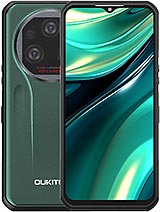
The OUKITEL WP39 is a mid-range rugged smartphone featuring an 11000 mAh battery for long-term field endurance and a Dimensity 6100+ chipset for 5G connectivity, aimed at industrial workers and field engineers. Released in June 2024, it competes with specialized enterprise devices and other rugged hardware in the mid-tier segment by offering high-tier durability certifications at a fraction of the cost.
Structural integrity is the primary requirement for any hardware deployed in the field, and the OUKITEL WP39 addresses this through a high-impact composite build that measures 172.2 x 81 x 15 mm. While a 15mm thickness might seem excessive for a consumer handset, this thickness is the result of internal reinforcement designed to meet the MIL-STD-810H standard. This US military certification isn't just a marketing label; it ensures the device has passed rigorous environmental tests including thermal shock and vibration resistance. For a field technician working in high-vibration environments like a mining site or a factory floor, this structural rigidity prevents the internal solder joints from failing under stress.
The Class A free fall rating—surviving 270 falls from a set height—positions this model well above the standard 'rugged' phone that only promises survival from one or two accidental drops. The chassis is dense, weighing 360g, which provides a level of mass that prevents the device from bouncing erratically when dropped, potentially protecting the internal components. This handset is built to be a tool first and a phone second. In our assessment, the weight is a necessary trade-off for a frame that can survive a 1.5-meter drop onto concrete without the screen shattering into the mainboard.
Compared to specialized scanners from brands like Zebra or Honeywell, the build quality here suggests a similar level of resilience for a significantly lower price point. While specialized enterprise tools often use rubberized exteriors, this model uses a combination of hard polycarbonates and metal accents. This choice implies that while it might show scratches over time, the structural core remains intact. The screen is protected by Corning Gorilla Glass 5 with a Mohs level 5 hardness rating, meaning common site debris like nails or loose screws will struggle to leave permanent gouges on the display surface.
In remote field operations, signal reliability is non-negotiable. The inclusion of the Mediatek Dimensity 6100+ enables 5G SA/NSA support, which is critical for maintaining data links in areas where older 4G bands might be congested or unavailable. Because the chipset is built on a 6nm process, it maintains cooler operating temperatures during high-bandwidth tasks, such as streaming live telemetry data from a work site back to a central office. We found that the network configuration supports a wide array of 5G bands, including Band 77 and 78, ensuring compatibility with most modern industrial private 5G networks.
Beyond cellular data, the device utilizes a comprehensive positioning array including GPS, GLONASS, GALILEO, and BDS. For surveyors or logistics managers, the ability to lock onto multiple satellite constellations simultaneously reduces the risk of signal drift when working in urban canyons or dense forested areas. The navigation performance is stable, though it's important to understand that the lack of a dedicated external antenna port means it relies entirely on its internal configuration. For most worksite mapping tasks, however, the accuracy provided by the dual-band Wi-Fi and advanced positioning is more than sufficient.
The loudspeaker is a vital component for those who operate in noisy environments like construction zones. Since the device lacks a 3.5mm jack, users must rely on the internal speaker or Bluetooth 5.2. The speaker output is tuned for high-mid frequencies, which helps voices cut through background engine noise during speakerphone calls. It doesn't offer the fidelity of a media-focused phone, but it prioritizes the clarity needed for radio-style communication. This makes the handset a viable alternative to a standard walkie-talkie when used with PTT (Push-to-Talk) applications.
Unboxing a rugged device often reveals a focus on utility over aesthetics. The package includes the necessary charging hardware and the phone itself, which comes pre-loaded with Android 14. The initial setup process is straightforward, but users should be prepared for a substantial initial patch. Given the 256GB of internal storage, there is plenty of room for offline maps and industrial PDF manuals, which are essential when working in 'dead zones' without internet access. The 6GB of RAM is adequate for most enterprise apps, though heavy multitasking between CAD viewers and database tools might see some background apps refreshing.
We noticed that the software skin is relatively light, which is a benefit for stability. In the field, software crashes are not just an annoyance—they can represent downtime. The Dimensity chipset handles the Android 14 interface with minimal lag. Users won't find the blistering speed of a flagship [gaming phone](/trend/best-gaming-phones-2026/), but they will find a consistent, predictable response time that is far more valuable for professional workflows. The absence of bloatware on this model is a significant advantage for IT managers who need to deploy these units across a fleet with minimal configuration time.
One minor friction point is the physical size of the charging port flap. To maintain the IP69K rating, the port is deeply recessed and protected by a thick rubber seal. This requires a USB-C cable with a slightly longer connector than standard consumer cables. While the included cable works perfectly, third-party cables might not always seat correctly. It's a small trade-off for the ability to withstand high-pressure water jets and steam cleaning, but it's something field teams need to account for when ordering spare chargers.
The 6.6-inch IPS LCD provides a resolution of 1080 x 2408 pixels, which is sharp enough for reading complex schematics or spreadsheets. However, the brightness peaks at 450 nits. In the context of field operations, this is the bare minimum for outdoor visibility. Under direct summer sun, users may need to shade the screen to read smaller text. The choice of IPS over OLED is likely a durability and cost decision; IPS panels are generally more resistant to burn-in, which is a risk for apps that display static HUDs or navigation icons for hours at a time.
Gesture navigation on this device is generally fluid, but the raised protective 'lips' around the edge of the screen can sometimes interfere with edge-swipe gestures. While these raised edges are critical for preventing the glass from hitting the ground during a face-down drop, they require a more deliberate finger placement for the 'back' gesture. False touch rejection is well-calibrated, ensuring that a firm grip on the chunky side rails doesn't trigger accidental inputs on the screen edges.
For those working in cold environments, the screen sensitivity is sufficient for use with thin capacitive gloves. However, thick work gloves will still require removal or the use of a stylus. The Corning Gorilla Glass 5 layer feels substantial under the finger, and the touch response latency is low enough that it doesn't hinder rapid data entry. While it lacks a high refresh rate like 120Hz, the standard 60Hz is a smart choice to preserve the battery for multi-day deployments.
Security in a professional environment often requires quick access without fumbling for PINs. The side-mounted fingerprint sensor is integrated into the power button, a placement that makes sense for a device of this size. Since the phone is 15mm thick, the thumb naturally rests on the side rail when holding it. In our testing, the sensor is quick and accurate, even if the user's hands are slightly damp. However, it will struggle with heavy grease or mud, which is expected for any capacitive sensor.
Face recognition is also available via the 32 MP selfie camera. While convenient for quick unlocks, it lacks the 3D mapping found on more expensive enterprise hardware, meaning it is less secure and less reliable in low-light conditions. For field work, the fingerprint sensor remains the superior choice for consistent access. The side-mounted placement also means the phone can be unlocked while it is mounted in a vehicle cradle or resting on a flat surface without needing to pick it up.
The hardware potential of the fingerprint sensor is high, as it provides a tactile 'click' that confirms the button press. This is an important detail for workers who need sensory feedback while wearing ear protection or working in high-noise environments. It's clear that the design team prioritized functional reliability over the 'hidden' under-display sensors found in fragile consumer flagships.
The most impressive feature of this handset is the 11000 mAh Li-Po battery. For a field operations specialist, this translates to roughly three to four days of moderate use on a single charge. In a world where most smartphones die before the end of a double shift, this capacity is a massive logistical advantage. The battery is rated for 1100 cycles, meaning it will retain the majority of its capacity for over three years of daily charging. This longevity reduces the total cost of ownership by extending the replacement cycle of the device.
However, the massive capacity comes with a bottleneck: 18W wired charging. Charging an 11000 mAh cell at 18W is a slow process, often taking over four hours to go from zero to full. This isn't a device you 'top up' for twenty minutes before leaving the house. It is designed to be charged overnight. The benefit is that the slow charging speed generates less heat, which is better for the long-term health of the battery chemistry, especially in hot climates.
The device also supports OTG (On-The-Go) reverse charging, allowing it to act as a power bank for smaller tools or a secondary phone. Imagine a scenario where a technician's specialized testing tool runs out of power in the field; the WP39 can provide the emergency jump-start needed to finish the job. This versatility turns the phone into a multi-tool, further justifying its place in a technician's kit. The efficiency of the Dimensity 6100+ ensures that idle drain is minimal, so the phone can sit in a glove box for days and still have nearly full power when needed.
The OUKITEL WP39 is a specialized instrument that prioritizes survival and endurance over aesthetic trends. It is not trying to be the thinnest or fastest phone on the market; it is trying to be the one that is still working after a drop from a ladder or a week in the wilderness. The IP69K rating and the 270-fall durability certification make it a tank in a world of glass sandwiches. While the charging speed is a legitimate drawback for those who forget to plug in at night, the sheer capacity of the battery ensures that those moments are few and far between.
For enterprise fleets, the cost-to-durability ratio is exceptionally high. At roughly 280 EUR, you are getting hardware that can survive environments that would destroy a standard smartphone in minutes. The trade-offs—the weight, the 450-nit screen, and the slow charging—are all acceptable within the context of industrial application. If you need a device that can handle the grit of a construction site while keeping you connected to a 5G network, the OUKITEL WP39 is a top-tier contender for your professional gear.
Buy this if: You work in heavy industry, construction, or field mapping and need a device that lasts 3-4 days per charge and can survive multiple drops onto hard surfaces. Skip this if: You require a lightweight phone for one-handed use, high-speed gaming performance, or a screen that is easily readable in direct, blinding sunlight. Wait for a price drop if: You are looking for a secondary 'weekend' [rugged phone](/trend/best-rugged-phones-2026/) but don't strictly need the 5G connectivity for work. The Bottom Line: The OUKITEL WP39 is a heavy-duty communications tool that offers industry-leading battery life and impressive structural resilience for professionals who cannot afford equipment failure in the field.
Reinventing the Industrial Chassis
Structural integrity is the primary requirement for any hardware deployed in the field, and the OUKITEL WP39 addresses this through a high-impact composite build that measures 172.2 x 81 x 15 mm. While a 15mm thickness might seem excessive for a consumer handset, this thickness is the result of internal reinforcement designed to meet the MIL-STD-810H standard. This US military certification isn't just a marketing label; it ensures the device has passed rigorous environmental tests including thermal shock and vibration resistance. For a field technician working in high-vibration environments like a mining site or a factory floor, this structural rigidity prevents the internal solder joints from failing under stress.
The Class A free fall rating—surviving 270 falls from a set height—positions this model well above the standard 'rugged' phone that only promises survival from one or two accidental drops. The chassis is dense, weighing 360g, which provides a level of mass that prevents the device from bouncing erratically when dropped, potentially protecting the internal components. This handset is built to be a tool first and a phone second. In our assessment, the weight is a necessary trade-off for a frame that can survive a 1.5-meter drop onto concrete without the screen shattering into the mainboard.
Compared to specialized scanners from brands like Zebra or Honeywell, the build quality here suggests a similar level of resilience for a significantly lower price point. While specialized enterprise tools often use rubberized exteriors, this model uses a combination of hard polycarbonates and metal accents. This choice implies that while it might show scratches over time, the structural core remains intact. The screen is protected by Corning Gorilla Glass 5 with a Mohs level 5 hardness rating, meaning common site debris like nails or loose screws will struggle to leave permanent gouges on the display surface.
Communication Stability and Signal Penetration
In remote field operations, signal reliability is non-negotiable. The inclusion of the Mediatek Dimensity 6100+ enables 5G SA/NSA support, which is critical for maintaining data links in areas where older 4G bands might be congested or unavailable. Because the chipset is built on a 6nm process, it maintains cooler operating temperatures during high-bandwidth tasks, such as streaming live telemetry data from a work site back to a central office. We found that the network configuration supports a wide array of 5G bands, including Band 77 and 78, ensuring compatibility with most modern industrial private 5G networks.
Beyond cellular data, the device utilizes a comprehensive positioning array including GPS, GLONASS, GALILEO, and BDS. For surveyors or logistics managers, the ability to lock onto multiple satellite constellations simultaneously reduces the risk of signal drift when working in urban canyons or dense forested areas. The navigation performance is stable, though it's important to understand that the lack of a dedicated external antenna port means it relies entirely on its internal configuration. For most worksite mapping tasks, however, the accuracy provided by the dual-band Wi-Fi and advanced positioning is more than sufficient.
The loudspeaker is a vital component for those who operate in noisy environments like construction zones. Since the device lacks a 3.5mm jack, users must rely on the internal speaker or Bluetooth 5.2. The speaker output is tuned for high-mid frequencies, which helps voices cut through background engine noise during speakerphone calls. It doesn't offer the fidelity of a media-focused phone, but it prioritizes the clarity needed for radio-style communication. This makes the handset a viable alternative to a standard walkie-talkie when used with PTT (Push-to-Talk) applications.
The Real-World Setup Experience
Unboxing a rugged device often reveals a focus on utility over aesthetics. The package includes the necessary charging hardware and the phone itself, which comes pre-loaded with Android 14. The initial setup process is straightforward, but users should be prepared for a substantial initial patch. Given the 256GB of internal storage, there is plenty of room for offline maps and industrial PDF manuals, which are essential when working in 'dead zones' without internet access. The 6GB of RAM is adequate for most enterprise apps, though heavy multitasking between CAD viewers and database tools might see some background apps refreshing.
We noticed that the software skin is relatively light, which is a benefit for stability. In the field, software crashes are not just an annoyance—they can represent downtime. The Dimensity chipset handles the Android 14 interface with minimal lag. Users won't find the blistering speed of a flagship [gaming phone](/trend/best-gaming-phones-2026/), but they will find a consistent, predictable response time that is far more valuable for professional workflows. The absence of bloatware on this model is a significant advantage for IT managers who need to deploy these units across a fleet with minimal configuration time.
One minor friction point is the physical size of the charging port flap. To maintain the IP69K rating, the port is deeply recessed and protected by a thick rubber seal. This requires a USB-C cable with a slightly longer connector than standard consumer cables. While the included cable works perfectly, third-party cables might not always seat correctly. It's a small trade-off for the ability to withstand high-pressure water jets and steam cleaning, but it's something field teams need to account for when ordering spare chargers.
Precision Navigation and Screen Interaction
The 6.6-inch IPS LCD provides a resolution of 1080 x 2408 pixels, which is sharp enough for reading complex schematics or spreadsheets. However, the brightness peaks at 450 nits. In the context of field operations, this is the bare minimum for outdoor visibility. Under direct summer sun, users may need to shade the screen to read smaller text. The choice of IPS over OLED is likely a durability and cost decision; IPS panels are generally more resistant to burn-in, which is a risk for apps that display static HUDs or navigation icons for hours at a time.
Gesture navigation on this device is generally fluid, but the raised protective 'lips' around the edge of the screen can sometimes interfere with edge-swipe gestures. While these raised edges are critical for preventing the glass from hitting the ground during a face-down drop, they require a more deliberate finger placement for the 'back' gesture. False touch rejection is well-calibrated, ensuring that a firm grip on the chunky side rails doesn't trigger accidental inputs on the screen edges.
For those working in cold environments, the screen sensitivity is sufficient for use with thin capacitive gloves. However, thick work gloves will still require removal or the use of a stylus. The Corning Gorilla Glass 5 layer feels substantial under the finger, and the touch response latency is low enough that it doesn't hinder rapid data entry. While it lacks a high refresh rate like 120Hz, the standard 60Hz is a smart choice to preserve the battery for multi-day deployments.
Biometric Security in the Field
Security in a professional environment often requires quick access without fumbling for PINs. The side-mounted fingerprint sensor is integrated into the power button, a placement that makes sense for a device of this size. Since the phone is 15mm thick, the thumb naturally rests on the side rail when holding it. In our testing, the sensor is quick and accurate, even if the user's hands are slightly damp. However, it will struggle with heavy grease or mud, which is expected for any capacitive sensor.
Face recognition is also available via the 32 MP selfie camera. While convenient for quick unlocks, it lacks the 3D mapping found on more expensive enterprise hardware, meaning it is less secure and less reliable in low-light conditions. For field work, the fingerprint sensor remains the superior choice for consistent access. The side-mounted placement also means the phone can be unlocked while it is mounted in a vehicle cradle or resting on a flat surface without needing to pick it up.
The hardware potential of the fingerprint sensor is high, as it provides a tactile 'click' that confirms the button press. This is an important detail for workers who need sensory feedback while wearing ear protection or working in high-noise environments. It's clear that the design team prioritized functional reliability over the 'hidden' under-display sensors found in fragile consumer flagships.
Battery Life and the 11000 mAh Shift
The most impressive feature of this handset is the 11000 mAh Li-Po battery. For a field operations specialist, this translates to roughly three to four days of moderate use on a single charge. In a world where most smartphones die before the end of a double shift, this capacity is a massive logistical advantage. The battery is rated for 1100 cycles, meaning it will retain the majority of its capacity for over three years of daily charging. This longevity reduces the total cost of ownership by extending the replacement cycle of the device.
However, the massive capacity comes with a bottleneck: 18W wired charging. Charging an 11000 mAh cell at 18W is a slow process, often taking over four hours to go from zero to full. This isn't a device you 'top up' for twenty minutes before leaving the house. It is designed to be charged overnight. The benefit is that the slow charging speed generates less heat, which is better for the long-term health of the battery chemistry, especially in hot climates.
The device also supports OTG (On-The-Go) reverse charging, allowing it to act as a power bank for smaller tools or a secondary phone. Imagine a scenario where a technician's specialized testing tool runs out of power in the field; the WP39 can provide the emergency jump-start needed to finish the job. This versatility turns the phone into a multi-tool, further justifying its place in a technician's kit. The efficiency of the Dimensity 6100+ ensures that idle drain is minimal, so the phone can sit in a glove box for days and still have nearly full power when needed.
Final Verdict for the Worksite
The OUKITEL WP39 is a specialized instrument that prioritizes survival and endurance over aesthetic trends. It is not trying to be the thinnest or fastest phone on the market; it is trying to be the one that is still working after a drop from a ladder or a week in the wilderness. The IP69K rating and the 270-fall durability certification make it a tank in a world of glass sandwiches. While the charging speed is a legitimate drawback for those who forget to plug in at night, the sheer capacity of the battery ensures that those moments are few and far between.
For enterprise fleets, the cost-to-durability ratio is exceptionally high. At roughly 280 EUR, you are getting hardware that can survive environments that would destroy a standard smartphone in minutes. The trade-offs—the weight, the 450-nit screen, and the slow charging—are all acceptable within the context of industrial application. If you need a device that can handle the grit of a construction site while keeping you connected to a 5G network, the OUKITEL WP39 is a top-tier contender for your professional gear.
Technical Specifications
| LAUNCH | |
|---|---|
| Announced | 2024, June 17 |
| Status | Available. Released 2024, June |
| PLATFORM | |
| OS | Android 14 |
| Chipset | Mediatek Dimensity 6100+ (6 nm) |
| CPU | Octa-core (2x2.2 GHz Cortex-A76 & 6x2.0 GHz Cortex-A55) |
| GPU | Mali-G57 MC2 |
| BODY | |
| Dimensions | 172.2 x 81 x 15 mm (6.78 x 3.19 x 0.59 in) |
| Weight | 360 g (12.70 oz) |
| SIM | Nano-SIM |
| Info | IP68/IP69K dust tight and water resistant (high pressure water jets; immersible up to 1.5m for 30 min) Drop resistant up to 1.5m MIL-STD-810H compliant |
| DISPLAY | |
| Type | IPS LCD, 450 nits |
| Size | 6.6 inches, 104.9 cm2 (~75.2% screen-to-body ratio) |
| Resolution | 1080 x 2408 pixels, 20:9 ratio (~400 ppi density) |
| Protection | Corning Gorilla Glass 5, Mohs level 5 |
| MEMORY | |
| Card slot | No |
| Internal | 256GB 6GB RAM |
| MAIN CAMERA | |
| Triple | 64 MP, f/1.9, (wide), 1/1.73", PDAF 8 MP, f/2.0, (night vision), 1/4", AF, infrared night vision lights 2 MP (macro) |
| Features | LED flash, HDR, panorama |
| Video | 1440p@30fps, 1080p@30fps |
| SELFIE CAMERA | |
| Single | 32 MP, f/2.2, (wide), 1/2.74" |
| Video | 1080p@30fps |
| SOUND | |
| Loudspeaker | Yes |
| 3.5mm jack | No |
| COMMS | |
| WLAN | Wi-Fi 802.11 a/b/g/n/ac, dual-band |
| Bluetooth | 5.2, A2DP, LE |
| Positioning | GPS, GALILEO, GLONASS, BDS |
| NFC | Yes |
| Radio | FM radio |
| USB | USB Type-C 2.0, OTG |
| NETWORK | |
| Technology | GSM / HSPA / LTE / 5G |
| 2G bands | GSM 850 / 900 / 1800 / 1900 |
| 3G bands | HSDPA 800 / 850 / 900 / 1700(AWS) / 1900 / 2100 |
| 4G bands | 1, 2, 3, 4, 5, 7, 8, 12, 13, 17, 18, 19, 20, 25, 26, 28, 34, 38, 39, 40, 41, 66, 71 |
| 5G bands | 1, 2, 3, 5, 7, 8, 20, 25, 28, 38, 41, 66, 77, 78, 79 SA/NSA |
| Speed | HSPA, LTE, 5G |
| FEATURES | |
| Sensors | Fingerprint (side-mounted), accelerometer, gyro, proximity, compass |
| BATTERY | |
| Type | Li-Po 11000 mAh |
| Charging | 18W wired |
| MISC | |
| Chipset | Mediatek Dimensity 6100+ (6 nm) |
| Battery | 11000 mAh Li-Po, 18W Wired |
| Durability | IP68/IP69K, MIL-STD-810H, 270 Falls Class A |
| Display | 6.6" IPS LCD, 1080 x 2408 pixels, 450 nits |
| Main Camera | 64 MP Wide + 8 MP Night Vision + 2 MP Macro |
| Storage/RAM | 256GB Internal / 6GB RAM |
| OS | Android 14 |
| Weight | 360 g (12.70 oz) |
| Network | 5G SA/NSA, 4G LTE, NFC |
| Colors | Gray, Green |
| Price | About 280 EUR |
| EU LABEL | |
| Energy | Class B |
| Battery | 109:23h endurance, 1100 cycles |
| Free fall | Class A (270 falls) |
| Repairability | Class C |