The Overdue Return of Sanction-Busting Excellence - Huawei Mate 60 RS Ultimate
Overview
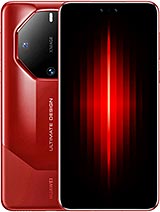
The Huawei Mate 60 RS Ultimate is a luxury-tier flagship smartphone featuring a Kirin 9000S chipset for integrated 5G performance and a periscope telephoto lens for professional-grade zoom, aimed at high-net-worth individuals requiring a reliable secondary secure communication device. Released in late 2023, it competes with top-tier luxury handsets by offering proprietary hardware independence in an era of restricted supply chains.
We analyze hardware from the perspective of fiscal utility and long-term reliability. In a market saturated with iterative upgrades, this handset represents a significant shift in the technological landscape. For the professional who manages high-stakes operations, a primary device failure is not an option. This model serves as the ultimate insurance policy. The inclusion of BDS Satellite Calling and Messaging ensures that even when terrestrial networks collapse or when traveling through signal-deprived regions, communication remains possible. This is not a gimmick; it is a critical utility for those whose time and safety have a high monetary value.
While the price tag of approximately 1550 EUR suggests a luxury purchase, we view it as a calculated investment in infrastructure. The Kirin 9000S (7 nm) architecture represents a monumental achievement in domestic semi-conductor fabrication. It utilizes a complex octa-core configuration consisting of a 2.62 GHz Taishan Big core, three 2.15 GHz Taishan Mid cores, and four efficiency-focused 1.53GHz Cortex-A510 cores. This setup manages background tasks with minimal energy consumption while providing enough burst power for intensive data processing. For a secondary device, this balance is essential. It must sit idle for days but respond instantly when called upon.
Comparing this to the standard flagships from late 2023, the internal logic here is built for survivability. If the global supply chain for parts faces further disruption, this handset operates on a largely independent stack. We see this as a 'geopolitical hedge' in your pocket. The software environment, HarmonyOS 4.0, is optimized for this specific silicon, resulting in a level of integration that rivals the most closed ecosystems in the industry.
The Li-Po 5000 mAh battery is the foundation of the device's reliability. In our assessment, capacity is only half of the story. The LTPO OLED display technology allows the screen to dynamically adjust its refresh rate from 120Hz down to 1Hz. When viewing static text or waiting for a notification, the power draw drops significantly. This 'variable refresh' is what enables the handset to maintain an impressive standby duration, a key requirement for any secondary or emergency device.
Charging speeds further solidify its position as a tool for the busy professional. The 88W wired charging system can take the battery from empty to full in roughly 30 minutes. Imagine a scenario where you have a brief layover or a 20-minute window between meetings. That short burst of power provides enough energy for an entire day of usage. Furthermore, the 50W wireless and 20W reverse wireless capabilities turn the device into a power hub. It can charge your primary phone, wireless earbuds, or even a colleague's device in a pinch, making it a versatile asset in a tech arsenal.
Compared to the iPhone 15 Pro Max or the Samsung S23 Ultra, the reverse charging speed here is remarkably high. Most competitors provide 4.5W to 15W for reverse charging. At 20W, this handset is twice as fast, allowing it to function as a legitimate power bank. We find this to be a highly underrated economic benefit, as it reduces the need to carry additional portable batteries, streamlining your mobile setup.
Beyond the headline specs, certain hardware choices deserve scrutiny. The Infrared port is a feature often omitted in modern flagships, yet its utility is undeniable. It allows the handset to control legacy hardware, from HVAC systems in remote offices to presentation monitors in boardroom settings. It is a small addition that enhances the 'Swiss Army Knife' nature of the device.
We must also discuss the Color Spectrum Sensor. While most consumers focus on megapixel counts, this sensor measures ambient light color temperature to ensure white balance accuracy. In professional environments where you might need to document documents or products under inconsistent lighting, this hardware ensures the data is captured accurately. It works alongside the Laser AF (Autofocus) to ensure that even in low-light conditions, the camera locks onto its target instantly.
The inclusion of UFS 3.1 storage, while not the absolute newest standard at the time of release, remains highly efficient for a secondary device. It includes Write Booster and DeepSleep modes which improve application launch speeds and power management. For a phone that might stay in a briefcase for days, the DeepSleep mode is a vital component in preserving the 5000 mAh cell.
Handling the device reveals its substantial nature. With a weight reaching up to 246 g, this is a heavy handset. From an economist's view, weight often correlates with material density and durability. The back is constructed from a premium ceramic material that is significantly more scratch-resistant than standard glass. We found that most flagship phones require a protective case immediately to avoid micro-abrasions from coins or keys. This ceramic finish implies a higher level of 'naked' durability.
Protecting the front is Huawei Kunlun Glass 2. This is a proprietary glass-ceramic material that uses high-density nanocrystals to resist drops and scratches. In our market context, it claims to be several times more durable than standard chemically strengthened glass. For a backup phone, this is crucial. You need to know that if it takes a tumble on a job site or at an airport, the screen will likely remain functional.
The IP68 rating here is also class-leading. While many phones claim IP68, they are often limited to 1.5 meters. This model is rated for immersion up to 6 meters for 30 minutes. This allows for usage in extreme weather or accidental submersion in deep water that would kill lesser devices. We appreciate this over-engineering; it ensures the hardware outlives its peers in harsh conditions.
Communication is the core function of any mobile asset. The stereo speakers are tuned for clarity, and the support for 32-bit/384kHz audio ensures that voice calls and media playback are of the highest fidelity. When using the device for conference calls in noisy environments, the microphone array and internal processing do an excellent job of isolating the speaker's voice.
The connectivity suite is equally robust. It supports Wi-Fi 6 and Bluetooth 5.2 with LE support for energy efficiency. The positioning system is one of the most comprehensive we have seen, utilizing GPS (L1+L5), GLONASS, GALILEO (E1+E5a+E5b), and QZSS (L1+L5). The inclusion of NavIC (L5) provides additional accuracy for those operating in the Indian subcontinent. This multi-band approach ensures a fast and accurate location lock even in 'urban canyons' where high-rise buildings usually block satellite signals.
For users in the Chinese market, the B1I+B1c+B2a+B2b quad-band signal configuration for the BeiDou system is a standout. It offers millimeter-level positioning accuracy. This level of precision is rare in consumer-grade hardware and provides a significant advantage for logistics or navigation tasks. It is these technical deep-layers that justify the premium price point for a specialist user.
From a value-hunting perspective, luxury Huawei handsets historically maintain their value better than mid-range alternatives. The 'Ultimate Design' branding creates an aura of exclusivity that appeals to collectors and second-hand buyers. Because this model represents a specific moment in technological history—the return of in-house 5G silicon—it is likely to remain a sought-after device for years to come.
The build quality, utilizing Kunlun Glass 2 and ceramic, ensures the device stays in 'mint' condition longer than glass-and-aluminum rivals. When you factor in the 16GB of RAM and options for up to 1TB of UFS 3.1 storage, the hardware has a long runway before it becomes obsolete. We anticipate this device will remain fully functional and performant for at least 4 to 5 years, which amortizes the 1550 EUR cost down to about 310 EUR per year.
The Huawei Mate 60 RS Ultimate is more than a luxury statement. It is a highly engineered communication tool designed for those who value independence from traditional supply chains and need absolute reliability. While the average consumer might find the price prohibitive, for the professional user, the inclusion of satellite technology, extreme water resistance, and robust in-house silicon makes it a unique and valuable asset.
The Professional Redundancy Asset
We analyze hardware from the perspective of fiscal utility and long-term reliability. In a market saturated with iterative upgrades, this handset represents a significant shift in the technological landscape. For the professional who manages high-stakes operations, a primary device failure is not an option. This model serves as the ultimate insurance policy. The inclusion of BDS Satellite Calling and Messaging ensures that even when terrestrial networks collapse or when traveling through signal-deprived regions, communication remains possible. This is not a gimmick; it is a critical utility for those whose time and safety have a high monetary value.
While the price tag of approximately 1550 EUR suggests a luxury purchase, we view it as a calculated investment in infrastructure. The Kirin 9000S (7 nm) architecture represents a monumental achievement in domestic semi-conductor fabrication. It utilizes a complex octa-core configuration consisting of a 2.62 GHz Taishan Big core, three 2.15 GHz Taishan Mid cores, and four efficiency-focused 1.53GHz Cortex-A510 cores. This setup manages background tasks with minimal energy consumption while providing enough burst power for intensive data processing. For a secondary device, this balance is essential. It must sit idle for days but respond instantly when called upon.
Comparing this to the standard flagships from late 2023, the internal logic here is built for survivability. If the global supply chain for parts faces further disruption, this handset operates on a largely independent stack. We see this as a 'geopolitical hedge' in your pocket. The software environment, HarmonyOS 4.0, is optimized for this specific silicon, resulting in a level of integration that rivals the most closed ecosystems in the industry.
Endurance and Standby Logic
The Li-Po 5000 mAh battery is the foundation of the device's reliability. In our assessment, capacity is only half of the story. The LTPO OLED display technology allows the screen to dynamically adjust its refresh rate from 120Hz down to 1Hz. When viewing static text or waiting for a notification, the power draw drops significantly. This 'variable refresh' is what enables the handset to maintain an impressive standby duration, a key requirement for any secondary or emergency device.
Charging speeds further solidify its position as a tool for the busy professional. The 88W wired charging system can take the battery from empty to full in roughly 30 minutes. Imagine a scenario where you have a brief layover or a 20-minute window between meetings. That short burst of power provides enough energy for an entire day of usage. Furthermore, the 50W wireless and 20W reverse wireless capabilities turn the device into a power hub. It can charge your primary phone, wireless earbuds, or even a colleague's device in a pinch, making it a versatile asset in a tech arsenal.
Compared to the iPhone 15 Pro Max or the Samsung S23 Ultra, the reverse charging speed here is remarkably high. Most competitors provide 4.5W to 15W for reverse charging. At 20W, this handset is twice as fast, allowing it to function as a legitimate power bank. We find this to be a highly underrated economic benefit, as it reduces the need to carry additional portable batteries, streamlining your mobile setup.
Underrated Hardware Quirks
Beyond the headline specs, certain hardware choices deserve scrutiny. The Infrared port is a feature often omitted in modern flagships, yet its utility is undeniable. It allows the handset to control legacy hardware, from HVAC systems in remote offices to presentation monitors in boardroom settings. It is a small addition that enhances the 'Swiss Army Knife' nature of the device.
We must also discuss the Color Spectrum Sensor. While most consumers focus on megapixel counts, this sensor measures ambient light color temperature to ensure white balance accuracy. In professional environments where you might need to document documents or products under inconsistent lighting, this hardware ensures the data is captured accurately. It works alongside the Laser AF (Autofocus) to ensure that even in low-light conditions, the camera locks onto its target instantly.
The inclusion of UFS 3.1 storage, while not the absolute newest standard at the time of release, remains highly efficient for a secondary device. It includes Write Booster and DeepSleep modes which improve application launch speeds and power management. For a phone that might stay in a briefcase for days, the DeepSleep mode is a vital component in preserving the 5000 mAh cell.
The Ceramic Durability Factor
Handling the device reveals its substantial nature. With a weight reaching up to 246 g, this is a heavy handset. From an economist's view, weight often correlates with material density and durability. The back is constructed from a premium ceramic material that is significantly more scratch-resistant than standard glass. We found that most flagship phones require a protective case immediately to avoid micro-abrasions from coins or keys. This ceramic finish implies a higher level of 'naked' durability.
Protecting the front is Huawei Kunlun Glass 2. This is a proprietary glass-ceramic material that uses high-density nanocrystals to resist drops and scratches. In our market context, it claims to be several times more durable than standard chemically strengthened glass. For a backup phone, this is crucial. You need to know that if it takes a tumble on a job site or at an airport, the screen will likely remain functional.
The IP68 rating here is also class-leading. While many phones claim IP68, they are often limited to 1.5 meters. This model is rated for immersion up to 6 meters for 30 minutes. This allows for usage in extreme weather or accidental submersion in deep water that would kill lesser devices. We appreciate this over-engineering; it ensures the hardware outlives its peers in harsh conditions.
Audio and Communication Clarity
Communication is the core function of any mobile asset. The stereo speakers are tuned for clarity, and the support for 32-bit/384kHz audio ensures that voice calls and media playback are of the highest fidelity. When using the device for conference calls in noisy environments, the microphone array and internal processing do an excellent job of isolating the speaker's voice.
The connectivity suite is equally robust. It supports Wi-Fi 6 and Bluetooth 5.2 with LE support for energy efficiency. The positioning system is one of the most comprehensive we have seen, utilizing GPS (L1+L5), GLONASS, GALILEO (E1+E5a+E5b), and QZSS (L1+L5). The inclusion of NavIC (L5) provides additional accuracy for those operating in the Indian subcontinent. This multi-band approach ensures a fast and accurate location lock even in 'urban canyons' where high-rise buildings usually block satellite signals.
For users in the Chinese market, the B1I+B1c+B2a+B2b quad-band signal configuration for the BeiDou system is a standout. It offers millimeter-level positioning accuracy. This level of precision is rare in consumer-grade hardware and provides a significant advantage for logistics or navigation tasks. It is these technical deep-layers that justify the premium price point for a specialist user.
Resale Value and Long-Term Ownership
From a value-hunting perspective, luxury Huawei handsets historically maintain their value better than mid-range alternatives. The 'Ultimate Design' branding creates an aura of exclusivity that appeals to collectors and second-hand buyers. Because this model represents a specific moment in technological history—the return of in-house 5G silicon—it is likely to remain a sought-after device for years to come.
The build quality, utilizing Kunlun Glass 2 and ceramic, ensures the device stays in 'mint' condition longer than glass-and-aluminum rivals. When you factor in the 16GB of RAM and options for up to 1TB of UFS 3.1 storage, the hardware has a long runway before it becomes obsolete. We anticipate this device will remain fully functional and performant for at least 4 to 5 years, which amortizes the 1550 EUR cost down to about 310 EUR per year.
The Huawei Mate 60 RS Ultimate is more than a luxury statement. It is a highly engineered communication tool designed for those who value independence from traditional supply chains and need absolute reliability. While the average consumer might find the price prohibitive, for the professional user, the inclusion of satellite technology, extreme water resistance, and robust in-house silicon makes it a unique and valuable asset.
Technical Specifications
| LAUNCH | |
|---|---|
| Announced | 2023, September 25 |
| Status | Available. Released 2023, September 28 |
| PLATFORM | |
| OS | HarmonyOS 4.0 (China) |
| Chipset | Kirin 9000S (7 nm) |
| CPU | Octa-core (1x2.62 GHz Taishan Big & 3x2.15 GHz Taishan Mid & 4x1.53GHz Cortex-A510) |
| GPU | Maleoon 910 MP4 |
| BODY | |
| Dimensions | 163.7 x 79 x 8.1 mm (6.44 x 3.11 x 0.32 in) |
| Weight | 242 g or 246 g (8.54 oz) |
| SIM | Nano-SIM + Nano-SIM |
| Info | IP68 dust tight and water resistant (immersible up to 6m for 30 min) |
| DISPLAY | |
| Type | LTPO OLED, 1B colors, 120Hz |
| Size | 6.82 inches, 114.4 cm2 (~88.5% screen-to-body ratio) |
| Resolution | 1260 x 2720 pixels, 19.5:9 ratio (~440 ppi density) |
| Protection | Huawei Kunlun Glass 2 |
| MEMORY | |
| Card slot | Nano Memory (uses shared SIM slot) |
| Internal | 512GB 16GB RAM, 1TB 16GB RAM |
| Info | UFS 3.1 |
| MAIN CAMERA | |
| Triple | 48 MP, f/1.4-f/4.0, 24mm (wide), PDAF, OIS 48 MP, f/3.0, 90mm (periscope telephoto), PDAF, OIS, 3.5x optical zoom 40 MP, f/2.2, 13mm, 120˚ (ultrawide), PDAF |
| Features | Laser AF, color spectrum sensor, LED flash, panorama, HDR |
| Video | 4K@30/60fps, 1080p@30/60/120/240/480fps, 720p@960fps, 720p@3840fps, HDR Vivid, gyro-EIS |
| SELFIE CAMERA | |
| Single | 13 MP, f/2.4, 18mm (ultrawide) TOF 3D, (depth/biometrics sensor) |
| Features | HDR, panorama |
| Video | 4K@30/60fps, 1080p@30/60/240fps, HDR Vivid |
| SOUND | |
| Loudspeaker | Yes, with stereo speakers |
| 3.5mm jack | No |
| Info | 32-bit/384kHz audio |
| COMMS | |
| WLAN | Wi-Fi 802.11 a/b/g/n/ac/6, dual-band, Wi-Fi Direct |
| Bluetooth | 5.2, A2DP, LE |
| Positioning | GPS (L1+L5), GLONASS (L1), BDS (B1I+B1c+B2a+B2b), GALILEO (E1+E5a+E5b), QZSS (L1+L5), NavIC (L5) |
| NFC | Yes |
| Infrared port | Yes |
| Radio | No |
| USB | USB Type-C 3.1, OTG, DisplayPort 1.2 |
| NETWORK | |
| Technology | GSM / CDMA / HSPA / CDMA2000 / LTE / 5G |
| 2G bands | GSM 850 / 900 / 1800 / 1900 |
| Info | CDMA2000 1x |
| 3G bands | HSDPA 800 / 850 / 900 / 1700(AWS) / 1900 / 2100 |
| 4G bands | LTE |
| 5G bands | SA/NSA |
| Speed | HSPA, LTE, 5G |
| FEATURES | |
| Sensors | Face ID, fingerprint (under display, optical), accelerometer, gyro, proximity, barometer, compass |
| Info | BDS Satellite Calling and Messaging - China only |
| BATTERY | |
| Type | Li-Po 5000 mAh |
| Charging | 88W wired, 100% in 30 min 50W wireless 20W reverse wireless |
| MISC | |
| Colors | Black, Red |
| Models | ALN-AL10 |
| Price | About 1550 EUR |