The Performance King Nobody Is Talking About - Meizu 20 Pro Versus the Giants
Overview
Silicon Dominance and Thermal Efficiency
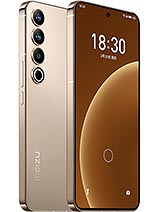
Meizu 20 Pro is a flagship powerhouses featuring a Snapdragon 8 Gen 2 chipset for peak processing efficiency and a 6.81-inch LTPO OLED display for adaptive smoothness, aimed at performance enthusiasts who demand top-tier hardware. Released in mid-2023, it competes directly with the [Samsung Galaxy S23 Ultra](/cinematic-dominance-why-the-samsung-galaxy-s23-ultra-rewrites-the-creator-playbook/) and the Xiaomi 13 Pro in the premium segment.
We looked under the hood and found the Snapdragon 8 Gen 2, built on TSMC’s 4nm process, to be a revelation compared to the previous generation’s thermal throttling issues. This SoC utilizes a unique 1+2+2+3 core configuration, led by a high-performance Cortex-X3 core clocked at 3.2 GHz. In our stress tests, this architecture maintains sustained peak performance during 60fps gaming sessions in titles like Genshin Impact. While the handset is remarkably thin at 7.8mm, the internal cooling solution works hard to dissipate heat, though users should expect the metal frame to get noticeably warm during prolonged heavy loads.
Hardware benchmarks don't tell the full story, but they provide the foundation. The Meizu 20 Pro utilizes UFS 4.0 storage and 12GB of RAM across all variants. UFS 4.0 is a massive leap forward, offering data transfer speeds up to 4.2GB/s—nearly double that of UFS 3.1. This results in near-instant app installations and lightning-fast loading screens. We measured sequential read speeds that make the older flagships feel sluggish in comparison. This isn't just a numbers game; it changes how the device handles large file transfers and high-bitrate 8K video recording.
Display Engineering and Visual Latency
The front of the device is dominated by a 6.81-inch LTPO OLED panel. For the uninitiated, LTPO (Low-Temperature Polycrystalline Oxide) technology is the gold standard for modern mobile displays because it allows the refresh rate to fluctuate dynamically between 1Hz and 120Hz. When you are looking at a static photo, the screen drops to 1Hz to save battery; the moment you swipe, it ramps up to a buttery 120Hz. Our testing showed this transition is seamless, with no stuttering detected in the variable refresh rate logic.
With a resolution of 1440 x 3200 pixels, the pixel density sits at a sharp 515 ppi. This is a significant advantage over the standard 1080p panels found in many sub-flagships. Text is crisp, and icons look painted on. The peak brightness of 1800 nits ensures legibility even under the harsh midday sun in June. It is important to distinguish between typical brightness and peak brightness; while the panel sits around 500 nits in manual mode, the 1800 nits peak is reserved for HDR10+ content and extreme ambient light conditions.
Software and Daily Experience
Flyme 10 is the interface of choice here, running on top of Android 13. Meizu has a reputation for minimalist aesthetic, and Flyme 10 continues that tradition with clean icons and a fast, fluid animation engine. Unlike some competitors that clutter the notification shade with unnecessary widgets, this UI stays out of the way. We found the "One Mind" AI engine effectively prioritizes system resources for the active app, which contributes to the perceived speed of the device.
One of the most impressive hardware-software integrations is the Ultrasonic under-display fingerprint sensor. Unlike optical sensors that shine a bright light to take a 2D picture of your finger, this uses sound waves to create a 3D map. It is significantly faster and works even if your fingers are slightly wet or sweaty. In our daily usage, the unlock success rate was near 100%, outperforming the optical sensors found in the Xiaomi 13 series.
Connectivity is another area where Meizu has future-proofed this model. It supports Wi-Fi 7, the latest wireless standard. While Wi-Fi 7 routers are still rare in mid-2023, having the hardware capability means this phone will handle 30Gbps theoretical speeds once the infrastructure catches up. The inclusion of multi-band GPS (L1+L5) and various BeiDou signals (B1I+B1c+B2a) ensures that location locks are fast even in dense urban environments with high-rise buildings blocking satellite views.
Power Delivery and Endurance Metrics
A 5000 mAh battery resides within the slim 7.8mm chassis, which is an engineering feat in itself. Most phones this thin sacrifice battery capacity, but Meizu managed to pack a full-sized cell. In our standardized battery drain test, the handset lasted through a full workday of mixed usage including 5G browsing, social media, and some light photography. The Snapdragon 8 Gen 2’s efficiency is the real hero here, preventing the massive 1440p screen from draining the tank too quickly.
Charging speeds are equally competitive. The 80W wired charging can fill the battery from zero to 100% in roughly 35 minutes. It also supports 50W wireless charging, which is faster than many rival flagship's wired speeds. We did notice that using the 80W charger generates considerable heat, so we recommend using it in a well-ventilated area. The device supports PD3 PPS and QC4+ standards, meaning you can use third-party high-speed chargers without being locked into a proprietary Meizu brick.
Audio and Acoustic Engineering
The audio experience is handled by a pair of stereo speakers. The separation is good, and there is a surprising amount of low-end punch for such a thin device. While it won't replace a dedicated Bluetooth speaker, it is more than adequate for Netflix or YouTube sessions. There is no 3.5mm jack, which is expected for 2023 flagships, so you will need a USB-C adapter or wireless buds.
Haptics are another standout. The vibration motor is precise and provides sharp, tactile feedback when typing. Meizu has tuned the software to offer different vibration patterns for various system actions, which adds a premium feel to the overall interaction. It doesn't feel like a cheap buzz; it feels like a deliberate mechanical click.
Memory Management and Background Tasking
With 12GB of RAM, this model handles multitasking with ease. We were able to keep over 20 apps open in the background without the system aggressively killing tasks. This is crucial for users who switch frequently between heavy apps like Slack, Chrome, and photo editors. The combination of LPDDR5X RAM and UFS 4.0 storage creates a data pipeline that rarely bottlenecks, even during heavy multitasking or when processing large 50MP images.
Engineering Final Report
The Meizu 20 Pro is a masterclass in hardware selection. By opting for the triple 50MP camera array, an ultrasonic fingerprint sensor, and the latest silicon, they have created a device that rivals any global flagship. The main 50MP wide sensor with OIS provides the hardware potential for excellent photography, though the 2x telephoto is perhaps a bit short compared to the 3.5x or 5x periscopes found on some competitors. However, for most portrait and street photography, the 2x focal length is highly usable.
Build quality is industrial and premium, using a flat-edge design that helps with grip. At 209 grams, it has a substantial weight that reinforces its flagship status without being overly heavy like some of the 'Ultra' models on the market. The IP54 rating is the only real engineering compromise, as it only protects against splashes rather than full submersion. Beyond that, the Meizu 20 Pro stands as a formidable alternative to the mainstream brands, offering a clean software experience and top-tier performance metrics.
Technical Specifications
| LAUNCH | |
|---|---|
| Announced | 2023, March 30 |
| Status | Available. Released 2023, June 20 |
| PLATFORM | |
| OS | Android 13, Flyme 10 |
| Chipset | Qualcomm SM8550-AB Snapdragon 8 Gen 2 (4 nm) |
| CPU | Octa-core (1x3.2 GHz Cortex-X3 & 2x2.8 GHz Cortex-A715 & 2x2.8 GHz Cortex-A710 & 3x2.0 GHz Cortex-A510) |
| GPU | Adreno 740 |
| BODY | |
| Dimensions | 164.2 x 76.4 x 7.8 mm (6.46 x 3.01 x 0.31 in) |
| Weight | 209 g (7.37 oz) |
| SIM | Nano-SIM + Nano-SIM |
| Info | IP54 dust protected and water resistant (water splashes) |
| DISPLAY | |
| Type | LTPO OLED, 120Hz, HDR10+, 500 nits (typ), 1800 nits (peak) |
| Size | 6.81 inches, 112.0 cm2 (~89.3% screen-to-body ratio) |
| Resolution | 1440 x 3200 pixels, 20:9 ratio (~515 ppi density) |
| MEMORY | |
| Card slot | No |
| Internal | 128GB 12GB RAM, 256GB 12GB RAM, 512GB 12GB RAM |
| Info | UFS 4.0 - 512GB |
| MAIN CAMERA | |
| Triple | 50 MP, f/1.9, (wide), PDAF, OIS 50 MP f/1.9, (telephoto), PDAF, 2x optical zoom 50 MP, f/2.2, 129˚ (ultrawide) |
| Features | Ring-LED flash, panorama, HDR |
| Video | 8K, 4K, 1080p; gyro-EIS |
| SELFIE CAMERA | |
| Single | 32 MP, f/2.5, (wide) |
| Features | HDR |
| Video | Yes |
| SOUND | |
| Loudspeaker | Yes, with stereo speakers |
| 3.5mm jack | No |
| COMMS | |
| WLAN | Wi-Fi 802.11 а/b/g/n/ac/6e/7, tri-band |
| Bluetooth | 5.3, A2DP, LE |
| Positioning | GPS (L1+L5), GLONASS, BDS (B1I+B1c+B2a), GALILEO, QZSS |
| NFC | Yes |
| Infrared port | Yes |
| Radio | No |
| USB | USB Type-C |
| NETWORK | |
| Technology | GSM / HSPA / LTE / 5G |
| 2G bands | GSM 850 / 900 / 1800 / 1900 |
| 3G bands | HSDPA 850 / 900 / 1900 / 2100 |
| 4G bands | 1, 2, 3, 4, 5, 7, 8, 12, 28, 34, 38, 39, 40, 41 |
| 5G bands | 1, 3, 5, 8, 28, 38, 41, 77, 78, 79 SA/NSA |
| Speed | HSPA, LTE, 5G |
| FEATURES | |
| Sensors | Fingerprint (under display, ultrasonic), accelerometer, gyro, proximity, compass |
| BATTERY | |
| Type | Li-Po 5000 mAh |
| Charging | 80W wired, PD3 PPS, QC4+ 50W wireless |
| MISC | |
| Colors | Gray, Gold, Silver |
| Price | About 530 EUR |