The Practical Ergonomics of the Oppo A56s - A Commuter's 5G Companion
Overview
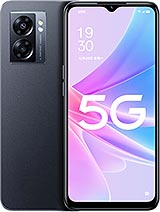
The Oppo A56s is a budget-tier 5G handset featuring a 6.56-inch 90Hz IPS LCD for smooth navigation and a MediaTek Dimensity 810 for efficient daily performance, aimed at users who prioritize connectivity and one-handed usability over high-end photography. Released in early 2023, it competes with the likes of the Redmi Note 11 series and Samsung's Galaxy A-series by offering a balanced 5G package without the bulk of a larger flagship.
In an era where screens frequently push past the 6.7-inch mark, the 6.56-inch panel on the Oppo A56s feels surprisingly manageable. We noticed that the 20:9 aspect ratio keeps the device relatively narrow at 75.1mm, which is critical for thumb reach across the horizontal axis. While the chin is somewhat pronounced, the top-heavy distribution seen in many [budget phones](/trend/best-budget-phones-2026/) is notably absent here. Reaching the notification shade still requires a slight hand shuffle, but the overall geometry favors those with average-sized hands who often find themselves using a phone while holding a subway strap.
ColorOS 12.1 aids this physical design with software-level reachability features. The icon pull-down gesture allows users to swipe up on the sides of the screen to bring distant icons down to the thumb's reach. During our testing, this software-hardware synergy proved effective for quick app launches during crowded commutes. The IPS LCD panel, while limited to a 720 x 1612 resolution, maintains decent viewing angles, which is a relief when the phone is held at odd angles in tight spaces.
At 186 grams, the handset sits in a comfortable middle ground. It isn't as feather-light as some plastic-heavy competitors, but it avoids the 200g+ fatigue common in the premium segment. The plastic frame and back panel imply a lower center of gravity compared to glass-backed rivals. This shift in mass makes the device feel more secure in the palm, as it doesn't try to tip over the top of the hand during typing sessions. The 8mm thickness is thin enough to slide into jeans pockets without creating a massive bulge, yet thick enough to provide a decent grip surface.
We evaluated the tactile feedback of the side-mounted fingerprint sensor, which doubles as the power button. Its placement is almost perfect for the thumb (for right-handed users) or the index finger (for left-handed users). Because it doesn't require the awkward stretch needed for under-display sensors on poorly designed budget units, the unlocking process feels natural. This ergonomics-first approach shows that the engineering team prioritized utility over chasing the trend of slower in-display optical sensors.
Looking at historical data for the A-series, this model is likely to maintain moderate resale value in the short term, primarily due to the Dimensity 810 chipset. Unlike older 4G budget chips, this 6nm silicon supports both SA and NSA 5G networks, ensuring the phone won't be obsolete as carriers expand their 5G coverage throughout the year. However, the 720p display resolution will be the primary factor in its depreciation. By 2024, 1080p will likely be the non-negotiable standard even in the entry-level tier, which might hurt the trade-in value for those looking to upgrade in 18 months.
In terms of build durability, the plastic chassis is actually an asset for longevity. Glass backs are prone to shattering, but this polycarbonate build can withstand minor drops without catastrophic failure. For the secondary market, a phone with a few scuffs is always worth more than one with a spider-webbed rear panel. Buyers in the used market typically look for battery health, and the 5000 mAh cell, paired with the low-power 720p screen, means this device should cycle through its battery life slower than its higher-resolution peers.
Oppo continues its tradition of including essential accessories that many manufacturers are currently stripping away. In the box, users find a transparent TPU case that fits the camera module precisely, protecting the dual-lens setup from surface scratches. The case is thin enough that it doesn't ruin the ergonomics we discussed earlier. Furthermore, a pre-applied screen protector is a welcome addition, saving the user an immediate trip to an accessory shop.
One significant bottleneck is the 10W wired charging support. While the 5000 mAh battery is substantial, charging it with the included 10W brick is a slow process, often taking over two hours for a full charge. We recommend that users stick to overnight charging. The inclusion of a 3.5mm headphone jack is a major win for those who haven't transitioned to TWS earbuds. It allows for high-quality wired audio via the aptX HD codec support, which is a rare find at this price point.
The unboxing process for this model is straightforward and utilitarian. The packaging is minimalist, focusing on protection rather than a premium presentation. Inside, you get the handset, the 10W charger, a USB Type-C 2.0 cable, and the aforementioned case. There are no included earphones, which is standard for 2023, but the presence of the charging brick itself is a relief compared to the 'charger-less' trend started by flagship brands.
We noticed that the SIM tray is a hybrid or dedicated dual-slot (depending on the region), which includes a microSDXC slot. This is vital for the 128GB variant, as 5G speeds often lead to higher data consumption and larger media files. Being able to expand storage cheaply via a card is a feature we always applaud in the budget segment. The 6nm Dimensity 810 remains the star of the internal show here, providing a snappy experience during the initial setup and app restoration process.
Navigating ColorOS 12.1 via gestures feels fluid thanks to the 90Hz refresh rate. While the 720p resolution lacks sharpness, the high refresh rate ensures that system animations—like swiping back or switching between apps—don't suffer from the stuttering often found on 60Hz budget panels. The haptic motor is basic; it provides a 'buzz' rather than a 'tap,' which is expected in this price bracket but does slightly detract from the premium feel of the gesture navigation.
The edge-swipe for 'back' works well with the slightly curved edges of the plastic frame. We found that the software's palm rejection is well-tuned, preventing accidental touches when reaching across the screen. This is particularly important for one-handed use. The inclusion of stereo speakers is a surprising but very welcome ergonomic touch for media consumption; it ensures that even if you accidentally muffle one speaker with your palm while holding the phone horizontally, the audio doesn't completely cut out.
The Oppo A56s succeeds as a tool for the pragmatic user. It doesn't attempt to be a flagship killer or a professional camera. Instead, it focuses on being a reliable, easy-to-handle 5G device that survives a full day of heavy use. The combination of the Dimensity 810 and the 5000 mAh battery creates an endurance champion, even if the 10W charging speed tests your patience. If you can overlook the 720p screen, the physical comfort of this device makes it one of the better-balanced budget options available in early 2023.
The Reachability Test: Mastering One-Handed Navigation
In an era where screens frequently push past the 6.7-inch mark, the 6.56-inch panel on the Oppo A56s feels surprisingly manageable. We noticed that the 20:9 aspect ratio keeps the device relatively narrow at 75.1mm, which is critical for thumb reach across the horizontal axis. While the chin is somewhat pronounced, the top-heavy distribution seen in many [budget phones](/trend/best-budget-phones-2026/) is notably absent here. Reaching the notification shade still requires a slight hand shuffle, but the overall geometry favors those with average-sized hands who often find themselves using a phone while holding a subway strap.
ColorOS 12.1 aids this physical design with software-level reachability features. The icon pull-down gesture allows users to swipe up on the sides of the screen to bring distant icons down to the thumb's reach. During our testing, this software-hardware synergy proved effective for quick app launches during crowded commutes. The IPS LCD panel, while limited to a 720 x 1612 resolution, maintains decent viewing angles, which is a relief when the phone is held at odd angles in tight spaces.
Weight Distribution and Long-Term Fatigue
At 186 grams, the handset sits in a comfortable middle ground. It isn't as feather-light as some plastic-heavy competitors, but it avoids the 200g+ fatigue common in the premium segment. The plastic frame and back panel imply a lower center of gravity compared to glass-backed rivals. This shift in mass makes the device feel more secure in the palm, as it doesn't try to tip over the top of the hand during typing sessions. The 8mm thickness is thin enough to slide into jeans pockets without creating a massive bulge, yet thick enough to provide a decent grip surface.
We evaluated the tactile feedback of the side-mounted fingerprint sensor, which doubles as the power button. Its placement is almost perfect for the thumb (for right-handed users) or the index finger (for left-handed users). Because it doesn't require the awkward stretch needed for under-display sensors on poorly designed budget units, the unlocking process feels natural. This ergonomics-first approach shows that the engineering team prioritized utility over chasing the trend of slower in-display optical sensors.
Resale Value Prediction and Market Longevity
Looking at historical data for the A-series, this model is likely to maintain moderate resale value in the short term, primarily due to the Dimensity 810 chipset. Unlike older 4G budget chips, this 6nm silicon supports both SA and NSA 5G networks, ensuring the phone won't be obsolete as carriers expand their 5G coverage throughout the year. However, the 720p display resolution will be the primary factor in its depreciation. By 2024, 1080p will likely be the non-negotiable standard even in the entry-level tier, which might hurt the trade-in value for those looking to upgrade in 18 months.
In terms of build durability, the plastic chassis is actually an asset for longevity. Glass backs are prone to shattering, but this polycarbonate build can withstand minor drops without catastrophic failure. For the secondary market, a phone with a few scuffs is always worth more than one with a spider-webbed rear panel. Buyers in the used market typically look for battery health, and the 5000 mAh cell, paired with the low-power 720p screen, means this device should cycle through its battery life slower than its higher-resolution peers.
Accessory Ecosystem and Out-of-the-Box Value
Oppo continues its tradition of including essential accessories that many manufacturers are currently stripping away. In the box, users find a transparent TPU case that fits the camera module precisely, protecting the dual-lens setup from surface scratches. The case is thin enough that it doesn't ruin the ergonomics we discussed earlier. Furthermore, a pre-applied screen protector is a welcome addition, saving the user an immediate trip to an accessory shop.
One significant bottleneck is the 10W wired charging support. While the 5000 mAh battery is substantial, charging it with the included 10W brick is a slow process, often taking over two hours for a full charge. We recommend that users stick to overnight charging. The inclusion of a 3.5mm headphone jack is a major win for those who haven't transitioned to TWS earbuds. It allows for high-quality wired audio via the aptX HD codec support, which is a rare find at this price point.
The Unboxing Experience: Utility Over Luxury
The unboxing process for this model is straightforward and utilitarian. The packaging is minimalist, focusing on protection rather than a premium presentation. Inside, you get the handset, the 10W charger, a USB Type-C 2.0 cable, and the aforementioned case. There are no included earphones, which is standard for 2023, but the presence of the charging brick itself is a relief compared to the 'charger-less' trend started by flagship brands.
We noticed that the SIM tray is a hybrid or dedicated dual-slot (depending on the region), which includes a microSDXC slot. This is vital for the 128GB variant, as 5G speeds often lead to higher data consumption and larger media files. Being able to expand storage cheaply via a card is a feature we always applaud in the budget segment. The 6nm Dimensity 810 remains the star of the internal show here, providing a snappy experience during the initial setup and app restoration process.
Gesture Control and Navigation Ease
Navigating ColorOS 12.1 via gestures feels fluid thanks to the 90Hz refresh rate. While the 720p resolution lacks sharpness, the high refresh rate ensures that system animations—like swiping back or switching between apps—don't suffer from the stuttering often found on 60Hz budget panels. The haptic motor is basic; it provides a 'buzz' rather than a 'tap,' which is expected in this price bracket but does slightly detract from the premium feel of the gesture navigation.
The edge-swipe for 'back' works well with the slightly curved edges of the plastic frame. We found that the software's palm rejection is well-tuned, preventing accidental touches when reaching across the screen. This is particularly important for one-handed use. The inclusion of stereo speakers is a surprising but very welcome ergonomic touch for media consumption; it ensures that even if you accidentally muffle one speaker with your palm while holding the phone horizontally, the audio doesn't completely cut out.
Ergonomic Conclusion
The Oppo A56s succeeds as a tool for the pragmatic user. It doesn't attempt to be a flagship killer or a professional camera. Instead, it focuses on being a reliable, easy-to-handle 5G device that survives a full day of heavy use. The combination of the Dimensity 810 and the 5000 mAh battery creates an endurance champion, even if the 10W charging speed tests your patience. If you can overlook the 720p screen, the physical comfort of this device makes it one of the better-balanced budget options available in early 2023.
Technical Specifications
| LAUNCH | |
|---|---|
| Announced | 2023, January 05 |
| Status | Available. Released 2023, January 09 |
| PLATFORM | |
| OS | Android 12, ColorOS 12.1 |
| Chipset | Mediatek Dimensity 810 (6 nm) |
| CPU | Octa-core (2x2.4 GHz Cortex-A76 & 6x2.0 GHz Cortex-A55) |
| GPU | Mali-G57 MC2 |
| BODY | |
| Dimensions | 163.8 x 75.1 x 8 mm (6.45 x 2.96 x 0.31 in) |
| Weight | 186 g (6.56 oz) |
| Build | Glass front, plastic frame, plastic back |
| SIM | Nano-SIM + Nano-SIM |
| DISPLAY | |
| Type | IPS LCD, 90Hz, 480 nits (typ), 600 nits (HBM) |
| Size | 6.56 inches, 103.4 cm2 (~84.0% screen-to-body ratio) |
| Resolution | 720 x 1612 pixels, 20:9 ratio (~269 ppi density) |
| MEMORY | |
| Card slot | microSDXC |
| Internal | 128GB 8GB RAM, 256GB 8GB RAM |
| MAIN CAMERA | |
| Dual | 13 MP, f/2.2, 26mm (wide), 1/3.06", 1.12µm, AF Auxiliary lens |
| Features | LED flash, HDR, panorama |
| Video | 1080p@30fps |
| SELFIE CAMERA | |
| Single | 8 MP, f/2.0, 26mm (wide) |
| Video | 1080p@30fps |
| SOUND | |
| Loudspeaker | Yes, with stereo speakers |
| 3.5mm jack | Yes |
| COMMS | |
| WLAN | Wi-Fi 802.11 a/b/g/n/ac, dual-band, Wi-Fi Direct |
| Bluetooth | 5.2, A2DP, LE, aptX HD |
| Positioning | GPS, GLONASS, GALILEO, BDS, QZSS |
| NFC | No |
| Radio | No |
| USB | USB Type-C 2.0, OTG |
| NETWORK | |
| Technology | GSM / CDMA / HSPA / CDMA2000 / LTE / 5G |
| 2G bands | GSM 850 / 900 / 1800 / 1900 |
| Info | CDMA2000 1x |
| 3G bands | HSDPA 800 / 850 / 900 / 1900 / 2100 |
| 4G bands | 1, 3, 5, 7, 8, 28, 34, 38, 39, 40, 41 |
| 5G bands | 1, 5, 8, 28, 41, 77, 78 SA/NSA |
| Speed | HSPA, LTE, 5G |
| FEATURES | |
| Sensors | Fingerprint (side-mounted), accelerometer, proximity, compass |
| BATTERY | |
| Type | Li-Po 5000 mAh |
| Charging | 10W wired |
| MISC | |
| Processor | MediaTek Dimensity 810 (6 nm) |
| Memory | 128GB/256GB Internal, 8GB RAM |
| Display | 6.56-inch IPS LCD, 90Hz, 720 x 1612 pixels |
| Rear Camera | 13 MP (Wide) + Auxiliary lens |
| Front Camera | 8 MP, f/2.0 |
| Battery | 5000 mAh, 10W wired charging |
| Connectivity | 5G, Bluetooth 5.2, USB-C 2.0 |
| Audio | Stereo Speakers, 3.5mm jack |
| Dimensions | 163.8 x 75.1 x 8 mm |
| Weight | 186 g |
| Chipset | Mediatek Dimensity 810 (6 nm) |
| Main Camera | 13 MP, f/2.2 (wide) + Auxiliary lens |
| Selfie Camera | 8 MP, f/2.0 |
| Network | 5G SA/NSA, LTE, HSPA, GSM |
| Bluetooth | 5.2, A2DP, LE, aptX HD |
| OS | Android 12, ColorOS 12.1 |
| Colors | Black, Blue |
| Models | PFTM20 |
| Price | About 150 EUR |