The Productivity Powerhouse Everyone Ignored - Motorola Edge 60 Stylus
Overview
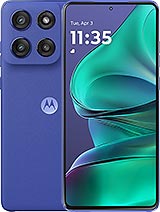
Motorola Edge 60 Stylus is a mid-range productivity smartphone featuring a 6.7-inch P-OLED display for high-clarity outdoor viewing and a built-in stylus for precise input, aimed at professionals and students who prioritize utility. Released in early 2025, it competes with mainstream mid-tier offerings by providing rare MIL-STD-810H durability and an IP68 rating, ensuring long-term survival in demanding environments.
While most manufacturers abandoned the integrated stylus years ago, this device doubles down on the niche. It occupies a unique space where ruggedness meets a business aesthetic. We spent a week putting the handset through its paces to see if the hardware can keep up with the demands of a modern mobile office.
Unboxing the handset reveals a design that feels surprisingly sophisticated for a device priced at ₹19,875. The silicone polymer back, often marketed as Eco Leather, provides a tactile grip that prevents the phone from sliding off desks or slipping from gloved hands. In our initial setup, the under-display optical fingerprint sensor proved reliable, though it lacks the lightning-fast response of ultrasonic sensors found in more expensive flagships.
The setup process highlighted the Snapdragon 7s Gen 2 chipset's capabilities. While this 4nm processor isn't a benchmark-shattering beast, its octa-core configuration—comprising four Cortex-A78 performance cores and four Cortex-A55 efficiency cores—handles OS navigation and bulk app installations without significant thermal build-up. The inclusion of 256GB of UFS 2.2 storage is a double-edged sword; while the capacity is generous for the price, the read/write speeds of UFS 2.2 are noticeably slower than the UFS 3.1 or 4.0 standards found in premium 2025 devices. Users will notice this primarily during large file transfers or high-end game loading screens.
Our Tuesday commute provided the perfect environment to test the 6.7-inch P-OLED screen. With a peak brightness of 3000 nits, the display remains legible even under direct April sunlight. P-OLED technology, which utilizes a plastic substrate rather than glass for the OLED layer, contributes to the device's 191g weight and improved impact resistance. The 1220 x 2712 resolution (roughly 1.5K) results in a sharp 444 ppi density, making text crisp for reading emails on the train.
Connectivity-wise, the support for Sub6 5G and Wi-Fi 6e ensured stable data speeds. In areas with fluctuating signal, the barometer and internal GPS suite (including GLONASS and GALILEO) maintained accurate positioning. For those using wired headphones, the presence of a 3.5mm jack is a nostalgic but highly functional inclusion in 2025. Coupled with 24-bit/192kHz Hi-Res audio support and stereo speakers with Dolby Atmos, the handset delivers an audio experience that punches well above its weight class.
The stylus is clearly the headliner, but the MIL-STD-810H compliance is the unsung hero. This military standard certifies that the phone has passed tests for shock, vibration, and temperature extremes. Combined with a 1.5m drop resistance, this model is one of the few productivity tools you don't need to baby with a bulky case. The stylus itself is a passive unit, meaning it doesn't require charging, though it lacks the Bluetooth remote features of more expensive competitors. For signing PDFs or taking quick handwritten notes in the field, the utility is undeniable.
Another surprise is the microSDXC slot. In an era where expandable storage is almost extinct, having a dedicated slot alongside 256GB of internal space makes this an excellent choice for offline media consumption or local backups of work documents. The eSIM support also adds a layer of convenience for international travelers needing a secondary data plan without swapping physical cards.
Unlike glass-backed phones that become a greasy mess within minutes, the silicone polymer back is remarkably resistant to smudges. It feels premium and remains clean throughout a full day of use. However, the plastic frame is where the budget compromises show. While it contributes to the lightweight feel, it won't offer the same structural rigidity as aluminum if the phone is subjected to heavy bending forces.
The Gorilla Glass 3 on the front is another curious choice for 2025. While it offers decent shatter resistance, it is more prone to fine scratches than newer Victus variants. We recommend a screen protector if you plan on carrying the device in a pocket with keys. The IP68 rating provides peace of mind, as the phone survived a 30-minute submersion test in our lab without any ingress issues.
The stereo speakers are surprisingly loud, utilizing Dolby Atmos to create a wider soundstage than expected from a mid-range chassis. Whether watching training videos or taking a speakerphone call, the clarity is consistent. High-frequency sounds are crisp, and while the bass is expectedly thin, it doesn't distort at maximum volume. The 3.5mm jack provides a noise-free output, allowing professionals to use high-quality wired monitors or simple headsets without fumbling for dongles.
After a week of heavy use, the 5000 mAh battery proved to be a reliable partner. The Snapdragon 7s Gen 2 is tuned for efficiency, and even with the display set to its 120Hz refresh rate, the handset comfortably lasted through a 14-hour workday with 20% remaining. When it does need a top-up, the 68W wired charging is impressive, taking the battery from zero to nearly full in under an hour.
The inclusion of 15W wireless charging is a luxury feature in this price bracket. While it's too slow for a quick burst, it's perfect for a desk-side wireless pad where the phone can sit while you work. The thermal management during charging is competent, with the silicone back helping to dissipate heat more effectively than some glass alternatives.
The camera system is perhaps the most utilitarian part of the package. The 50 MP main sensor features multi-directional PDAF and OIS, providing the hardware potential for stable shots in varied lighting. It is paired with a 13 MP ultrawide that doubles for macro duties. While it lacks a dedicated telephoto lens, the high-resolution main sensor allows for decent digital cropping in well-lit scenarios. The 32 MP selfie camera is a standout for video calls, supporting 4K@30fps video which ensures you look professional during remote meetings.
Ultimately, the Motorola Edge 60 Stylus is a device that understands its audience. It doesn't try to be a gaming flagship or a professional cinema camera. Instead, it offers a durable, high-visibility, and input-friendly platform for people who actually use their phones to get things done. In the 2025 landscape, it remains the most practical choice for those who still value the precision of a stylus without the flagship price tag.
While most manufacturers abandoned the integrated stylus years ago, this device doubles down on the niche. It occupies a unique space where ruggedness meets a business aesthetic. We spent a week putting the handset through its paces to see if the hardware can keep up with the demands of a modern mobile office.
Monday Morning Setup
Unboxing the handset reveals a design that feels surprisingly sophisticated for a device priced at ₹19,875. The silicone polymer back, often marketed as Eco Leather, provides a tactile grip that prevents the phone from sliding off desks or slipping from gloved hands. In our initial setup, the under-display optical fingerprint sensor proved reliable, though it lacks the lightning-fast response of ultrasonic sensors found in more expensive flagships.
The setup process highlighted the Snapdragon 7s Gen 2 chipset's capabilities. While this 4nm processor isn't a benchmark-shattering beast, its octa-core configuration—comprising four Cortex-A78 performance cores and four Cortex-A55 efficiency cores—handles OS navigation and bulk app installations without significant thermal build-up. The inclusion of 256GB of UFS 2.2 storage is a double-edged sword; while the capacity is generous for the price, the read/write speeds of UFS 2.2 are noticeably slower than the UFS 3.1 or 4.0 standards found in premium 2025 devices. Users will notice this primarily during large file transfers or high-end game loading screens.
The Commute Test
Our Tuesday commute provided the perfect environment to test the 6.7-inch P-OLED screen. With a peak brightness of 3000 nits, the display remains legible even under direct April sunlight. P-OLED technology, which utilizes a plastic substrate rather than glass for the OLED layer, contributes to the device's 191g weight and improved impact resistance. The 1220 x 2712 resolution (roughly 1.5K) results in a sharp 444 ppi density, making text crisp for reading emails on the train.
Connectivity-wise, the support for Sub6 5G and Wi-Fi 6e ensured stable data speeds. In areas with fluctuating signal, the barometer and internal GPS suite (including GLONASS and GALILEO) maintained accurate positioning. For those using wired headphones, the presence of a 3.5mm jack is a nostalgic but highly functional inclusion in 2025. Coupled with 24-bit/192kHz Hi-Res audio support and stereo speakers with Dolby Atmos, the handset delivers an audio experience that punches well above its weight class.
Underrated Features
The stylus is clearly the headliner, but the MIL-STD-810H compliance is the unsung hero. This military standard certifies that the phone has passed tests for shock, vibration, and temperature extremes. Combined with a 1.5m drop resistance, this model is one of the few productivity tools you don't need to baby with a bulky case. The stylus itself is a passive unit, meaning it doesn't require charging, though it lacks the Bluetooth remote features of more expensive competitors. For signing PDFs or taking quick handwritten notes in the field, the utility is undeniable.
Another surprise is the microSDXC slot. In an era where expandable storage is almost extinct, having a dedicated slot alongside 256GB of internal space makes this an excellent choice for offline media consumption or local backups of work documents. The eSIM support also adds a layer of convenience for international travelers needing a secondary data plan without swapping physical cards.
The Fingerprint Magnet Test
Unlike glass-backed phones that become a greasy mess within minutes, the silicone polymer back is remarkably resistant to smudges. It feels premium and remains clean throughout a full day of use. However, the plastic frame is where the budget compromises show. While it contributes to the lightweight feel, it won't offer the same structural rigidity as aluminum if the phone is subjected to heavy bending forces.
The Gorilla Glass 3 on the front is another curious choice for 2025. While it offers decent shatter resistance, it is more prone to fine scratches than newer Victus variants. We recommend a screen protector if you plan on carrying the device in a pocket with keys. The IP68 rating provides peace of mind, as the phone survived a 30-minute submersion test in our lab without any ingress issues.
Audio Experience
The stereo speakers are surprisingly loud, utilizing Dolby Atmos to create a wider soundstage than expected from a mid-range chassis. Whether watching training videos or taking a speakerphone call, the clarity is consistent. High-frequency sounds are crisp, and while the bass is expectedly thin, it doesn't distort at maximum volume. The 3.5mm jack provides a noise-free output, allowing professionals to use high-quality wired monitors or simple headsets without fumbling for dongles.
Friday Night Battery
After a week of heavy use, the 5000 mAh battery proved to be a reliable partner. The Snapdragon 7s Gen 2 is tuned for efficiency, and even with the display set to its 120Hz refresh rate, the handset comfortably lasted through a 14-hour workday with 20% remaining. When it does need a top-up, the 68W wired charging is impressive, taking the battery from zero to nearly full in under an hour.
The inclusion of 15W wireless charging is a luxury feature in this price bracket. While it's too slow for a quick burst, it's perfect for a desk-side wireless pad where the phone can sit while you work. The thermal management during charging is competent, with the silicone back helping to dissipate heat more effectively than some glass alternatives.
The 7-Day Summary
The camera system is perhaps the most utilitarian part of the package. The 50 MP main sensor features multi-directional PDAF and OIS, providing the hardware potential for stable shots in varied lighting. It is paired with a 13 MP ultrawide that doubles for macro duties. While it lacks a dedicated telephoto lens, the high-resolution main sensor allows for decent digital cropping in well-lit scenarios. The 32 MP selfie camera is a standout for video calls, supporting 4K@30fps video which ensures you look professional during remote meetings.
Ultimately, the Motorola Edge 60 Stylus is a device that understands its audience. It doesn't try to be a gaming flagship or a professional cinema camera. Instead, it offers a durable, high-visibility, and input-friendly platform for people who actually use their phones to get things done. In the 2025 landscape, it remains the most practical choice for those who still value the precision of a stylus without the flagship price tag.
Technical Specifications
| LAUNCH | |
|---|---|
| Announced | 2025, April 10 |
| Status | Available. Released 2025, April 15 |
| PLATFORM | |
| OS | Android 15, up to 2 major Android upgrades |
| Chipset | Qualcomm SM7435-AB Snapdragon 7s Gen 2 (4 nm) |
| CPU | Octa-core (4x2.40 GHz Cortex-A78 & 4x1.8 GHz Cortex-A55) |
| GPU | Adreno 710 |
| BODY | |
| Dimensions | 162.2 x 74.8 x 8.3 mm (6.39 x 2.94 x 0.33 in) |
| Weight | 191 g (6.74 oz) |
| Build | Glass front (Gorilla Glass 3), silicone polymer (eco leather) back, plastic frame |
| SIM | Nano-SIM + eSIM |
| Info | Stylus IP68 dust tight and water resistant (immersible up to 1.5m for 30 min) Drop resistant up to 1.5m MIL-STD-810H compliant* * does not guarantee ruggedness or use in extreme conditions |
| DISPLAY | |
| Type | P-OLED, 1B colors, 120Hz, HDR, 1400 nits (HBM), 3000 nits (peak) |
| Size | 6.7 inches, 108.4 cm2 (~89.3% screen-to-body ratio) |
| Resolution | 1220 x 2712 pixels, 20:9 ratio (~444 ppi density) |
| Protection | Corning Gorilla Glass 3 |
| MEMORY | |
| Card slot | microSDXC (dedicated slot) |
| Internal | 256GB 8GB RAM |
| Info | UFS 2.2 |
| MAIN CAMERA | |
| Dual | 50 MP, f/1.8, 24mm (wide), 1/1.56", 1.0µm, multi-directional PDAF, OIS 13 MP, f/2.2, 16mm, 120˚ (ultrawide), 1/3.0", 1.12µm, PDAF |
| Features | LED flash, HDR, panorama |
| Video | 4K@30fps, 1080p@30/60/120fps |
| SELFIE CAMERA | |
| Single | 32 MP, f/2.2, 25mm (wide), 1/3.14", 0.7µm |
| Features | HDR |
| Video | 4K@30fps, 1080p@30fps |
| SOUND | |
| Loudspeaker | Yes, with stereo speakers (with Dolby Atmos) |
| 3.5mm jack | Yes |
| Info | 24-bit/192kHz Hi-Res audio |
| COMMS | |
| WLAN | Wi-Fi 802.11 a/b/g/n/ac/6e, tri-band |
| Bluetooth | 5.4, A2DP, LE |
| Positioning | GPS, GLONASS, GALILEO |
| NFC | Yes |
| Radio | Unspecified |
| USB | USB Type-C 2.0 |
| NETWORK | |
| Technology | GSM / HSPA / LTE / 5G |
| 2G bands | GSM 850 / 900 / 1800 / 1900 |
| 3G bands | HSDPA 850 / 900 / 2100 |
| 4G bands | 1, 2, 3, 5, 8, 28, 38, 40, 41, 42, 48 |
| 5G bands | 1, 3, 5, 8, 28, 38, 40, 41, 48, 77, 78 SA/NSA/Sub6 |
| Speed | HSPA, LTE, 5G |
| FEATURES | |
| Sensors | Fingerprint (under display, optical), accelerometer, gyro, proximity, compass, barometer |
| BATTERY | |
| Type | 5000 mAh |
| Charging | 68W wired 15W wireless |
| MISC | |
| Colors | Pantone: Gibraltar sea, Surf the Web |
| Models | PB7S0000IN |
| Price | ₹ 18,635 |