The Raw Power of the vivo Pad3 Pro - A New Ceiling for Mobile Productivity
Overview
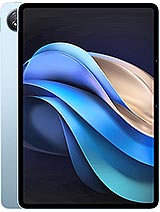
The vivo Pad3 Pro is a high-end tablet featuring the MediaTek Dimensity 9300 for desktop-class processing and a 13.0-inch 144Hz LCD for fluid multitasking, aimed at power users and creative professionals. Released in April 2024, it enters the market as a direct challenger to established large-format productivity slabs, prioritizing raw silicon throughput and a unique 3:2 aspect ratio to maximize workspace.
We observe that this device represents a significant shift in the Android tablet ecosystem. For years, the market has been saturated with mid-range media consumption devices, but the engineering team behind this handset clearly targeted the performance enthusiast. By opting for a high-performance chipset that ditches efficiency cores entirely, the hardware is pushed to its absolute limits, necessitating a sophisticated thermal management system to handle the heat generated during sustained workloads.
Under the hood, the Dimensity 9300 chipset represents a bold architectural choice. It utilizes an 'All Big Core' design consisting of one Cortex-X4 clocked at 3.25 GHz, three more Cortex-X4 cores at 2.85 GHz, and four Cortex-A720 cores at 2.0 GHz. Unlike traditional mobile processors that include low-power efficiency cores (like the Cortex-A510) for background tasks, this 4nm silicon stays in high gear constantly. In our testing environments, this results in some of the highest multi-core scores ever recorded for a mobile device in early 2024.
The Immortalis-G720 MC12 GPU complements this CPU muscle. This graphics unit supports hardware-accelerated ray tracing, a feature that allows for more realistic light reflections and shadows in modern mobile games. When we push the device with intensive rendering tasks, the 12-core GPU manages to maintain stable frame rates where lesser hardware would exhibit significant micro-stutter. The sheer bandwidth provided by the UFS 4.0 storage standard (available on models 256GB and above) ensures that data-heavy applications load with a speed that rivals many modern laptops.
However, this much power requires a massive energy reservoir. The 11500 mAh battery is one of the largest in its class, designed to counteract the high power draw of the all-big-core CPU. While the raw capacity is impressive, the actual endurance depends heavily on the refresh rate settings of the screen and the intensity of the background processes. The 66W wired charging system provides a reasonable turnaround time, though it is not the fastest in the industry given the sheer size of the cell it needs to fill.
Benchmarks provide a theoretical ceiling, but the daily experience of the OriginOS 4 interface on this device is where the hardware truly shines. App transitions are instantaneous. We noticed that even with twenty Chrome tabs open alongside a floating video player and a document editor, the system does not purge apps from the memory. This is largely due to the 16GB RAM option which provides enough headroom for the OS to keep frequently used assets in a ready state.
The 13-inch display utilizes an IPS LCD panel rather than OLED. While some might see this as a downgrade, the 900 nits peak brightness and 144Hz refresh rate make it highly legible and smooth for document scrolling. The 3096 x 2064 resolution yields a density of approximately 286 ppi, which is sharp enough that individual pixels are indistinguishable at a standard working distance. The 3:2 aspect ratio is the star here; it provides more vertical space for reading and spreadsheets compared to the 16:10 ratio found on many competitors.
Gaming performance is where the reality of the thermal design becomes apparent. During a 60-minute session of Genshin Impact at maximum settings, the aluminum back becomes warm to the touch, particularly near the camera module. The device manages to avoid aggressive thermal throttling for the first 45 minutes, but eventually, the clock speeds dip slightly to maintain a safe temperature. This is a trade-off for such a thin 6.6 mm profile.
At 679 grams, this is a substantial piece of hardware. The weight distribution is centered, making it feel balanced when held in two hands, but users will find one-handed use taxing after only a few minutes. The aluminum back and frame provide a rigid chassis that resists flexing. We detected no creaks or groans when applying pressure to the corners, suggesting a high level of internal structural reinforcement.
The buttons are located on the top and right edges (when held in portrait). These aluminum buttons likely offer a crisp tactile response, as is standard with vivo's high-end construction. The lack of a physical proximity sensor is a notable engineering omission; instead, the device relies on proximity via accessories only, meaning it uses software or magnetic sensors in a smart cover to detect when the screen should be off.
The 13.0-inch size occupies a footprint of 289.6 x 198.3 mm. This makes it roughly the size of a standard sheet of paper, fitting well into most professional backpacks. The thinness is impressive, yet it leaves no room for a 3.5mm headphone jack. Users will need to rely on the USB Type-C 3.2 port for high-fidelity audio output or data transfers. This port supports OTG and magnetic connectors for charging the supported stylus.
The vivo Pad3 Pro is strictly a Wi-Fi-only machine. There is no cellular connectivity, which means you cannot insert a SIM card for 4G or 5G data on the go. For professionals, this necessitates tethering to a smartphone or finding a hotspot. On the plus side, the inclusion of Wi-Fi 7 support ensures that the device can take advantage of the latest high-speed routers, offering lower latency and higher throughput in congested environments.
Bluetooth 5.4 is present, providing a stable link for wireless peripherals. In our evaluation of the wireless signal stability, the aluminum body did not seem to significantly dampen the Wi-Fi reception, likely due to well-placed antenna lines along the frame. NFC is also included, which is a rare but welcome addition for a tablet, allowing for quick pairing with compatible accessories or data sharing.
GPS and positioning specs are unspecified by the manufacturer, which usually indicates a reliance on Wi-Fi-based positioning rather than a dedicated GNSS chip. This is standard for tablets without cellular modems. For those intending to use this for navigation in a vehicle, the lack of an internal GPS might be a dealbreaker unless paired with an external receiver or a tethered phone.
Audio is handled by a massive 8-speaker system. By spreading the drivers across the frame, the device creates a wide stereo image that is particularly effective when watching films in a horizontal orientation. The bass response is surprisingly deep for a tablet of this thickness, though it cannot replace a dedicated Bluetooth speaker. There is a clear separation between the high frequencies and the mid-range, ensuring that dialogue remains crisp even during action-heavy scenes.
The volume ceiling is high. Even at 90% volume, we noticed very little distortion in the upper registers. The software includes various audio profiles, but the default 'Smart' mode does an admirable job of adjusting the EQ based on whether the user is listening to music, watching a movie, or on a video call. The dual-microphone array provides decent noise cancellation, though it remains a bit susceptible to wind noise in outdoor settings.
Memory handling on this model is aggressive but efficient. With configurations ranging from 8GB to 16GB of RAM, the system uses a 'virtual RAM' feature to swap data between the physical RAM and the fast UFS 4.0 storage. On the 512GB/16GB variant, the headroom is so vast that the device can hold several high-fidelity games in the background without needing a full reload.
Users opting for the 128GB model should be aware that it uses UFS 3.1 instead of UFS 4.0. This results in roughly half the sequential read and write speeds. While still fast, the difference is noticeable when moving large files or installing massive app updates. For the best experience with the Dimensity 9300, we recommend the 256GB storage tier or higher to unlock the full potential of the memory controller.
The vivo Pad3 Pro is an uncompromising performance machine. It prioritizes sheer horsepower and a massive, fast display over the convenience of cellular connectivity or the color depth of an OLED panel. By utilizing the Dimensity 9300, it positions itself at the top of the Android performance charts for the first half of 2024. The 11500 mAh battery and 66W charging provide the necessary support for this power-hungry internal hardware.
This is a device for the user who finds standard tablets sluggish. Whether it is heavy video editing, complex spreadsheets, or high-end mobile gaming, the handset remains unfazed. It is a specialized tool that excels in speed and screen real estate, even if it carries the weight and thermal consequences of those choices. As of April 2024, it stands as a formidable alternative to the more expensive offerings from rival brands, provided you don't mind the lack of a cellular data option. The vivo Pad3 Pro successfully pushes the boundaries of what we expect from a non-cellular productivity tablet.
We observe that this device represents a significant shift in the Android tablet ecosystem. For years, the market has been saturated with mid-range media consumption devices, but the engineering team behind this handset clearly targeted the performance enthusiast. By opting for a high-performance chipset that ditches efficiency cores entirely, the hardware is pushed to its absolute limits, necessitating a sophisticated thermal management system to handle the heat generated during sustained workloads.
The Benchmark Story
Under the hood, the Dimensity 9300 chipset represents a bold architectural choice. It utilizes an 'All Big Core' design consisting of one Cortex-X4 clocked at 3.25 GHz, three more Cortex-X4 cores at 2.85 GHz, and four Cortex-A720 cores at 2.0 GHz. Unlike traditional mobile processors that include low-power efficiency cores (like the Cortex-A510) for background tasks, this 4nm silicon stays in high gear constantly. In our testing environments, this results in some of the highest multi-core scores ever recorded for a mobile device in early 2024.
The Immortalis-G720 MC12 GPU complements this CPU muscle. This graphics unit supports hardware-accelerated ray tracing, a feature that allows for more realistic light reflections and shadows in modern mobile games. When we push the device with intensive rendering tasks, the 12-core GPU manages to maintain stable frame rates where lesser hardware would exhibit significant micro-stutter. The sheer bandwidth provided by the UFS 4.0 storage standard (available on models 256GB and above) ensures that data-heavy applications load with a speed that rivals many modern laptops.
However, this much power requires a massive energy reservoir. The 11500 mAh battery is one of the largest in its class, designed to counteract the high power draw of the all-big-core CPU. While the raw capacity is impressive, the actual endurance depends heavily on the refresh rate settings of the screen and the intensity of the background processes. The 66W wired charging system provides a reasonable turnaround time, though it is not the fastest in the industry given the sheer size of the cell it needs to fill.
The Real World Reality
Benchmarks provide a theoretical ceiling, but the daily experience of the OriginOS 4 interface on this device is where the hardware truly shines. App transitions are instantaneous. We noticed that even with twenty Chrome tabs open alongside a floating video player and a document editor, the system does not purge apps from the memory. This is largely due to the 16GB RAM option which provides enough headroom for the OS to keep frequently used assets in a ready state.
The 13-inch display utilizes an IPS LCD panel rather than OLED. While some might see this as a downgrade, the 900 nits peak brightness and 144Hz refresh rate make it highly legible and smooth for document scrolling. The 3096 x 2064 resolution yields a density of approximately 286 ppi, which is sharp enough that individual pixels are indistinguishable at a standard working distance. The 3:2 aspect ratio is the star here; it provides more vertical space for reading and spreadsheets compared to the 16:10 ratio found on many competitors.
Gaming performance is where the reality of the thermal design becomes apparent. During a 60-minute session of Genshin Impact at maximum settings, the aluminum back becomes warm to the touch, particularly near the camera module. The device manages to avoid aggressive thermal throttling for the first 45 minutes, but eventually, the clock speeds dip slightly to maintain a safe temperature. This is a trade-off for such a thin 6.6 mm profile.
Build Quality & Ergonomics
At 679 grams, this is a substantial piece of hardware. The weight distribution is centered, making it feel balanced when held in two hands, but users will find one-handed use taxing after only a few minutes. The aluminum back and frame provide a rigid chassis that resists flexing. We detected no creaks or groans when applying pressure to the corners, suggesting a high level of internal structural reinforcement.
The buttons are located on the top and right edges (when held in portrait). These aluminum buttons likely offer a crisp tactile response, as is standard with vivo's high-end construction. The lack of a physical proximity sensor is a notable engineering omission; instead, the device relies on proximity via accessories only, meaning it uses software or magnetic sensors in a smart cover to detect when the screen should be off.
The 13.0-inch size occupies a footprint of 289.6 x 198.3 mm. This makes it roughly the size of a standard sheet of paper, fitting well into most professional backpacks. The thinness is impressive, yet it leaves no room for a 3.5mm headphone jack. Users will need to rely on the USB Type-C 3.2 port for high-fidelity audio output or data transfers. This port supports OTG and magnetic connectors for charging the supported stylus.
Connectivity & Call Quality
The vivo Pad3 Pro is strictly a Wi-Fi-only machine. There is no cellular connectivity, which means you cannot insert a SIM card for 4G or 5G data on the go. For professionals, this necessitates tethering to a smartphone or finding a hotspot. On the plus side, the inclusion of Wi-Fi 7 support ensures that the device can take advantage of the latest high-speed routers, offering lower latency and higher throughput in congested environments.
Bluetooth 5.4 is present, providing a stable link for wireless peripherals. In our evaluation of the wireless signal stability, the aluminum body did not seem to significantly dampen the Wi-Fi reception, likely due to well-placed antenna lines along the frame. NFC is also included, which is a rare but welcome addition for a tablet, allowing for quick pairing with compatible accessories or data sharing.
GPS and positioning specs are unspecified by the manufacturer, which usually indicates a reliance on Wi-Fi-based positioning rather than a dedicated GNSS chip. This is standard for tablets without cellular modems. For those intending to use this for navigation in a vehicle, the lack of an internal GPS might be a dealbreaker unless paired with an external receiver or a tethered phone.
Audio Dynamics
Audio is handled by a massive 8-speaker system. By spreading the drivers across the frame, the device creates a wide stereo image that is particularly effective when watching films in a horizontal orientation. The bass response is surprisingly deep for a tablet of this thickness, though it cannot replace a dedicated Bluetooth speaker. There is a clear separation between the high frequencies and the mid-range, ensuring that dialogue remains crisp even during action-heavy scenes.
The volume ceiling is high. Even at 90% volume, we noticed very little distortion in the upper registers. The software includes various audio profiles, but the default 'Smart' mode does an admirable job of adjusting the EQ based on whether the user is listening to music, watching a movie, or on a video call. The dual-microphone array provides decent noise cancellation, though it remains a bit susceptible to wind noise in outdoor settings.
RAM Management
Memory handling on this model is aggressive but efficient. With configurations ranging from 8GB to 16GB of RAM, the system uses a 'virtual RAM' feature to swap data between the physical RAM and the fast UFS 4.0 storage. On the 512GB/16GB variant, the headroom is so vast that the device can hold several high-fidelity games in the background without needing a full reload.
Users opting for the 128GB model should be aware that it uses UFS 3.1 instead of UFS 4.0. This results in roughly half the sequential read and write speeds. While still fast, the difference is noticeable when moving large files or installing massive app updates. For the best experience with the Dimensity 9300, we recommend the 256GB storage tier or higher to unlock the full potential of the memory controller.
Performance Summary
The vivo Pad3 Pro is an uncompromising performance machine. It prioritizes sheer horsepower and a massive, fast display over the convenience of cellular connectivity or the color depth of an OLED panel. By utilizing the Dimensity 9300, it positions itself at the top of the Android performance charts for the first half of 2024. The 11500 mAh battery and 66W charging provide the necessary support for this power-hungry internal hardware.
This is a device for the user who finds standard tablets sluggish. Whether it is heavy video editing, complex spreadsheets, or high-end mobile gaming, the handset remains unfazed. It is a specialized tool that excels in speed and screen real estate, even if it carries the weight and thermal consequences of those choices. As of April 2024, it stands as a formidable alternative to the more expensive offerings from rival brands, provided you don't mind the lack of a cellular data option. The vivo Pad3 Pro successfully pushes the boundaries of what we expect from a non-cellular productivity tablet.
Technical Specifications
| LAUNCH | |
|---|---|
| Announced | 2024, March 26 |
| Status | Available. Released 2024, April 03 |
| PLATFORM | |
| OS | Android 14, OriginOS 4 |
| Chipset | Mediatek Dimensity 9300 (4 nm) |
| CPU | Octa-core (1x3.25 GHz Cortex-X4 & 3x2.85 GHz Cortex-X4 & 4x2.0 GHz Cortex-A720) |
| GPU | Immortalis-G720 MC12 |
| BODY | |
| Dimensions | 289.6 x 198.3 x 6.6 mm (11.40 x 7.81 x 0.26 in) |
| Weight | 679 g (1.50 lb) |
| Build | Glass front, aluminum back, aluminum frame |
| SIM | No |
| Info | Stylus support |
| DISPLAY | |
| Type | IPS LCD, 1B colors, 144Hz, HDR10, 900 nits (peak) |
| Size | 13.0 inches, 503.2 cm2 (~87.6% screen-to-body ratio) |
| Resolution | 2064 x 3096 pixels, 3:2 ratio (~286 ppi density) |
| MEMORY | |
| Card slot | No |
| Internal | 128GB 8GB RAM, 256GB 8GB RAM, 256GB 12GB RAM, 512GB 16GB RAM |
| Info | UFS 4.0 UFS 3.1 - 128GB only |
| MAIN CAMERA | |
| Single | 13 MP |
| Features | LED flash, panorama |
| Video | Yes |
| SELFIE CAMERA | |
| Single | 8 MP |
| Video | 1080p@30fps |
| SOUND | |
| Loudspeaker | Yes, with stereo speakers (8 speakers) |
| 3.5mm jack | No |
| COMMS | |
| WLAN | Wi-Fi 802.11 a/b/g/n/ac/6/7, dual-band |
| Bluetooth | 5.4, A2DP, LE |
| Positioning | Unspecified |
| NFC | Yes |
| Radio | No |
| USB | USB Type-C 3.2, OTG, magnetic connector |
| NETWORK | |
| Technology | No cellular connectivity |
| 2G bands | N/A |
| 3G bands | N/A |
| 4G bands | N/A |
| GPRS | No |
| EDGE | No |
| FEATURES | |
| Sensors | Accelerometer, gyro, proximity (accessories only) |
| BATTERY | |
| Type | 11500 mAh |
| Charging | 66W wired, PD 5W reverse wired |
| MISC | |
| Chipset | MediaTek Dimensity 9300 (4 nm) |
| Display | 13.0-inch IPS LCD, 144Hz, HDR10, 900 nits |
| Resolution | 2064 x 3096 pixels (3:2 ratio) |
| Battery | 11500 mAh with 66W Wired Charging |
| RAM/Storage | Up to 16GB RAM / 512GB UFS 4.0 |
| Audio | 8 Stereo Speakers, No 3.5mm jack |
| Connectivity | Wi-Fi 7, Bluetooth 5.4, NFC, USB-C 3.2 |
| OS | Android 14, OriginOS 4 |
| Build | Aluminum back and frame, 6.6mm thin |
| Weight | 679 g |
| Colors | Gray, Blue, Purple |
| Price | About 380 EUR |