The realme 11 4G - A High-Definition Productivity Hub for the Budget Professional
Overview
A Professional Definition of the Compact Workhorse
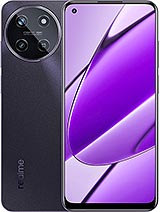
realme 11 4G is a mid-range productivity smartphone featuring a 6.4-inch Super AMOLED display for crisp visual output and 67W wired charging for rapid power recovery, aimed at mobile professionals who prioritize battery efficiency and screen clarity in a lightweight form factor. Released in July 2023, it competes with established budget contenders like the [Samsung Galaxy A24](/stop-overpaying-for-tech-the-samsung-galaxy-a24-4g-is-the-practical-king-of-may/) and the Redmi Note 12 4G, positioning itself as a more balanced alternative focused on charging speed and sensor-level camera detail.
While the market shifts aggressively toward 5G, this handset doubles down on the 4G LTE ecosystem, banking on the stability and maturity of the Mediatek Helio G99 chipset. We see this as a strategic move for users in regions where 5G infrastructure remains spotty or for those who prefer longer battery endurance over theoretical peak data speeds. The hardware choices here suggest a device built for the long haul—literally and figuratively.
Virtual Workspace Capabilities
Productivity on the go requires more than just a fast CPU; it demands software that understands a user's workflow. While the realme 11 4G does not offer a dedicated desktop mode similar to Samsung DeX, it utilizes the realme UI 3.0 interface to bridge the gap between a mobile handset and a portable workstation. The 8GB of RAM, which can be expanded virtually using storage space, allows for significant background activity. Users can keep multiple heavy applications like Microsoft Teams, Slack, and Google Sheets open simultaneously without the system aggressively killing processes.
Connecting this device to an external display via standard screencast protocols provides a large-canvas experience. Because the Super AMOLED panel reaches 1000 nits peak brightness, it serves as an excellent reference monitor even in brightly lit environments. When mirroring to a television or a compatible monitor, the device manages its heat well, thanks to the 6nm process of the Helio G99 chipset. This efficiency ensures that a 40-minute presentation or a collaborative video session won't lead to thermal throttling that plagues thinner or less optimized competitors.
Data Management and File Logistics
For the digital archivist or the field professional, storage speed is just as critical as capacity. This model utilizes UFS 2.2 storage, which is a significant upgrade over the older eMMC standards found in entry-level devices. UFS 2.2 introduces Write Booster technology, which essentially creates a high-speed buffer to accelerate app installations and file saves. If you are moving large batches of high-resolution 108 MP photographs or downloading 4K video assets for review, the increased sequential write speeds mean less time staring at a progress bar.
Physical expansion remains a key differentiator. The inclusion of a dedicated microSDXC slot is a win for productivity. It allows users to separate their primary application storage from their massive media libraries or archival documents. Professionals can swap cards to transfer data between cameras and the phone, or simply use a 512GB card to store an entire year's worth of work projects without taxing the internal 128GB or 256GB chips. However, we must note that the USB Type-C 2.0 port is the bottleneck here. While it supports OTG for connecting thumb drives or keyboards, its data transfer speeds are limited to 480 Mbps. Moving 50GB of data via a cable to a PC will take considerably longer than it would on a flagship device with USB 3.1.
The 'Day in the Life' Productivity Stress Test
Morning (07:00
Midday (12:00
Evening (18:00
The Deal Breakers: Where the Compromises Are Felt
No device is perfect, and the realme 11 4G makes several concessions to hit its price target. First, the build materials are strictly functional. The plastic frame and plastic back lack the rigidity and premium hand-feel of glass or metal. While this makes the phone light at 178 grams, it also makes it feel less like a professional tool and more like a consumer-grade toy. A high-quality case is mandatory to avoid the inevitable scuffs that plastic accumulates.
Second, the video capabilities are surprisingly stunted. Despite having a massive 108 MP sensor, the processor limits video recording to 1080p at 30fps. In an era where even budget-conscious users expect 4K for content creation or 60fps for smoother motion, this feels like a missed opportunity. If your productivity involves high-end video production or detailed site inspections requiring high-frame-rate footage, the camera software will frustrate you. Furthermore, the absence of an ultrawide lens means you cannot capture wide architectural spaces or tight indoor environments in a single shot.
Finally, the audio setup is a single-speaker affair. For a phone intended for media consumption and video calls, the lack of stereo speakers is disappointing. While there is a 3.5mm jack and support for 24-bit/192kHz Hi-Res audio and aptX HD, the built-in speaker sounds thin and is easily blocked by a hand when holding the phone in landscape mode. It's a functional audio system, but far from an immersive one.
Biometrics and Enterprise Security
Security is paramount for any device carrying sensitive work data. This model utilizes a side-mounted fingerprint sensor integrated into the power button. In our assessment, this is often superior to the slow, under-display optical sensors found in other mid-range AMOLED phones. The physical contact provides nearly instantaneous unlocking, and the failure rate is exceptionally low. It's a reliable gatekeeper for your biometric-locked apps like banking or password managers.
Face unlock is also present, utilizing the 16 MP front-facing camera. While it is fast in good lighting, it lacks dedicated IR hardware, meaning it is less secure and less reliable in the dark compared to the fingerprint scanner. On the software side, realme UI 3.0 includes a Private Safe and App Lock, allowing users to silo their work applications and sensitive documents behind an extra layer of encryption. For a professional, these tools are essential for maintaining a boundary between personal life and corporate data.
Multitasking and Performance Chops
The combination of the Mali-G57 MC2 GPU and the Helio G99 provides a stable platform for multitasking. While it isn't a gaming powerhouse, it excels at "productivity gaming"—managing complex spreadsheets, editing high-resolution PDFs, and switching between heavy browser tabs. The 8GB of RAM is the star of the show here. The system manages memory effectively, keeping most apps in a suspended state rather than closing them entirely.
We tested the multitasking by running a split-screen view with a YouTube tutorial on the top and a note-taking app on the bottom. The 90Hz refresh rate remains consistent, with very few dropped frames. This fluidity is vital for a professional workflow; stuttering interfaces lead to user fatigue. The Corning Gorilla Glass 5 protecting the display adds a layer of durability, ensuring that the screen survives the occasional bump against a desk or a pen in a pocket. It's a resilient setup that prioritizes consistent uptime over raw, peak benchmarks.
Final Productivity Assessment
In the context of July 2023, the realme 11 4G is a specialist tool. It doesn't try to be everything to everyone. It ignores 5G and 4K video to provide a superior charging experience and a high-quality AMOLED screen at a price point that is accessible for many. For the field worker who needs a phone that charges in a flash and stays visible under the noon sun, it is an excellent choice. For the office worker who needs a reliable secondary device for handling files and communication, its microSD expansion and solid RAM management are highly valuable.
Ultimately, the realme 11 4G succeeds by focusing on the fundamentals: power, display, and charging. If you can overlook the plastic build and the limited video recording, you are left with a very capable mobile office that won't leave you tethered to a wall outlet for half the day.
Technical Specifications
| LAUNCH | |
|---|---|
| Announced | 2023, July 31 |
| Status | Available. Released 2023, July 31 |
| PLATFORM | |
| OS | Android 12, Realme UI 3.0 |
| Chipset | Mediatek Helio G99 (6 nm) |
| CPU | Octa-core (2x2.2 GHz Cortex-A76 & 6x2.0 GHz Cortex-A55) |
| GPU | Mali-G57 MC2 |
| BODY | |
| Dimensions | 159.9 x 73.3 x 8 mm (6.30 x 2.89 x 0.31 in) |
| Weight | 178 g (6.28 oz) |
| Build | Glass front (Gorilla Glass 5), plastic frame, plastic back |
| SIM | Nano-SIM + Nano-SIM |
| DISPLAY | |
| Type | Super AMOLED, 90Hz, 1000 nits (peak) |
| Size | 6.4 inches, 98.9 cm2 (~84.4% screen-to-body ratio) |
| Resolution | 1080 x 2400 pixels, 20:9 ratio (~411 ppi density) |
| Protection | Corning Gorilla Glass 5 |
| MEMORY | |
| Card slot | microSDXC (dedicated slot) |
| Internal | 128GB 8GB RAM, 256GB 8GB RAM |
| Info | UFS 2.2 |
| MAIN CAMERA | |
| Dual | 108 MP, f/1.8, 25mm (wide), 1/1.67", 0.64µm, PDAF Auxiliary lens |
| Features | LED flash, HDR, panorama |
| Video | 1080p@30fps |
| SELFIE CAMERA | |
| Single | 16 MP, f/2.5, 27mm (wide) |
| Features | HDR, panorama |
| Video | 1080p@30fps |
| SOUND | |
| Loudspeaker | Yes |
| 3.5mm jack | Yes |
| Info | 24-bit/192kHz Hi-Res audio |
| COMMS | |
| WLAN | Wi-Fi 802.11 a/b/g/n/ac, dual-band |
| Bluetooth | 5.2, A2DP, LE, aptX HD, aptX Adaptive |
| Positioning | GPS, GLONASS, GALILEO, BDS |
| NFC | Unspecified |
| Radio | No |
| USB | USB Type-C 2.0, OTG |
| NETWORK | |
| Technology | GSM / HSPA / LTE |
| 2G bands | GSM 850 / 900 / 1800 / 1900 |
| 3G bands | HSDPA 850 / 900 / 2100 |
| 4G bands | LTE |
| Speed | HSPA, LTE |
| FEATURES | |
| Sensors | Fingerprint (side-mounted), accelerometer, gyro, proximity, compass |
| BATTERY | |
| Type | 5000 mAh |
| Charging | 67W wired, 50% in 17 min |
| MISC | |
| Colors | Black, Gold |
| Models | RMX3636 |
| Price | About 280 EUR |