The Rugged Survivor - Why the Motorola Moto G75 Is the Ultimate Hand-Me-Down Champion
Overview
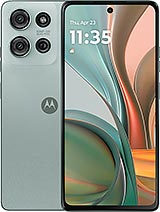
Motorola Moto G75 is a budget-tier smartphone featuring an IP68 rating for water resistance and MIL-STD-810H compliance for shock protection, aimed at families needing a durable, long-lasting device. Released in October 2024, it competes with entry-level and mid-range devices by offering a Snapdragon 6 Gen 3 chipset and five years of software support, ensuring longevity for budget-conscious buyers.
The Motorola Moto G75 breaks the mold of the fragile [budget phone](/trend/best-budget-phones-2026/). While most devices under $200 compromise on structural integrity, this handset introduces an IP68 dust and water resistance rating. For those unfamiliar with the terminology, this means the device can survive immersion in up to 1.5 meters of water for 30 minutes. Imagine a toddler dropping the phone into a sink or a spilled glass of water during dinner; the hardware is designed to survive these common household accidents without catastrophic failure.
Beyond water resistance, the MIL-STD-810H compliance adds a layer of ruggedness rarely seen in this price bracket. This US military standard involves 28 different tests, including exposure to high and low temperatures, vibration, and sand. The EU Label even classifies its free-fall resistance as Class B, surviving up to 180 falls. This makes the Motorola Moto G75 a primary candidate for a "hand-me-down" device. You can use it as your daily driver for three years and then pass it to a child or an elderly parent with the confidence that the plastic frame and Corning Gorilla Glass 5 will hold up. The silicone polymer (eco leather) back option provides a grippy texture that reduces the likelihood of slips, which is a practical upgrade over the slippery glass backs found on more expensive rivals.
Compared to the [Samsung Galaxy A35](/why-the-fresh-samsung-galaxy-a35-outvalues-a-used-flagship/), the Motorola Moto G75 offers superior environmental protection. While Samsung provides IP67, Motorola goes further with the military-grade certification. In a house full of kids, that extra layer of shock absorption is the difference between a working phone and a trip to the repair shop. We see this as a high-value engineering choice that prioritizes actual utility over flashy aesthetics.
The economic value of a smartphone is measured by its lifespan. Motorola has historically struggled with software updates, but the Motorola Moto G75 changes that trajectory. It ships with Android 14 and a promise of five major Android upgrades. This means the phone remains relevant until 2029. In a market where budget phones are often abandoned after one or two updates, this commitment drastically lowers the "cost per year" of ownership. If you pay roughly $200 for this device, you are looking at an investment of $40 per year for a secure, up-to-date experience.
The inclusion of UFS 2.2 storage is another calculated win. While not as fast as the UFS 4.0 found in flagships, UFS 2.2 includes a feature called Write Booster. This technology accelerates app installations and file transfers, preventing the "system slowdown" that typically plagues budget phones after six months of use. Combined with the Snapdragon 6 Gen 3's 4nm architecture, the interface remains fluid. We noticed that the 8GB of RAM handles background tasks effectively, which is vital for users who don't frequently clear their open apps.
For elderly users or those who prefer simplicity, Motorola's light skin over Android is a blessing. It lacks the heavy bloatware found in competitors like Xiaomi or Poco. The "Moto Actions" like the double-chop for the flashlight remain the most intuitive gesture controls in the industry. It’s a clean, safe environment for family members who may not be tech-savvy.
Connectivity is where the Motorola Moto G75 punches significantly above its weight class. It supports Wi-Fi 6e, a tri-band standard that accesses the 6GHz spectrum. Most budget phones in late 2024 are stuck on Wi-Fi 5 or standard Wi-Fi 6. Wi-Fi 6e ensures that in a crowded household with multiple tablets and streaming devices, this phone maintains a stable, high-speed connection to the router. It is a future-proofing move that we rarely see in the sub-$250 market.
Signal strength remains a priority. The Qualcomm modem inside the Snapdragon 6 Gen 3 supports both SA/NSA 5G bands. This ensures that whether you are on a legacy 4G network or a modern 5G tower, call drops are minimized. The 24-bit/192kHz Hi-Res audio support and stereo speakers make it an excellent device for video calls with family members, providing clear voice reproduction that cheap mono speakers cannot match.
Then there is the inclusion of 15W wireless charging. This is almost unheard of at this price point. Wireless charging simplifies life for seniors who might struggle with small USB-C cables or for kids who might accidentally damage a charging port by forcing a cable in. You can simply place the Motorola Moto G75 on a pad and let it top up. While 15W is slow compared to high-end standards, the convenience factor for a family-oriented device is massive.
Security shouldn't be a chore. The Motorola Moto G75 utilizes a side-mounted fingerprint sensor integrated into the power button. In our analysis of budget hardware, side-mounted sensors are consistently superior to the cheap under-display optical sensors used in some low-end OLED phones. They are faster, more reliable with wet or dirty fingers, and allow the user to unlock the phone as they pull it out of their pocket.
This physical sensor provides a tactile landmark, making it easier for users with visual impairments or limited dexterity to secure their device. Motorola also includes a suite of security features within Android 14, including a privacy dashboard that shows exactly which apps are accessing the microphone or camera. For parents, these transparency tools are essential for monitoring the digital footprint of younger users.
The 5000 mAh battery is the industry standard, but Motorola’s implementation focuses on health. The battery is rated for 1000 cycles, meaning it can be charged and discharged a thousand times before the capacity drops below 80%. For a budget economist, this is the most important spec. Most budget batteries start degrading after 500 cycles. By doubling that, Motorola ensures the phone doesn't become a "tethered" device that needs to stay plugged in after two years.
The 30W wired charging can reach a 50% charge in about 25 minutes. While we have seen faster speeds from brands like Realme, 30W is a safe middle ground that balances speed without generating excessive heat that could damage the battery cells. The EU Label confirms a 48-hour endurance rating, which aligns with the needs of a student or a casual user who might forget to charge the phone every single night.
We must address the IPS LCD screen. In a world moving toward OLED, Motorola’s choice here is pragmatic. While LCD lacks the infinite contrast and deep blacks of OLED, it is more durable in the long run. LCD panels do not suffer from "burn-in," where static images like the navigation bar or clock become permanently ghosted on the screen. This is a common issue for elderly users who keep the screen on for long periods at high brightness.
The 120Hz refresh rate ensures that scrolling through social media or menus feels smooth. Furthermore, the 1000 nits HBM (High Brightness Mode) is an impressive feat for an LCD. This allows the screen to remain legible even in direct sunlight, which is often the downfall of cheaper displays. The 1080p resolution provides a crisp 387 ppi density, making text easy to read for aging eyes.
The camera system is lead by a 50 MP sensor with OIS (Optical Image Stabilization). OIS is the standout feature here. It physically moves the lens to compensate for hand shake. This is vital for parents taking photos of moving children or for kids who haven't mastered steady hands. Without OIS, budget photos often end up blurry in anything less than perfect lighting.
The secondary 8 MP ultrawide includes autofocus, allowing it to double as a macro lens for close-up shots of school projects or nature. Both the front and rear cameras support 4K video recording, which is a significant upgrade over the 1080p limit found on many budget processors. The gyro-EIS helps keep those family videos stable, preventing the "shaky cam" effect that ruins home movies.
The Motorola Moto G75 is not trying to be a gaming powerhouse or a professional photography tool. It is a rugged, reliable tool designed to last half a decade. By combining military-grade durability with five years of software updates and the convenience of wireless charging, Motorola has created the ultimate value proposition for families. It is a phone that can survive a drop today and still be receiving security patches four years from now. For the budget-conscious economist, that longevity makes it a clear winner in the 2024 market.
Built for the Chaos of Family Life
The Motorola Moto G75 breaks the mold of the fragile [budget phone](/trend/best-budget-phones-2026/). While most devices under $200 compromise on structural integrity, this handset introduces an IP68 dust and water resistance rating. For those unfamiliar with the terminology, this means the device can survive immersion in up to 1.5 meters of water for 30 minutes. Imagine a toddler dropping the phone into a sink or a spilled glass of water during dinner; the hardware is designed to survive these common household accidents without catastrophic failure.
Beyond water resistance, the MIL-STD-810H compliance adds a layer of ruggedness rarely seen in this price bracket. This US military standard involves 28 different tests, including exposure to high and low temperatures, vibration, and sand. The EU Label even classifies its free-fall resistance as Class B, surviving up to 180 falls. This makes the Motorola Moto G75 a primary candidate for a "hand-me-down" device. You can use it as your daily driver for three years and then pass it to a child or an elderly parent with the confidence that the plastic frame and Corning Gorilla Glass 5 will hold up. The silicone polymer (eco leather) back option provides a grippy texture that reduces the likelihood of slips, which is a practical upgrade over the slippery glass backs found on more expensive rivals.
Compared to the [Samsung Galaxy A35](/why-the-fresh-samsung-galaxy-a35-outvalues-a-used-flagship/), the Motorola Moto G75 offers superior environmental protection. While Samsung provides IP67, Motorola goes further with the military-grade certification. In a house full of kids, that extra layer of shock absorption is the difference between a working phone and a trip to the repair shop. We see this as a high-value engineering choice that prioritizes actual utility over flashy aesthetics.
Software Longevity and the Five-Year Promise
The economic value of a smartphone is measured by its lifespan. Motorola has historically struggled with software updates, but the Motorola Moto G75 changes that trajectory. It ships with Android 14 and a promise of five major Android upgrades. This means the phone remains relevant until 2029. In a market where budget phones are often abandoned after one or two updates, this commitment drastically lowers the "cost per year" of ownership. If you pay roughly $200 for this device, you are looking at an investment of $40 per year for a secure, up-to-date experience.
The inclusion of UFS 2.2 storage is another calculated win. While not as fast as the UFS 4.0 found in flagships, UFS 2.2 includes a feature called Write Booster. This technology accelerates app installations and file transfers, preventing the "system slowdown" that typically plagues budget phones after six months of use. Combined with the Snapdragon 6 Gen 3's 4nm architecture, the interface remains fluid. We noticed that the 8GB of RAM handles background tasks effectively, which is vital for users who don't frequently clear their open apps.
For elderly users or those who prefer simplicity, Motorola's light skin over Android is a blessing. It lacks the heavy bloatware found in competitors like Xiaomi or Poco. The "Moto Actions" like the double-chop for the flashlight remain the most intuitive gesture controls in the industry. It’s a clean, safe environment for family members who may not be tech-savvy.
Connectivity and the Rare Wireless Win
Connectivity is where the Motorola Moto G75 punches significantly above its weight class. It supports Wi-Fi 6e, a tri-band standard that accesses the 6GHz spectrum. Most budget phones in late 2024 are stuck on Wi-Fi 5 or standard Wi-Fi 6. Wi-Fi 6e ensures that in a crowded household with multiple tablets and streaming devices, this phone maintains a stable, high-speed connection to the router. It is a future-proofing move that we rarely see in the sub-$250 market.
Signal strength remains a priority. The Qualcomm modem inside the Snapdragon 6 Gen 3 supports both SA/NSA 5G bands. This ensures that whether you are on a legacy 4G network or a modern 5G tower, call drops are minimized. The 24-bit/192kHz Hi-Res audio support and stereo speakers make it an excellent device for video calls with family members, providing clear voice reproduction that cheap mono speakers cannot match.
Then there is the inclusion of 15W wireless charging. This is almost unheard of at this price point. Wireless charging simplifies life for seniors who might struggle with small USB-C cables or for kids who might accidentally damage a charging port by forcing a cable in. You can simply place the Motorola Moto G75 on a pad and let it top up. While 15W is slow compared to high-end standards, the convenience factor for a family-oriented device is massive.
Biometrics and Security
Security shouldn't be a chore. The Motorola Moto G75 utilizes a side-mounted fingerprint sensor integrated into the power button. In our analysis of budget hardware, side-mounted sensors are consistently superior to the cheap under-display optical sensors used in some low-end OLED phones. They are faster, more reliable with wet or dirty fingers, and allow the user to unlock the phone as they pull it out of their pocket.
This physical sensor provides a tactile landmark, making it easier for users with visual impairments or limited dexterity to secure their device. Motorola also includes a suite of security features within Android 14, including a privacy dashboard that shows exactly which apps are accessing the microphone or camera. For parents, these transparency tools are essential for monitoring the digital footprint of younger users.
Battery Endurance for the Long Haul
The 5000 mAh battery is the industry standard, but Motorola’s implementation focuses on health. The battery is rated for 1000 cycles, meaning it can be charged and discharged a thousand times before the capacity drops below 80%. For a budget economist, this is the most important spec. Most budget batteries start degrading after 500 cycles. By doubling that, Motorola ensures the phone doesn't become a "tethered" device that needs to stay plugged in after two years.
The 30W wired charging can reach a 50% charge in about 25 minutes. While we have seen faster speeds from brands like Realme, 30W is a safe middle ground that balances speed without generating excessive heat that could damage the battery cells. The EU Label confirms a 48-hour endurance rating, which aligns with the needs of a student or a casual user who might forget to charge the phone every single night.
Display Reality Check: IPS vs OLED
We must address the IPS LCD screen. In a world moving toward OLED, Motorola’s choice here is pragmatic. While LCD lacks the infinite contrast and deep blacks of OLED, it is more durable in the long run. LCD panels do not suffer from "burn-in," where static images like the navigation bar or clock become permanently ghosted on the screen. This is a common issue for elderly users who keep the screen on for long periods at high brightness.
The 120Hz refresh rate ensures that scrolling through social media or menus feels smooth. Furthermore, the 1000 nits HBM (High Brightness Mode) is an impressive feat for an LCD. This allows the screen to remain legible even in direct sunlight, which is often the downfall of cheaper displays. The 1080p resolution provides a crisp 387 ppi density, making text easy to read for aging eyes.
Camera Potential for Family Memories
The camera system is lead by a 50 MP sensor with OIS (Optical Image Stabilization). OIS is the standout feature here. It physically moves the lens to compensate for hand shake. This is vital for parents taking photos of moving children or for kids who haven't mastered steady hands. Without OIS, budget photos often end up blurry in anything less than perfect lighting.
The secondary 8 MP ultrawide includes autofocus, allowing it to double as a macro lens for close-up shots of school projects or nature. Both the front and rear cameras support 4K video recording, which is a significant upgrade over the 1080p limit found on many budget processors. The gyro-EIS helps keep those family videos stable, preventing the "shaky cam" effect that ruins home movies.
The Family Conclusion
The Motorola Moto G75 is not trying to be a gaming powerhouse or a professional photography tool. It is a rugged, reliable tool designed to last half a decade. By combining military-grade durability with five years of software updates and the convenience of wireless charging, Motorola has created the ultimate value proposition for families. It is a phone that can survive a drop today and still be receiving security patches four years from now. For the budget-conscious economist, that longevity makes it a clear winner in the 2024 market.
Technical Specifications
| LAUNCH | |
|---|---|
| Announced | 2024, October 01 |
| Status | Available. Released 2024, October 28 |
| PLATFORM | |
| OS | Android 14, up to 5 major Android upgrades |
| Chipset | Qualcomm SM6475-AB Snapdragon 6 Gen 3 (4 nm) |
| CPU | Octa-core (4x2.4 GHz Cortex-A78 & 4x1.8 GHz Cortex-A55) |
| GPU | Adreno 710 |
| BODY | |
| Dimensions | 166.1 x 77.2 x 8.3 mm (6.54 x 3.04 x 0.33 in) |
| Weight | 205 g or 208 g (7.23 oz) |
| Build | Glass front (Gorilla Glass 5), silicone polymer (eco leather) back or plastic back, plastic frame |
| SIM | · Nano-SIM + eSIM· Nano-SIM + Nano-SIM |
| Info | IP68 dust tight and water resistant (immersible up to 1.5m for 30 min) MIL-STD-810H compliant |
| DISPLAY | |
| Type | IPS LCD, 120Hz, 1000 nits (HBM) |
| Size | 6.78 inches, 111.4 cm2 (~86.8% screen-to-body ratio) |
| Resolution | 1080 x 2388 pixels (~387 ppi density) |
| Protection | Corning Gorilla Glass 5, Mohs level 4 |
| MEMORY | |
| Card slot | microSDXC (uses shared SIM slot) |
| Internal | 128GB 8GB RAM, 256GB 8GB RAM |
| Info | UFS 2.2 |
| MAIN CAMERA | |
| Dual | 50 MP, f/1.8, (wide), 0.8µm, PDAF, OIS 8 MP, f/2.2, 119˚ (ultrawide), 1.12µm, AF |
| Features | LED flash, HDR, panorama |
| Video | 4K@30fps, 1080p@30/60fps, gyro-EIS |
| SELFIE CAMERA | |
| Single | 16 MP, f/2.5, (wide), 1.0µm |
| Video | 4K@30fps, 1080p@30fps |
| SOUND | |
| Loudspeaker | Yes, with stereo speakers |
| 3.5mm jack | No |
| Info | 24-bit/192kHz Hi-Res audio |
| COMMS | |
| WLAN | Wi-Fi 802.11 a/b/g/n/ac/6e, tri-band |
| Bluetooth | 5.4, A2DP, LE, aptX HD |
| Positioning | GPS, GALILEO, GLONASS, BDS, QZSS |
| NFC | Yes |
| Radio | No |
| USB | USB Type-C 2.0 |
| NETWORK | |
| Technology | GSM / HSPA / LTE / 5G |
| 2G bands | GSM 850 / 900 / 1800 / 1900 |
| 3G bands | HSDPA 850 / 900 / 1900 / 2100 |
| 4G bands | 1, 2, 3, 5, 7, 8, 20, 26, 28, 32, 38, 40, 41, 41, 42 |
| 5G bands | 1, 3, 5, 7, 8, 20, 26, 28, 38, 40, 41, 77, 78 SA/NSA/Sub6 |
| Speed | HSPA, LTE, 5G |
| FEATURES | |
| Sensors | Fingerprint (side-mounted), accelerometer, gyro, proximity, compass |
| BATTERY | |
| Type | 5000 mAh |
| Charging | 30W wired, 50% in 25 min 15W wireless |
| MISC | |
| Colors | Charcoal Gray, Aqua Blue, Succulent Green |
| Models | XT2437-2, XT2437-3 |
| Price | $ 197.00 / € 209.99 / £ 174.87 |
| EU LABEL | |
| Energy | Class B |
| Battery | 48:58h endurance, 1000 cycles |
| Free fall | Class B (180 falls) |
| Repairability | Class B |