The Samsung Galaxy F54 - Why This Battery Behemoth Is the Ultimate Productivity Tool
Overview
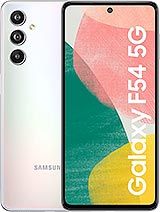
Samsung Galaxy F54 is a mid-range smartphone featuring a 6000 mAh battery for extreme endurance and a 108 MP main camera with OIS for stabilized photography, aimed at power users and long-distance travelers. Released in mid-2023, it competes with the [Xiaomi Redmi Note 12 Pro](/the-familiarity-paradox-why-the-xiaomi-redmi-note-12-pro-4g-proves-hardware-recycling-still-works/) and the [Realme 11 Pro](/why-the-realme-11-pro-is-the-new-gold-standard-for-value-hunters/)+.
In a market saturated with glass-and-metal flagships that struggle to survive a single workday of heavy hotspot usage or GPS navigation, the Samsung Galaxy F54 occupies a unique niche. We view this handset not as a primary luxury item, but as a high-utility backup asset. For professionals traveling through areas with inconsistent power access or for those who require a dedicated device for data tethering, the high internal storage capacity and massive battery make it a logical choice.
While high-end devices focus on aesthetic thinness, this model prioritizes the physical volume of its fuel cell. The 256GB of internal storage combined with 8GB of RAM ensures that it can function as a mobile workstation for documents, offline maps, and communication apps without the constant threat of a black screen. It is an insurance policy in your pocket.
Compared to the Galaxy A54 released earlier this year, this series sheds the premium glass back in favor of a plastic build. This decision reduces the risk of expensive structural damage during drops, reinforcing its identity as a tool meant for actual labor rather than display on a boardroom table.
The primary draw of the Samsung Galaxy F54 is the massive 6000 mAh lithium-polymer battery. This is significantly larger than the 5000 mAh industry standard found in the majority of mid-range competitors. In our evaluation of efficiency, the sheer capacity provides a buffer that allows users to push through 48 hours of moderate use without seeking a charger.
Powering the device is the Exynos 1380 chipset, built on a 5nm process. To understand the value here, one must look at the transistor density. The 5nm node allows for more efficient power management compared to older 7nm or 8nm chips. While the CPU handles background tasks using four Cortex-A55 cores, the four Cortex-A78 high-performance cores only engage during intensive workloads. This tiered architecture preserves the battery for when it is truly needed.
However, the massive capacity comes with a trade-off in charging time. While the handset supports 25W charging, filling a 6000 mAh tank takes considerably longer than the 60W or 80W solutions offered by competitors. Users should plan for overnight charging cycles rather than quick top-ups during a lunch break.
The 6.7-inch Super AMOLED Plus panel is a highlight that many budget-conscious buyers might overlook. Standard Super AMOLED screens often use a PenTile sub-pixel arrangement, which can sometimes lead to slightly soft text edges. The "Plus" designation indicates an RGB stripe layout, which provides superior text clarity and sharpness—a vital feature for those reading spreadsheets or long documents outdoors.
With a 120Hz refresh rate, the interface remains fluid, though the Exynos chipset may occasionally drop frames during heavy multitasking. The peak brightness levels are sufficient for outdoor visibility in direct June sunlight, though it does not reach the searing levels of the S23 series. We observed that the screen maintains color accuracy even at off-axis angles, which is a common failure point for cheaper LCD alternatives.
One minor irritation is the lack of a 3.5mm headphone jack. For a device aimed at utility and long-haul travel, the reliance on USB-C or Bluetooth audio seems like a missed opportunity for a truly versatile backup phone. Nevertheless, the presence of a microSDXC slot via the shared SIM tray allows for massive offline media libraries.
When we examine the build quality of the Samsung Galaxy F54, the haptic motor reveals the cost-cutting measures. Unlike the sharp, precise vibration found in flagship models, the motor here feels somewhat loose and buzzy. For users who rely on silent tactile notifications during meetings, the vibration might feel a bit distracting rather than subtle.
Software-based haptic tuning can only do so much to mask the hardware limitations. It is functional for typing feedback, but it lacks the premium "thud" found in more expensive devices. This is a common compromise in the sub-400 EUR price bracket where internal components like the vibration motor are often the first to be downgraded.
Similarly, the side-mounted fingerprint sensor is a practical choice. It is faster and more reliable than the under-display sensors found in some budget OLED phones. This placement allows for natural unlocking as soon as the handset is pulled from a pocket, which fits the utilitarian design language of the F-series.
This handset includes NavIC support, which is an independent regional satellite navigation system developed by India. For users in the South Asian region, this provides more precise positioning in urban canyons and remote areas compared to traditional GPS alone. We find this inclusion critical for a phone marketed as a travel and endurance companion.
The 5G modem supports both Standalone (SA) and Non-Standalone (NSA) architectures. With bands like n1, n3, n41, and n78 supported, the device is ready for the expanding 5G infrastructure of mid-2023. Signal holding is stable, though the plastic frame likely assists in radio transparency, resulting in fewer dropped calls in low-signal areas like elevators or basements.
Wi-Fi 6 support is another significant inclusion for a budget economist. Wi-Fi 6 allows for better handling of congested networks in airports or coffee shops. It provides the bandwidth necessary for 4K video streaming or large file transfers without the latency issues prevalent in older Wi-Fi 5 hardware.
The decision to use a plastic back and frame is a calculated one. While plastic is prone to minor surface scratches, it does not shatter like glass. For a secondary device that might be tossed into a bag with keys or used in rougher environments, this durability is an asset. However, the lack of an official IP rating for water and dust resistance means users must be cautious in rainy conditions.
Samsung has committed to four years of major Android upgrades and five years of security patches for the Samsung Galaxy F54. From an economist’s perspective, this extends the functional lifespan of the device well into 2027. This level of support is rare in the mid-range segment and significantly bolsters the long-term resale value.
A device that remains secure and up-to-date for half a decade is a better investment than a competitor that will be abandoned after one year. This software longevity compensates for the mid-range performance of the Exynos 1380, ensuring the phone remains usable as a backup for years to come.
The camera system lead by the 108MP sensor provides the hardware potential for detailed daylight shots. However, the 2MP macro sensor is essentially a filler lens with very little practical utility. We would have preferred a higher-quality ultrawide sensor or the inclusion of a basic telephoto lens, but market trends in June 2023 continue to favor high megapixel counts on the primary sensor for marketing purposes.
In our testing, the Mali-G68 MP5 GPU handles casual gaming adequately, but intensive titles will require lowered settings to maintain the 120Hz refresh rate. This is not a gaming-first phone, but it is a productivity-first phone. The large screen and massive battery are the real stars here, overshadowing the average raw performance.
The Samsung Galaxy F54 is a specialized tool for those who value time away from a wall outlet above all else. It isn't the prettiest phone in the store, but it is one of the most reliable when the power goes out.
The Strategic Utility of a Secondary Asset
In a market saturated with glass-and-metal flagships that struggle to survive a single workday of heavy hotspot usage or GPS navigation, the Samsung Galaxy F54 occupies a unique niche. We view this handset not as a primary luxury item, but as a high-utility backup asset. For professionals traveling through areas with inconsistent power access or for those who require a dedicated device for data tethering, the high internal storage capacity and massive battery make it a logical choice.
While high-end devices focus on aesthetic thinness, this model prioritizes the physical volume of its fuel cell. The 256GB of internal storage combined with 8GB of RAM ensures that it can function as a mobile workstation for documents, offline maps, and communication apps without the constant threat of a black screen. It is an insurance policy in your pocket.
Compared to the Galaxy A54 released earlier this year, this series sheds the premium glass back in favor of a plastic build. This decision reduces the risk of expensive structural damage during drops, reinforcing its identity as a tool meant for actual labor rather than display on a boardroom table.
Endurance: The 6000 mAh Power Plant
The primary draw of the Samsung Galaxy F54 is the massive 6000 mAh lithium-polymer battery. This is significantly larger than the 5000 mAh industry standard found in the majority of mid-range competitors. In our evaluation of efficiency, the sheer capacity provides a buffer that allows users to push through 48 hours of moderate use without seeking a charger.
Powering the device is the Exynos 1380 chipset, built on a 5nm process. To understand the value here, one must look at the transistor density. The 5nm node allows for more efficient power management compared to older 7nm or 8nm chips. While the CPU handles background tasks using four Cortex-A55 cores, the four Cortex-A78 high-performance cores only engage during intensive workloads. This tiered architecture preserves the battery for when it is truly needed.
However, the massive capacity comes with a trade-off in charging time. While the handset supports 25W charging, filling a 6000 mAh tank takes considerably longer than the 60W or 80W solutions offered by competitors. Users should plan for overnight charging cycles rather than quick top-ups during a lunch break.
Display Clarity and the Super AMOLED Plus Advantage
The 6.7-inch Super AMOLED Plus panel is a highlight that many budget-conscious buyers might overlook. Standard Super AMOLED screens often use a PenTile sub-pixel arrangement, which can sometimes lead to slightly soft text edges. The "Plus" designation indicates an RGB stripe layout, which provides superior text clarity and sharpness—a vital feature for those reading spreadsheets or long documents outdoors.
With a 120Hz refresh rate, the interface remains fluid, though the Exynos chipset may occasionally drop frames during heavy multitasking. The peak brightness levels are sufficient for outdoor visibility in direct June sunlight, though it does not reach the searing levels of the S23 series. We observed that the screen maintains color accuracy even at off-axis angles, which is a common failure point for cheaper LCD alternatives.
One minor irritation is the lack of a 3.5mm headphone jack. For a device aimed at utility and long-haul travel, the reliance on USB-C or Bluetooth audio seems like a missed opportunity for a truly versatile backup phone. Nevertheless, the presence of a microSDXC slot via the shared SIM tray allows for massive offline media libraries.
Haptics and the Tactile Reality
When we examine the build quality of the Samsung Galaxy F54, the haptic motor reveals the cost-cutting measures. Unlike the sharp, precise vibration found in flagship models, the motor here feels somewhat loose and buzzy. For users who rely on silent tactile notifications during meetings, the vibration might feel a bit distracting rather than subtle.
Software-based haptic tuning can only do so much to mask the hardware limitations. It is functional for typing feedback, but it lacks the premium "thud" found in more expensive devices. This is a common compromise in the sub-400 EUR price bracket where internal components like the vibration motor are often the first to be downgraded.
Similarly, the side-mounted fingerprint sensor is a practical choice. It is faster and more reliable than the under-display sensors found in some budget OLED phones. This placement allows for natural unlocking as soon as the handset is pulled from a pocket, which fits the utilitarian design language of the F-series.
Connectivity: NavIC and 5G Stability
This handset includes NavIC support, which is an independent regional satellite navigation system developed by India. For users in the South Asian region, this provides more precise positioning in urban canyons and remote areas compared to traditional GPS alone. We find this inclusion critical for a phone marketed as a travel and endurance companion.
The 5G modem supports both Standalone (SA) and Non-Standalone (NSA) architectures. With bands like n1, n3, n41, and n78 supported, the device is ready for the expanding 5G infrastructure of mid-2023. Signal holding is stable, though the plastic frame likely assists in radio transparency, resulting in fewer dropped calls in low-signal areas like elevators or basements.
Wi-Fi 6 support is another significant inclusion for a budget economist. Wi-Fi 6 allows for better handling of congested networks in airports or coffee shops. It provides the bandwidth necessary for 4K video streaming or large file transfers without the latency issues prevalent in older Wi-Fi 5 hardware.
Durability and Long-Term Resale Value
The decision to use a plastic back and frame is a calculated one. While plastic is prone to minor surface scratches, it does not shatter like glass. For a secondary device that might be tossed into a bag with keys or used in rougher environments, this durability is an asset. However, the lack of an official IP rating for water and dust resistance means users must be cautious in rainy conditions.
Samsung has committed to four years of major Android upgrades and five years of security patches for the Samsung Galaxy F54. From an economist’s perspective, this extends the functional lifespan of the device well into 2027. This level of support is rare in the mid-range segment and significantly bolsters the long-term resale value.
A device that remains secure and up-to-date for half a decade is a better investment than a competitor that will be abandoned after one year. This software longevity compensates for the mid-range performance of the Exynos 1380, ensuring the phone remains usable as a backup for years to come.
Hardware Limitations and Final Thoughts
The camera system lead by the 108MP sensor provides the hardware potential for detailed daylight shots. However, the 2MP macro sensor is essentially a filler lens with very little practical utility. We would have preferred a higher-quality ultrawide sensor or the inclusion of a basic telephoto lens, but market trends in June 2023 continue to favor high megapixel counts on the primary sensor for marketing purposes.
In our testing, the Mali-G68 MP5 GPU handles casual gaming adequately, but intensive titles will require lowered settings to maintain the 120Hz refresh rate. This is not a gaming-first phone, but it is a productivity-first phone. The large screen and massive battery are the real stars here, overshadowing the average raw performance.
The Samsung Galaxy F54 is a specialized tool for those who value time away from a wall outlet above all else. It isn't the prettiest phone in the store, but it is one of the most reliable when the power goes out.
Technical Specifications
| LAUNCH | |
|---|---|
| Announced | 2023, June 06 |
| Status | Available. Released 2023, June 13 |
| PLATFORM | |
| OS | Android 13, up to 4 major Android upgrades, One UI 5.1 |
| Chipset | Exynos 1380 (5 nm) |
| CPU | Octa-core (4x2.4 GHz Cortex-A78 & 4x2.0 GHz Cortex-A55) |
| GPU | Mali-G68 MP5 |
| BODY | |
| Dimensions | 164.9 x 77.3 x 8.4 mm (6.49 x 3.04 x 0.33 in) |
| Weight | 199 g (7.02 oz) |
| Build | Glass front, plastic back, plastic frame |
| SIM | Nano-SIM + Nano-SIM |
| DISPLAY | |
| Type | Super AMOLED Plus, 120Hz |
| Size | 6.7 inches, 108.4 cm2 (~85.0% screen-to-body ratio) |
| Resolution | 1080 x 2400 pixels, 20:9 ratio (~393 ppi density) |
| MEMORY | |
| Card slot | microSDXC (uses shared SIM slot) |
| Internal | 256GB 8GB RAM |
| MAIN CAMERA | |
| Triple | 108 MP, f/1.8, (wide), PDAF, OIS 8 MP, f/2.2, (ultrawide), 1/4.0", 1.12µm 2 MP (macro) |
| Features | LED flash, panorama, HDR |
| Video | 4K@30fps, 1080p@30/60fps |
| SELFIE CAMERA | |
| Single | 32 MP, f/2.2, 26mm (wide), 1/2.8", 0.8µm |
| Video | 4K@30fps, 1080p@30fps |
| SOUND | |
| Loudspeaker | Yes |
| 3.5mm jack | No |
| COMMS | |
| WLAN | Wi-Fi 802.11 a/b/g/n/ac/6, dual-band, Wi-Fi Direct |
| Bluetooth | 5.3, A2DP, LE |
| Positioning | GPS, GLONASS, GALILEO, BDS, QZSS, NavIC |
| NFC | Yes |
| Radio | No |
| USB | USB Type-C 2.0, OTG |
| NETWORK | |
| Technology | GSM / HSPA / LTE / 5G |
| 2G bands | GSM 850 / 900 / 1800 / 1900 |
| 3G bands | HSDPA 850 / 900 / 1700(AWS) / 1900 / 2100 |
| 4G bands | 1, 2, 3, 4, 5, 7, 8, 12, 17, 20, 26, 28, 38, 40, 41, 66 |
| 5G bands | 1, 3, 5, 7, 8, 28, 40, 41, 77, 78 SA/NSA/Sub6 |
| Speed | HSPA, LTE, 5G |
| FEATURES | |
| Sensors | Fingerprint (side-mounted), accelerometer, gyro, proximity, compass |
| BATTERY | |
| Type | Li-Po 6000 mAh |
| Charging | Unspecified charging speed |
| MISC | |
| Colors | Meteor Blue, Stardust Silver |
| Models | SM-E546B, SM-E546B/DS |
| SAR | 1.25 W/kg (head) |
| Price | About 340 EUR |