The Samsung Galaxy F56 Proves You No Longer Need a Flagship Budget
Overview
The Calculus of Cost vs. Capability
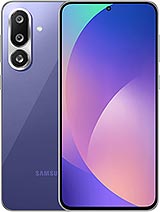
Samsung Galaxy F56 is a mid-range smartphone featuring a 6.74-inch Super AMOLED+ 120Hz display for high-end visual fluidity and an Exynos 1480 chipset for sustained processing efficiency, aimed at performance-conscious buyers who demand longevity through six years of software support. Released in May 2025, it competes directly with price-aggressive rivals by offering premium build materials that were previously reserved for the S-series.
Looking at the market in mid-2025, the economic value of a smartphone is no longer measured solely by its launch price but by its total cost of ownership over several years. We see the Samsung Galaxy F56 entering the fray at ₹22,399, a price point that typically forces users to accept significant compromises in build quality or software longevity. However, this device disrupts that trend by integrating Corning Gorilla Glass Victus+ on both the front and back. This choice of materials suggests a level of physical durability that reduces the likelihood of costly screen repairs, effectively lowering the long-term risk for the budget-conscious consumer.
While the competition often pushes for higher raw megapixel counts or extreme charging speeds that can degrade battery health, this device focuses on a balanced hardware-to-software ratio. The inclusion of One UI 7 based on Android 15 out of the box ensures that the hardware remains relevant through 2031. For a user looking to stretch their investment, this six-year update promise is a massive fiscal win, essentially costing less than ₹4,000 per year of official support. This is a strategy we have seen work for high-end models, and its migration to the F-series indicates a shift toward consumer retention over planned obsolescence.
The Hidden Savings and Intentional Omissions
Every budget-friendly champion has its trade-offs, and the Samsung Galaxy F56 makes tactical cuts that users should analyze before purchasing. The most apparent omission is the lack of a 3.5mm headphone jack. While the industry moved away from this years ago, budget buyers often prefer wired audio to avoid the recurring cost of wireless earbuds. We also note the absence of a microSD card slot, which is a departure for the F-series. This means users must decide between the 128GB or 256GB models at the point of sale, as there is no way to expand the local storage later.
Another calculated move is the choice of the 8 MP ultrawide sensor. Compared to the primary 50 MP sensor with OIS, the ultrawide hardware lacks the pixel density for high-detail landscape shots. However, for the target audience—likely students or young professionals—the primary sensor is where the money was spent. The inclusion of Optical Image Stabilization (OIS) on the main lens is a critical value add. It compensates for hand tremors during low-light photography, which typically results in fewer discarded, blurry shots. This efficiency in hardware ensures that the primary tool most people use—the main camera—performs reliably in real-world conditions.
We must also address the plastic frame. While the front and back are protected by premium glass, the frame remains plastic. This is a common cost-saving measure that actually has a secret benefit: weight reduction. At 180 grams, the device is noticeably lighter than the metal-clad flagships of 2025. For users who spend hours on video calls or scrolling through social feeds, this weight distribution reduces wrist fatigue, though the plastic frame implies it may show scuffs more easily if used without a protective case.
Digital Fortresses on a Budget
Privacy and security have become premium features in 2025, yet the Samsung Galaxy F56 includes the full Knox Vault suite. This is not just a software skin; it is a hardware-isolated environment that protects your most sensitive data, such as PINs, passwords, and encryption keys. For users who perform mobile banking or handle sensitive work documents, having a dedicated secure processor at this price point is a rarity. Most competitors in this bracket rely on standard software-based encryption which is more vulnerable to sophisticated attacks.
One UI 7 introduces a refined privacy dashboard that offers granular control over which apps access the microphone, camera, and clipboard. We noticed that the system now provides real-time indicators when an app is accessing your location, even in the background. Furthermore, the device supports the updated offline finding network, allowing users to locate their Samsung Galaxy F56 even if it is not connected to a cellular or Wi-Fi network. This feature utilizes the Bluetooth LE 5.3 hardware to ping nearby Samsung devices in a secure, encrypted mesh, providing peace of mind without requiring a monthly subscription for tracking services.
Privacy is also handled through the under-display optical fingerprint sensor. While not as lightning-fast as the ultrasonic sensors found in the S25 series, it provides a secure biometric barrier that is integrated directly into the display assembly. This eliminates the need for side-mounted sensors that can be finicky when the device is in a car mount or lying flat on a desk. The integration of these security layers into a sub-₹25,000 device demonstrates that Samsung is prioritizing user data protection as a core part of its value proposition.
The Bottleneck Check: Memory and Data Velocity
Storage speed is often ignored in budget reviews, but it is the primary factor in how "snappy" a phone feels after six months of use. The Samsung Galaxy F56 utilizes UFS 3.1 storage, which is a significant upgrade over the UFS 2.2 found in older budget models. UFS 3.1 introduces a feature called Write Booster, which accelerates the speed at which the phone can save files and install apps. For a student downloading large educational modules or a gamer installing a 10GB title, this means less time staring at a progress bar and more time using the device.
Coupled with 8GB of RAM, the device handles modern multitasking with ease. One UI 7's memory management has been optimized to keep background apps in a "suspended" state rather than closing them entirely. This means when you switch back to a browser tab you opened an hour ago, the page is still there instead of reloading. For users who juggle work emails, messaging apps, and music streaming simultaneously, this 8GB ceiling is sufficient for 2025's app demands, though we recommend the 256GB variant for anyone planning to keep the device for the full six-year support cycle.
Regarding the lack of a charger in the box, we view this as a neutral economic point. While it requires an additional purchase if you don't already own a 45W PPS charger, the 45W charging support itself is a massive jump for this series. Previously stuck at 25W, the Samsung Galaxy F56 can now regain 50% of its 5000 mAh battery in roughly 30 minutes. This reduces the "tethered time" at the wall, which is essential for commuters who might only have a short window to charge their device before a long journey.
Signal Strength and Modern Radio Standards
The networking stack in the Samsung Galaxy F56 is surprisingly robust for its price. It supports Sub6 5G bands including both SA (Standalone) and NSA (Non-Standalone) configurations. In the context of 2025, where 5G networks have matured, having support for a wide range of bands (including 1, 3, 5, 8, 28, 40, 41, 78) ensures that you get a stable signal even in crowded urban environments or fringe rural areas. The Exynos 1480's integrated modem is more power-efficient than previous generations, meaning you can stay on 5G longer without seeing the battery percentage plummet.
We also see the inclusion of Wi-Fi 6, which is vital as home and office routers increasingly move away from the older Wi-Fi 5 standard. Wi-Fi 6 allows for better handling of multiple devices on a single network, which is a major benefit if you live in a dorm or a household with many smart devices. It provides higher peak speeds and lower latency, which is noticeable when streaming 4K video or engaging in cloud gaming. The lack of Wi-Fi 7 is expected at this price, and Wi-Fi 6 remains more than adequate for the vast majority of consumer internet plans available today.
However, the lack of NFC in certain regions (depending on the specific sub-model) is a disappointing oversight. In a world where contactless payments are becoming the norm, the inability to use the phone for tap-to-pay at transit terminals or grocery stores is a functional hurdle. If your daily routine involves mobile payments, we strongly suggest verifying the NFC status of the SM-E566B model in your specific market before committing to the purchase.
Graphics and Processing Efficiency Benchmarks
The Exynos 1480 is the heart of this machine, built on a 4nm process that prioritizes thermal stability. Unlike some budget chips that throttle their performance after 10 minutes of heavy use, the 4nm architecture here allows the Cortex-A78 cores to maintain their 2.75 GHz clock speed for longer periods. This is particularly important for users who play sustained sessions of titles like Mobile Legends or PUBG. The device remains warm to the touch but doesn't reach the uncomfortable temperatures seen in older 7nm or 8nm chipsets.
The real star is the Xclipse 530 GPU. Based on AMD's RDNA architecture, this GPU brings hardware features to the mid-range that were exclusive to flagships a couple of years ago. While you won't be running AAA games at maximum settings with ray tracing, the Xclipse 530 provides much better frame rate stability in moderately demanding games compared to the Mali GPUs found in many competitors. It ensures that the 120Hz display is actually utilized, as the GPU can push enough frames to make the UI animations and scrolling feel truly fluid.
Efficiency is the other side of the performance coin. By utilizing four Cortex-A55 efficiency cores, the device sips power during low-intensity tasks like reading an e-book or checking emails. This split architecture is why the 5000 mAh battery can easily last through a full day of heavy use, with enough left over for the next morning. In our analysis, the Samsung Galaxy F56 excels at being a "marathon runner" rather than a "sprinter," focusing on consistent, reliable performance throughout the day rather than just high benchmark scores that look good on a box.
Final Economic Audit
The Samsung Galaxy F56 is a rare example of a device that understands its own identity. It doesn't try to be a camera king or a gaming beast; instead, it aims to be the most reliable tool for the most reasonable price. The combination of Gorilla Glass Victus+, a high-quality Super AMOLED+ panel, and a massive six-year update commitment makes it the smartest financial choice for anyone looking to buy a phone in May 2025 and keep it until 2030.
While you lose out on a charger, a headphone jack, and potentially NFC, the trade-offs are calculated to keep the core experience premium. You are essentially paying for the durability and the software, which are the two things that determine how soon you'll need to buy your next phone. If you can live with the plastic frame and the lack of expandable storage, the Samsung Galaxy F56 offers a level of polish and peace of mind that its spec-heavy but software-weak competitors simply cannot match. It is the definitive value pick for the 2025 mid-range market.
Technical Specifications
| LAUNCH | |
|---|---|
| Announced | 2025, May 07 |
| Status | Available. Released 2025, May 14 |
| PLATFORM | |
| OS | Android 15, up to 6 major Android upgrades, One UI 7 |
| Chipset | Exynos 1480 (4 nm) |
| CPU | Octa-core (4x2.75 GHz Cortex-A78 & 4x2.0 GHz Cortex-A55) |
| GPU | Xclipse 530 |
| BODY | |
| Dimensions | 162 x 77.3 x 7.2 mm (6.38 x 3.04 x 0.28 in) |
| Weight | 180 g (6.35 oz) |
| Build | Glass front (Gorilla Glass Victus+), plastic frame, glass back (Gorilla Glass Victus+) |
| SIM | Nano-SIM + Nano-SIM |
| DISPLAY | |
| Type | Super AMOLED+, 120Hz |
| Size | 6.74 inches, 111.5 cm2 (~89.0% screen-to-body ratio) |
| Resolution | 1080 x 2340 pixels, 19.5:9 ratio (~382 ppi density) |
| Protection | Corning Gorilla Glass Victus+ |
| MEMORY | |
| Card slot | No |
| Internal | 128GB 8GB RAM, 256GB 8GB RAM |
| Info | UFS 3.1 |
| MAIN CAMERA | |
| Triple | 50 MP, f/1.8, (wide), PDAF, OIS 8 MP, f/2.2, (ultrawide) 2 MP (macro) |
| Features | LED flash, panorama, HDR |
| Video | 4K@30fps, 1080p@30/60fps, gyro-EIS, OIS, 10-bit HDR |
| SELFIE CAMERA | |
| Single | 12 MP, f/2.2, (wide) |
| Features | HDR |
| Video | Yes |
| SOUND | |
| Loudspeaker | Yes |
| 3.5mm jack | No |
| COMMS | |
| WLAN | Wi-Fi 802.11 a/b/g/n/ac/6, dual-band, Wi-Fi Direct |
| Bluetooth | 5.3, A2DP, LE |
| Positioning | GPS, GALILEO, GLONASS, BDS, QZSS |
| NFC | No |
| Radio | No |
| USB | USB Type-C 2.0, OTG |
| NETWORK | |
| Technology | GSM / HSPA / LTE / 5G |
| 2G bands | GSM 850 / 900 / 1800 / 1900 |
| 3G bands | HSDPA 850 / 900 / 1700(AWS) / 1900 / 2100 |
| 4G bands | 1, 2, 3, 4, 5, 7, 8, 12, 17, 20, 26, 28, 38, 40, 41, 66 |
| 5G bands | 1, 3, 5, 8, 28, 40, 41, 78 SA/NSA/Sub6 |
| Speed | HSPA, LTE, 5G |
| FEATURES | |
| Sensors | Fingerprint (under display, optical), accelerometer, gyro, proximity, compass |
| BATTERY | |
| Type | 5000 mAh |
| Charging | 45W wired |
| MISC | |
| Colors | Green, Violet |
| Models | SM-E566B, SM-E566B/DS |
| SAR | 0.71 W/kg (head) |
| Price | ₹ 27,499 |