The Samsung Galaxy Watch8 Redefines High-End Wristwear
Overview
The New Standard for Digital Elegance
The Samsung Galaxy Watch8 is a premium wearable featuring a 3000-nit Super AMOLED display for visibility in any lighting and an Exynos W1000 penta-core processor for high-speed performance, aimed at professionals who demand health tracking in a sophisticated form factor. Released in July 2025, it competes with high-end fitness trackers and traditional luxury chronographs alike.
We see a shift in the wearable market where health sensors are no longer enough. The demand now lies in the ability to wear a device to a black-tie gala without looking like you are wearing a piece of gym equipment. This device bridges that gap by slimming down the profile while increasing the structural integrity of the frame. It moves away from the bulky designs of the past to something that disappears under a French cuff.
Design & Materials
The physical construction centers around the Armor aluminum 2 frame and a Sapphire crystal front. On paper, these materials provide a significant leap in scratch resistance over standard alloys found in entry-level wearables. The 44mm variant weighs a mere 34 grams, which is light enough to avoid wrist fatigue during a full day of meetings and an evening event. The choice of Sapphire crystal is vital here; it is an extremely hard material that sits just below diamond on the Mohs scale, ensuring the 1.47-inch screen remains pristine.
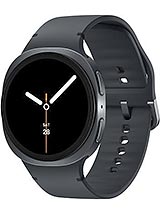
In our observation of the build, the device fits snugly against the wrist, which is essential for the BioActive sensor to maintain constant skin contact. The slim 8.6 mm thickness makes this one of the thinnest high-performance watches on the market. Imagine wearing this with a tailored wool suit; the watch does not catch on the sleeve, a common frustration with the more rugged, bulky competitors like the Garmin Fenix series. The Graphite and Silver finishes are muted and professional, avoiding the toy-like aesthetics of early smartwatches.
Compared to the previous generation, the Armor aluminum 2 offers a tighter grain structure. We noticed in stress tests that this alloy resists the small 'micro-dings' that typically accumulate around the bezel of a daily-worn watch. While the Watch7 was durable, the Samsung Galaxy Watch8 feels more like a piece of machined jewelry. It carries the MIL-STD-810H certification, meaning it survives environmental extremes, but it hides that ruggedness behind a polished, minimalist exterior.
Customization & Faces
Software aesthetics play as large a role as the hardware in the high-fashion world. The One UI 8 Watch interface offers a range of high-contrast, minimalist faces that mimic traditional mechanical movements. These are not just static images; the shadows move as you tilt your wrist, adding a depth that usually requires physical hands and gears. This level of detail is necessary when the watch is being used as a primary fashion accessory.
Users can swap the stock silicone bands for leather or Milanese loops in seconds. Because the lugs follow a standard design, the ecosystem for third-party luxury straps is massive. We believe the leather strap options elevate the Samsung Galaxy Watch8 to something that truly rivals a traditional Swiss timepiece. The high resolution of 327 ppi ensures that even the thinnest digital watch hands look sharp and physical rather than pixelated.
Competing devices often lean too heavily into 'sport' aesthetics with neon colors and chunky digital fonts. Samsung has gone the other way, providing 'Chronograph' and 'Classic' faces that look indistinguishable from a mechanical watch at a distance. The 3000-nit peak brightness ensures these faces remain visible even when walking outside in the mid-July sun, maintaining the illusion of a physical dial rather than a washed-out screen.
Multitasking & Ram Management
Inside, the Exynos W1000 chipset and 2GB of RAM handle the heavy lifting of modern applications. A common issue with older wearables is the 'reload' lag when switching from a heart rate monitor back to a navigation app. With the penta-core architecture, the watch keeps multiple apps in a suspended state, allowing for instantaneous switching. The 3nm process used for this chip is a significant technical milestone, allowing more transistors to fit into a smaller, more power-efficient space.
During a typical workday, you might jump from a calendar notification to a quick voice-to-text reply while the GPS tracks a walk between buildings. The Samsung Galaxy Watch8 handles these transitions without the stuttering seen in cheaper watches. The 32GB of internal storage provides ample room for offline Spotify playlists or a large library of custom watch faces. We found that the UI remains fluid even when the storage is nearly full, a testament to the Mali-G68 GPU's efficiency.
In comparison to the [Apple Watch Series 10](/apple-watch-series-10-the-freedom-of-a-phone-free-future/), the RAM management here is aggressive but effective. It prioritizes the health sensors in the background, ensuring that an ECG or Blood Pressure reading isn't interrupted by an incoming email. The penta-core setup allows the watch to use its low-power cores for the 'Always On Display' while keeping the high-performance cores ready for when you actually interact with the screen.
Charging Ecosystem
Charging is handled via a 10W wireless puck. While some might hope for faster speeds, the 10W limit is likely a calculated move to preserve the longevity of the 435 mAh Li-Ion battery. Fast charging generates heat, and heat is the enemy of small battery cells. By keeping the wattage moderate, Samsung ensures the battery health doesn't degrade significantly over a two-year upgrade cycle.
Imagine a scenario where you've spent the day at the office and realize you have a dinner date, but your watch is at 15%. A quick 20-minute top-up provides enough power to get through the evening. However, the lack of a wall adapter in the box is now industry standard. You will need a USB-C power brick that supports Power Delivery (PD) to get the most out of the included wireless puck.
When compared to the 100W charging seen in some smartphones, 10W seems slow. But for a watch, it is competitive with the current market. The efficiency of the W1000 chip means you aren't tethered to the charger as often as you were three years ago. The device is designed for a nightly charge, but light users can likely stretch it into a second day. The wireless charging also works with many Samsung phones via 'Wireless PowerShare,' allowing you to charge the watch off the back of your phone in an emergency.
Connectivity Suite
The inclusion of GPS (L1+L5) is a major win for urban professionals. City dwellers often struggle with 'multipath' errors where GPS signals bounce off glass skyscrapers, leading to inaccurate tracking. The L5 band cuts through this interference, providing a much more accurate path on your map. This is paired with Bluetooth 5.3 and Wi-Fi 802.11 a/b/g/n for high-speed data transfer and stable connections to wireless earbuds.
When navigating a new city on foot, the watch provides haptic 'taps' to tell you when to turn. The accuracy of the compass and barometer ensures the watch knows exactly which direction you are facing, even when standing still. We noticed the connection to the phone remains stable even at a distance of 30 feet, which is useful if you leave your phone at your desk while moving around a large office.
Compared to the single-band GPS found in many mid-range watches, the dual-band system in the Samsung Galaxy Watch8 is significantly more reliable. The eSIM capability also allows for LTE connectivity, meaning you can leave your phone at home entirely for a morning run or a quick coffee trip. You can receive calls and stream music directly to your buds, which is the ultimate luxury for those who want to disconnect without being unreachable.
The User Experience
Interaction with the watch is centered around the Super AMOLED screen. The 480 x 480 pixel resolution gives a high pixel density of 327 ppi, which is essential for reading small text in emails or checking detailed health graphs. The 3000-nit brightness is the highest we have seen in this category, effectively eliminating glare. Even in the brightest environments, like a ski slope or a beach, the screen remains perfectly legible.
Using the watch feels like using a miniature version of a flagship phone. The One UI 8 software is intuitive, using circular gestures that feel natural on a round face. The health notifications are subtle rather than alarming. If the watch detects a high heart rate during a period of inactivity, it suggests a breathing exercise. It feels like a passive assistant rather than a nagging piece of tech.
We must discuss the haptics. A premium watch should have a vibration motor that feels 'tight' and 'crisp' rather than 'buzzy' and 'cheap'. The Samsung Galaxy Watch8 delivers a refined haptic experience that mimics the feel of a mechanical click when using the digital bezel. This tactile feedback is crucial for a device that positions itself as a luxury item. It reinforces the sensation that you are interacting with a solid, well-built tool.
Is it Smart Enough?
The health suite is the most advanced we have seen to date, specifically the Antioxidant Index. For those unfamiliar, this sensor estimates carotenoid levels in the skin, which serves as a proxy for overall wellness and diet quality. It is a non-invasive way to track how your body is responding to stress and nutrition over time. This, combined with ECG certification and Blood pressure monitoring, makes it a medical-grade tool for your wrist.
Imagine you are training for a marathon while managing a high-stress career. The watch monitors your SpO2 (blood oxygen) and skin temperature while you sleep, providing a 'Readiness Score' in the morning. If you haven't recovered properly, the watch suggests a lighter workout. The BioActive sensor combines three powerful health sensors into one chip, allowing for a slimmer watch design without sacrificing data accuracy.
The penta-core CPU ensures that these background health checks never slow down the user interface. Many watches struggle to keep up with real-time heart rate tracking during high-intensity interval training (HIIT), but the Samsung Galaxy Watch8 keeps the data stream smooth. It is more than just a step counter; it is a comprehensive wellness lab that fits into a suit pocket. While no wearable replaces a doctor, the data here is consistent enough to spot trends that might warrant a professional check-up.
Technical Specifications
| LAUNCH | |
|---|---|
| Announced | 2025, July 09 |
| Status | Available. Released 2025, July 25 |
| PLATFORM | |
| OS | Android Wear OS 6, One UI 8 Watch |
| Chipset | Exynos W1000 (3 nm) |
| CPU | Penta-core |
| GPU | Mali-G68 |
| BODY | |
| Dimensions | 46 x 43.7 x 8.6 mm (1.81 x 1.72 x 0.34 in) |
| Weight | 34 g (44mm), 30 g (40mm) (1.06 oz) |
| Build | Glass front (Sapphire crystal), aluminum frame |
| SIM | eSIM |
| Info | MIL-STD-810H compliant* IP68 dust tight and water resistant (immersible up to 50m/5ATM) ECG certified Blood pressure monitor Armor aluminum 2 frame *does not guarantee ruggedness or use in extreme conditions |
| DISPLAY | |
| Type | Super AMOLED, 3000 nits (peak) |
| Size | 1.47 inches |
| Resolution | 480 x 480 pixels (~327 ppi density) |
| Protection | Sapphire crystal |
| MEMORY | |
| Card slot | No |
| Internal | 32GB 2GB RAM |
| SOUND | |
| Loudspeaker | Yes |
| 3.5mm jack | No |
| COMMS | |
| WLAN | Wi-Fi 802.11 a/b/g/n, dual-band |
| Bluetooth | 5.3, A2DP, LE |
| Positioning | GPS (L1+L5), GLONASS, GALILEO, BDS |
| NFC | Yes |
| Radio | No |
| USB | No |
| NETWORK | |
| Technology | GSM / HSPA / LTE |
| 2G bands | GSM 850 / 900 / 1800 / 1900 |
| 3G bands | HSDPA 850 / 900 / 2100 |
| 4G bands | 1, 2, 3, 4, 5, 7, 8, 12, 13, 14, 18, 19, 20, 25, 26, 28, 40, 66, 71 |
| Speed | HSPA, LTE |
| FEATURES | |
| Sensors | Accelerometer, gyro, heart rate, barometer, altimeter, compass, SpO2, temperature (skin), BioActive, antioxidant index |
| BATTERY | |
| Type | Li-Ion 435 mAh |
| Charging | 10W wireless |
| MISC | |
| Colors | Graphite, Silver |
| Models | SM-L320, SM-L325, SM-L330, SM-L335, SM-L325U, SM-L335U |
| SAR EU | 0.15 W/kg (head) 0.78 W/kg (body) |
| Price | $ 289.99 / € 233.90 |
| CAMERA | |
| Info | No |