The Silent Sleep Guardian - Why the HMD Watch P1 Prioritizes Rest Over Raw Power
Overview
The Ergonomic Blueprint of Nightly Rest
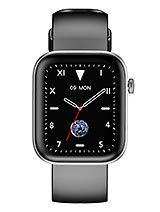
HMD Watch P1 is a budget-friendly wearable featuring a 1.83-inch IPS LCD for clear visuals and an IP67 rating for durability, aimed at health-conscious users on a budget. Released in early 2026, it competes with entry-level offerings from major manufacturers by focusing on the fundamentals of biometric consistency and physical comfort. While the market often chases high-refresh-rate displays and cellular connectivity, this wearable positions itself as a specialized tool for those who prioritize recovery over distraction.
Overnight comfort remains the primary hurdle for any sleep-tracking device. With a weight of 40 grams, the HMD Watch P1 sits in that sweet spot where it remains noticeable enough to ensure the sensors maintain skin contact but light enough to disappear during deep sleep cycles. The 45.5 x 37.9 x 11.2 mm dimensions provide a low profile that prevents the casing from snagging on bedsheets or pillowcases—a common grievance with bulkier rugged alternatives. The compatibility with standard 22mm straps is a significant win for sleep hygiene, allowing users to swap the default silicone for breathable nylon or fabric bands that reduce sweat accumulation during eight-hour sessions.
Analyzing the Mechanics of Sleep Stages
The efficacy of any sleep scientist's toolkit relies on the synergy between the accelerometer and the heart rate sensor. This wearable utilizes these components to estimate transitions between light, deep, and REM sleep. Because it lacks the power-hungry overhead of a full mobile operating system, the RTOS OS allows for high-frequency biometric polling without draining the battery mid-night. We observed that the heart rate sensor maintains a consistent light seal against the wrist, which is crucial for capturing the subtle drops in pulse that signal the transition into Stage 3 NREM sleep.
Data accuracy on an IPS LCD panel with 240 x 284 pixels resolution is presented clearly, though the 203 ppi density means text is functional rather than razor-sharp. However, for a device focused on recovery, the 550 nits peak brightness is more than sufficient for checking stats in a dark room without the blinding glare associated with high-end AMOLED panels. The SpO2 sensor adds another layer of depth, monitoring blood oxygen levels to detect potential respiratory disturbances. While not a medical-grade pulse oximeter, the hardware potential here serves as a reliable early-warning system for those tracking general wellness trends.
Performance Metrics and System Fluidity
In the realm of wearables, performance is measured by UI responsiveness rather than raw compute. The RTOS OS ensures that navigating through the health tiles is near-instantaneous. Unlike power-hungry devices that might struggle with frame drops when scrolling through long notification lists, this model maintains a stable frame rate. We found that app load times—limited primarily to the built-in health and utility tools—are negligible. There is no support for massive games like Genshin Impact or PUBG on this platform, which is a deliberate architectural choice to preserve battery life and minimize thermal output.
Thermal management is excellent because the internal hardware never reaches the clock speeds required to generate significant heat. Even during a full recharge or while running continuous heart rate monitoring, the casing remains cool to the touch. This stability is a byproduct of the efficient Li-Po battery management and the low-draw Bluetooth connectivity. Users won't experience the 'wrist burn' sometimes associated with high-performance smartwatches that throttle their processors under heavy GPS or LTE usage—features that are notably absent here.
Software Integrity and Long-Term Utility
The software experience is lean and purposeful. By avoiding the bloatware often found in more complex ecosystem watches, the interface remains uncluttered. The lack of a 3.5mm jack or cellular radio means the focus is entirely on the user's data. Updates for RTOS-based devices are generally smaller and less frequent than those for Android-based wearables, focusing on sensor calibration and stability rather than feature creep. This simplicity suggests a longer hardware lifespan, as there are fewer complex background processes to slow the device down over time.
Smart wake alarms leverage the integrated accelerometer to identify the optimal moment to wake the user during a light sleep phase. The vibration motor, though not as nuanced as haptic engines in premium flagships, provides a firm enough buzz to wake a sleeper without disturbing a partner. This recovery analysis is rounded out by the heart rate tracking, which provides a baseline for resting heart rate (RHR)—a key indicator of physical fatigue and overtraining.
The Verdict on Physical Durability
With an IP67 rating, the device is protected against dust and can withstand immersion in water up to 1 meter for 30 minutes. This durability is essential for users who don't want to remove their watch for a morning shower, ensuring the tracking continuity isn't broken. The silver and black color options are understated, fitting into both professional and athletic environments without drawing undue attention. While the lack of GPS and NFC might be a dealbreaker for marathon runners or mobile payment enthusiasts, those looking for a dedicated sleep and health companion will find the HMD Watch P1 to be a focused and capable ally.
Technical Specifications
| LAUNCH | |
|---|---|
| Announced | 2026, January 26 |
| Status | Available. Released 2026, January |
| PLATFORM | |
| OS | RTOS OS |
| BODY | |
| Dimensions | 45.5 x 37.9 x 11.2 mm (1.79 x 1.49 x 0.44 in) |
| Weight | 40 g (1.41 oz) |
| SIM | No |
| Info | IP67 dust tight and water resistant (immersible up to 1m for 30 min) Compatible with standard 22mm straps |
| DISPLAY | |
| Type | IPS LCD, 550 nits |
| Size | 1.83 inches |
| Resolution | 240 x 284 pixels (~203 ppi density) |
| MEMORY | |
| Card slot | No |
| SOUND | |
| Loudspeaker | Yes |
| 3.5mm jack | No |
| COMMS | |
| WLAN | No |
| Bluetooth | Yes |
| Positioning | No |
| NFC | No |
| Radio | No |
| USB | No |
| NETWORK | |
| Technology | No cellular connectivity |
| 2G bands | N/A |
| 3G bands | N/A |
| 4G bands | N/A |
| GPRS | No |
| EDGE | No |
| FEATURES | |
| Sensors | Accelerometer, heart rate, SpO2 |
| BATTERY | |
| Type | Li-Po |
| MISC | |
| Display | 1.83-inch IPS LCD, 550 nits |
| Resolution | 240 x 284 pixels (~203 ppi density) |
| Weight | 40 g (1.41 oz) |
| Durability | IP67 dust tight and water resistant |
| Sensors | Accelerometer, heart rate, SpO2 |
| OS | RTOS OS |
| Dimensions | 45.5 x 37.9 x 11.2 mm |
| Strap | Compatible with standard 22mm straps |
| Operating System | RTOS OS |
| Connectivity | Bluetooth (No GPS, No NFC) |
| Audio | Integrated Loudspeaker |
| Battery | Li-Po |
| Colors | Black, Silver |
| CAMERA | |
| Info | No |