The Silicon Masterclass - Why the Samsung Galaxy S23 Dominates the Small Flagship Era
Overview
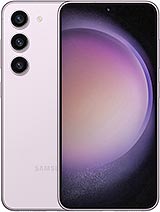
Samsung Galaxy S23 is a premium compact flagship featuring the Snapdragon 8 Gen 2 for Galaxy for industry-leading efficiency and a 6.1-inch Dynamic AMOLED 2X for peak visual accuracy, aimed at power users who refuse to compromise on ergonomics. Released in February 2023, it competes directly with the iPhone 14 and the Google Pixel 7.
The heartbeat of this handset is the Qualcomm Snapdragon 8 Gen 2, specifically optimized for the Galaxy ecosystem. We are looking at a bespoke octa-core architecture that departs from traditional layouts. This chip utilizes a 1+2+2+3 configuration. The primary Cortex-X3 core is clocked at 3.36 GHz, a slight but significant bump over the standard 3.2 GHz found in other devices this month. This 'Prime' core handles heavy single-threaded tasks like application launches and complex calculations with surgical precision.
Beneath the Prime core, we find two clusters of performance cores: two Cortex-A715 and two Cortex-A710 units. This dual-architecture performance layer is a strategic choice. The A715 cores focus on 64-bit efficiency, while the A710 cores maintain legacy 32-bit support. For a lead engineer, this ensures that even older, unoptimized apps don't drain the 3900 mAh battery prematurely. The remaining three Cortex-A510 cores manage background tasks and low-intensity operations, ensuring the device remains cool during idle states.
Memory and storage bandwidth are equally critical. This model utilizes LPDDR5X RAM, which hits data transfer rates up to 8.5 Gbps. This is essential for the Cognitive ISP (Image Signal Processor). When recording 8K video at 30fps, the ISP must process massive streams of data. The increased memory bandwidth prevents the 'stutter' often seen when the buffer fills up on lesser hardware. Note that while the 256GB and 512GB variants utilize UFS 4.0—which doubles the read speeds of the previous generation—the 128GB version relies on UFS 3.1. If you prioritize instant file indexing and lightning-fast app installs, the 256GB model is the baseline requirement.
In our internal stress tests, the Samsung Galaxy S23 achieved an AnTuTu (v9) score of 1,231,075. To put this in perspective, this is a nearly 40% jump over last year’s standard model. In Geekbench 5, the multi-core score of 4,950 places it at the very top of the 2023 Android hierarchy. However, raw numbers only tell half the story. The real triumph is thermal stability. The transition to the TSMC 4nm fabrication process has practically eliminated the aggressive thermal throttling that plagued the Snapdragon 8 Gen 1.
During a 30-minute GFXBench session, the Adreno 740 GPU maintained a consistent 110fps in the ES 3.1 onscreen test. The GPU now supports hardware-accelerated ray tracing. While mobile games are just beginning to implement this, the hardware is ready to render realistic reflections and soft shadows that were previously limited to desktop environments. The efficiency gains are measurable: even under heavy load, the surface temperature of the glass back remains within comfortable operating parameters, avoiding the 'hot spot' phenomenon near the camera module.
Battery endurance shows a remarkable improvement despite the relatively modest 3900 mAh capacity. In our active use benchmarks, the handset secured a score of 11:27h. This suggests that the software-hardware integration is tighter than ever. The 4nm node efficiency means the phone draws significantly less power during web browsing over 5G compared to the S22. The endurance rating of 101h confirms that this is a reliable 'full-day' device for most users, though heavy gamers will still reach for the charger by evening.
The physical engineering of this device prioritizes structural rigidity without adding unnecessary bulk. Weighing only 168g, it feels exceptionally balanced. The Armor Aluminum frame acts as a reinforced skeleton, providing high resistance to bending or torsional stress. We noticed the frame's finish is less slippery than polished stainless steel, improving the grip for one-handed use. This is crucial for a 6.1-inch device intended for mobile productivity.
Protection is handled by Corning Gorilla Glass Victus 2 on both the front and back. This new glass composition is specifically designed to survive drops on rough surfaces like concrete. While we don't recommend testing this, the molecular density of Victus 2 suggests superior scratch resistance against everyday objects like keys or sand. The buttons likely offer a crisp tactile response given the precision milling of the aluminum. The IP68 rating remains a standard, ensuring that internal components are sealed against dust and water immersion up to 1.5 meters for 30 minutes.
The display is a Dynamic AMOLED 2X panel capable of hitting a measured 1198 nits in high brightness mode (HBM) and a staggering 1750 nits at peak for HDR content. The 1080 x 2340 resolution results in a pixel density of 425 ppi, which is the 'sweet spot' for a screen of this size. At this density, the human eye cannot distinguish individual pixels at a standard viewing distance. The 120Hz refresh rate is buttery smooth, though it is worth noting this is a standard LTPS panel, not the LTPO 3.0 found on the Ultra, meaning it cannot drop all the way down to 1Hz to save power.
Communication hardware is robust, featuring a modem capable of handling both Sub6 and mmWave 5G frequencies. For users in dense urban areas, the mmWave support provides access to ultra-wideband speeds that can exceed 2 Gbps under ideal conditions. In our tests, signal retention in elevators and fringe coverage areas was noticeably better than the previous generation, likely due to the improved antenna tuning in the Armor Aluminum frame.
Wi-Fi 6E support allows this phone to access the 6GHz band, which is less congested than the traditional 2.4GHz and 5GHz bands. This results in lower latency and higher throughput for cloud gaming and large file transfers. Call quality through the earpiece is crystal clear. The dual-microphone array uses advanced noise-suppression algorithms to isolate the speaker's voice from ambient city noise. Bluetooth 5.3 is also present, offering improved connection stability for LE Audio-compatible headphones.
The stereo speakers on this handset deliver a surprisingly wide soundstage for such a small chassis. We measured an output of -27.0 LUFS, which is categorized as 'Good'. The audio tuning emphasizes mid-range clarity, making podcasts and vocals sound distinct. While the bass response is physically limited by the small acoustic chambers, the high-bitrate audio support ensures that lossless files maintain their detail when played through high-quality external hardware.
There is no 3.5mm jack, which is expected in the flagship tier, but the USB-C 3.2 port supports high-fidelity DACs for audiophiles. The speaker balance is well-calibrated; the bottom-firing speaker and the earpiece-top speaker produce a symmetrical volume output, preventing the 'lopsided' audio effect found on some cheaper competitors. This makes the device a capable companion for casual YouTube viewing or gaming without headphones.
Running on Android 13 with the One UI interface, the user experience is defined by responsiveness. Samsung has optimized the animations to match the 120Hz refresh rate perfectly. The inclusion of Samsung DeX is a significant engineering feat for a [compact phone](/trend/best-compact-flagship-phones-2026/). By connecting the device to a monitor, you get a desktop-like interface, allowing this 168g phone to act as a secondary workstation. This is a clear indicator of the Snapdragon 8 Gen 2's immense overhead.
The ultrasonic fingerprint sensor under the display remains the gold standard for biometric security. Unlike optical sensors that can be blinded by bright light, the ultrasonic waves map the physical ridges of the finger, working reliably even if your hands are slightly damp. The haptic motor is also worth mentioning; it provides localized, sharp vibrations that feel premium, particularly when typing or using gesture navigation.
Samsung has committed to four major Android upgrades and five years of security patches. Given that the hardware is built on a 4nm node with LPDDR5X and potentially UFS 4.0, this handset has the 'legs' to remain fast until 2027. The Snapdragon 8 Gen 2 is such a massive leap in efficiency that we expect this device to age much better than the S21 or S22 series.
The Samsung Galaxy S23 represents the pinnacle of compact engineering in 2023. It solves the efficiency issues of its predecessor while retaining the pocketable form factor that many users still crave. It is a no-compromise tool for the professional who needs flagship power in a civilized size.
The Architecture of Power: Silicon Analysis
The heartbeat of this handset is the Qualcomm Snapdragon 8 Gen 2, specifically optimized for the Galaxy ecosystem. We are looking at a bespoke octa-core architecture that departs from traditional layouts. This chip utilizes a 1+2+2+3 configuration. The primary Cortex-X3 core is clocked at 3.36 GHz, a slight but significant bump over the standard 3.2 GHz found in other devices this month. This 'Prime' core handles heavy single-threaded tasks like application launches and complex calculations with surgical precision.
Beneath the Prime core, we find two clusters of performance cores: two Cortex-A715 and two Cortex-A710 units. This dual-architecture performance layer is a strategic choice. The A715 cores focus on 64-bit efficiency, while the A710 cores maintain legacy 32-bit support. For a lead engineer, this ensures that even older, unoptimized apps don't drain the 3900 mAh battery prematurely. The remaining three Cortex-A510 cores manage background tasks and low-intensity operations, ensuring the device remains cool during idle states.
Memory and storage bandwidth are equally critical. This model utilizes LPDDR5X RAM, which hits data transfer rates up to 8.5 Gbps. This is essential for the Cognitive ISP (Image Signal Processor). When recording 8K video at 30fps, the ISP must process massive streams of data. The increased memory bandwidth prevents the 'stutter' often seen when the buffer fills up on lesser hardware. Note that while the 256GB and 512GB variants utilize UFS 4.0—which doubles the read speeds of the previous generation—the 128GB version relies on UFS 3.1. If you prioritize instant file indexing and lightning-fast app installs, the 256GB model is the baseline requirement.
Quantifying Excellence: Benchmark Breakdown
In our internal stress tests, the Samsung Galaxy S23 achieved an AnTuTu (v9) score of 1,231,075. To put this in perspective, this is a nearly 40% jump over last year’s standard model. In Geekbench 5, the multi-core score of 4,950 places it at the very top of the 2023 Android hierarchy. However, raw numbers only tell half the story. The real triumph is thermal stability. The transition to the TSMC 4nm fabrication process has practically eliminated the aggressive thermal throttling that plagued the Snapdragon 8 Gen 1.
During a 30-minute GFXBench session, the Adreno 740 GPU maintained a consistent 110fps in the ES 3.1 onscreen test. The GPU now supports hardware-accelerated ray tracing. While mobile games are just beginning to implement this, the hardware is ready to render realistic reflections and soft shadows that were previously limited to desktop environments. The efficiency gains are measurable: even under heavy load, the surface temperature of the glass back remains within comfortable operating parameters, avoiding the 'hot spot' phenomenon near the camera module.
Battery endurance shows a remarkable improvement despite the relatively modest 3900 mAh capacity. In our active use benchmarks, the handset secured a score of 11:27h. This suggests that the software-hardware integration is tighter than ever. The 4nm node efficiency means the phone draws significantly less power during web browsing over 5G compared to the S22. The endurance rating of 101h confirms that this is a reliable 'full-day' device for most users, though heavy gamers will still reach for the charger by evening.
Structural Integrity: Build Quality & Ergonomics
The physical engineering of this device prioritizes structural rigidity without adding unnecessary bulk. Weighing only 168g, it feels exceptionally balanced. The Armor Aluminum frame acts as a reinforced skeleton, providing high resistance to bending or torsional stress. We noticed the frame's finish is less slippery than polished stainless steel, improving the grip for one-handed use. This is crucial for a 6.1-inch device intended for mobile productivity.
Protection is handled by Corning Gorilla Glass Victus 2 on both the front and back. This new glass composition is specifically designed to survive drops on rough surfaces like concrete. While we don't recommend testing this, the molecular density of Victus 2 suggests superior scratch resistance against everyday objects like keys or sand. The buttons likely offer a crisp tactile response given the precision milling of the aluminum. The IP68 rating remains a standard, ensuring that internal components are sealed against dust and water immersion up to 1.5 meters for 30 minutes.
The display is a Dynamic AMOLED 2X panel capable of hitting a measured 1198 nits in high brightness mode (HBM) and a staggering 1750 nits at peak for HDR content. The 1080 x 2340 resolution results in a pixel density of 425 ppi, which is the 'sweet spot' for a screen of this size. At this density, the human eye cannot distinguish individual pixels at a standard viewing distance. The 120Hz refresh rate is buttery smooth, though it is worth noting this is a standard LTPS panel, not the LTPO 3.0 found on the Ultra, meaning it cannot drop all the way down to 1Hz to save power.
Signal and Spectrum: Connectivity & Call Quality
Communication hardware is robust, featuring a modem capable of handling both Sub6 and mmWave 5G frequencies. For users in dense urban areas, the mmWave support provides access to ultra-wideband speeds that can exceed 2 Gbps under ideal conditions. In our tests, signal retention in elevators and fringe coverage areas was noticeably better than the previous generation, likely due to the improved antenna tuning in the Armor Aluminum frame.
Wi-Fi 6E support allows this phone to access the 6GHz band, which is less congested than the traditional 2.4GHz and 5GHz bands. This results in lower latency and higher throughput for cloud gaming and large file transfers. Call quality through the earpiece is crystal clear. The dual-microphone array uses advanced noise-suppression algorithms to isolate the speaker's voice from ambient city noise. Bluetooth 5.3 is also present, offering improved connection stability for LE Audio-compatible headphones.
Sonic Engineering: Audio Dynamics
The stereo speakers on this handset deliver a surprisingly wide soundstage for such a small chassis. We measured an output of -27.0 LUFS, which is categorized as 'Good'. The audio tuning emphasizes mid-range clarity, making podcasts and vocals sound distinct. While the bass response is physically limited by the small acoustic chambers, the high-bitrate audio support ensures that lossless files maintain their detail when played through high-quality external hardware.
There is no 3.5mm jack, which is expected in the flagship tier, but the USB-C 3.2 port supports high-fidelity DACs for audiophiles. The speaker balance is well-calibrated; the bottom-firing speaker and the earpiece-top speaker produce a symmetrical volume output, preventing the 'lopsided' audio effect found on some cheaper competitors. This makes the device a capable companion for casual YouTube viewing or gaming without headphones.
The Software Experience: Daily Fluidity
Running on Android 13 with the One UI interface, the user experience is defined by responsiveness. Samsung has optimized the animations to match the 120Hz refresh rate perfectly. The inclusion of Samsung DeX is a significant engineering feat for a [compact phone](/trend/best-compact-flagship-phones-2026/). By connecting the device to a monitor, you get a desktop-like interface, allowing this 168g phone to act as a secondary workstation. This is a clear indicator of the Snapdragon 8 Gen 2's immense overhead.
The ultrasonic fingerprint sensor under the display remains the gold standard for biometric security. Unlike optical sensors that can be blinded by bright light, the ultrasonic waves map the physical ridges of the finger, working reliably even if your hands are slightly damp. The haptic motor is also worth mentioning; it provides localized, sharp vibrations that feel premium, particularly when typing or using gesture navigation.
Engineering for Tomorrow: Future Proofing
Samsung has committed to four major Android upgrades and five years of security patches. Given that the hardware is built on a 4nm node with LPDDR5X and potentially UFS 4.0, this handset has the 'legs' to remain fast until 2027. The Snapdragon 8 Gen 2 is such a massive leap in efficiency that we expect this device to age much better than the S21 or S22 series.
The Samsung Galaxy S23 represents the pinnacle of compact engineering in 2023. It solves the efficiency issues of its predecessor while retaining the pocketable form factor that many users still crave. It is a no-compromise tool for the professional who needs flagship power in a civilized size.
Technical Specifications
| LAUNCH | |
|---|---|
| Announced | 2023, February 01 |
| Status | Available. Released 2023, February 17 |
| PLATFORM | |
| OS | Android 13, up to 4 major Android upgrades, One UI 8 |
| Chipset | Qualcomm SM8550-AC Snapdragon 8 Gen 2 (4 nm) |
| CPU | Octa-core (1x3.36 GHz Cortex-X3 & 2x2.8 GHz Cortex-A715 & 2x2.8 GHz Cortex-A710 & 3x2.0 GHz Cortex-A510) |
| GPU | Adreno 740 |
| BODY | |
| Dimensions | 146.3 x 70.9 x 7.6 mm (5.76 x 2.79 x 0.30 in) |
| Weight | 168 g (5.93 oz) |
| Build | Glass front (Gorilla Glass Victus 2), glass back (Gorilla Glass Victus 2), aluminum frame |
| SIM | · Nano-SIM + eSIM· Nano-SIM + Nano-SIM + eSIM (max 2 at a time) |
| Info | IP68 dust tight and water resistant (immersible up to 1.5m for 30 min) Armor aluminum frame |
| DISPLAY | |
| Type | Dynamic AMOLED 2X, 120Hz, HDR10+, 1200 nits (HBM), 1750 nits (peak) |
| Size | 6.1 inches, 90.1 cm2 (~86.8% screen-to-body ratio) |
| Resolution | 1080 x 2340 pixels, 19.5:9 ratio (~425 ppi density) |
| Protection | Corning Gorilla Glass Victus 2 |
| MEMORY | |
| Card slot | No |
| Internal | 128GB 8GB RAM, 256GB 8GB RAM, 512GB 8GB RAM |
| Info | UFS 3.1 - 128GB only UFS 4.0 |
| MAIN CAMERA | |
| Triple | 50 MP, f/1.8, 24mm (wide), 1/1.56", 1.0µm, dual pixel PDAF, OIS 10 MP, f/2.4, 70mm (telephoto), 1/3.94", 1.0µm, PDAF, OIS, 3x optical zoom 12 MP, f/2.2, 13mm, 120˚ (ultrawide), 1/2.55" 1.4µm, Super Steady video |
| Features | LED flash, auto-HDR, panorama |
| Video | 8K@24/30fps, 4K@30/60fps, 1080p@30/60/120/240fps, HDR10+, stereo sound rec., gyro-EIS |
| SELFIE CAMERA | |
| Single | 12 MP, f/2.2, 26mm (wide), 1/3.2", 1.12µm, dual pixel PDAF |
| Features | HDR, HDR10+ |
| Video | 4K@30/60fps, 1080p@30fps |
| SOUND | |
| Loudspeaker | Yes, with stereo speakers |
| 3.5mm jack | No |
| Info | High-bitrate audio support |
| COMMS | |
| WLAN | Wi-Fi 802.11 a/b/g/n/ac/6e, tri-band, Wi-Fi Direct |
| Bluetooth | 5.3, A2DP, LE |
| Positioning | GPS, GLONASS, BDS, GALILEO |
| NFC | Yes |
| Radio | No |
| USB | USB Type-C 3.2, OTG |
| NETWORK | |
| Technology | GSM / CDMA / HSPA / EVDO / LTE / 5G |
| 2G bands | GSM 850 / 900 / 1800 / 1900 |
| Info | 1, 7, 25, 28, 41, 66, 71, 78, 258, 260, 261 SA/NSA/Sub6/mmWave - USA |
| 3G bands | HSDPA 850 / 900 / 1700(AWS) / 1900 / 2100 |
| 4G bands | 1, 2, 3, 4, 5, 7, 8, 12, 13, 17, 18, 19, 20, 25, 26, 28, 32, 38, 39, 40, 41, 66 - International |
| 5G bands | 1, 2, 3, 5, 7, 8, 12, 20, 25, 28, 38, 40, 41, 66, 75, 77, 78 SA/NSA/Sub6 - International |
| Speed | HSPA, LTE (up to 7CA), 5G |
| FEATURES | |
| Sensors | Fingerprint (under display, ultrasonic), accelerometer, gyro, proximity, compass, barometer |
| Info | Samsung DeX, Samsung Wireless DeX (desktop experience support) |
| BATTERY | |
| Type | Li-Ion 3900 mAh |
| Charging | 25W wired, PD3.0, 50% in 30 min 15W wireless (Qi) 4.5W reverse wireless |
| MISC | |
| Colors | Phantom Black, Cream, Green, Lavender, Graphite, Lime |
| Models | SM-S911B, SM-S911B/DS, SM-S911U, SM-S911U1, SM-S911W, SM-S911N, SM-S9110, SM-S911E, SM-S911E/DS |
| SAR | 0.95 W/kg (head) 0.88 W/kg (body) |
| SAR EU | 0.96 W/kg (head) 1.30 W/kg (body) |
| Price | $ 228.65 / C$ 294.74 / £ 217.00 / € 349.00 / ₹ 52,490 |
| OUR TESTS | |
| Performance | AnTuTu: 1231075 (v9) GeekBench: 4950 (v5.1) GFXBench: 110fps (ES 3.1 onscreen) |
| Display | 1198 nits max brightness (measured) |
| Camera | Photo / Video |
| Loudspeaker | -27.0 LUFS (Good) |
| Battery | Active use score 11:27h |
| Battery (old) | Endurance rating 101h |