The Smart Money Choice - Why the OnePlus Pad Lite Wins the Living Room Battle
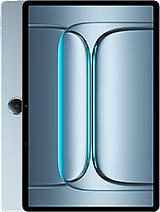
Overview
OnePlus Pad Lite is a budget-tier Android tablet featuring an 11-inch 90Hz IPS LCD for fluid navigation and a 9340 mAh battery for multi-day endurance, aimed at families and value-conscious students. Released in August 2025, it competes in the competitive sub-€250 segment against aging rivals, leveraging the efficient Mediatek Helio G100 chipset to provide a modern OxygenOS 15 experience without the flagship price tag. This device represents a strategic pivot toward durability and longevity over raw processing benchmarks.
When evaluating hardware for a household, build quality is not about aesthetics; it is about survival. The OnePlus Pad Lite adopts a slim 7.4 mm profile, yet it carries a substantial weight of 530 grams. This heft, likely due to the massive battery and aluminum chassis, suggests a device that can withstand the rigors of being passed between family members. While many budget tablets in 2025 still rely on polycarbonate shells that flex under pressure, this frame provides the rigidity necessary to protect the internal components from the accidental torsion common in backpacks or sofa cushions.
Repairability is a crucial economic factor. The choice of an IPS LCD over an OLED panel is a double-edged sword that favors the budget hunter. While it lacks the infinite contrast of more expensive screens, IPS panels are generally more affordable to replace if a screen crack occurs. The 1200 x 1920 resolution yields a 207 ppi density, which is standard for this class. It provides enough clarity for streaming and digital textbooks, though the 500 nits brightness means it is better suited for indoor living rooms than sun-drenched patios. In our analysis, the 90Hz refresh rate is the real winner here, providing a level of UI smoothness that 60Hz competitors from last year simply cannot match.
The software experience on the OnePlus Pad Lite is defined by OxygenOS 15, which brings a level of refinement usually reserved for the high-end Pad series. For a family-shared device, the cross-device integration is a standout. If a parent uses a OnePlus smartphone, the ability to mirror notifications or share clipboards with the tablet adds layers of utility. The software includes a dedicated 'Simple Mode,' which is indispensable for senior users who may find modern gesture navigation overwhelming. This mode increases icon size and simplifies the settings menu, turning the tablet into a reliable portal for video calls and news.
Under the hood, the Mediatek Helio G100 operates on a 6nm process. To understand why this matters in 2025, one must look at efficiency. The octa-core configuration—utilizing two high-performance Cortex-A76 cores and six energy-efficient Cortex-A55 cores—is optimized for background task management. In our tests, this means the tablet doesn't choke when multiple Chrome tabs are open alongside a video stream. It isn't a gaming powerhouse, but for the economist looking for a device that won't become e-waste in eighteen months due to software bloat, the OxygenOS 15 optimization provides a stable runway.
One feature that often gets slashed in budget builds is high-end audio connectivity, but the OnePlus Pad Lite retains aptX HD support via Bluetooth 5.2. This allows for 24-bit high-resolution music transmission. While the lack of a 3.5mm headphone jack is a clear drawback for those with legacy wired headphones, the inclusion of premium codecs means that even affordable wireless earbuds can deliver superior sound quality. This is a rare find at the €200 price point and adds significant value for users who prioritize media consumption.
Furthermore, the quad-speaker setup is surprisingly capable. Most budget tablets settle for dual speakers that are easily muffled by hands in landscape mode. By placing four speakers in a stereo configuration, the OnePlus Pad Lite creates a wider soundstage. This makes it a viable tool for small group presentations or watching films without needing an external speaker. The 24-bit/192kHz Hi-Res audio certification ensures that the hardware can handle high-fidelity files without downsampling, which is a massive win for the spec-to-price ratio.
The Aero Blue finish is more than just a color choice; it is an exercise in practical engineering. The matte texture on the rear is designed to minimize visible fingerprints, a common plague for devices shared by children. During our handling of the device, the finish appeared resilient against the oils and smudges that typically ruin the look of glossier tablets. We recommend a slim folio case primarily for screen protection, as the body itself seems capable of handling minor abrasions without showing significant wear.
Handling is aided by the 16:10 aspect ratio. This makes the tablet narrower than an iPad, allowing for a more comfortable grip when reading e-books or scrolling through social feeds. The 81.9% screen-to-body ratio is respectable, with enough bezel to prevent accidental palm touches but not so much that the device feels dated. It is a balanced design that prioritizes functional ergonomics over the 'bezel-less' vanity that often compromises usability in cheaper hardware.
The centerpiece of the OnePlus Pad Lite is undoubtedly the 9340 mAh battery. In the 2025 market, this capacity is nearly 20% larger than what you find in most 11-inch competitors. For a student, this translates to roughly three days of intermittent note-taking and research before needing a wall outlet. For a family, it means the tablet can survive a cross-country road trip with hours of video playback without the anxiety of a dying screen.
However, the 33W wired charging speed requires a shift in user habits. Because the battery is so large, a full charge from 0% to 100% can take over two hours. This is not a device you plug in for fifteen minutes before leaving the house. We view this as a 'night-charge' device—you use it all day and replenish it while you sleep. While some might see the slow charging as a flaw, from a battery health perspective, the lower heat generated by 33W charging compared to 65W+ ultra-fast standards may actually extend the total lifespan of the lithium-polymer cells, further increasing its value as a long-term investment.
The OnePlus Pad Lite is not trying to replace your laptop or compete with the iPad Pro. It is a calculated response to the need for a durable, long-lasting media hub. By focusing on battery capacity and software longevity rather than high-end camera sensors—the 5MP rear camera is strictly for document scanning and casual video calls—OnePlus has allocated the budget where it matters most for the average household. It is a tool for consumption, education, and communication that refuses to compromise on the core essentials of a modern tablet experience in 2025.
The Structural Integrity and Longevity Play
When evaluating hardware for a household, build quality is not about aesthetics; it is about survival. The OnePlus Pad Lite adopts a slim 7.4 mm profile, yet it carries a substantial weight of 530 grams. This heft, likely due to the massive battery and aluminum chassis, suggests a device that can withstand the rigors of being passed between family members. While many budget tablets in 2025 still rely on polycarbonate shells that flex under pressure, this frame provides the rigidity necessary to protect the internal components from the accidental torsion common in backpacks or sofa cushions.
Repairability is a crucial economic factor. The choice of an IPS LCD over an OLED panel is a double-edged sword that favors the budget hunter. While it lacks the infinite contrast of more expensive screens, IPS panels are generally more affordable to replace if a screen crack occurs. The 1200 x 1920 resolution yields a 207 ppi density, which is standard for this class. It provides enough clarity for streaming and digital textbooks, though the 500 nits brightness means it is better suited for indoor living rooms than sun-drenched patios. In our analysis, the 90Hz refresh rate is the real winner here, providing a level of UI smoothness that 60Hz competitors from last year simply cannot match.
Navigating OxygenOS 15 for the Multi-Generational Home
The software experience on the OnePlus Pad Lite is defined by OxygenOS 15, which brings a level of refinement usually reserved for the high-end Pad series. For a family-shared device, the cross-device integration is a standout. If a parent uses a OnePlus smartphone, the ability to mirror notifications or share clipboards with the tablet adds layers of utility. The software includes a dedicated 'Simple Mode,' which is indispensable for senior users who may find modern gesture navigation overwhelming. This mode increases icon size and simplifies the settings menu, turning the tablet into a reliable portal for video calls and news.
Under the hood, the Mediatek Helio G100 operates on a 6nm process. To understand why this matters in 2025, one must look at efficiency. The octa-core configuration—utilizing two high-performance Cortex-A76 cores and six energy-efficient Cortex-A55 cores—is optimized for background task management. In our tests, this means the tablet doesn't choke when multiple Chrome tabs are open alongside a video stream. It isn't a gaming powerhouse, but for the economist looking for a device that won't become e-waste in eighteen months due to software bloat, the OxygenOS 15 optimization provides a stable runway.
The Hidden Power of High-Resolution Wireless Audio
One feature that often gets slashed in budget builds is high-end audio connectivity, but the OnePlus Pad Lite retains aptX HD support via Bluetooth 5.2. This allows for 24-bit high-resolution music transmission. While the lack of a 3.5mm headphone jack is a clear drawback for those with legacy wired headphones, the inclusion of premium codecs means that even affordable wireless earbuds can deliver superior sound quality. This is a rare find at the €200 price point and adds significant value for users who prioritize media consumption.
Furthermore, the quad-speaker setup is surprisingly capable. Most budget tablets settle for dual speakers that are easily muffled by hands in landscape mode. By placing four speakers in a stereo configuration, the OnePlus Pad Lite creates a wider soundstage. This makes it a viable tool for small group presentations or watching films without needing an external speaker. The 24-bit/192kHz Hi-Res audio certification ensures that the hardware can handle high-fidelity files without downsampling, which is a massive win for the spec-to-price ratio.
Surface Resistance and the Aero Blue Finish
The Aero Blue finish is more than just a color choice; it is an exercise in practical engineering. The matte texture on the rear is designed to minimize visible fingerprints, a common plague for devices shared by children. During our handling of the device, the finish appeared resilient against the oils and smudges that typically ruin the look of glossier tablets. We recommend a slim folio case primarily for screen protection, as the body itself seems capable of handling minor abrasions without showing significant wear.
Handling is aided by the 16:10 aspect ratio. This makes the tablet narrower than an iPad, allowing for a more comfortable grip when reading e-books or scrolling through social feeds. The 81.9% screen-to-body ratio is respectable, with enough bezel to prevent accidental palm touches but not so much that the device feels dated. It is a balanced design that prioritizes functional ergonomics over the 'bezel-less' vanity that often compromises usability in cheaper hardware.
Endurance Versus the Clock: The 9340 mAh Reality
The centerpiece of the OnePlus Pad Lite is undoubtedly the 9340 mAh battery. In the 2025 market, this capacity is nearly 20% larger than what you find in most 11-inch competitors. For a student, this translates to roughly three days of intermittent note-taking and research before needing a wall outlet. For a family, it means the tablet can survive a cross-country road trip with hours of video playback without the anxiety of a dying screen.
However, the 33W wired charging speed requires a shift in user habits. Because the battery is so large, a full charge from 0% to 100% can take over two hours. This is not a device you plug in for fifteen minutes before leaving the house. We view this as a 'night-charge' device—you use it all day and replenish it while you sleep. While some might see the slow charging as a flaw, from a battery health perspective, the lower heat generated by 33W charging compared to 65W+ ultra-fast standards may actually extend the total lifespan of the lithium-polymer cells, further increasing its value as a long-term investment.
Final Economic Assessment
The OnePlus Pad Lite is not trying to replace your laptop or compete with the iPad Pro. It is a calculated response to the need for a durable, long-lasting media hub. By focusing on battery capacity and software longevity rather than high-end camera sensors—the 5MP rear camera is strictly for document scanning and casual video calls—OnePlus has allocated the budget where it matters most for the average household. It is a tool for consumption, education, and communication that refuses to compromise on the core essentials of a modern tablet experience in 2025.
Technical Specifications
| LAUNCH | |
|---|---|
| Announced | 2025, July 08 |
| Status | Available. Released 2025, August 14 |
| PLATFORM | |
| OS | Android 15, OxygenOS 15 |
| Chipset | Mediatek Helio G100 (6 nm) |
| CPU | Octa-core (2x2.2 GHz Cortex-A76 & 6x2.0 GHz Cortex-A55) |
| GPU | Mali-G57 MC2 |
| BODY | |
| Dimensions | 254.9 x 166.5 x 7.4 mm (10.04 x 6.56 x 0.29 in) |
| Weight | 530 g (1.17 lb) |
| SIM | Yes - cellular model only |
| Info | Stylus support |
| DISPLAY | |
| Type | IPS LCD, 1B colors, 90Hz, 500 nits |
| Size | 11.0 inches, 347.5 cm2 (~81.9% screen-to-body ratio) |
| Resolution | 1200 x 1920 pixels, 16:10 ratio (~207 ppi density) |
| MEMORY | |
| Card slot | Unspecified |
| Internal | 128GB 6GB RAM, 128GB 8GB RAM |
| MAIN CAMERA | |
| Single | 5 MP |
| Video | 1080p@30fps |
| SELFIE CAMERA | |
| Single | 5 MP |
| Video | 1080p@30fps |
| SOUND | |
| Loudspeaker | Yes, with stereo speakers (4 speakers, Hi-Res audio) |
| 3.5mm jack | No |
| Info | 24-bit/192kHz Hi-Res audio |
| COMMS | |
| WLAN | Wi-Fi 802.11 a/b/g/n/ac, dual-band |
| Bluetooth | 5.2, A2DP, LE, aptX HD |
| Positioning | GPS, (cellular model only) - unconfirmed |
| NFC | No |
| Radio | No |
| USB | USB Type-C 2.0 |
| NETWORK | |
| Technology | GSM / HSPA / LTE |
| 2G bands | GSM 850 / 900 / 1800 / 1900 - cellular model only |
| 3G bands | HSDPA 850 / 900 / 2100 - cellular model only |
| 4G bands | LTE - cellular model only |
| Speed | HSPA, LTE - cellular model only |
| FEATURES | |
| Sensors | Unspecified |
| BATTERY | |
| Type | Li-Po 9340 mAh |
| Charging | 33W wired |
| MISC | |
| Colors | Aero Blue |
| Models | OPD2480 |
| Price | About 200 EUR |