The Smartest Utility Purchase - Why the Blackview BV4800 Pro Is the Definitive Budget Secondary Device
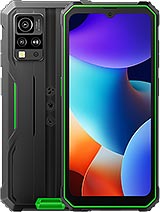
Overview
Blackview BV4800 Pro is an entry-level rugged smartphone featuring IP68/IP69K durability for extreme liquid and dust resistance and the Unisoc T606 chipset for efficient daily operations, aimed at professionals needing a reliable secondary device in hazardous environments. Released in December 2024, it competes with traditional budget handsets by offering military-grade protection at a fraction of flagship costs.
Maintaining a secondary device is no longer a luxury but a calculated economic strategy for the modern professional. The Blackview BV4800 Pro fills a specific void in the market: the "burner" that refuses to die. While primary flagships offer high-resolution displays and cutting-edge photography, they remain fragile and expensive to repair. We view the Blackview BV4800 Pro as a specialized tool for worksites, hiking, or international travel where the risk of theft or damage is high.
At its core, the device relies on the Unisoc T606 (12 nm) SoC. This chipset utilizes a cluster of two Cortex-A75 performance cores and six Cortex-A55 efficiency cores. In our analysis, this configuration provides sufficient throughput for essential communication apps like WhatsApp, Slack, or email without the thermal throttling found in more powerful, heat-prone chips. The 4GB RAM is admittedly modest for 2024, but the 128GB eMMC storage provides enough localized space for offline maps and work documents. For those requiring more, the dedicated microSDXC slot allows for expansion without sacrificing the dual-SIM capabilities.
Imagine a scenario where a primary phone shatters on a construction site. The cost of screen replacement alone often exceeds the total price of the Blackview BV4800 Pro. By offloading high-risk tasks to this rugged unit, the user effectively insures their primary investment. This is not a device meant for heavy multitasking; it is a device meant for survival.
The 5180 mAh battery is the centerpiece of the device's reliability. While 5000 mAh has become standard, the efficiency of the 720p display and the low-power T606 chipset translate to superior real-world endurance. According to the EU Label data, the device offers a 43:06h endurance rating. For a secondary phone sitting in a glovebox or a backpack, this translates to several days of standby time.
We must address the 10W wired charging. In an era where 65W is common, 10W is undeniably slow. It will take several hours to bring the Blackview BV4800 Pro from zero to a full charge. However, from a value hunter's perspective, this slow charging has a silver lining. Slow charging generates less heat, which preserves the long-term health of the lithium-ion cells. The EU Label confirms a 800-cycle battery life, suggesting this phone will remain functional for years as a backup.
During long-duration field work, the ability to rely on the device for 48 hours without hunting for a power outlet is critical. The IP69K rating ensures that even if the device is left in a damp environment or exposed to high-pressure cleaning, the battery housing remains sealed. We see this as a fair trade-off for the lack of fast-charging convenience.
The Blackview BV4800 Pro features a single loudspeaker. We find the output to be tuned for clarity in the vocal range rather than high-fidelity music reproduction. At maximum volume, there is noticeable distortion in the lower frequencies, which is expected from a single-driver setup in a sealed, rugged chassis. The lack of a 3.5mm jack is a disappointment for some, but the Bluetooth 5.0 support ensures stable connections with wireless headsets.
For loudspeaker calls on a noisy site, the mid-range emphasis is actually an advantage. It cuts through environmental hum better than more bass-heavy speakers. However, if the goal is media consumption, the mono setup lacks the immersion of stereo speakers found in the Galaxy A series. The audio is utilitarian—it alerts you to notifications and makes voices audible, and little else.
Communication is the primary job of a backup phone. The Blackview BV4800 Pro utilizes a standard microphone array that lacks advanced active noise cancellation found in premium tiers. In quiet environments, call quality is crisp. When subjected to wind or traffic noise, the microphone struggle to isolate the user's voice, though it remains functional for brief status updates.
Recording audio for video at 1080p@30fps yields similar results. The audio capture is mono and sensitive to handling noise against the rugged plastic frame. For voice notes or emergency calls, the hardware is adequate. We recommend using a Bluetooth headset with built-in noise cancellation if you plan to use this device as a primary work phone in loud industrial settings.
The vibration motor in the Blackview BV4800 Pro is a basic eccentric rotating mass motor. It lacks the sharp, "clicky" haptics of a linear actuator found in flagship devices. The feedback is somewhat "mushy," providing a buzzing sensation rather than a precise tap. This is common in the budget rugged category where internal space is prioritized for structural bracing and battery capacity.
DokeOS 4.0, built on Android 14, handles the UI feedback reasonably well. Users can adjust the vibration intensity, but it will never feel premium. The side-mounted fingerprint sensor is surprisingly responsive, offering a tactile physical anchor that works even when the screen is wet—a common pain point for under-display sensors.
This is where the Blackview BV4800 Pro justifies its existence. It carries an IP68/IP69K rating and is MIL-STD-810H compliant. For the uninitiated, IP69K means the device can withstand high-pressure water jets and high-temperature steam cleaning. This is the highest level of liquid protection available for a consumer electronic device. Most flagships stop at IP68, which only covers immersion.
The screen is protected by Corning Gorilla Glass 5 with a Mohs level 5 scratch resistance. While level 6 and 7 are where deep grooves appear, a level 5 rating means common keys and coins are unlikely to leave permanent marks. Furthermore, the structural engineering is rated for 270 falls as per the EU Label's Class A rating. This is an industrial-grade metric that far exceeds standard consumer testing.
At 285 grams and 13.5 mm thick, the device is a brick. It is not designed for pocket comfort; it is designed to hit concrete from 1.5 meters and keep working. The inclusion of NFC is a significant value add, allowing for contactless payments in an era where many budget [rugged phones](/trend/best-rugged-phones-2026/) omit this feature to save costs.
From an economist's view, rugged phones hold a different type of value than flagships. An iPhone 16 Pro Max will lose 30-40% of its value in its first year. A Blackview BV4800 Pro has such a low entry price that its depreciation is negligible in absolute dollar terms. Its value lies in its utility-per-month.
Because it runs Android 14, it remains compatible with modern banking and security apps for the foreseeable future. The 16 MP main camera is strictly for documentation; it lacks the dynamic range for photography but serves its purpose for capturing images of receipts, site progress, or QR codes. As a secondary device, its resale value is less important than its "cost of failure." If this phone saves your primary device from one drop, it has already paid for itself. This is the ultimate value-hunter logic: spend a little now to avoid spending a lot later.
The Essential Economic Use Case for Backup Hardware
Maintaining a secondary device is no longer a luxury but a calculated economic strategy for the modern professional. The Blackview BV4800 Pro fills a specific void in the market: the "burner" that refuses to die. While primary flagships offer high-resolution displays and cutting-edge photography, they remain fragile and expensive to repair. We view the Blackview BV4800 Pro as a specialized tool for worksites, hiking, or international travel where the risk of theft or damage is high.
At its core, the device relies on the Unisoc T606 (12 nm) SoC. This chipset utilizes a cluster of two Cortex-A75 performance cores and six Cortex-A55 efficiency cores. In our analysis, this configuration provides sufficient throughput for essential communication apps like WhatsApp, Slack, or email without the thermal throttling found in more powerful, heat-prone chips. The 4GB RAM is admittedly modest for 2024, but the 128GB eMMC storage provides enough localized space for offline maps and work documents. For those requiring more, the dedicated microSDXC slot allows for expansion without sacrificing the dual-SIM capabilities.
Imagine a scenario where a primary phone shatters on a construction site. The cost of screen replacement alone often exceeds the total price of the Blackview BV4800 Pro. By offloading high-risk tasks to this rugged unit, the user effectively insures their primary investment. This is not a device meant for heavy multitasking; it is a device meant for survival.
Endurance Metrics and the Standby Advantage
The 5180 mAh battery is the centerpiece of the device's reliability. While 5000 mAh has become standard, the efficiency of the 720p display and the low-power T606 chipset translate to superior real-world endurance. According to the EU Label data, the device offers a 43:06h endurance rating. For a secondary phone sitting in a glovebox or a backpack, this translates to several days of standby time.
We must address the 10W wired charging. In an era where 65W is common, 10W is undeniably slow. It will take several hours to bring the Blackview BV4800 Pro from zero to a full charge. However, from a value hunter's perspective, this slow charging has a silver lining. Slow charging generates less heat, which preserves the long-term health of the lithium-ion cells. The EU Label confirms a 800-cycle battery life, suggesting this phone will remain functional for years as a backup.
During long-duration field work, the ability to rely on the device for 48 hours without hunting for a power outlet is critical. The IP69K rating ensures that even if the device is left in a damp environment or exposed to high-pressure cleaning, the battery housing remains sealed. We see this as a fair trade-off for the lack of fast-charging convenience.
Audio Architecture and Speaker Utility
The Blackview BV4800 Pro features a single loudspeaker. We find the output to be tuned for clarity in the vocal range rather than high-fidelity music reproduction. At maximum volume, there is noticeable distortion in the lower frequencies, which is expected from a single-driver setup in a sealed, rugged chassis. The lack of a 3.5mm jack is a disappointment for some, but the Bluetooth 5.0 support ensures stable connections with wireless headsets.
For loudspeaker calls on a noisy site, the mid-range emphasis is actually an advantage. It cuts through environmental hum better than more bass-heavy speakers. However, if the goal is media consumption, the mono setup lacks the immersion of stereo speakers found in the Galaxy A series. The audio is utilitarian—it alerts you to notifications and makes voices audible, and little else.
Call Integrity and Microphone Precision
Communication is the primary job of a backup phone. The Blackview BV4800 Pro utilizes a standard microphone array that lacks advanced active noise cancellation found in premium tiers. In quiet environments, call quality is crisp. When subjected to wind or traffic noise, the microphone struggle to isolate the user's voice, though it remains functional for brief status updates.
Recording audio for video at 1080p@30fps yields similar results. The audio capture is mono and sensitive to handling noise against the rugged plastic frame. For voice notes or emergency calls, the hardware is adequate. We recommend using a Bluetooth headset with built-in noise cancellation if you plan to use this device as a primary work phone in loud industrial settings.
Tactile Response and UI Feedback
The vibration motor in the Blackview BV4800 Pro is a basic eccentric rotating mass motor. It lacks the sharp, "clicky" haptics of a linear actuator found in flagship devices. The feedback is somewhat "mushy," providing a buzzing sensation rather than a precise tap. This is common in the budget rugged category where internal space is prioritized for structural bracing and battery capacity.
DokeOS 4.0, built on Android 14, handles the UI feedback reasonably well. Users can adjust the vibration intensity, but it will never feel premium. The side-mounted fingerprint sensor is surprisingly responsive, offering a tactile physical anchor that works even when the screen is wet—a common pain point for under-display sensors.
Engineering for Physical Trauma
This is where the Blackview BV4800 Pro justifies its existence. It carries an IP68/IP69K rating and is MIL-STD-810H compliant. For the uninitiated, IP69K means the device can withstand high-pressure water jets and high-temperature steam cleaning. This is the highest level of liquid protection available for a consumer electronic device. Most flagships stop at IP68, which only covers immersion.
The screen is protected by Corning Gorilla Glass 5 with a Mohs level 5 scratch resistance. While level 6 and 7 are where deep grooves appear, a level 5 rating means common keys and coins are unlikely to leave permanent marks. Furthermore, the structural engineering is rated for 270 falls as per the EU Label's Class A rating. This is an industrial-grade metric that far exceeds standard consumer testing.
At 285 grams and 13.5 mm thick, the device is a brick. It is not designed for pocket comfort; it is designed to hit concrete from 1.5 meters and keep working. The inclusion of NFC is a significant value add, allowing for contactless payments in an era where many budget [rugged phones](/trend/best-rugged-phones-2026/) omit this feature to save costs.
Calculating Long-Term Resale and Utility Value
From an economist's view, rugged phones hold a different type of value than flagships. An iPhone 16 Pro Max will lose 30-40% of its value in its first year. A Blackview BV4800 Pro has such a low entry price that its depreciation is negligible in absolute dollar terms. Its value lies in its utility-per-month.
Because it runs Android 14, it remains compatible with modern banking and security apps for the foreseeable future. The 16 MP main camera is strictly for documentation; it lacks the dynamic range for photography but serves its purpose for capturing images of receipts, site progress, or QR codes. As a secondary device, its resale value is less important than its "cost of failure." If this phone saves your primary device from one drop, it has already paid for itself. This is the ultimate value-hunter logic: spend a little now to avoid spending a lot later.
Technical Specifications
| LAUNCH | |
|---|---|
| Announced | 2024, December |
| Status | Available. Released 2024, December |
| PLATFORM | |
| OS | Android 14, DokeOS 4.0 |
| Chipset | Unisoc T606 (12 nm) |
| CPU | Octa-core (2x1.6 GHz Cortex-A75 & 6x1.6 GHz Cortex-A55) |
| GPU | Mali-G57 MP1 |
| BODY | |
| Dimensions | 174.7 x 81.5 x 13.5 mm (6.88 x 3.21 x 0.53 in) |
| Weight | 285 g (10.05 oz) |
| SIM | Nano-SIM + Nano-SIM |
| Info | IP68/IP69K dust tight and water resistant (high pressure water jets; immersible up to 1.5m for 30 min) Drop resistant up to 1.5m MIL-STD-810H compliant |
| DISPLAY | |
| Type | IPS LCD |
| Size | 6.56 inches, 103.4 cm2 (~72.6% screen-to-body ratio) |
| Resolution | 720 x 1612 pixels, 20:9 ratio (~269 ppi density) |
| Protection | Corning Gorilla Glass 5, Mohs level 5 |
| MEMORY | |
| Card slot | microSDXC (dedicated slot) |
| Internal | 128GB 4GB RAM |
| Info | eMMC |
| MAIN CAMERA | |
| Dual | 16 MP, f/2.2, (wide), AF 2 MP, f/2.8 |
| Features | LED flash |
| Video | 1080p@30fps |
| SELFIE CAMERA | |
| Single | 8 MP, f/2.2, (wide) |
| Video | 720p@30fps |
| SOUND | |
| Loudspeaker | Yes |
| 3.5mm jack | No |
| COMMS | |
| WLAN | Wi-Fi 802.11 a/b/g/n/ac, dual-band |
| Bluetooth | 5.0, A2DP, LE |
| Positioning | GPS, GLONASS, GALILEO, BDS |
| NFC | Yes |
| Radio | FM radio |
| USB | USB Type-C 2.0, OTG |
| NETWORK | |
| Technology | GSM / HSPA / LTE |
| 2G bands | GSM 850 / 900 / 1800 / 1900 |
| 3G bands | HSDPA 850 / 900 / 1700(AWS) / 1900 / 2100 |
| 4G bands | 2, 3, 4, 5, 7, 12, 13, 17, 26, 28, 40, 41, 66 |
| Speed | HSPA, LTE |
| FEATURES | |
| Sensors | Fingerprint (side-mounted), accelerometer, gyro, proximity, compass |
| BATTERY | |
| Type | 5180 mAh |
| Charging | 10W wired |
| MISC | |
| Colors | Black, Orange, Green |
| EU LABEL | |
| Energy | Class C |
| Battery | 43:06h endurance, 800 cycles |
| Free fall | Class A (270 falls) |
| Repairability | Class C |