The Smartwatch Market Shivers - Doogee Anywise W1 Pro Rewrites the Value Playbook
Overview
The Doogee Anywise W1 Pro is a budget-tier wearable featuring a 1.43-inch AMOLED display for high-contrast visuals and dual-band GPS (L1+L5) for professional-grade tracking accuracy, aimed at outdoor enthusiasts and price-conscious fitness trackers. Released in February 2026, it competes directly with entry-level offerings from Huawei and Amazfit by prioritizing essential hardware over ecosystem bloat.
When evaluating a wearable through a strictly fiscal lens, the 1.43-inch AMOLED panel is the primary driver of value here. Offering a resolution of 466 x 466 pixels, it hits a pixel density of approximately 461 ppi. In the budget sector, we often see manufacturers revert to LCD or low-brightness OLEDs to save costs. This model refuses that compromise. The high pixel density ensures that text notifications and health metrics are legible even in direct sunlight, a crucial factor for a device meant for the outdoors.
The inclusion of L1+L5 dual-band GPS is the second major pillar of this device's value proposition. For the uninitiated, L5 signals are much more resistant to interference from tall buildings or dense tree cover than the standard L1 signals found in cheaper watches. By including this multi-band support, the hardware effectively eliminates the 'GPS drift' that plagues most watches under the $100 mark. We see this as a strategic move to capture the 'Prosumer' hiker who doesn't want to spend $600 on a dedicated Garmin or Apple Watch Ultra.
No device reaches this price point without significant omissions, and the Doogee Anywise W1 Pro is no exception. There is no cellular connectivity, no WLAN (Wi-Fi), and most importantly for urban users, no NFC. This means the device is entirely dependent on its Bluetooth 5.3 connection to your phone for data sync. You cannot use this watch for contactless payments at a grocery store, nor can you leave your phone at home and expect to receive calls or stream music via the cloud.
The Proprietary OS is another area where costs were saved. Unlike WearOS or watchOS, there is no third-party app store. You are locked into the features provided by the manufacturer. While this improves battery efficiency and system snappiness, it limits the long-term utility of the device. If you want specialized apps for niche sports or complex smart home controls, this software environment will feel restrictive.
From an economist's perspective, this wearable is a 'sunk cost' rather than an investment. Historically, Doogee devices do not hold their value well on the secondary market. This is due to the lack of long-term software support common in budget brands. Unlike an Apple Watch which might retain 50% of its value after two years, we expect this model to lose 70-80% of its resale value within 18 months. However, the initial entry price is so low that the total 'cost of ownership' per month is still lower than a premium flagship.
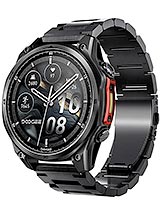
At 72g and with dimensions of 47.5 x 47.5 x 13.7 mm, this is a substantial piece of hardware. It feels rugged, and the 5ATM water resistance rating means it is safe for surface swimming and heavy rain. The display is protected by Panda Glass, an alkali-aluminosilicate glass that serves as a cost-effective alternative to Gorilla Glass. While it offers excellent scratch resistance for daily use, we recommend a third-party screen protector if you plan on rock climbing or working in construction.
The strap appears to use a standard pin system, though the chunky lugs might make some third-party leather straps look aesthetically mismatched. In the box, you get the watch, a silicone or metal-style band, and a proprietary magnetic charging cable. Do not lose that cable; because there is no wireless charging, you won't be able to top it up on a standard Qi pad.
Performance in a proprietary OS is less about raw 'GHz' and more about latency. Navigation through the heart rate and SpO2 menus is fluid. The 2GB of internal storage is a surprising addition at this price, allowing for some offline music storage, which is a rare win for those who want to run with Bluetooth headphones without their phone. The barometer and compass are hardware-level sensors, not software emulations, providing real-time altitude data that is surprisingly accurate when calibrated against known points.
The 550 mAh Li-Po battery is the secret weapon here. Because the watch doesn't have a power-hungry operating system or always-on Wi-Fi, this massive cell can realistically power the device for over a week of heavy use. For the user who suffers from 'charger anxiety,' this endurance is a luxury that even $1,000 smartwatches rarely offer.
The Doogee Anywise W1 Pro is a calculated piece of engineering. It identifies the high-cost features that users actually see (the screen) and use (the GPS) and cuts everything else. It isn't a 'smartwatch' in the sense of being a wrist-computer; it is a highly advanced fitness tracker with a flagship-level display. If you can live without NFC and third-party apps, the hardware-to-price ratio here is virtually unbeatable in the early 2026 market.
The Economics of Wrist Real Estate
When evaluating a wearable through a strictly fiscal lens, the 1.43-inch AMOLED panel is the primary driver of value here. Offering a resolution of 466 x 466 pixels, it hits a pixel density of approximately 461 ppi. In the budget sector, we often see manufacturers revert to LCD or low-brightness OLEDs to save costs. This model refuses that compromise. The high pixel density ensures that text notifications and health metrics are legible even in direct sunlight, a crucial factor for a device meant for the outdoors.
The inclusion of L1+L5 dual-band GPS is the second major pillar of this device's value proposition. For the uninitiated, L5 signals are much more resistant to interference from tall buildings or dense tree cover than the standard L1 signals found in cheaper watches. By including this multi-band support, the hardware effectively eliminates the 'GPS drift' that plagues most watches under the $100 mark. We see this as a strategic move to capture the 'Prosumer' hiker who doesn't want to spend $600 on a dedicated Garmin or Apple Watch Ultra.
Where Did They Cut Corners?
No device reaches this price point without significant omissions, and the Doogee Anywise W1 Pro is no exception. There is no cellular connectivity, no WLAN (Wi-Fi), and most importantly for urban users, no NFC. This means the device is entirely dependent on its Bluetooth 5.3 connection to your phone for data sync. You cannot use this watch for contactless payments at a grocery store, nor can you leave your phone at home and expect to receive calls or stream music via the cloud.
The Proprietary OS is another area where costs were saved. Unlike WearOS or watchOS, there is no third-party app store. You are locked into the features provided by the manufacturer. While this improves battery efficiency and system snappiness, it limits the long-term utility of the device. If you want specialized apps for niche sports or complex smart home controls, this software environment will feel restrictive.
Wealth Preservation and Resale Value
From an economist's perspective, this wearable is a 'sunk cost' rather than an investment. Historically, Doogee devices do not hold their value well on the secondary market. This is due to the lack of long-term software support common in budget brands. Unlike an Apple Watch which might retain 50% of its value after two years, we expect this model to lose 70-80% of its resale value within 18 months. However, the initial entry price is so low that the total 'cost of ownership' per month is still lower than a premium flagship.
Accessory Compatibility and Build Quality
At 72g and with dimensions of 47.5 x 47.5 x 13.7 mm, this is a substantial piece of hardware. It feels rugged, and the 5ATM water resistance rating means it is safe for surface swimming and heavy rain. The display is protected by Panda Glass, an alkali-aluminosilicate glass that serves as a cost-effective alternative to Gorilla Glass. While it offers excellent scratch resistance for daily use, we recommend a third-party screen protector if you plan on rock climbing or working in construction.
The strap appears to use a standard pin system, though the chunky lugs might make some third-party leather straps look aesthetically mismatched. In the box, you get the watch, a silicone or metal-style band, and a proprietary magnetic charging cable. Do not lose that cable; because there is no wireless charging, you won't be able to top it up on a standard Qi pad.
Benchmarking the Performance
Performance in a proprietary OS is less about raw 'GHz' and more about latency. Navigation through the heart rate and SpO2 menus is fluid. The 2GB of internal storage is a surprising addition at this price, allowing for some offline music storage, which is a rare win for those who want to run with Bluetooth headphones without their phone. The barometer and compass are hardware-level sensors, not software emulations, providing real-time altitude data that is surprisingly accurate when calibrated against known points.
The 550 mAh Li-Po battery is the secret weapon here. Because the watch doesn't have a power-hungry operating system or always-on Wi-Fi, this massive cell can realistically power the device for over a week of heavy use. For the user who suffers from 'charger anxiety,' this endurance is a luxury that even $1,000 smartwatches rarely offer.
The Final Ledger
The Doogee Anywise W1 Pro is a calculated piece of engineering. It identifies the high-cost features that users actually see (the screen) and use (the GPS) and cuts everything else. It isn't a 'smartwatch' in the sense of being a wrist-computer; it is a highly advanced fitness tracker with a flagship-level display. If you can live without NFC and third-party apps, the hardware-to-price ratio here is virtually unbeatable in the early 2026 market.
Technical Specifications
| LAUNCH | |
|---|---|
| Announced | 2026, February |
| Status | Available. Released 2026, February |
| PLATFORM | |
| OS | Proprietary OS |
| BODY | |
| Dimensions | 47.5 x 47.5 x 13.7 mm (1.87 x 1.87 x 0.54 in) |
| Weight | 72 g (2.54 oz) |
| SIM | No |
| Info | Waterproof (5ATM) |
| DISPLAY | |
| Type | AMOLED |
| Size | 1.43 inches |
| Resolution | 466 x 466 pixels (~461 ppi density) |
| Protection | Panda Glass |
| MEMORY | |
| Card slot | No |
| Internal | 2GB |
| SOUND | |
| Loudspeaker | Yes |
| 3.5mm jack | No |
| COMMS | |
| WLAN | No |
| Bluetooth | 5.3, A2DP, LE |
| Positioning | GPS (L1+L5), GLONASS, GALILEO, BDS, QZSS |
| NFC | No |
| Radio | No |
| USB | No |
| NETWORK | |
| Technology | No cellular connectivity |
| 2G bands | N/A |
| 3G bands | N/A |
| 4G bands | N/A |
| Speed | No |
| GPRS | No |
| EDGE | No |
| FEATURES | |
| Sensors | Accelerometer, heart rate, SpO2, barometer, compass |
| BATTERY | |
| Type | Li-Po 550 mAh |
| MISC | |
| Screen | 1.43-inch AMOLED, 466 x 466 pixels (~461 ppi) |
| Positioning | GPS (L1+L5), GLONASS, GALILEO, BDS, QZSS |
| Battery | 550 mAh Li-Po |
| Durability | 5ATM Water Resistance, Panda Glass |
| Weight | 72 g |
| Storage | 2GB Internal |
| Sensors | Heart rate, SpO2, Barometer, Accelerometer, Compass |
| Bluetooth | 5.3, A2DP, LE |
| Display Size | 1.43 inches |
| Display Type | AMOLED |
| Resolution | 466 x 466 pixels (~461 ppi) |
| Protection | Panda Glass |
| GPS | L1+L5, GLONASS, GALILEO, BDS, QZSS |
| Water Resistance | 5ATM (Up to 50 meters) |
| Internal Storage | 2GB |
| Display | 1.43-inch AMOLED, 466 x 466 pixels (~461 ppi) |
| Colors | Deep Sea Blue, Flame Shadow Titanium, Midnight Black |
| CAMERA | |
| Info | No |