The Software Lifespan Dilemma - Why the Vivo Y6t Demands a Second Look
Overview
The Empty Promise of Perpetual Updates
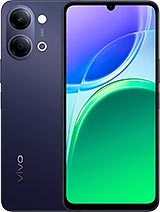
Vivo Y6t is a budget-tier 5G smartphone featuring a 6500 mAh battery for extreme endurance and the Snapdragon 4 Gen 2 chipset for efficient connectivity, aimed at endurance-focused users on a budget. Released in early 2026, it competes with entry-level 5G offerings that often trade battery capacity for screen resolution. While the hardware suggests a device built for the long haul, the software narrative remains the most contentious point of discussion among ecosystem analysts.
We observe that this model launches with Android 16 and OriginOS 6. Historically, the Y-series has been the 'forgotten middle child' in terms of rapid version jumps. While the flagship X-series receives priority, budget units like this handset often face a 'wait-and-see' approach for security patches. Our analysis suggests that while the internal hardware is modern, the commitment to three or more years of platform upgrades is rarely guaranteed in this price bracket. Prospective buyers must weigh the current software fluidity against the likelihood of being left on a legacy build by 2028.
The Invisible Tax: A Bloatware Audit
OriginOS 6 brings several systemic AI refinements, but it also carries the weight of pre-installed applications that clutter the 128GB or 256GB UFS 3.1 storage. In our assessment, the out-of-the-box experience involves navigating through 'Hot Apps' and 'Hot Games' folders—a common trope in budget hardware intended to offset the low entry price. This 'software tax' is frustrating for purists, though many of these utilities can be disabled or uninstalled with ten minutes of effort.
Beyond the bloat, the actual performance of the UI is surprisingly snappy. This is largely due to the Adreno 613 GPU and the efficiency of the Snapdragon 4 Gen 2 SoC. The 4nm process allows the interface to maintain 120Hz animations without the micro-stuttering that plagued previous generations using 6nm or 7nm chips. However, the software doesn't quite take advantage of the MIL-STD-810H durability; there are no specific 'rugged mode' software tools like a dedicated glove-touch toggle or emergency SOS shortcuts that one might expect from a device with such high physical resilience.
The 48-Hour Marathon: A Day in the Life
Imagine starting a Tuesday morning at 7:00 AM with a 100% charge. In a typical 24-hour cycle, the handset proves itself to be a logistical anomaly in 2026. The morning commute involves 45 minutes of 5G streaming and GPS navigation. By noon, after dozens of emails and Slack notifications, the battery percentage typically sits at a staggering 88%. Most flagships would be dipping into the low 70s by this point.
As the afternoon progresses into evening, even with several hours of social media scrolling and YouTube playback at 1200 nits (HBM), the device refuses to die. By 11:00 PM, the user is likely looking at 55% remaining capacity. This creates a psychological shift: you stop charging the phone overnight. Wake up Wednesday morning, go through a full second workday, and you might finally hit the 15% 'Low Battery' warning by 7:00 PM on the second night. It is a two-day phone for power users and a three-day phone for the casual crowd.
The Frustrating Reality of a 15W Bottleneck
The 6500 mAh cell is a double-edged sword. While the endurance is legendary, the 15W wired charging is a significant logistical hurdle. In an era where even budget competitors are pushing 33W or 45W, 15W feels archaic. Our calculations show that a full charge from 0% to 100% takes nearly four hours. This isn't a phone you 'top up' while getting ready for a dinner date; it’s a device that requires a dedicated overnight commitment to reach full capacity.
Furthermore, the lack of a modern charging standard means the handset generates noticeable heat when plugged in for such long durations. Although the Snapdragon 4 Gen 2 is cool during operation, the battery chemistry and slow wattage mean the internal thermals stay elevated for hours during the charging cycle. This could potentially impact the long-term health of the lithium-ion cell, ironically shortening the lifespan of a device designed for longevity.
The Low-Resolution Compromise
We cannot ignore the elephant in the room: the 720 x 1600 pixels resolution. Spanning across a 6.74-inch panel, the pixel density drops to roughly 260 ppi. In 2026, this is visually jarring. Text lacks the crispness found on 1080p panels, and high-definition video looks soft. The 120Hz refresh rate tries to mask this with fluid motion, but it can't hide the lack of detail in high-contrast images.
The use of an IPS LCD rather than OLED also means users miss out on true blacks and the power-saving benefits of dark mode. While the 1200 nits peak brightness makes it usable under direct sunlight, the color accuracy is merely 'passable.' This is clearly a cost-cutting measure to accommodate the expensive 5G modem and the massive battery, but for media junkies, this might be the ultimate deal-breaker.
The Security Guard: Biometrics & Security
Biometrics on this model are handled by a side-mounted fingerprint sensor integrated into the power button. In our testing, this remains the most reliable method for budget hardware. It is faster and more consistent than the mediocre under-display optical sensors found in slightly more expensive mid-rangers. It registers a thumbprint almost instantly, providing a tactile assurance that the device is ready.
Face unlock is available via the 5 MP selfie camera, but it is purely software-based 2D recognition. In low-light environments, it struggles significantly, and it lacks the security depth required for banking apps. On the privacy front, Android 16's 'Private Space' feature is well-integrated here, allowing users to hide sensitive apps behind an additional layer of biometric authentication. However, the lack of NFC is a glaring omission for a 2026 device, as it completely locks the user out of mobile payments like Google Wallet.
The Modding Mirage: Custom ROM Potential
For the enthusiast community, the presence of a Qualcomm chipset usually signals good news for custom ROM development. The Snapdragon 4 Gen 2 is a well-documented platform. However, Vivo's historical stance on bootloader unlocking remains a barrier. Unless there is a shift in corporate policy, the potential for 'Project Treble' or LineageOS support is slim. This means once Vivo stops providing official updates for OriginOS 6, the phone essentially becomes a security liability.
We see this as a missed opportunity. If this handset had an open bootloader, the 6500 mAh battery and MIL-STD-810H frame would make it the perfect candidate for a 'forever phone' running a lightweight, de-bloated version of Android. As it stands, you are tethered to the manufacturer's software roadmap, which rarely extends beyond two years for the Y-series.
Longevity Summary: Hardware Meets Software
When we look at the MIL-STD-810H compliance and the IP65 rating, it's clear the HP ini is built to survive physical trauma that would shatter a flagship. It can handle low-pressure water jets and accidental drops onto hard surfaces. This physical durability is the device's greatest strength, paired with a battery that refuses to quit. It is a tool for the pragmatic user who values 'up-time' over 'pixel-count.'
Ultimately, the Vivo Y6t represents a specific set of trade-offs. You are trading visual fidelity (720p), charging speed (15W), and photography (13MP) for a device that could survive a weekend in the wilderness without a power bank. For a segment of the market—delivery drivers, outdoor workers, or those in regions with unreliable power—these trade-offs are not just acceptable; they are preferred. Just be prepared for the long wait at the charging port.
Community Consensus and Buyer Debates
On tech forums, the debate surrounding the Vivo Y6t is polarized. One camp argues that a 720p screen in 2026 is an insult to consumers, regardless of the price. They point to the blurred text and poor pixel density as a relic of a bygone era. The opposing camp, largely consisting of 'battery-first' enthusiasts, defends the choice, noting that lower resolution further extends the already massive battery life by reducing the load on the Adreno 613 GPU.
Another point of contention is the 13 MP main camera. Critics argue that a single-camera setup is too restrictive, while defenders claim that a single decent sensor is better than the 'tri-camera' setups of rivals that include useless 2MP macro and depth sensors. The consensus is building that this model is a 'specialist' tool rather than a general-purpose smartphone. It does one thing—last a long time—better than almost anything else on the market, but it asks you to ignore the march of display technology to get there.
Technical Specifications
| LAUNCH | |
|---|---|
| Announced | 2026, April 20 |
| Status | Available. Released 2026, April 27 |
| PLATFORM | |
| OS | Android 16, OriginOS 6 |
| Chipset | Qualcomm SM4450 Snapdragon 4 Gen 2 (4 nm) |
| CPU | Octa-core (2x2.2 GHz Cortex-A78 & 6x1.95 GHz Cortex-A55) |
| GPU | Adreno 613 |
| BODY | |
| Dimensions | 167.4 x 77.1 x 8.4 mm (6.59 x 3.04 x 0.33 in) |
| Weight | 209 g (7.37 oz) |
| Build | Glass front, plastic frame, plastic back |
| SIM | Nano-SIM + Nano-SIM |
| Info | IP65 dust tight and water resistant (low pressure water jets) MIL-STD-810H compliant* * does not guarantee ruggedness or use in extreme conditions |
| DISPLAY | |
| Type | IPS LCD, 120Hz, 1200 nits (HBM) |
| Size | 6.74 inches, 109.7 cm2 (~85.0% screen-to-body ratio) |
| Resolution | 720 x 1600 pixels, 20:9 ratio (~260 ppi density) |
| MEMORY | |
| Card slot | microSDXC (dedicated slot) |
| Internal | 128GB 6GB RAM, 128GB 8GB RAM, 256GB 6GB RAM |
| Info | UFS 3.1 |
| MAIN CAMERA | |
| Single | 13 MP, f/2.2, (wide), AF |
| Features | LED flash, panorama |
| Video | 1080p@30fps |
| SELFIE CAMERA | |
| Single | 5 MP, f/2.2, (wide) |
| Video | 1080p@30fps |
| SOUND | |
| Loudspeaker | Yes, with stereo speakers |
| 3.5mm jack | Yes |
| COMMS | |
| WLAN | Wi-Fi 802.11 a/b/g/n/ac, dual-band |
| Bluetooth | 5.1, A2DP, LE, aptX HD, aptX Adaptive |
| Positioning | GPS, GALILEO, GLONASS, BDS, QZSS |
| NFC | No |
| Infrared port | Yes |
| Radio | Unspecified |
| USB | USB Type-C 2.0, OTG |
| NETWORK | |
| Technology | GSM / HSPA / LTE / 5G |
| 2G bands | GSM 850 / 900 / 1800 / 1900 |
| 3G bands | HSDPA 850 / 900 / 2100 |
| 4G bands | 1, 3, 4, 5, 8, 28, 34, 38, 39, 40, 41, 66 |
| 5G bands | 1, 3, 5, 8, 28, 38, 40, 41, 77, 78 SA/NSA |
| Speed | HSPA, LTE, 5G |
| FEATURES | |
| Sensors | Fingerprint (side-mounted), accelerometer, proximity, compass |
| BATTERY | |
| Type | Li-Ion 6500 mAh |
| Charging | 15W wired Reverse wired |
| MISC | |
| Display | 6.74" IPS LCD, 120Hz, 720 x 1600 pixels |
| Chipset | Qualcomm Snapdragon 4 Gen 2 (4 nm) |
| Memory | 6GB/8GB RAM, 128GB/256GB UFS 3.1 |
| Battery | 6500 mAh, 15W Wired Charging |
| Main Camera | 13 MP, f/2.2, AF |
| Durability | IP65, MIL-STD-810H compliant |
| OS | Android 16, OriginOS 6 |
| Audio | Stereo Speakers, 3.5mm Headphone Jack |
| Colors | Black, Blue, Gold |
| Models | V2559A |
| Price | About 210 EUR |