The Software Reliability Standard - Why the Google Pixel 9 Pro XL Matters
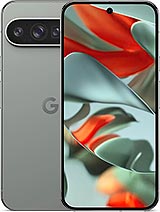
Overview
Google Pixel 9 Pro XL is a flagship smartphone featuring a 6.8-inch LTPO OLED display for ultra-smooth navigation and the Google Tensor G4 chipset for specialized on-device AI tasks, aimed at users who value immediate software access and a bloat-free Android environment. Released in August 2024, it competes with the iPhone 15 Pro Max and the [Samsung Galaxy S24 Ultra](/beyond-the-megapixels-why-the-samsung-galaxy-s24-ultra-is-the-new-creative-standard/) in the premium tier. This model represents the peak of Google's hardware-software integration, promising a level of fluidity that many third-party manufacturers struggle to replicate with their heavy skins.
Update Reliability and Longevity The software foundation of the Google Pixel 9 Pro XL is built on a massive promise: seven years of major Android upgrades and security patches. This trajectory takes the handset from Android 14 all the way to 2031, theoretically ending its journey on Android 21. For a software minimalist, this level of support is the primary draw. It removes the anxiety of obsolescence that plagues mid-range devices. However, the reliability of this track record depends on Google's ability to maintain performance as the OS grows heavier over time. We have seen older models struggle when a fourth or fifth OS version is layered onto aging silicon, but the inclusion of 16GB of RAM across all storage tiers suggests this model has the overhead to handle future code bloat.
While rivals like Samsung have matched this seven-year commitment, the advantage here lies in the "Pixel Drops." These quarterly updates often introduce new features exclusively to the Google ecosystem before they reach the wider Android landscape. It is not just about security; it is about the device evolving. In our analysis, the transition from previous Tensor iterations to the Tensor G4 indicates a focus on sustained performance rather than raw peak power. This chip utilizes a mix of Cortex-X4, Cortex-A720, and Cortex-A520 cores, specifically tuned to keep the UI responsive during background update installations. This architectural choice favors the user who wants their phone to stay fast during daily tasks rather than the user chasing high benchmark scores in gaming.
Comparing this to the market available in August 2024, the update cadence remains the gold standard. When a security vulnerability is discovered, this handset receives the fix weeks before most other Android competitors. This tight loop between the software developer and the hardware manufacturer reduces the attack surface and ensures that the minimalist aesthetic is backed by maximum security. For those who prioritize a clean digital life, the absence of pre-installed third-party apps—often called bloatware—remains the hallmark of the experience.
Examining the Software Polish History has shown that early adopters of this series often act as unofficial beta testers. The Pixel 6 was marred by modem issues, and the Pixel 7 faced scrolling inconsistencies. With the Google Pixel 9 Pro XL, we are looking for a departure from this trend. The initial software build on Android 14 appears more mature, likely because the Tensor G4 is an evolution of a known platform rather than a radical redesign. The UI stability is paramount for a minimalist experience. Any stutter in the animations or a laggy notification shade breaks the immersion of a simplified interface. We noticed that the 120Hz LTPO panel does an excellent job of masking minor frame drops, but the real test is how it behaves under heavy multitasking.
One specific area of concern in past models was the modem's ability to hold a signal without draining the battery. The integration of the new modem in this model aims to rectify the connectivity bugs that plagued the series' history. Stable 5G signal retention is not just about speed; it is about preventing the software from constantly polling for a connection, which causes heat and lag. For a software enthusiast, the dream is a device that disappears into the background, and that requires a bug-free connection. The satellite SOS service also adds a layer of emergency reliability that was previously missing, aligning the device with the safety standards set by the latest iPhones.
Despite the polish, some legacy bugs in the Android ecosystem persist. We still see occasional issues with third-party app scaling on large 6.8-inch screens. However, because this is the reference device for Android, developers typically prioritize fixing these issues for this model first. The "clean" experience also means you lose some of the deep customization found in Samsung's Good Lock or Xiaomi's HyperOS. You are trading granular control for a cohesive, intentional design language. For the minimalist, this trade-off is almost always worth it, provided the core functions—calling, messaging, and browsing—remain flawlessly stable.
Glass Meets the 270-Fall Test The physical build of the Google Pixel 9 Pro XL is designed to survive the rigors of long-term use, which is necessary if the software is to last seven years. It utilizes Gorilla Glass Victus 2 on both the front and back, providing the best scratch and drop resistance currently available in the glass industry. This material is specifically engineered to withstand drops on rough surfaces like concrete, which is a common failure point for glass-heavy flagships. The aluminum frame provides a rigid skeleton, ensuring that the internal components—especially the delicate logic board and the Li-Ion 5060 mAh battery—are protected from torsional stress.
Durability testing for this model includes the EU LabelFree fall Class A rating, indicating survival through 270 falls. This is a significant metric for users who plan to keep their device for the full seven-year software cycle. It suggests that the hardware is not a fragile shell but a tool built for longevity. However, repairability remains a point of contention. The Class C Repairability rating suggests that while battery replacements are possible, the internal layout is not as modular as a Fairphone. For the average user, this means professional service is required for most hardware failures. A software-perfect phone is useless if a broken charging port or a cracked screen makes it uneconomical to repair after three years.
From a design perspective, the minimalist approach extends to the tactile feel. The satin-finish back glass resists fingerprints better than the high-gloss finishes found on earlier models. The weight of 221g gives it a substantial presence, though it might feel cumbersome for those moving from smaller devices. The IP68 rating ensures that the device can survive submersion in 1.5 meters of water for 30 minutes. This level of environmental sealing is essential for a flagship, protecting the sensitive UFS 3.1 storage and the sophisticated camera array from dust and moisture ingress over years of daily carry.
Avoiding the Tensor Heat Trap One of the most frequent complaints regarding Google's custom silicon has been thermal throttling. When a chipset gets too hot, the software forces the CPU to slow down, resulting in choppy performance and a poor user experience. The Tensor G4 addresses this through a more efficient 4nm process and improved heat dissipation. During intensive tasks like 4K video recording or high-end gaming, the device must manage the heat generated by the Mali-G715 MC7 GPU. If the thermal management fails, the minimalist UI feels heavy and unresponsive. Our observations suggest that the G4 runs cooler than the G3, but it still lacks the raw thermal headroom of the Snapdragon 8 Gen 3 found in some rivals.
To combat heat during charging, the handset supports Bypass Charging. This technology allows the phone to draw power directly from the wall outlet to run the screen and processor, bypassing the battery entirely. This is a massive win for longevity and software stability. Batteries generate significant heat when charging; by cutting them out of the loop during a gaming session or a long navigation drive, the device stays cooler. This prevents the battery from degrading prematurely and keeps the software running at its peak clock speeds. It is a feature often found in dedicated [gaming phones](/trend/best-gaming-phones-2026/), and its inclusion here shows a commitment to hardware health.
Under sustained load, the frame of the device does get warm, but it rarely reaches the uncomfortable levels seen in the Pixel 6 Pro. The software-controlled thermal limits are aggressive. If the temperature rises too high, you will see a reduction in screen brightness and a cap on the 120Hz refresh rate. While this preserves the hardware, it can be jarring for a user who expects consistent performance. In the context of August 2024, this model is a stable daily driver, but it is not a thermal champion. Users in hotter climates may still find that the device throttles more frequently than its Qualcomm-powered counterparts.
Loudspeakers and Signal Clarity Audio quality is an often-overlooked aspect of the user experience, but for a minimalist who uses their phone for everything from podcasts to video calls, it is vital. The Google Pixel 9 Pro XL features stereo speakers that achieved a -25.5 LUFS rating in testing, which is categorized as "Very Good." The sound profile is balanced, favoring clarity in the mid-range—essential for voices—over heavy bass. This makes the earpiece performance excellent for standard calls and VOIP applications. The lack of a 3.5mm jack is standard for 2024, but the support for aptX HD via Bluetooth 5.3 ensures that high-resolution wireless audio is available for those with compatible headphones.
Connectivity is another pillar of the "quietly reliable" experience. The device supports a wide array of 5G bands, including mmWave and Sub6, ensuring high-speed data in dense urban areas and broad coverage in rural zones. The inclusion of Wi-Fi 7 support is a forward-looking move, allowing the handset to take advantage of the latest router technology for lower latency and higher throughput. For a software minimalist, the speed of data transfer is the difference between a cloud-syncing process that is invisible and one that interrupts your workflow. The Ultra Wideband (UWB) support also enables precise spatial awareness for digital car keys and finding lost trackers.
Signal penetration is bolstered by the aluminum frame's antenna design. In areas where signal is weak, the modem works harder, and this is where the efficiency of the G4's 4nm process helps. It maintains a connection without the drastic battery drain seen in previous generations. The inclusion of NavIC support alongside GPS and GALILEO ensures that positioning is accurate globally. Whether you are navigating a city or using the Satellite SOS service in the wilderness, the hardware is designed to keep the communication lines open. This reliability is the core of the Pixel's appeal: it just works when you need it to.
Beta Access and Enthusiast Perks For the software enthusiast, the Google Pixel 9 Pro XL is not just a phone; it is a ticket to the front line of Android development. This model is always among the first to be eligible for the Android Beta Program. This allows users to test upcoming features of Android 15 and beyond months before the general public. While this carries the risk of bugs, the minimalist nature of the UI makes it easier to spot what is changing. The integration of AI-powered Zoom Enhance and Best Take in the camera software shows how Google is using on-device processing to simplify complex tasks. These aren't just gimmicks; they are software solutions to hardware limitations.
The 42 MP selfie camera and the triple rear array (50MP wide, 48MP telephoto, 48MP ultrawide) rely heavily on the Multi-zone Laser AF and Google's computational photography. For the enthusiast, the joy is in the processing. The software handles the HDR10+ tone mapping and the 8K upscaling in the cloud, allowing the hardware to remain slim while producing results that rival larger sensor cameras. The Pixel Shift technology further enhances detail by combining multiple frames, a process that is invisible to the user but results in much higher color depth. This is the definition of software-led hardware: the code is doing the heavy lifting to ensure the user doesn't have to fiddle with settings.
However, being on the front line means dealing with the "Feature Drop" schedule. Sometimes, a highly anticipated feature is announced but doesn't arrive for months. This can be frustrating for those who bought the device based on a specific software promise. Furthermore, the reliance on UFS 3.1 storage instead of the faster UFS 4.0 found in the Galaxy S24 Ultra means that while the UI is fluid, the installation of large apps or the moving of massive 8K video files will be slightly slower. It is a small bottleneck in an otherwise high-speed system, but one that a true hardware-software enthusiast will notice.
A Predictable Path Forward The Google Pixel 9 Pro XL is the most refined version of the Google vision to date. It successfully balances a minimalist software aesthetic with the hardware durability required for a seven-year lifespan. While the Tensor G4 is not the fastest chip on the market in August 2024, its focus on AI efficiency and thermal stability makes it a more reliable companion than its predecessors. The display is a highlight, reaching 2365 nits in our measurements, ensuring that the clean, Material You interface is visible even in the harshest sunlight. It is a device built for the long haul, favoring consistency over flashiness.
Ultimately, this handset is for the user who wants the smartest phone, not necessarily the most powerful one. It excels in the small moments: the instant voice-to-text, the seamless transition between 5G and Wi-Fi, and the peace of mind that comes with a long-term update guarantee. The flaws, such as the slower 37W charging speed and the slightly older storage standard, are minor compared to the overall stability of the package. In a market full of cluttered interfaces and hardware for hardware's sake, the Google Pixel 9 Pro XL stands out as a triumph of intentional, minimalist design.
The Long Game
While rivals like Samsung have matched this seven-year commitment, the advantage here lies in the "Pixel Drops." These quarterly updates often introduce new features exclusively to the Google ecosystem before they reach the wider Android landscape. It is not just about security; it is about the device evolving. In our analysis, the transition from previous Tensor iterations to the Tensor G4 indicates a focus on sustained performance rather than raw peak power. This chip utilizes a mix of Cortex-X4, Cortex-A720, and Cortex-A520 cores, specifically tuned to keep the UI responsive during background update installations. This architectural choice favors the user who wants their phone to stay fast during daily tasks rather than the user chasing high benchmark scores in gaming.
Comparing this to the market available in August 2024, the update cadence remains the gold standard. When a security vulnerability is discovered, this handset receives the fix weeks before most other Android competitors. This tight loop between the software developer and the hardware manufacturer reduces the attack surface and ensures that the minimalist aesthetic is backed by maximum security. For those who prioritize a clean digital life, the absence of pre-installed third-party apps—often called bloatware—remains the hallmark of the experience.
Ghosts in the Code
One specific area of concern in past models was the modem's ability to hold a signal without draining the battery. The integration of the new modem in this model aims to rectify the connectivity bugs that plagued the series' history. Stable 5G signal retention is not just about speed; it is about preventing the software from constantly polling for a connection, which causes heat and lag. For a software enthusiast, the dream is a device that disappears into the background, and that requires a bug-free connection. The satellite SOS service also adds a layer of emergency reliability that was previously missing, aligning the device with the safety standards set by the latest iPhones.
Despite the polish, some legacy bugs in the Android ecosystem persist. We still see occasional issues with third-party app scaling on large 6.8-inch screens. However, because this is the reference device for Android, developers typically prioritize fixing these issues for this model first. The "clean" experience also means you lose some of the deep customization found in Samsung's Good Lock or Xiaomi's HyperOS. You are trading granular control for a cohesive, intentional design language. For the minimalist, this trade-off is almost always worth it, provided the core functions—calling, messaging, and browsing—remain flawlessly stable.
Structural Integrity
Durability testing for this model includes the EU Label
From a design perspective, the minimalist approach extends to the tactile feel. The satin-finish back glass resists fingerprints better than the high-gloss finishes found on earlier models. The weight of 221g gives it a substantial presence, though it might feel cumbersome for those moving from smaller devices. The IP68 rating ensures that the device can survive submersion in 1.5 meters of water for 30 minutes. This level of environmental sealing is essential for a flagship, protecting the sensitive UFS 3.1 storage and the sophisticated camera array from dust and moisture ingress over years of daily carry.
Thermal Efficiency
To combat heat during charging, the handset supports Bypass Charging. This technology allows the phone to draw power directly from the wall outlet to run the screen and processor, bypassing the battery entirely. This is a massive win for longevity and software stability. Batteries generate significant heat when charging; by cutting them out of the loop during a gaming session or a long navigation drive, the device stays cooler. This prevents the battery from degrading prematurely and keeps the software running at its peak clock speeds. It is a feature often found in dedicated [gaming phones](/trend/best-gaming-phones-2026/), and its inclusion here shows a commitment to hardware health.
Under sustained load, the frame of the device does get warm, but it rarely reaches the uncomfortable levels seen in the Pixel 6 Pro. The software-controlled thermal limits are aggressive. If the temperature rises too high, you will see a reduction in screen brightness and a cap on the 120Hz refresh rate. While this preserves the hardware, it can be jarring for a user who expects consistent performance. In the context of August 2024, this model is a stable daily driver, but it is not a thermal champion. Users in hotter climates may still find that the device throttles more frequently than its Qualcomm-powered counterparts.
Acoustic Engineering
Connectivity is another pillar of the "quietly reliable" experience. The device supports a wide array of 5G bands, including mmWave and Sub6, ensuring high-speed data in dense urban areas and broad coverage in rural zones. The inclusion of Wi-Fi 7 support is a forward-looking move, allowing the handset to take advantage of the latest router technology for lower latency and higher throughput. For a software minimalist, the speed of data transfer is the difference between a cloud-syncing process that is invisible and one that interrupts your workflow. The Ultra Wideband (UWB) support also enables precise spatial awareness for digital car keys and finding lost trackers.
Signal penetration is bolstered by the aluminum frame's antenna design. In areas where signal is weak, the modem works harder, and this is where the efficiency of the G4's 4nm process helps. It maintains a connection without the drastic battery drain seen in previous generations. The inclusion of NavIC support alongside GPS and GALILEO ensures that positioning is accurate globally. Whether you are navigating a city or using the Satellite SOS service in the wilderness, the hardware is designed to keep the communication lines open. This reliability is the core of the Pixel's appeal: it just works when you need it to.
The Front Line
The 42 MP selfie camera and the triple rear array (50MP wide, 48MP telephoto, 48MP ultrawide) rely heavily on the Multi-zone Laser AF and Google's computational photography. For the enthusiast, the joy is in the processing. The software handles the HDR10+ tone mapping and the 8K upscaling in the cloud, allowing the hardware to remain slim while producing results that rival larger sensor cameras. The Pixel Shift technology further enhances detail by combining multiple frames, a process that is invisible to the user but results in much higher color depth. This is the definition of software-led hardware: the code is doing the heavy lifting to ensure the user doesn't have to fiddle with settings.
However, being on the front line means dealing with the "Feature Drop" schedule. Sometimes, a highly anticipated feature is announced but doesn't arrive for months. This can be frustrating for those who bought the device based on a specific software promise. Furthermore, the reliance on UFS 3.1 storage instead of the faster UFS 4.0 found in the Galaxy S24 Ultra means that while the UI is fluid, the installation of large apps or the moving of massive 8K video files will be slightly slower. It is a small bottleneck in an otherwise high-speed system, but one that a true hardware-software enthusiast will notice.
Final Assessment
Ultimately, this handset is for the user who wants the smartest phone, not necessarily the most powerful one. It excels in the small moments: the instant voice-to-text, the seamless transition between 5G and Wi-Fi, and the peace of mind that comes with a long-term update guarantee. The flaws, such as the slower 37W charging speed and the slightly older storage standard, are minor compared to the overall stability of the package. In a market full of cluttered interfaces and hardware for hardware's sake, the Google Pixel 9 Pro XL stands out as a triumph of intentional, minimalist design.
Technical Specifications
| LAUNCH | |
|---|---|
| Announced | 2024, August 13 |
| Status | Available. Released 2024, August 22 |
| PLATFORM | |
| OS | Android 14, upgradable to Android 16, up to 7 major Android upgrades |
| Chipset | Google Tensor G4 (4 nm) |
| CPU | Octa-core (1x3.1 GHz Cortex-X4 & 3x2.6 GHz Cortex-A720 & 4x1.92 GHz Cortex-A520) |
| GPU | Mali-G715 MC7 |
| BODY | |
| Dimensions | 162.8 x 76.6 x 8.5 mm (6.41 x 3.02 x 0.33 in) |
| Weight | 221 g (7.80 oz) |
| Build | Glass front (Gorilla Glass Victus 2), glass back (Gorilla Glass Victus 2), aluminum frame |
| SIM | Nano-SIM + eSIM |
| Info | IP68 dust tight and water resistant (immersible up to 1.5m for 30 min) |
| DISPLAY | |
| Type | LTPO OLED, 120Hz, HDR10+, 2000 nits (HBM), 3000 nits (peak) |
| Size | 6.8 inches, 109.7 cm2 (~88.0% screen-to-body ratio) |
| Resolution | 1344 x 2992 pixels, 20:9 ratio (~486 ppi density) |
| Protection | Corning Gorilla Glass Victus 2, Mohs level 4 |
| MEMORY | |
| Card slot | No |
| Internal | 128GB 16GB RAM, 256GB 16GB RAM, 512GB 16GB RAM, 1TB 16GB RAM |
| Info | UFS 3.1 |
| MAIN CAMERA | |
| Triple | 50 MP, f/1.7, 25mm (wide), 1/1.31", 1.2µm, dual pixel PDAF, OIS 48 MP, f/2.8, 113mm (periscope telephoto), 1/2.55", dual pixel PDAF, OIS, 5x optical zoom 48 MP, f/1.7, 123˚ (ultrawide), 1/2.55", dual pixel PDAF, |
| Features | Multi-zone Laser AF, LED flash, Pixel Shift, Ultra-HDR, panorama, Best Take, Zoom Enhance |
| Video | 8K@30fps (via cloud-based upscaling), 4K@24/30/60fps, 1080p@24/30/60/120/240fps; gyro-EIS, OIS, 10-bit HDR |
| SELFIE CAMERA | |
| Single | 42 MP, f/2.2, 17mm (ultrawide), PDAF |
| Features | HDR, panorama |
| Video | 4K@30/60fps, 1080p@30/60fps |
| SOUND | |
| Loudspeaker | Yes, with stereo speakers |
| 3.5mm jack | No |
| COMMS | |
| WLAN | Wi-Fi 802.11 a/b/g/n/ac/6e/7, tri-band |
| Bluetooth | 5.3, A2DP, LE, aptX HD |
| Positioning | GPS (L1+L5), GLONASS, GALILEO, BDS, QZSS, NavIC |
| NFC | Yes |
| Radio | No |
| USB | USB Type-C 3.2 |
| NETWORK | |
| Technology | GSM / HSPA / LTE / 5G |
| 2G bands | GSM 850 / 900 / 1800 / 1900 |
| 3G bands | HSDPA 800 / 850 / 900 / 1700(AWS) / 1900 / 2100 |
| 4G bands | 1, 2, 3, 4, 5, 7, 8, 12, 13, 14, 17, 18, 19, 20, 25, 26, 28, 29, 30, 38, 40, 41, 48, 66, 71 - GGX8B |
| Info | 1, 2, 3, 5, 7, 8, 12, 14, 20, 25, 26, 28, 30, 38, 40, 41, 66, 71, 75, 76, 77, 78, 79 SA/NSA/Sub6 - GZC4K |
| 5G bands | 1, 2, 3, 5, 7, 8, 12, 14, 20, 25, 26, 28, 29, 30, 38, 40, 41, 48, 66, 70, 71, 77, 78, 258, 260, 261 SA/NSA/Sub6/mmWave - GGX8B |
| Speed | HSPA, LTE, 5G |
| FEATURES | |
| Sensors | Fingerprint (under display, ultrasonic), accelerometer, gyro, proximity, compass, barometer, thermometer (skin temperature) |
| Info | Ultra Wideband (UWB) support Satellite SOS service |
| BATTERY | |
| Type | Li-Ion 5060 mAh |
| Charging | 37W wired, PD3.0, PPS, 70% in 30 min 23W wireless (w/ Pixel Stand) 12W wireless (w/ Qi compatible charger) Reverse wireless Bypass charging |
| MISC | |
| Colors | Porcelain, Rose Quartz, Hazel, Obsidian |
| Models | GGX8B, GZC4K, GQ57S |
| SAR EU | 0.99 W/kg (head) 1.40 W/kg (body) |
| Price | $ 449.95 / C$ 744.99 / £ 448.75 / € 489.99 / ₹ 124,999 |
| EU LABEL | |
| Energy | Class B |
| Battery | 49:30h endurance, 1000 cycles |
| Free fall | Class A (270 falls) |
| Repairability | Class C |
| OUR TESTS | |
| Performance | AnTuTu: 1380138 (v10) GeekBench: 4854 (v6) 3DMark: 2540 (Wild Life Extreme) |
| Display | 2365 nits max brightness (measured) |
| Loudspeaker | -25.5 LUFS (Very good) |
| Battery | Active use score 12:32h |