The Strategic Value King - Why the Samsung Galaxy A05s Is the Best Backup Phone Right Now
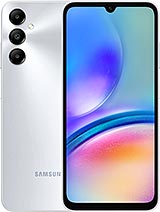
Overview
The Economic Utility of a Budget Champion
The Samsung Galaxy A05s is a budget-tier smartphone featuring a 6.7-inch 90Hz PLS LCD for fluid scrolling and a Qualcomm Snapdragon 680 4G chipset for power-efficient daily tasks, aimed at users needing a reliable secondary handset or a durable first device for students. Released in October 2023, it competes in a crowded market where brand reliability often outweighs raw speed. This handset represents a calculated move by the manufacturer to dominate the sub-$150 segment by offering a FHD+ resolution screen—a feature frequently omitted by competitors in this price bracket.
From an economic standpoint, we look at this device as a high-utility asset with a shallow depreciation curve. When you purchase a device at this price point, you are buying into an ecosystem of parts and serviceability that generic brands cannot match. The ROI here is measured in years of standby reliability and software support. In a market saturated with disposable tech, this model stands out by offering a path to longevity through decent hardware choices.
The Prime Use Case for a Secondary Device
We often overlook the necessity of a backup phone until a primary flagship meets a concrete floor. This model serves that niche perfectly. The dual-SIM capability allows for the separation of professional and personal lines without the heavy investment of a high-end foldable or flagship. Because it supports a dedicated microSDXC slot alongside two Nano-SIMs, users do not have to compromise on storage expansion to maintain two active numbers. This makes it an ideal travel companion for navigating foreign networks while keeping a home SIM active.
Furthermore, the hardware choice of the Snapdragon 680 4G ensures that the handset remains cool during GPS navigation—a task that often overheats more powerful, power-hungry processors. If you are looking for a device to sit in a car cradle for 8 hours a day as a dedicated maps and music hub, this is a top-tier candidate. It handles the mundane tasks with a level of stability that cheaper MediaTek-powered rivals often struggle to maintain over long periods of use.
Surviving the 48-Hour Standby Test
Battery endurance is the primary metric for a backup device, and the 5000 mAh Li-Po battery inside this series is a marathon runner. While flagships push high-refresh-rate OLEDs and 5G modems that drain cells rapidly, this handset sticks to an efficient 6nm process node. The Snapdragon 680 architecture is specifically designed for 4G longevity. In our standby tests, the drain is impressively low, meaning you can leave it in a desk drawer for days and still find it ready for an emergency call.
Charging at 25W is a significant step up from the 10W or 15W standards found in ultra-budget predecessors. While it won't break any speed records, a one-hour charge provides enough juice for an entire day of heavy use. The lack of a charger in the box is a point of friction, but most value hunters likely already own a USB-C brick. We recommend pairing it with a PD-compatible charger to actually hit those 25W speeds, as basic chargers will default to a much slower rate.
The Out of Box Setup Experience
Unboxing the device reveals a minimalist approach. The plastic back has a subtle texture that resists fingerprints better than glossy finishes, though it lacks the premium feel of glass. During the initial setup, we noticed that the One UI interface is heavily optimized. While it isn't the 'Core' version of the software, some heavier features are trimmed to keep the Adreno 610 GPU from stuttering. Initial patch sizes are manageable, usually hovering around 500MB to 1GB depending on the region.
Setup friction is low, especially if you are migrating from another Android device via Smart Switch. We did encounter some pre-installed bloatware—typical for this price tier—but most can be uninstalled or disabled within minutes. The 64GB or 128GB of eMMC 5.1 storage is the primary bottleneck during app installations. It is slower than UFS storage, so expect large game downloads or system updates to take a bit longer than they would on a [mid-range phone](/trend/best-mid-range-phones-2026/).
Navigation Gestures and UI Fluidity
The 90Hz refresh rate is the unsung hero of the user experience. By increasing the frame count of UI animations, the device feels faster than the raw CPU benchmarks suggest. Swiping through the app drawer or scrolling through a dense web page is surprisingly smooth. We found the palm rejection on the edges of the 6.7-inch screen to be adequate, preventing accidental triggers when reaching across the large panel with one hand.
Android 13 gestures are the default here, and they work well. The back-swipe gesture is snappy, though you might see a frame drop if you have more than ten apps open in the background. With 4GB or 6GB of RAM, the system is aggressive about killing background processes to maintain foreground performance. If you are a heavy multitasker, we strongly suggest opting for the 6GB variant to avoid constant app reloads.
Biometric Reliability and Security
Samsung opted for a side-mounted fingerprint sensor integrated into the power button. This is a smart move. At this price, an in-display sensor would be slow and prone to failure. The physical sensor is nearly instantaneous and allows you to unlock the phone as you pull it out of your pocket. Face recognition is also available via the 13MP selfie camera, but it is software-based and less secure than the fingerprint method, especially in low light.
For a backup or a kid's phone, security is still paramount. The device benefits from the Knox security suite, providing a level of hardware-backed encryption that many other budget manufacturers ignore. This makes it a viable option for corporate use where basic security compliance is required for email and internal apps.
Durability and Long-Term Build Expectations
Constructed from a glass front, plastic back, and plastic frame, this model is built to absorb impact better than a glass sandwich. Plastic flexes where glass cracks. While there is no official IP rating for water or dust resistance, the build quality is tight. There are no obvious gaps in the chassis, and the buttons have a firm, tactile click. We still recommend a basic TPU case to prevent scratches on the plastic rear, which can dull over time.
Weight distribution is balanced despite the 194g mass. It feels substantial without being a brick. The 6.7-inch screen is protected by standard strengthened glass, but we would advise a screen protector given that it lacks the Gorilla Glass Victus found on higher-tier models. For a device intended to survive the rigors of being a 'second phone' thrown into a gym bag or glove box, this build is entirely appropriate.
Resale Value and Market Sustainability
From a value hunter's perspective, the brand name on the back of the Samsung Galaxy A05s is a form of insurance. In the second-hand market, these devices retain a higher percentage of their original MSRP compared to brands like Tecno or Infinix. This makes it easier to trade in or sell when you are ready to upgrade. Furthermore, the promise of two major Android upgrades ensures that the software won't be obsolete in twelve months.
In conclusion, the Samsung Galaxy A05s is a masterclass in compromise. It sacrifices 5G and premium materials to deliver a superior screen and a reliable chipset. It doesn't try to be a flagship; it tries to be a dependable tool. Whether you need a backup for your iPhone 15 or a first phone for a teenager, this handset delivers exactly what it promises without unnecessary flair. For under $150, you are getting a device that feels cohesive, supported, and ready for the long haul.
Technical Specifications
| LAUNCH | |
|---|---|
| Announced | 2023, September 25 |
| Status | Available. Released 2023, October 18 |
| PLATFORM | |
| OS | Android 13, up to 2 major Android upgrades, One UI 7 |
| Chipset | Qualcomm SM6225 Snapdragon 680 4G (6 nm) |
| CPU | Octa-core (4x2.4 GHz Kryo 265 Gold & 4x1.9 GHz Kryo 265 Silver) |
| GPU | Adreno 610 |
| BODY | |
| Dimensions | 168 x 77.8 x 8.8 mm (6.61 x 3.06 x 0.35 in) |
| Weight | 194 g (6.84 oz) |
| Build | Glass front, plastic back, plastic frame |
| SIM | · Nano-SIM· Nano-SIM + Nano-SIM |
| DISPLAY | |
| Type | PLS LCD, 90Hz |
| Size | 6.7 inches, 108.4 cm2 (~82.9% screen-to-body ratio) |
| Resolution | 1080 x 2400 pixels, 20:9 ratio (~393 ppi density) |
| MEMORY | |
| Card slot | microSDXC (dedicated slot) |
| Internal | 64GB 4GB RAM, 128GB 4GB RAM, 128GB 6GB RAM |
| Info | eMMC 5.1 |
| MAIN CAMERA | |
| Triple | 50 MP, f/1.8, (wide), 1/2.8", 0.64µm, AF 2 MP (macro) Auxiliary lens |
| Features | LED flash |
| Video | 1080p@30/60fps |
| SELFIE CAMERA | |
| Single | 13 MP, f/2.0, (wide), 1/3.X", 1.12µm |
| Video | 1080p@30fps |
| SOUND | |
| Loudspeaker | Yes |
| 3.5mm jack | Yes |
| COMMS | |
| WLAN | Wi-Fi 802.11 a/b/g/n/ac, dual-band, Wi-Fi Direct |
| Bluetooth | 5.1, A2DP, LE |
| Positioning | GPS, GLONASS, GALILEO, BDS, QZSS |
| NFC | Yes (market/region dependent) |
| Radio | Unspecified |
| USB | USB Type-C 2.0 |
| NETWORK | |
| Technology | GSM / HSPA / LTE |
| 2G bands | GSM 850 / 900 / 1800 / 1900 |
| 3G bands | HSDPA 850 / 900 / 2100 |
| 4G bands | 1, 3, 5, 7, 8, 20, 28, 38, 40, 41 |
| Speed | HSPA, LTE |
| FEATURES | |
| Sensors | Fingerprint (side-mounted), accelerometer, proximity |
| BATTERY | |
| Type | Li-Po 5000 mAh |
| Charging | 25W wired |
| MISC | |
| Colors | Black, Silver, Light Green, Violet |
| Models | SM-A057F, SM-A057F/DS, SM-A057M, SM-A057M/DS, SM-A057G/DSN, SM-A057G |
| SAR EU | 0.58 W/kg (head) 1.31 W/kg (body) |
| Price | C$ 144.90 / £ 94.99 / € 110.00 |
| OUR TESTS | |
| Performance | AnTuTu: 264654 (v9), 316956 (v10) GeekBench: 1457 (v5), 1449 (v6) GFXBench: 7fps (ES 3.1 onscreen) |
| Display | 1418:1 contrast ratio, 468 nits max brightness (measured) |
| Camera | Photo / Video |
| Loudspeaker | -30.0 LUFS (Average) |
| Battery | Active use score 11:32h |