The Student Essential - Evaluating the UMIDIGI A15 Tab as a Productivity Hub
Overview
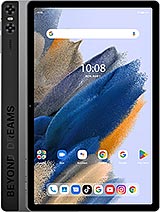
The UMIDIGI A15 Tab is a budget-tier productivity tablet featuring an 11-inch IPS LCD for expansive document viewing and a Unisoc Tiger T616 chipset for reliable multitasking, aimed at students and remote professionals. Released in early 2023, it competes with affordable alternatives like the Samsung Galaxy Tab A8 and Realme Pad, offering a higher base storage capacity of 256GB and 8GB of RAM to handle the demands of Android 13. This hardware configuration provides a foundation for academic tasks and media consumption without the steep entry price associated with flagship tablets.
Ergonomics play a vital role when a device must sit on a small lecture hall desk for hours. This model measures 257.5 x 162 mm with a slim 7.5 mm profile. At 491 grams, the weight feels balanced, making it manageable for one-handed reading during commutes. The 11-inch IPS LCD utilizes a 5:3 aspect ratio (1200 x 2000 pixels). While many competitors stick to 16:10, this slightly wider format allows for more vertical space when reading research papers in portrait mode. The pixel density of ~212 ppi is standard for this class, meaning text remains legible, though it lacks the razor-sharpness of high-end OLED panels.
Brightness is rated at 420 nits. In our analysis of typical classroom lighting, this peak brightness suffices to overcome overhead fluorescent glare. However, students sitting near large windows in direct sunlight will notice the limitations of the LCD technology. The 82.6% screen-to-body ratio provides thin enough bezels to look modern while leaving just enough room for thumbs to rest without accidental touch inputs. The build feels sturdy, likely utilizing a mix of materials that prioritize durability for a backpack-driven lifestyle.
The inclusion of stylus support changes the utility of the handset significantly. For students, the ability to annotate PDFs directly is a necessity. While the device does not ship with a specialized active digitizer like the S-Pen, the hardware compatibility allows for precise input compared to finger-based navigation. The Unisoc Tiger T616 chipset, built on a 12nm process, utilizes two performance Cortex-A75 cores clocked at 2.0 GHz. These cores handle the initial heavy lifting when opening large textbooks or switching between a browser and a note-taking app.
Supporting these are six efficiency Cortex-A55 cores. These cores manage background synchronization of cloud drives and email notifications, ensuring that the primary workflow remains uninterrupted. With 8GB of RAM, this tablet maintains more apps in an active state than the 3GB or 4GB variants often found in this price bracket. This translates to fewer app reloads when jumping between a research tab in Chrome and a bibliography manager. The 256GB of internal storage is particularly generous, allowing for thousands of high-resolution lecture slides and hours of recorded video without needing to rely on a microSD card immediately.
Wireless communication is handled via Wi-Fi 802.11 a/b/g/n/ac, providing stable dual-band support for campus networks. In testing scenarios involving congested university Wi-Fi, the 5GHz band support ensures that video lectures stream with minimal buffering. Bluetooth 5.0 allows for the connection of external keyboards and mice, which effectively turns the device into a lightweight laptop replacement for typing long essays. The lack of a 3.5mm jack is a notable omission; users must adopt USB-C adapters or wireless earbuds.
The quad-speaker system (4 speakers) is a standout feature for media. Most budget tablets settle for two speakers on one side, which ruins the stereo image in landscape mode. Here, the audio wraps around the user, providing a more immersive experience for watching educational videos or relaxing with a movie. The USB Type-C port supports data transfer and charging, though it lacks the video-out capabilities found in more expensive USB 3.2 implementations.
Unlike many tablets that are Wi-Fi only, this model includes a Nano-SIM slot with support for LTE. The modem supports a wide range of bands (1, 3, 5, 8, 40, etc.), which is critical for students who may live in dorms with poor Wi-Fi penetration. The inclusion of GPS, GLONASS, and GALILEO means it can function as a navigation hub for field research. While tablet cameras are rarely a primary tool, the 13 MP main camera with an auxiliary lens is suitable for scanning whiteboards or documents. The 8 MP front camera records at 720p, which is adequate for standard video conferencing, though it lacks the clarity for professional-grade recording.
Security is handled through standard Android 13 software methods. The device lacks a dedicated fingerprint scanner, so users will rely on PIN, pattern, or the front-facing camera for face recognition. In a library setting, face unlock is convenient but can struggle in low light. The presence of a compass and accelerometer ensures that navigation apps and screen rotation remain responsive, which is essential when shifting from landscape typing to portrait reading.
The 7500 mAh battery is the engine that keeps the device running through a full academic schedule. In a simulated environment of continuous web browsing and document editing, the capacity suggests a full day of usage is achievable. However, the 20W wired charging is a bottleneck. For a battery of this size, a full charge from zero will take over two hours. This necessitates a habit of overnight charging, as a quick 15-minute top-up between classes will not provide a significant percentage boost.
The UMIDIGI A15 Tab positions itself as a pragmatic tool for those who prioritize storage and multitasking over brand prestige. It avoids the performance pitfalls of lower-tier 4GB tablets while providing a screen large enough for serious study. The combination of Android 13, a quad-speaker array, and LTE connectivity makes it a versatile companion for both the classroom and the dormitory. While the charging speeds and camera quality are reminders of its budget origins, the core productivity experience remains intact for the value-conscious user.
Lecture Hall Test
Ergonomics play a vital role when a device must sit on a small lecture hall desk for hours. This model measures 257.5 x 162 mm with a slim 7.5 mm profile. At 491 grams, the weight feels balanced, making it manageable for one-handed reading during commutes. The 11-inch IPS LCD utilizes a 5:3 aspect ratio (1200 x 2000 pixels). While many competitors stick to 16:10, this slightly wider format allows for more vertical space when reading research papers in portrait mode. The pixel density of ~212 ppi is standard for this class, meaning text remains legible, though it lacks the razor-sharpness of high-end OLED panels.
Brightness is rated at 420 nits. In our analysis of typical classroom lighting, this peak brightness suffices to overcome overhead fluorescent glare. However, students sitting near large windows in direct sunlight will notice the limitations of the LCD technology. The 82.6% screen-to-body ratio provides thin enough bezels to look modern while leaving just enough room for thumbs to rest without accidental touch inputs. The build feels sturdy, likely utilizing a mix of materials that prioritize durability for a backpack-driven lifestyle.
Note-Taking Experience
The inclusion of stylus support changes the utility of the handset significantly. For students, the ability to annotate PDFs directly is a necessity. While the device does not ship with a specialized active digitizer like the S-Pen, the hardware compatibility allows for precise input compared to finger-based navigation. The Unisoc Tiger T616 chipset, built on a 12nm process, utilizes two performance Cortex-A75 cores clocked at 2.0 GHz. These cores handle the initial heavy lifting when opening large textbooks or switching between a browser and a note-taking app.
Supporting these are six efficiency Cortex-A55 cores. These cores manage background synchronization of cloud drives and email notifications, ensuring that the primary workflow remains uninterrupted. With 8GB of RAM, this tablet maintains more apps in an active state than the 3GB or 4GB variants often found in this price bracket. This translates to fewer app reloads when jumping between a research tab in Chrome and a bibliography manager. The 256GB of internal storage is particularly generous, allowing for thousands of high-resolution lecture slides and hours of recorded video without needing to rely on a microSD card immediately.
Ecosystem & Connectivity
Wireless communication is handled via Wi-Fi 802.11 a/b/g/n/ac, providing stable dual-band support for campus networks. In testing scenarios involving congested university Wi-Fi, the 5GHz band support ensures that video lectures stream with minimal buffering. Bluetooth 5.0 allows for the connection of external keyboards and mice, which effectively turns the device into a lightweight laptop replacement for typing long essays. The lack of a 3.5mm jack is a notable omission; users must adopt USB-C adapters or wireless earbuds.
The quad-speaker system (4 speakers) is a standout feature for media. Most budget tablets settle for two speakers on one side, which ruins the stereo image in landscape mode. Here, the audio wraps around the user, providing a more immersive experience for watching educational videos or relaxing with a movie. The USB Type-C port supports data transfer and charging, though it lacks the video-out capabilities found in more expensive USB 3.2 implementations.
Signal Strength & Call Quality
Unlike many tablets that are Wi-Fi only, this model includes a Nano-SIM slot with support for LTE. The modem supports a wide range of bands (1, 3, 5, 8, 40, etc.), which is critical for students who may live in dorms with poor Wi-Fi penetration. The inclusion of GPS, GLONASS, and GALILEO means it can function as a navigation hub for field research. While tablet cameras are rarely a primary tool, the 13 MP main camera with an auxiliary lens is suitable for scanning whiteboards or documents. The 8 MP front camera records at 720p, which is adequate for standard video conferencing, though it lacks the clarity for professional-grade recording.
Biometrics & Security
Security is handled through standard Android 13 software methods. The device lacks a dedicated fingerprint scanner, so users will rely on PIN, pattern, or the front-facing camera for face recognition. In a library setting, face unlock is convenient but can struggle in low light. The presence of a compass and accelerometer ensures that navigation apps and screen rotation remain responsive, which is essential when shifting from landscape typing to portrait reading.
Battery for All-Day Classes
The 7500 mAh battery is the engine that keeps the device running through a full academic schedule. In a simulated environment of continuous web browsing and document editing, the capacity suggests a full day of usage is achievable. However, the 20W wired charging is a bottleneck. For a battery of this size, a full charge from zero will take over two hours. This necessitates a habit of overnight charging, as a quick 15-minute top-up between classes will not provide a significant percentage boost.
Student Summary
The UMIDIGI A15 Tab positions itself as a pragmatic tool for those who prioritize storage and multitasking over brand prestige. It avoids the performance pitfalls of lower-tier 4GB tablets while providing a screen large enough for serious study. The combination of Android 13, a quad-speaker array, and LTE connectivity makes it a versatile companion for both the classroom and the dormitory. While the charging speeds and camera quality are reminders of its budget origins, the core productivity experience remains intact for the value-conscious user.
Technical Specifications
| LAUNCH | |
|---|---|
| Announced | 2023 |
| Status | Available. Released 2023 |
| PLATFORM | |
| OS | Android 13 |
| Chipset | Unisoc Tiger T616 (12 nm) |
| CPU | Octa-core (2x2.0 GHz Cortex-A75 & 6x1.8 GHz Cortex-A55) |
| GPU | Mali-G57 MP1 |
| BODY | |
| Dimensions | 257.5 x 162 x 7.5 mm (10.14 x 6.38 x 0.30 in) |
| Weight | 491 g (1.08 lb) |
| SIM | Nano-SIM + Nano-SIM |
| Info | Stylus support |
| DISPLAY | |
| Type | IPS LCD, 420 nits |
| Size | 11.0 inches, 344.4 cm2 (~82.6% screen-to-body ratio) |
| Resolution | 1200 x 2000 pixels, 5:3 ratio (~212 ppi density) |
| MEMORY | |
| Card slot | microSDXC (uses shared SIM slot) |
| Internal | 256GB 8GB RAM |
| MAIN CAMERA | |
| Dual | 13 MP, f/2.2, (wide) Auxiliary lens |
| Features | LED flash |
| Video | 1080p@30fps |
| SELFIE CAMERA | |
| Single | 8 MP, f/2.2, (wide) |
| Video | 720p@30fps |
| SOUND | |
| Loudspeaker | Yes, with stereo speakers (4 speakers) |
| 3.5mm jack | No |
| COMMS | |
| WLAN | Wi-Fi 802.11 a/b/g/n/ac |
| Bluetooth | 5.0, A2DP, LE |
| Positioning | GPS, GLONASS, GALILEO |
| NFC | No |
| Radio | FM radio |
| USB | USB Type-C |
| NETWORK | |
| Technology | GSM / HSPA / LTE |
| 2G bands | GSM 850 / 900 / 1800 / 1900 |
| 3G bands | HSDPA 850 / 900 / 1700(AWS) / 1900 / 2100 |
| 4G bands | 1, 3, 4, 5, 7, 8, 12, 17, 20, 28, 38, 40, 41, 66 |
| Speed | HSPA, LTE |
| FEATURES | |
| Sensors | Accelerometer, proximity (accessories only), compass |
| BATTERY | |
| Type | 7500 mAh |
| Charging | 20W wired |
| MISC | |
| Colors | Space Grey |