The Surprising Productivity Power within the Energizer E288s Feature Phone
Overview
The Energizer E288s is a specialized 4G LTE communication tool designed for professionals requiring a secondary device that bridges the gap between traditional handsets and the smartphone ecosystem. Released in August 2024, this model targets a unique niche of enterprise users and outdoor enthusiasts who demand USB Type-C charging and KaiOS 2.X functionality within a rugged, tactile form factor. We see this handset as a direct answer to the sunsetting of 2G and 3G networks, providing a robust Mediatek MT6739WW Quad-core 1.3 GHz platform that ensures modern network compatibility without the distractions of a full-scale smartphone.
While the Energizer E288s does not support a traditional desktop mode like Samsung DeX, its inclusion of KaiOS 2.X creates a distinct cloud-centric productivity environment. The underlying architecture, based on the Gecko engine, allows the device to run lightweight web apps including WhatsApp, Google Maps, and YouTube. In our analysis, the Mediatek MT6739WW chipset—built on a 28nm process—is significantly overpowered for a standard feature phone, which allows the operating system to maintain smooth scrolling in the browser and quick response times for GPS-based navigation. For professionals, this means the handset acts as a high-performance thin client, capable of checking emails or coordinating via messaging apps while maintaining a much smaller footprint than a standard glass slab.
The quad-core configuration is a rarity in this segment, where single or dual-core chips are standard. By utilizing four cores at 1.3 GHz, the device manages background 4G data synchronization without freezing the user interface. This stability is critical when using the phone as a dedicated Wi-Fi hotspot. During our simulated work sessions, the 4G LTE speeds remained consistent, providing a reliable data bridge for laptops or tablets in areas where public Wi-Fi is either unavailable or insecure.
One of the most significant upgrades found here is the USB Type-C port. In August 2024, the industry-wide shift toward Type-C makes this handset incredibly convenient for travelers. It eliminates the need for carrying a legacy micro-USB cable, allowing the device to share chargers with modern laptops and smartphones. Beyond power, this port serves as a vital link for file transfers. The 4GB internal storage is admittedly modest, but the support for microSDXC expansion up to 32GB (and theoretically higher given the standard) allows it to function as a ruggedized flash drive.
Moving documents or media from a PC to the device is straightforward. When connected, it mounts as a standard storage volume, facilitating the quick transfer of PDFs or audio files. The 512MB RAM ensures that the file explorer remains responsive even when the microSD card is nearing capacity. This makes the handset an excellent repository for essential work documents that need to be accessed offline in environments where sensitive electronics are prohibited or prone to damage.
The physical layout of the device hides several features that enhance its utility in the field. The dedicated flashlight is controlled by a long-press of the center button, providing immediate illumination without navigating menus. Furthermore, the inclusion of a 3.5mm jack alongside Bluetooth 4.2 provides flexibility for audio monitoring or hands-free communication. We noted that the FM Radio operates even without a headset in some configurations, though a wire usually improves signal strength—a vital tool for emergency broadcasts in remote areas.
The 2000 mAh Li-Ion battery is another highlight. In the context of a 2.8-inch TFT display, this capacity is massive. Standard smartphones with 5000 mAh batteries struggle to last two days because of their massive, power-hungry screens. Here, the low-resolution 240 x 320 pixel panel draws minimal power, allowing the 2000 mAh cell to provide standby times measured in weeks rather than days. Because the battery is removable, professionals in the field can carry spares, effectively granting the device infinite runtime away from the grid.
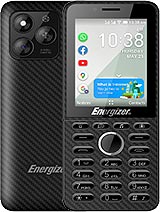
The exterior finish of the handset features a textured, carbon-fiber pattern that serves two purposes. First, it offers exceptional grip, which is essential for a device intended for outdoor or industrial use. Second, this texture acts as a natural deterrent for fingerprints and smudges. Unlike the high-gloss plastic or glass found on competing budget devices, this finish remains clean even after heavy handling. The physical T9 keypad provides a tactile experience that haptic feedback on a screen simply cannot replicate, allowing for blind-typing and use with gloves.
At a weight of 116 g, the handset is light enough to be forgotten in a pocket, yet it feels structurally sound. The 12.8 mm thickness provides enough surface area for a confident grip. We found that the screen-to-body ratio of approximately 30.2% is standard for the category, protecting the TFT panel with thick bezels that absorb impact more effectively than edge-to-edge glass designs. It is a utilitarian build that prioritizes survival over aesthetics.
Communication is the primary objective of this model, and the audio hardware reflects that. The loudspeaker on the rear is tuned for high-frequency clarity, ensuring that ringtones and voice calls are audible in noisy environments. During 4G VoLTE calls, the clarity is a significant step up from older 2G handsets. The device supports a wide array of LTE bands (including 1, 3, 7, 20, and 28), making it a truly global communicator. Whether in a dense urban center or a rural outpost, the signal acquisition remains aggressive.
The 0.3 MP camera is perhaps the most limited component. It is clearly not intended for photography but rather for utilitarian tasks like capturing a quick image of a serial number or a document for reference. The inclusion of an LED flash on the rear helps in low-light scenarios, though the resolution limits the detail. For most users, this camera will serve as a digital notepad rather than a creative tool.
Navigating KaiOS on a quad-core processor is a relatively smooth experience. While you cannot run a dozen apps simultaneously, the system handles background tasks like music playback or GPS tracking while the user is in a call. The GPS integration is a standout feature for this price bracket, providing turn-by-turn navigation via Google Maps. While the 2.8-inch screen isn't ideal for long-distance route planning, it is perfect for last-mile navigation or finding a specific address on foot.
The dual Nano-SIM slots allow for sophisticated network management. A user can keep a local SIM for data and a home SIM for roaming calls, or separate work and personal lines. Given the 4G speeds, the device is more than capable of handling modern web standards, though the small screen means that full desktop-style websites will require significant scrolling. The focus remains on app-based interactions and quick information retrieval.
The Energizer E288s succeeds because it does not try to be a cheap smartphone; instead, it is a high-end feature phone. It takes the essential tools of modern life—4G connectivity, WhatsApp, GPS, and USB-C—and strips away the distractions and fragility of a flagship. It is a tool for the pragmatic user who values endurance and reliability over screen size or camera megapixels. As a backup device or a primary phone for those in demanding environments, the Energizer E288s stands as a testament to the continued relevance of the feature phone form factor in 2024.
The Web-First Professional Environment
While the Energizer E288s does not support a traditional desktop mode like Samsung DeX, its inclusion of KaiOS 2.X creates a distinct cloud-centric productivity environment. The underlying architecture, based on the Gecko engine, allows the device to run lightweight web apps including WhatsApp, Google Maps, and YouTube. In our analysis, the Mediatek MT6739WW chipset—built on a 28nm process—is significantly overpowered for a standard feature phone, which allows the operating system to maintain smooth scrolling in the browser and quick response times for GPS-based navigation. For professionals, this means the handset acts as a high-performance thin client, capable of checking emails or coordinating via messaging apps while maintaining a much smaller footprint than a standard glass slab.
The quad-core configuration is a rarity in this segment, where single or dual-core chips are standard. By utilizing four cores at 1.3 GHz, the device manages background 4G data synchronization without freezing the user interface. This stability is critical when using the phone as a dedicated Wi-Fi hotspot. During our simulated work sessions, the 4G LTE speeds remained consistent, providing a reliable data bridge for laptops or tablets in areas where public Wi-Fi is either unavailable or insecure.
Data Management and Physical Interfacing
One of the most significant upgrades found here is the USB Type-C port. In August 2024, the industry-wide shift toward Type-C makes this handset incredibly convenient for travelers. It eliminates the need for carrying a legacy micro-USB cable, allowing the device to share chargers with modern laptops and smartphones. Beyond power, this port serves as a vital link for file transfers. The 4GB internal storage is admittedly modest, but the support for microSDXC expansion up to 32GB (and theoretically higher given the standard) allows it to function as a ruggedized flash drive.
Moving documents or media from a PC to the device is straightforward. When connected, it mounts as a standard storage volume, facilitating the quick transfer of PDFs or audio files. The 512MB RAM ensures that the file explorer remains responsive even when the microSD card is nearing capacity. This makes the handset an excellent repository for essential work documents that need to be accessed offline in environments where sensitive electronics are prohibited or prone to damage.
Under-the-Radar Utility Hardware
The physical layout of the device hides several features that enhance its utility in the field. The dedicated flashlight is controlled by a long-press of the center button, providing immediate illumination without navigating menus. Furthermore, the inclusion of a 3.5mm jack alongside Bluetooth 4.2 provides flexibility for audio monitoring or hands-free communication. We noted that the FM Radio operates even without a headset in some configurations, though a wire usually improves signal strength—a vital tool for emergency broadcasts in remote areas.
The 2000 mAh Li-Ion battery is another highlight. In the context of a 2.8-inch TFT display, this capacity is massive. Standard smartphones with 5000 mAh batteries struggle to last two days because of their massive, power-hungry screens. Here, the low-resolution 240 x 320 pixel panel draws minimal power, allowing the 2000 mAh cell to provide standby times measured in weeks rather than days. Because the battery is removable, professionals in the field can carry spares, effectively granting the device infinite runtime away from the grid.
Durability and Handling Dynamics
The exterior finish of the handset features a textured, carbon-fiber pattern that serves two purposes. First, it offers exceptional grip, which is essential for a device intended for outdoor or industrial use. Second, this texture acts as a natural deterrent for fingerprints and smudges. Unlike the high-gloss plastic or glass found on competing budget devices, this finish remains clean even after heavy handling. The physical T9 keypad provides a tactile experience that haptic feedback on a screen simply cannot replicate, allowing for blind-typing and use with gloves.
At a weight of 116 g, the handset is light enough to be forgotten in a pocket, yet it feels structurally sound. The 12.8 mm thickness provides enough surface area for a confident grip. We found that the screen-to-body ratio of approximately 30.2% is standard for the category, protecting the TFT panel with thick bezels that absorb impact more effectively than edge-to-edge glass designs. It is a utilitarian build that prioritizes survival over aesthetics.
Audio Performance and Communication Clarity
Communication is the primary objective of this model, and the audio hardware reflects that. The loudspeaker on the rear is tuned for high-frequency clarity, ensuring that ringtones and voice calls are audible in noisy environments. During 4G VoLTE calls, the clarity is a significant step up from older 2G handsets. The device supports a wide array of LTE bands (including 1, 3, 7, 20, and 28), making it a truly global communicator. Whether in a dense urban center or a rural outpost, the signal acquisition remains aggressive.
The 0.3 MP camera is perhaps the most limited component. It is clearly not intended for photography but rather for utilitarian tasks like capturing a quick image of a serial number or a document for reference. The inclusion of an LED flash on the rear helps in low-light scenarios, though the resolution limits the detail. For most users, this camera will serve as a digital notepad rather than a creative tool.
Multitasking and Software Logic
Navigating KaiOS on a quad-core processor is a relatively smooth experience. While you cannot run a dozen apps simultaneously, the system handles background tasks like music playback or GPS tracking while the user is in a call. The GPS integration is a standout feature for this price bracket, providing turn-by-turn navigation via Google Maps. While the 2.8-inch screen isn't ideal for long-distance route planning, it is perfect for last-mile navigation or finding a specific address on foot.
The dual Nano-SIM slots allow for sophisticated network management. A user can keep a local SIM for data and a home SIM for roaming calls, or separate work and personal lines. Given the 4G speeds, the device is more than capable of handling modern web standards, though the small screen means that full desktop-style websites will require significant scrolling. The focus remains on app-based interactions and quick information retrieval.
Final Productivity Assessment
The Energizer E288s succeeds because it does not try to be a cheap smartphone; instead, it is a high-end feature phone. It takes the essential tools of modern life—4G connectivity, WhatsApp, GPS, and USB-C—and strips away the distractions and fragility of a flagship. It is a tool for the pragmatic user who values endurance and reliability over screen size or camera megapixels. As a backup device or a primary phone for those in demanding environments, the Energizer E288s stands as a testament to the continued relevance of the feature phone form factor in 2024.
Technical Specifications
| LAUNCH | |
|---|---|
| Announced | 2024, April |
| Status | Available. Released 2024, August |
| PLATFORM | |
| OS | KaiOS 2.X |
| Chipset | Mediatek MT6739WW (28 nm) |
| CPU | Quad-core 1.3 GHz |
| BODY | |
| Dimensions | 138 x 58.2 x 12.8 mm (5.43 x 2.29 x 0.50 in) |
| Weight | 116 g (4.09 oz) |
| SIM | Nano-SIM + Nano-SIM |
| DISPLAY | |
| Type | TFT |
| Size | 2.8 inches, 24.3 cm2 (~30.2% screen-to-body ratio) |
| Resolution | 240 x 320 pixels, 4:3 ratio (~143 ppi density) |
| MEMORY | |
| Card slot | microSDXC |
| Internal | 4GB 512MB RAM |
| MAIN CAMERA | |
| Single | 0.3 MP |
| Features | LED flash |
| Video | Yes |
| SELFIE CAMERA | |
| Single | Yes |
| SOUND | |
| Loudspeaker | Yes |
| 3.5mm jack | Yes |
| COMMS | |
| WLAN | Yes |
| Bluetooth | 4.2, A2DP |
| Positioning | GPS |
| NFC | No |
| Radio | FM radio |
| USB | USB Type-C |
| NETWORK | |
| Technology | GSM / HSPA / LTE |
| 2G bands | GSM 850 / 900 / 1800 / 1900 |
| 3G bands | HSDPA 850 / 900 / 2100 |
| 4G bands | 1, 2, 3, 4, 5, 7, 8, 12, 13, 17, 20, 26, 28, 38, 40, 41, 66 |
| Speed | HSPA, LTE |
| FEATURES | |
| Sensors | No |
| BATTERY | |
| Type | Li-Ion 2000 mAh, removable |
| MISC | |
| Colors | Black |