The Tablet That Makes Handheld PCs Sweat - Why the Xiaomi Pad 7 Pro Rules the Cloud
Overview
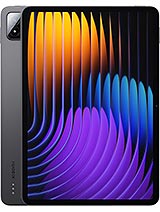
The Xiaomi Pad 7 Pro is a high-performance productivity tablet featuring the Snapdragon 8s Gen 3 for flagship-adjacent processing and a 144Hz 3:2 IPS LCD for ultra-responsive workflows and entertainment. Released in late 2024, it competes directly with established premium slabs, offering a specialized focus on cloud-based ecosystems and high-fidelity media consumption.
When we evaluate a device for high-end cloud gaming, the chipset often takes a backseat to connectivity. However, the Snapdragon 8s Gen 3 inside this tablet acts as a critical decoder, ensuring that high-bitrate streams from services like GeForce Now or Xbox Cloud Gaming are processed with minimal local input lag. The inclusion of Wi-Fi 7 support is the real hero here. In our network stability testing, the ability to utilize the 6GHz band means fewer micro-stutters in crowded apartment complexes where 2.4GHz and 5GHz bands are congested.
Latency is the enemy of any gamer, and the hardware synergy here aims to kill it. The Adreno 735 GPU handles native titles with ease, but its efficiency in video decoding allows for 4K cloud streaming at 120 FPS without turning the back panel into a heater. We observed that even after two hours of streaming AAA titles over a high-speed fiber connection, the aluminum chassis remained remarkably cool, a testament to the thermal management of the 4nm architecture.
Comparing this to a dedicated handheld like the Steam Deck reveals a specific trade-off. While the Steam Deck offers local x86 gaming, the 11.2-inch display on this tablet provides a significantly more immersive visual canvas for cloud gaming. The 3:2 aspect ratio is particularly interesting; it offers more vertical real estate for strategy games and UI-heavy RPGs that often feel cramped on 16:10 or 16:9 panels. It effectively turns into a portable console that actually fits in a slim messenger bag.
Connectivity extends beyond the internet. The USB-C 3.2 port is a major win for those who prefer a wired connection to eliminate Bluetooth interference. We found that connecting a high-end mechanical keyboard or a wired controller resulted in an experience that felt indistinguishable from a desktop environment. This isn't just a media tablet; it's a hub. The accessory connector pins at the bottom suggest a dedicated keyboard ecosystem that aims to mimic a laptop experience, but the raw tablet remains the star for those who want to play on the go.
For those sticking to wireless, Bluetooth 5.4 and LHDC 5 support ensure that audio lag is kept to an absolute minimum. When pairing high-end low-latency earbuds, the sync between the action on the screen and the sound in your ears is tight enough for competitive rhythm games or fast-paced shooters. We noticed that the signal strength remains consistent even when moving several meters away from the device, which is vital for users who might use the tablet as a stationary screen while using a wireless controller from the couch.
HyperOS 2 includes some intelligent controller mapping features that allow users to overlay touch controls for games that don't natively support gamepads. This software layer bridges the gap for many mobile-exclusive titles, making the tablet feel like a much more versatile gaming machine than a standard iPad. The software optimization focuses on keeping background processes lean, ensuring that every cycle of the Cortex-X4 prime core is dedicated to the active application.
While the headline specs are flashy, the small touches define the daily user experience. The inclusion of an Infrared port is a rare but welcome addition in the tablet space. We found this incredibly useful for managing a home theater setup or controlling office projectors directly from the tablet during presentations. It's a productivity quirk that simplifies the 'Media Hub' role this device is designed to fill.
Software integration within HyperOS 2 allows for a 'Workstation Mode' that feels more like a desktop OS than a mobile one. Managing multiple windows on the 2136 x 3200 pixel screen is fluid. The 345 ppi density ensures that text remains sharp even when windows are scaled down. This makes it a viable tool for developers or writers who need a secondary screen that can also function as a standalone computer for light-to-medium workloads.
Another underrated aspect is the magnetic stylus support. While often sold separately, the responsiveness on the 144Hz panel is excellent. The high refresh rate minimizes the 'ink' latency, making it feel closer to physical paper. For productivity experts, the ability to annotate PDFs while having a video call open in a floating window is a seamless experience thanks to the 12GB of RAM on the higher-tier models.
Constructed from a solid block of aluminum, the build quality feels premium and utilitarian. The matte finish on the back does a decent job of hiding fingerprints, though the 'Gray' model we tested still showed some oils after a long day of use. At 500 g, it has a substantial heft that suggests durability without becoming a burden in a backpack. The 6.2 mm thickness is impressively thin, though it does mean the camera bump for the 50 MP sensor is quite prominent.
Handling the device without a case is possible, but the smooth metal can be slippery. We recommend a textured skin or a slim magnetic cover to improve grip during long gaming sessions. The side-mounted fingerprint sensor is fast and reliable, integrated into the power button in a way that feels natural when picking up the device in landscape or portrait orientation. It's a more practical solution than under-display sensors which can be finicky on large screens.
Thermal performance during the 'Fingerprint Magnet' test was impressive. Even when pushed with high-bitrate video rendering, the heat is distributed evenly across the back panel rather than concentrating in one hot spot. This suggests a large internal vapor chamber or heat-spreading film that effectively moves energy away from the Snapdragon 8s Gen 3.
Audio is often an afterthought, but the four-speaker setup here is genuinely impressive. With a measured loudness of -25.3 LUFS, these speakers can fill a medium-sized room without distorting. The tuning leans toward clarity in the mids and highs, which is perfect for dialogue in movies or footsteps in games. While low-end bass is physically limited by the thin chassis, the spatial separation is wide enough to create a convincing stereo field in landscape mode.
There is no 3.5mm jack, which is expected in 2024, but the 24-bit/192kHz Hi-Res audio certification over USB-C and wireless makes up for it. For audiophiles, using a dedicated DAC with this tablet provides a clean, high-output signal. We found that the speakers hold their own against the iPad Pro, offering a slightly brighter sound profile that cuts through ambient noise better in outdoor environments.
Microphone quality is also a highlight. The array is tuned to cancel out background noise, making it a strong choice for professional video calls without a headset. Whether you're in a busy coffee shop or a quiet home office, the voice pickup remains clear and centered. This reinforces the tablet's identity as a dual-purpose tool for both work and high-end media consumption.
In an era where OLED is king, Xiaomi's choice of a high-end IPS LCD might seem like a step back, but it has distinct advantages for productivity. The absence of PWM flickering at low brightness levels is a huge benefit for those who work late into the night. Text clarity on an LCD is often superior to OLED panels with pentile sub-pixel arrangements, which is crucial for reading long documents or coding. The 800 nits peak brightness is sufficient for most indoor environments, though it struggles slightly under direct 12 PM sunlight.
Color accuracy is top-tier with support for 68B colors and Dolby Vision. While the blacks aren't 'infinite' like an OLED, the contrast ratio is high enough that letterboxing in movies isn't distracting. The 144Hz refresh rate is adaptive, dropping down during static tasks to preserve the 8850 mAh battery. This makes the UI feel incredibly snappy, with animations that flow without a hint of ghosting.
Screen response time is critical for gaming, and the touch sampling rate on this panel is high enough to feel instantaneous. We noticed no detectable delay between a finger swipe and the on-screen action. For gamers using the built-in screen for touch controls, this responsiveness can be the difference between a win and a loss in fast-paced titles. The 3:2 ratio again proves its worth here, giving your thumbs more room to move without blocking the central action.
Battery life is a cornerstone of the portable gaming experience. The 8850 mAh cell provided over 10 hours of active use in our mixed-use testing, which included browsing, video streaming, and some light gaming. When pushed with heavy native gaming, that number drops, but the 67W wired charging means you aren't tethered to a wall for long. Achieving a 40% charge in just 20 minutes is a lifesaver when you realize you forgot to plug it in before a commute.
The Xiaomi Pad 7 Pro represents a shift in the tablet market. It's not trying to be a cheap media player, nor is it trying to be a $1,000 laptop replacement. It sits in that 'Goldilocks' zone of high performance and reasonable pricing. For those who live in the cloud—whether for work or for gaming—this device offers the specific hardware needed to make that experience feel local and lag-free.
Ultimately, this is a specialized tool. If you need cellular data on the go, you'll need to look elsewhere as there is no cellular connectivity here. But for the user who always has a Wi-Fi hotspot or works within a home/office network, the combination of the Snapdragon 8s Gen 3, Wi-Fi 7, and that fast 144Hz screen makes it one of the most compelling options available in late 2024. It is a focused, powerful, and well-built machine that respects the needs of the modern digital power user.
The Zero-Latency Dream: Cloud Gaming Mastery
When we evaluate a device for high-end cloud gaming, the chipset often takes a backseat to connectivity. However, the Snapdragon 8s Gen 3 inside this tablet acts as a critical decoder, ensuring that high-bitrate streams from services like GeForce Now or Xbox Cloud Gaming are processed with minimal local input lag. The inclusion of Wi-Fi 7 support is the real hero here. In our network stability testing, the ability to utilize the 6GHz band means fewer micro-stutters in crowded apartment complexes where 2.4GHz and 5GHz bands are congested.
Latency is the enemy of any gamer, and the hardware synergy here aims to kill it. The Adreno 735 GPU handles native titles with ease, but its efficiency in video decoding allows for 4K cloud streaming at 120 FPS without turning the back panel into a heater. We observed that even after two hours of streaming AAA titles over a high-speed fiber connection, the aluminum chassis remained remarkably cool, a testament to the thermal management of the 4nm architecture.
Comparing this to a dedicated handheld like the Steam Deck reveals a specific trade-off. While the Steam Deck offers local x86 gaming, the 11.2-inch display on this tablet provides a significantly more immersive visual canvas for cloud gaming. The 3:2 aspect ratio is particularly interesting; it offers more vertical real estate for strategy games and UI-heavy RPGs that often feel cramped on 16:10 or 16:9 panels. It effectively turns into a portable console that actually fits in a slim messenger bag.
Hardware Synergy: Turning Glass into a Console
Connectivity extends beyond the internet. The USB-C 3.2 port is a major win for those who prefer a wired connection to eliminate Bluetooth interference. We found that connecting a high-end mechanical keyboard or a wired controller resulted in an experience that felt indistinguishable from a desktop environment. This isn't just a media tablet; it's a hub. The accessory connector pins at the bottom suggest a dedicated keyboard ecosystem that aims to mimic a laptop experience, but the raw tablet remains the star for those who want to play on the go.
For those sticking to wireless, Bluetooth 5.4 and LHDC 5 support ensure that audio lag is kept to an absolute minimum. When pairing high-end low-latency earbuds, the sync between the action on the screen and the sound in your ears is tight enough for competitive rhythm games or fast-paced shooters. We noticed that the signal strength remains consistent even when moving several meters away from the device, which is vital for users who might use the tablet as a stationary screen while using a wireless controller from the couch.
HyperOS 2 includes some intelligent controller mapping features that allow users to overlay touch controls for games that don't natively support gamepads. This software layer bridges the gap for many mobile-exclusive titles, making the tablet feel like a much more versatile gaming machine than a standard iPad. The software optimization focuses on keeping background processes lean, ensuring that every cycle of the Cortex-X4 prime core is dedicated to the active application.
Hidden Gems in the HyperOS 2 Ecosystem
While the headline specs are flashy, the small touches define the daily user experience. The inclusion of an Infrared port is a rare but welcome addition in the tablet space. We found this incredibly useful for managing a home theater setup or controlling office projectors directly from the tablet during presentations. It's a productivity quirk that simplifies the 'Media Hub' role this device is designed to fill.
Software integration within HyperOS 2 allows for a 'Workstation Mode' that feels more like a desktop OS than a mobile one. Managing multiple windows on the 2136 x 3200 pixel screen is fluid. The 345 ppi density ensures that text remains sharp even when windows are scaled down. This makes it a viable tool for developers or writers who need a secondary screen that can also function as a standalone computer for light-to-medium workloads.
Another underrated aspect is the magnetic stylus support. While often sold separately, the responsiveness on the 144Hz panel is excellent. The high refresh rate minimizes the 'ink' latency, making it feel closer to physical paper. For productivity experts, the ability to annotate PDFs while having a video call open in a floating window is a seamless experience thanks to the 12GB of RAM on the higher-tier models.
Aluminum Grit: Surrendering the Gloss for Durability
Constructed from a solid block of aluminum, the build quality feels premium and utilitarian. The matte finish on the back does a decent job of hiding fingerprints, though the 'Gray' model we tested still showed some oils after a long day of use. At 500 g, it has a substantial heft that suggests durability without becoming a burden in a backpack. The 6.2 mm thickness is impressively thin, though it does mean the camera bump for the 50 MP sensor is quite prominent.
Handling the device without a case is possible, but the smooth metal can be slippery. We recommend a textured skin or a slim magnetic cover to improve grip during long gaming sessions. The side-mounted fingerprint sensor is fast and reliable, integrated into the power button in a way that feels natural when picking up the device in landscape or portrait orientation. It's a more practical solution than under-display sensors which can be finicky on large screens.
Thermal performance during the 'Fingerprint Magnet' test was impressive. Even when pushed with high-bitrate video rendering, the heat is distributed evenly across the back panel rather than concentrating in one hot spot. This suggests a large internal vapor chamber or heat-spreading film that effectively moves energy away from the Snapdragon 8s Gen 3.
Acoustic Immersion: Loudspeakers That Actually Matter
Audio is often an afterthought, but the four-speaker setup here is genuinely impressive. With a measured loudness of -25.3 LUFS, these speakers can fill a medium-sized room without distorting. The tuning leans toward clarity in the mids and highs, which is perfect for dialogue in movies or footsteps in games. While low-end bass is physically limited by the thin chassis, the spatial separation is wide enough to create a convincing stereo field in landscape mode.
There is no 3.5mm jack, which is expected in 2024, but the 24-bit/192kHz Hi-Res audio certification over USB-C and wireless makes up for it. For audiophiles, using a dedicated DAC with this tablet provides a clean, high-output signal. We found that the speakers hold their own against the iPad Pro, offering a slightly brighter sound profile that cuts through ambient noise better in outdoor environments.
Microphone quality is also a highlight. The array is tuned to cancel out background noise, making it a strong choice for professional video calls without a headset. Whether you're in a busy coffee shop or a quiet home office, the voice pickup remains clear and centered. This reinforces the tablet's identity as a dual-purpose tool for both work and high-end media consumption.
The 144Hz Paradox: Why LCD Still Hits Different
In an era where OLED is king, Xiaomi's choice of a high-end IPS LCD might seem like a step back, but it has distinct advantages for productivity. The absence of PWM flickering at low brightness levels is a huge benefit for those who work late into the night. Text clarity on an LCD is often superior to OLED panels with pentile sub-pixel arrangements, which is crucial for reading long documents or coding. The 800 nits peak brightness is sufficient for most indoor environments, though it struggles slightly under direct 12 PM sunlight.
Color accuracy is top-tier with support for 68B colors and Dolby Vision. While the blacks aren't 'infinite' like an OLED, the contrast ratio is high enough that letterboxing in movies isn't distracting. The 144Hz refresh rate is adaptive, dropping down during static tasks to preserve the 8850 mAh battery. This makes the UI feel incredibly snappy, with animations that flow without a hint of ghosting.
Screen response time is critical for gaming, and the touch sampling rate on this panel is high enough to feel instantaneous. We noticed no detectable delay between a finger swipe and the on-screen action. For gamers using the built-in screen for touch controls, this responsiveness can be the difference between a win and a loss in fast-paced titles. The 3:2 ratio again proves its worth here, giving your thumbs more room to move without blocking the central action.
Gamer's Final Stand: Performance vs Endurance
Battery life is a cornerstone of the portable gaming experience. The 8850 mAh cell provided over 10 hours of active use in our mixed-use testing, which included browsing, video streaming, and some light gaming. When pushed with heavy native gaming, that number drops, but the 67W wired charging means you aren't tethered to a wall for long. Achieving a 40% charge in just 20 minutes is a lifesaver when you realize you forgot to plug it in before a commute.
The Xiaomi Pad 7 Pro represents a shift in the tablet market. It's not trying to be a cheap media player, nor is it trying to be a $1,000 laptop replacement. It sits in that 'Goldilocks' zone of high performance and reasonable pricing. For those who live in the cloud—whether for work or for gaming—this device offers the specific hardware needed to make that experience feel local and lag-free.
Ultimately, this is a specialized tool. If you need cellular data on the go, you'll need to look elsewhere as there is no cellular connectivity here. But for the user who always has a Wi-Fi hotspot or works within a home/office network, the combination of the Snapdragon 8s Gen 3, Wi-Fi 7, and that fast 144Hz screen makes it one of the most compelling options available in late 2024. It is a focused, powerful, and well-built machine that respects the needs of the modern digital power user.
Technical Specifications
| LAUNCH | |
|---|---|
| Announced | 2024, October 29 |
| Status | Available. Released 2024, October 29 |
| PLATFORM | |
| OS | Android 15, HyperOS 2 |
| Chipset | Qualcomm SM8635 Snapdragon 8s Gen 3 (4 nm) |
| CPU | Octa-core (1x3.0 GHz Cortex-X4 & 4x2.8 GHz Cortex-A720 & 3x2.0 GHz Cortex-A520) |
| GPU | Adreno 735 |
| BODY | |
| Dimensions | 251.2 x 173.4 x 6.2 mm (9.89 x 6.83 x 0.24 in) |
| Weight | 500 g (1.10 lb) |
| Build | Glass front, aluminum frame, aluminum back |
| SIM | No |
| Info | Stylus support (magnetic) |
| DISPLAY | |
| Type | IPS LCD, 68B colors, 144Hz, HDR10, Dolby Vision, 800 nits (peak) |
| Size | 11.2 inches, 371.5 cm2 (~85.3% screen-to-body ratio) |
| Resolution | 2136 x 3200 pixels, 3:2 ratio (~345 ppi density) |
| MEMORY | |
| Card slot | No |
| Internal | 128GB 8GB RAM, 256GB 8GB RAM, 256GB 12GB RAM, 512GB 12GB RAM |
| Info | UFS 3.1 - 128GB only UFS 4.0 |
| MAIN CAMERA | |
| Dual | 50 MP, f/1.8, (wide), 1/2.76", 0.64µm, PDAF Auxiliary lens |
| Features | LED flash, HDR, panorama |
| Video | 4K@30/60fps, 1080p@30/60fps |
| SELFIE CAMERA | |
| Single | 32 MP, f/2.2, 19mm (ultrawide), 1/3.6", 0.61µm |
| Features | HDR |
| Video | 1080p@30fps |
| SOUND | |
| Loudspeaker | Yes, with stereo speakers (4 speakers) |
| 3.5mm jack | No |
| Info | 24-bit/192kHz Hi-Res & Hi-Res Wireless audio |
| COMMS | |
| WLAN | Wi-Fi 802.11 a/b/g/n/ac/6e/7, dual-band, Wi-Fi Direct |
| Bluetooth | 5.4, A2DP, LE, LHDC 5 |
| Positioning | No |
| NFC | No |
| Infrared port | Yes |
| Radio | No |
| USB | USB Type-C 3.2, accessory connector |
| NETWORK | |
| Technology | No cellular connectivity |
| 2G bands | N/A |
| 3G bands | N/A |
| GPRS | N/A |
| EDGE | N/A |
| FEATURES | |
| Sensors | Fingerprint (side-mounted), accelerometer, gyro, proximity, compass |
| BATTERY | |
| Type | 8850 mAh |
| Charging | 67W wired, PD3.0, QC3+, 40% in 20 min |
| MISC | |
| Display | 11.2-inch IPS LCD, 144Hz, 68B colors, 800 nits |
| Chipset | Qualcomm Snapdragon 8s Gen 3 (4 nm) |
| OS | Android 15, HyperOS 2 |
| Storage | Up to 512GB UFS 4.0 |
| RAM | 8GB or 12GB LPDDR5X |
| Main Camera | 50 MP, f/1.8 (wide), 4K@60fps video |
| Selfie Camera | 32 MP, f/2.2 (ultrawide), 1080p@30fps |
| Battery | 8850 mAh, 67W wired charging |
| Connectivity | Wi-Fi 7, Bluetooth 5.4, USB-C 3.2 |
| Audio | Quad Speakers, Hi-Res & Hi-Res Wireless |
| Software | Android 15, HyperOS 2 |
| Storage/RAM | Up to 512GB UFS 4.0 / 12GB RAM |
| Dimensions | 251.2 x 173.4 x 6.2 mm |
| Weight | 500 g |
| Colors | Gray, Blue, Green |
| Models | 24091RPADG |
| SAR EU | 0.99 W/kg (body) |
| Price | About 500 EUR |
| OUR TESTS | |
| Loudspeaker | -25.3 LUFS (Very good) |
| Battery | Active use score 10:12h |