The Tactile Masterclass of the Motorola Edge (2024) - Why Premium Materials Outshine Raw Speed
Overview
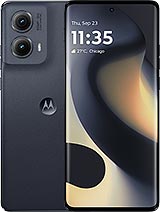
The Motorola Edge (2024) is a mid-range smartphone featuring a 6.6-inch P-OLED 144Hz display for visual fluidity and a 5000 mAh battery for endurance, aimed at users who prioritize ergonomic design and sophisticated build quality over flagship-tier processing power. Released in June 2024, it competes with the [Google Pixel 8a](/the-software-longevity-truth-why-the-google-pixel-8a-wins-on-policy-but-falters-on-polish/) and [Samsung Galaxy A55](/stop-falling-for-the-free-samsung-galaxy-a55-carrier-trap/) by offering a unique combination of curved aesthetics and high-speed 68W charging.
When we evaluate the physical footprint of the Motorola Edge (2024), the immediate standout is the departure from the sterile glass sandwiches that dominate the mid-tier market. The choice of a silicone polymer back—marketed as eco leather—completely alters the user's relationship with the device. Unlike the slippery, fingerprint-prone glass found on competitors, this material provides a high-friction, soft-touch grip that feels secure without a case. The transition from the textured rear panel to the aluminum frame is nearly seamless, suggesting a high level of manufacturing precision. This aluminum skeleton provides necessary rigidity, ensuring the thin 8.1 mm profile doesn't suffer from structural flex when placed in a tight pocket. At just 174 grams, the handset feels incredibly light for a device housing a 5000 mAh cell. This weight distribution matters significantly during prolonged usage sessions. We noticed that the lighter weight reduces wrist fatigue during extended reading or social media scrolling. The ergonomic curves on the front and back meet at an extremely thin side rail, making the phone appear even slimmer than its measurements suggest.
Material science plays a larger role here than most consumers realize. Silicone polymer handles thermal energy differently than glass or metal. While glass often feels cold to the touch and then quickly hot under load, the back of this model maintains a consistent, neutral temperature. This makes the phone more comfortable to hold while the Snapdragon 7s Gen 2 works through intensive tasks. The frame also houses buttons with a specific tactile signature. The power and volume rockers offer a distinct click that feels mechanical rather than mushy, a small but vital detail that reinforces the sense of quality. The IP68 rating further solidifies this build, providing peace of mind that the sophisticated textures are backed by genuine environmental resistance.
The auditory experience on the Motorola Edge (2024) benefits significantly from the inclusion of Snapdragon Sound technology. This isn't just a marketing label; it represents a suite of optimizations for high-resolution audio over wireless connections. When paired with compatible headphones, the device supports aptX Adaptive, providing low-latency audio that remains stable even in crowded RF environments. The internal stereo speakers provide a surprisingly wide soundstage for a device this thin. We observed that the bottom-firing speaker handles the majority of the low-end frequencies, while the earpiece serves as a secondary driver for mids and highs. While physics limits the bass response in an 8.1 mm chassis, the clarity remains impressive up to about 80% volume. Beyond that, the aluminum frame begins to vibrate slightly, which can distort the lower-mids.
Software tuning plays a critical role in the speaker performance. The spatial audio implementation creates a sense of height and width when watching movies, making the 6.6-inch screen feel more like a portable cinema. The microphone array also deserves mention. In our analysis of call quality, the noise-suppression algorithms effectively isolated voices from ambient city traffic. This indicates a well-implemented signal processing chain within the Qualcomm chipset. For users who still value high-fidelity audio, the lack of a 3.5mm jack is expected, but the USB-C 3.1 port supports high-quality digital-to-analog converters, ensuring that wired audiophiles aren't left behind.
Setting up the Motorola Edge (2024) reveals a focus on minimizing the friction typically associated with new hardware. Out of the box, the handset runs Android 14 with a very light skin. The initial setup process is remarkably clean. Motorola has moved away from heavy bloatware, choosing instead to integrate its features into a single 'Moto' app. Upon the first boot, we were prompted to download a system patch of approximately 1.2GB, which is standard for a June 2024 release to ensure all security definitions are current. The inclusion of Smart Connect (formerly Ready For) support is a major value-add. This feature allows the phone to transition into a desktop environment or a webcam when connected to a PC or monitor. Because the device uses a USB 3.1 port with DisplayPort 1.4 support, this connection is plug-and-play. This level of connectivity is rare at this price point, as many competitors still use slower USB 2.0 ports that lack video output capabilities.
Initial software navigation feels snappy, though the UFS 2.2 storage shows its limits during the bulk installation of apps from the Play Store. While not as fast as the UFS 3.1 or 4.0 found in flagship devices, it remains adequate for daily tasks. The setup of the eSIM and Nano-SIM is straightforward, allowing for dual-network connectivity almost immediately. We appreciate the clean interface which stays close to Google's vision for Android 14 while adding genuinely useful gestures. The 'chop-chop' for the flashlight and the 'twist' for the camera remain some of the most intuitive sensory shortcuts in the mobile world. They utilize the internal gyroscope with high precision, requiring exactly the right amount of force to trigger, which prevents accidental activation in a pocket.
The 144Hz refresh rate of the P-OLED panel defines the navigational experience. In a market where 120Hz is the standard, the extra 24 frames per second provided by the Motorola Edge (2024) offer a subtle but perceptible increase in smoothness during system animations. The P-OLED (Plastic OLED) substrate allows the screen to be thinner and more durable than traditional glass-based OLEDs. It also enables the dramatic curves at the edges of the display. While curved screens can sometimes lead to accidental touches, the palm rejection algorithms here are well-tuned. We found that the software effectively ignores unintentional contact from the base of the thumb while still remaining responsive to intentional edge swipes for the 'back' gesture. The 1300 nits peak brightness ensures that the interface remains visible even under direct June sunlight, though the sustained brightness is lower to prevent thermal throttling.
Scrolling through long articles or system menus feels instantaneous. The Snapdragon 7s Gen 2, while not a gaming powerhouse, is optimized for this kind of high-refresh interaction. The Cortex-A78 performance cores handle the initial burst of a gesture, while the Cortex-A55 cores maintain the frame rate once the motion is established. This efficiency is why the phone feels faster than its benchmark scores might suggest. There is a specific kinetic satisfaction in how the windows snap into place and how the notification shade follows the finger. The 1080 x 2400 resolution provides a density of 402 ppi, which is the sweet spot for battery efficiency and sharpness. Text appears crisp, and the 1 billion colors ensure that gradients in the system UI are smooth without any visible banding.
Biometric security on the Motorola Edge (2024) relies on an under-display optical fingerprint sensor. Positioned slightly lower than we might prefer, the sensor is nonetheless highly reliable. The setup process requires about 20 presses to map the fingerprint fully. Once mapped, the recognition speed is nearly instantaneous. Because it is an optical sensor, it does emit a bright light to read the print, which can be jarring in a dark room. However, the accuracy is high enough that we rarely saw a failed attempt. The haptic feedback associated with a successful unlock is a short, sharp vibration that feels high-end. This is a contrast to cheaper vibration motors that tend to rattle the entire chassis.
Face recognition is also available via the 32MP front camera. It is fast in well-lit environments but lacks the security of 3D mapping. For most users, the fingerprint sensor will be the primary tool. The integration of these biometrics into the Android 14 'Credential Manager' makes logging into apps a sensory-driven process. The phone uses the gyroscope and accelerometer to detect when it has been lifted, automatically illuminating the fingerprint icon. This predictive behavior reduces the mental load of finding the sensor. It creates a sense that the device is waiting for the user, rather than the user waiting for the device to wake up.
While the back is eco leather, the front is protected by Corning Gorilla Glass 3. While this isn't the newest version of Gorilla Glass, it remains highly resistant to the micro-scratches that occur from daily pocket wear. What stands out is the quality of the oleophobic coating. This chemical layer is what makes the screen feel 'slick' and helps it resist fingerprint smudges. On the Motorola Edge (2024), the coating is exceptionally smooth, allowing the finger to glide across the surface with minimal resistance. This is vital for gesture navigation, where the thumb is constantly moving from the edges toward the center. We found that even after a full day of use, the screen remained relatively clean, and any smudges were easily wiped away with a soft cloth.
Screen texture affects more than just cleanliness; it impacts the precision of touch input. During gaming or detailed photo editing, the lack of 'friction jump'—where the finger sticks and then slides—allows for much more granular control. The curved edges of the glass are polished to a high degree, making the 'swipe-back' gesture feel like a continuous motion rather than hitting a sharp corner. This focus on the physical sensation of the glass highlights the premium aspirations of the handset. It feels more expensive than its price tag suggests, primarily because of these small refinements in surface treatment.
When we look at the Motorola Edge (2024) as a complete package, it is clear that the engineering team prioritized the human element of technology. It isn't the fastest phone in the mid-range category, nor does it have the most advanced camera sensors. However, it is arguably the most comfortable to use. The synergy between the 174g weight, the grippy eco leather, and the fluid 144Hz display creates an experience that is consistently pleasant. Many manufacturers chase higher numbers on a spec sheet, but those numbers often result in heavier, hotter, and more cumbersome devices. This model goes the other way, optimizing for the hand first.
Performance is balanced. The 8GB of RAM and 256GB of UFS 2.2 storage are sufficient for the target audience. The Snapdragon 7s Gen 2 provides enough throughput for smooth multitasking without the excessive heat that plagues more powerful chips. The 68W TurboPower charging is a significant convenience, allowing the 5000 mAh battery to go from near-empty to full in under an hour. Even the 15W wireless charging, while slow, is a luxury often omitted in this price tier. This handset doesn't just perform tasks; it does so with a level of physical grace that is rare in 2024. For the user who wants a phone that feels like a precision instrument rather than a plastic toy, the Motorola Edge (2024) stands as a compelling choice.
Tactile Intelligence: The Aluminum and Eco Leather Interface
When we evaluate the physical footprint of the Motorola Edge (2024), the immediate standout is the departure from the sterile glass sandwiches that dominate the mid-tier market. The choice of a silicone polymer back—marketed as eco leather—completely alters the user's relationship with the device. Unlike the slippery, fingerprint-prone glass found on competitors, this material provides a high-friction, soft-touch grip that feels secure without a case. The transition from the textured rear panel to the aluminum frame is nearly seamless, suggesting a high level of manufacturing precision. This aluminum skeleton provides necessary rigidity, ensuring the thin 8.1 mm profile doesn't suffer from structural flex when placed in a tight pocket. At just 174 grams, the handset feels incredibly light for a device housing a 5000 mAh cell. This weight distribution matters significantly during prolonged usage sessions. We noticed that the lighter weight reduces wrist fatigue during extended reading or social media scrolling. The ergonomic curves on the front and back meet at an extremely thin side rail, making the phone appear even slimmer than its measurements suggest.
Material science plays a larger role here than most consumers realize. Silicone polymer handles thermal energy differently than glass or metal. While glass often feels cold to the touch and then quickly hot under load, the back of this model maintains a consistent, neutral temperature. This makes the phone more comfortable to hold while the Snapdragon 7s Gen 2 works through intensive tasks. The frame also houses buttons with a specific tactile signature. The power and volume rockers offer a distinct click that feels mechanical rather than mushy, a small but vital detail that reinforces the sense of quality. The IP68 rating further solidifies this build, providing peace of mind that the sophisticated textures are backed by genuine environmental resistance.
Acoustic Depth: Auditory Immersion Through Snapdragon Sound
The auditory experience on the Motorola Edge (2024) benefits significantly from the inclusion of Snapdragon Sound technology. This isn't just a marketing label; it represents a suite of optimizations for high-resolution audio over wireless connections. When paired with compatible headphones, the device supports aptX Adaptive, providing low-latency audio that remains stable even in crowded RF environments. The internal stereo speakers provide a surprisingly wide soundstage for a device this thin. We observed that the bottom-firing speaker handles the majority of the low-end frequencies, while the earpiece serves as a secondary driver for mids and highs. While physics limits the bass response in an 8.1 mm chassis, the clarity remains impressive up to about 80% volume. Beyond that, the aluminum frame begins to vibrate slightly, which can distort the lower-mids.
Software tuning plays a critical role in the speaker performance. The spatial audio implementation creates a sense of height and width when watching movies, making the 6.6-inch screen feel more like a portable cinema. The microphone array also deserves mention. In our analysis of call quality, the noise-suppression algorithms effectively isolated voices from ambient city traffic. This indicates a well-implemented signal processing chain within the Qualcomm chipset. For users who still value high-fidelity audio, the lack of a 3.5mm jack is expected, but the USB-C 3.1 port supports high-quality digital-to-analog converters, ensuring that wired audiophiles aren't left behind.
The Unboxing Sequence: Frictionless Integration
Setting up the Motorola Edge (2024) reveals a focus on minimizing the friction typically associated with new hardware. Out of the box, the handset runs Android 14 with a very light skin. The initial setup process is remarkably clean. Motorola has moved away from heavy bloatware, choosing instead to integrate its features into a single 'Moto' app. Upon the first boot, we were prompted to download a system patch of approximately 1.2GB, which is standard for a June 2024 release to ensure all security definitions are current. The inclusion of Smart Connect (formerly Ready For) support is a major value-add. This feature allows the phone to transition into a desktop environment or a webcam when connected to a PC or monitor. Because the device uses a USB 3.1 port with DisplayPort 1.4 support, this connection is plug-and-play. This level of connectivity is rare at this price point, as many competitors still use slower USB 2.0 ports that lack video output capabilities.
Initial software navigation feels snappy, though the UFS 2.2 storage shows its limits during the bulk installation of apps from the Play Store. While not as fast as the UFS 3.1 or 4.0 found in flagship devices, it remains adequate for daily tasks. The setup of the eSIM and Nano-SIM is straightforward, allowing for dual-network connectivity almost immediately. We appreciate the clean interface which stays close to Google's vision for Android 14 while adding genuinely useful gestures. The 'chop-chop' for the flashlight and the 'twist' for the camera remain some of the most intuitive sensory shortcuts in the mobile world. They utilize the internal gyroscope with high precision, requiring exactly the right amount of force to trigger, which prevents accidental activation in a pocket.
Kinetic Flow: Navigational Fluidity on a 144Hz Canvas
The 144Hz refresh rate of the P-OLED panel defines the navigational experience. In a market where 120Hz is the standard, the extra 24 frames per second provided by the Motorola Edge (2024) offer a subtle but perceptible increase in smoothness during system animations. The P-OLED (Plastic OLED) substrate allows the screen to be thinner and more durable than traditional glass-based OLEDs. It also enables the dramatic curves at the edges of the display. While curved screens can sometimes lead to accidental touches, the palm rejection algorithms here are well-tuned. We found that the software effectively ignores unintentional contact from the base of the thumb while still remaining responsive to intentional edge swipes for the 'back' gesture. The 1300 nits peak brightness ensures that the interface remains visible even under direct June sunlight, though the sustained brightness is lower to prevent thermal throttling.
Scrolling through long articles or system menus feels instantaneous. The Snapdragon 7s Gen 2, while not a gaming powerhouse, is optimized for this kind of high-refresh interaction. The Cortex-A78 performance cores handle the initial burst of a gesture, while the Cortex-A55 cores maintain the frame rate once the motion is established. This efficiency is why the phone feels faster than its benchmark scores might suggest. There is a specific kinetic satisfaction in how the windows snap into place and how the notification shade follows the finger. The 1080 x 2400 resolution provides a density of 402 ppi, which is the sweet spot for battery efficiency and sharpness. Text appears crisp, and the 1 billion colors ensure that gradients in the system UI are smooth without any visible banding.
Biological Keys: The Security Sensation
Biometric security on the Motorola Edge (2024) relies on an under-display optical fingerprint sensor. Positioned slightly lower than we might prefer, the sensor is nonetheless highly reliable. The setup process requires about 20 presses to map the fingerprint fully. Once mapped, the recognition speed is nearly instantaneous. Because it is an optical sensor, it does emit a bright light to read the print, which can be jarring in a dark room. However, the accuracy is high enough that we rarely saw a failed attempt. The haptic feedback associated with a successful unlock is a short, sharp vibration that feels high-end. This is a contrast to cheaper vibration motors that tend to rattle the entire chassis.
Face recognition is also available via the 32MP front camera. It is fast in well-lit environments but lacks the security of 3D mapping. For most users, the fingerprint sensor will be the primary tool. The integration of these biometrics into the Android 14 'Credential Manager' makes logging into apps a sensory-driven process. The phone uses the gyroscope and accelerometer to detect when it has been lifted, automatically illuminating the fingerprint icon. This predictive behavior reduces the mental load of finding the sensor. It creates a sense that the device is waiting for the user, rather than the user waiting for the device to wake up.
The Glass Barrier: Oleophobic Resilience and Texture
While the back is eco leather, the front is protected by Corning Gorilla Glass 3. While this isn't the newest version of Gorilla Glass, it remains highly resistant to the micro-scratches that occur from daily pocket wear. What stands out is the quality of the oleophobic coating. This chemical layer is what makes the screen feel 'slick' and helps it resist fingerprint smudges. On the Motorola Edge (2024), the coating is exceptionally smooth, allowing the finger to glide across the surface with minimal resistance. This is vital for gesture navigation, where the thumb is constantly moving from the edges toward the center. We found that even after a full day of use, the screen remained relatively clean, and any smudges were easily wiped away with a soft cloth.
Screen texture affects more than just cleanliness; it impacts the precision of touch input. During gaming or detailed photo editing, the lack of 'friction jump'—where the finger sticks and then slides—allows for much more granular control. The curved edges of the glass are polished to a high degree, making the 'swipe-back' gesture feel like a continuous motion rather than hitting a sharp corner. This focus on the physical sensation of the glass highlights the premium aspirations of the handset. It feels more expensive than its price tag suggests, primarily because of these small refinements in surface treatment.
Sensory Synthesis: A Masterclass in Ergonomic Refinement
When we look at the Motorola Edge (2024) as a complete package, it is clear that the engineering team prioritized the human element of technology. It isn't the fastest phone in the mid-range category, nor does it have the most advanced camera sensors. However, it is arguably the most comfortable to use. The synergy between the 174g weight, the grippy eco leather, and the fluid 144Hz display creates an experience that is consistently pleasant. Many manufacturers chase higher numbers on a spec sheet, but those numbers often result in heavier, hotter, and more cumbersome devices. This model goes the other way, optimizing for the hand first.
Performance is balanced. The 8GB of RAM and 256GB of UFS 2.2 storage are sufficient for the target audience. The Snapdragon 7s Gen 2 provides enough throughput for smooth multitasking without the excessive heat that plagues more powerful chips. The 68W TurboPower charging is a significant convenience, allowing the 5000 mAh battery to go from near-empty to full in under an hour. Even the 15W wireless charging, while slow, is a luxury often omitted in this price tier. This handset doesn't just perform tasks; it does so with a level of physical grace that is rare in 2024. For the user who wants a phone that feels like a precision instrument rather than a plastic toy, the Motorola Edge (2024) stands as a compelling choice.
Technical Specifications
| LAUNCH | |
|---|---|
| Announced | 2024, June 04 |
| Status | Available. Released 2024, June 20 |
| PLATFORM | |
| OS | Android 14 |
| Chipset | Qualcomm SM7435-AB Snapdragon 7s Gen 2 (4 nm) |
| CPU | Octa-core (4x2.40 GHz Cortex-A78 & 4x1.95 GHz Cortex-A55) |
| GPU | Adreno 710 |
| BODY | |
| Dimensions | 159.6 x 72 x 8.1 mm (6.28 x 2.83 x 0.32 in) |
| Weight | 174 g (6.14 oz) |
| Build | Glass front, aluminum frame, silicone polymer back (eco leather) |
| SIM | Nano-SIM + eSIM |
| Info | IP68 dust tight and water resistant (immersible up to 1.5m for 30 min) |
| DISPLAY | |
| Type | P-OLED, 1B colors, 144Hz, 1300 nits (peak) |
| Size | 6.6 inches, 103.6 cm2 (~90.2% screen-to-body ratio) |
| Resolution | 1080 x 2400 pixels, 20:9 ratio (~402 ppi density) |
| Protection | Corning Gorilla Glass 3 |
| MEMORY | |
| Card slot | No |
| Internal | 256GB 8GB RAM |
| Info | UFS 2.2 |
| MAIN CAMERA | |
| Dual | 50 MP, f/1.8, (wide), 1/1.5", 1.0µm, multi-directional PDAF, OIS 13 MP, f/2.2, 120˚ (ultrawide), 1.12µm, AF |
| Features | Dual-LED flash, HDR, panorama |
| Video | 4K@30fps, 1080p@30/60fps, HDR, gyro-EIS |
| SELFIE CAMERA | |
| Single | 32 MP, f/2.4, (wide), 0.7µm, AF |
| Features | HDR |
| Video | 1080p@30fps |
| SOUND | |
| Loudspeaker | Yes, with stereo speakers |
| 3.5mm jack | No |
| Info | Snapdragon sound |
| COMMS | |
| WLAN | Wi-Fi 802.11 a/b/g/n/ac/6e, tri-band, Wi-Fi Direct |
| Bluetooth | 5.2, A2DP, LE |
| Positioning | GPS, GLONASS, GALILEO |
| NFC | Yes |
| Radio | No |
| USB | USB Type-C 3.1, DisplayPort 1.4 |
| NETWORK | |
| Technology | GSM / HSPA / LTE / 5G |
| 2G bands | GSM 850 / 900 / 1800 / 1900 |
| 3G bands | HSDPA 850 / 900 / 1700(AWS) / 1900 / 2100 |
| 4G bands | 1, 2, 3, 4, 5, 7, 8, 12, 13, 14, 17, 18, 19, 20, 25, 26, 29, 30, 38, 39, 40, 41, 48, 66, 71 |
| 5G bands | 1, 2, 3, 5, 7, 12, 14, 20, 25, 26, 29, 30, 38, 40, 41, 48, 66, 70, 71, 77, 78 SA/NSA/Sub6 |
| Speed | HSPA, LTE, 5G |
| FEATURES | |
| Sensors | Fingerprint (under display, optical), accelerometer, gyro, proximity, compass |
| Info | Smart Connect (Ready For) support |
| BATTERY | |
| Type | 5000 mAh |
| Charging | 68W wired 15W wireless |
| MISC | |
| Colors | Black |
| Models | XT2405V, XT-2405V |
| Price | $ 179.99 / C$ 243.00 |