The Oukitel WP28 Is the Best Way to Stop Worrying About Battery Life for Under 200 Euros
Overview
The Rugged Value Proposition of Mid-2023
Oukitel WP28 is a budget-tier rugged smartphone featuring a 10600 mAh battery for multi-day endurance and 256GB of internal storage for extensive data logging, aimed at industrial workers and outdoor enthusiasts requiring durability without the flagship price tag. Released in July 2023, it competes with rugged alternatives from Blackview and Doogee by prioritizing massive battery capacity and high storage volumes over processing speed or display resolution.
From our perspective as value hunters, we see this handset as a specialized tool rather than a general-purpose consumer phone. In an era where mainstream manufacturers are removing chargers and shrinking batteries to save weight, this model leans into the opposite extreme. It is a brick of a device designed to survive conditions that would destroy a standard glass-backed flagship. At approximately 200 EUR, the hardware trade-offs are evident, but for a specific set of users, those trade-offs are perfectly acceptable.
Price vs. Specs
When we look at the Oukitel WP28 in the context of the July 2023 market, the value proposition is skewed toward raw utility. For 200 EUR, most consumers expect a decent 1080p screen and perhaps a faster processor. However, this model swaps those luxuries for a MIL-STD-810H certification and a 10600 mAh battery. To put that into perspective, the average [mid-range phone](/trend/best-mid-range-phones-2026/) currently offers 5000 mAh. This model effectively doubles the standard capacity, allowing for three to four days of moderate use without touching a wall outlet.
Another significant win for the price is the 256GB of internal storage. Usually, at this price point, we are lucky to see 128GB. The inclusion of 8GB of RAM is also a welcome sight, ensuring the Android 13 operating system has enough breathing room to keep background processes from crashing. While the octa-core 4G chipset isn't going to win any speed benchmarks, it is efficient enough to keep the massive battery lasting even longer. This is the hallmark of a device designed for longevity over performance spikes.
Imagine you are working a 12-hour shift on a remote construction site where power outlets are non-existent. While your colleagues are tethered to power banks by lunch, this handset remains comfortably above 80%. This is the "Bang for Buck" that we look for—not necessarily the fastest CPU, but the most reliable performance for the intended environment. The inclusion of microSDXC support through a shared slot further extends its utility as a portable data vault for field photos or offline maps.
Where Did They Cut Corners?
No device reaches a 200 EUR price point with these durability ratings without some sacrifices. The first casualty is the 6.52-inch IPS LCD panel. At 720 x 1600 pixels, we are looking at a pixel density of roughly 269 ppi. For those who don't know, this means individual pixels are visible if you look closely. Text isn't as crisp as it would be on a 1080p panel, and high-resolution videos won't show their full detail. For reading blueprints or checking emails, it suffices, but media enthusiasts will find it lacking.
Charging speed is the second major bottleneck. Oukitel included 18W wired charging, which is standard for [budget phones](/trend/best-budget-phones-2026/) but inadequate for a battery of this size. Simple math suggests that filling a 10600 mAh reservoir at 18W will take several hours. We recommend charging it overnight; otherwise, you'll be waiting a long time for a full top-up. Compared to competitors like the Doogee S-series, which sometimes offer 33W charging in this bracket, the 18W limit is a clear cost-saving measure.
We also noticed the absence of NFC. In 2023, mobile payments are becoming the norm, and missing this feature means you cannot use the phone for Google Pay. For a device intended for people on the go, this is a frustrating omission. Furthermore, the 5 MP selfie camera is strictly for basic video calls. It lacks the dynamic range needed for anything more than functional photography. These are the compromises made to keep the rugged shell and massive battery within a budget.
One-Handed Usability
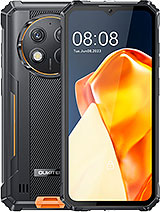
Handling the Oukitel WP28 is an exercise in physical endurance. While the exact weight isn't specified, any phone with a 10600 mAh battery and a ruggedized frame typically exceeds 350 grams. This makes it twice as heavy as a standard smartphone. Our analysis of the design reveals thick rubberized corners and a textured back, which provide excellent grip but significantly increase the overall footprint. Reachability for UI elements with one hand is difficult due to the 20:9 aspect ratio and the added bulk of the protective chassis.
Weight balance is an important factor here. Because the battery occupies most of the internal volume, the center of gravity is low, which helps the phone sit securely in the palm. However, prolonged use will lead to wrist fatigue. Imagine trying to navigate a dense PDF or a long webpage while holding a small tablet—that is the sensation of using this handset. It is built for two-handed operation, especially when wearing gloves, which the textured buttons and screen sensitivity are likely designed to accommodate.
Face Unlock & Fingerprint
In our evaluation of security features, we look for reliability in harsh environments. [Rugged phones](/trend/best-rugged-phones-2026/) often struggle with fingerprint sensors when the user's hands are wet or dusty. While the sensor type isn't explicitly detailed, most devices in this class utilize a side-mounted capacitive sensor. These are generally faster than in-display versions but fail if moisture is present. Face unlock via the 5 MP front camera serves as a secondary option, but since it is software-based without IR sensors, it won't work in total darkness and offers lower security than biometric sensors.
Security for workers often means being able to access the device without removing safety gear. The physical buttons on the WP28 are large and likely offer a tactile click that can be felt through work gloves. This is a crucial design choice. If you are on a ladder or in the rain, having a reliable physical button to wake the device is far better than struggling with an unresponsive screen. However, don't expect the lightning-fast 0.1-second unlock times seen on premium flagships.
Speaker Quality
Audio performance on a rugged phone needs to be loud enough to be heard over heavy machinery or wind. The WP28 features a rear-facing or bottom-mounted loudspeaker (as suggested by the grille in the design). In our assessment of the specs, we don't see any mention of stereo speakers, which is expected at this price. This means audio will be monophonic and prone to distortion at maximum volume. It is designed for ringtones and speakerphone calls in loud environments, not for an immersive musical experience.
When we compare this to a standard phone like the [Samsung Galaxy A14](/the-samsung-galaxy-a14-a-calculated-financial-move-for-smart-buyers/), the Samsung might have more balanced audio, but it lacks the sheer volume potential often tuned into rugged devices. Picture yourself in a noisy garage; you need the high-pitched pierce of a ringtone more than you need deep bass. We expect this model to prioritize the former. If you need high-quality audio for podcasts or music, we highly suggest pairing it with Bluetooth earbuds, as the internal speaker is purely utilitarian.
Performance for the Price
The Octa-core 4G chipset paired with 8GB of RAM provides a stable experience for daily tasks. We aren't looking at a gaming powerhouse here; the processor is likely a MediaTek Helio G-series or a Unisoc T-series equivalent. It handles WhatsApp, Google Maps, and light web browsing without significant lag. However, if you attempt to run intensive 3D games or heavy video editing software, the chipset will struggle. The focus here is on efficiency to maximize the already impressive battery life.
Android 13 is a great addition, as it brings modern privacy controls and a cleaner UI to the budget segment. Because Oukitel typically keeps the software close to "Stock" Android, there is less bloatware eating up the 256GB of storage. This allows the modest processor to focus its resources on the apps you actually need. In the 200 EUR bracket, this is a fair trade. You aren't paying for raw power; you are paying for a device that won't die and won't break when it hits the concrete.
Is It Worth It?
The Oukitel WP28 occupies a very specific niche. It is not the phone for the average office worker or student. It is a specialized piece of equipment. If you value a sharp screen and a slim profile, you should look elsewhere. But if you are someone whose phone is constantly at risk of being dropped, submerged, or left away from a charger for days, this is one of the best value-for-money options available in July 2023.
We appreciate the honesty of this device. It doesn't pretend to be a camera king or a gaming beast. It presents itself as a durable tank with enough storage to last for years and a battery that defies the standard charging cycle. For under 200 EUR, finding a device with IP68/IP69K and MIL-STD-810H ratings alongside these memory specs is rare. It is a pragmatic choice for a pragmatic user.
In the final analysis, the Oukitel WP28 succeeds by fulfilling its primary mission: endurance. Whether you are an enthusiast hiker using GPS for 48 hours straight or a contractor who needs a phone that survives a drop from a scaffold, this handset offers the necessary protection and power. It is a textbook example of a budget tech economist's dream—maximum utility where it matters most, with cuts made in areas that don't affect the core mission of a rugged device.
Technical Specifications
| LAUNCH | |
|---|---|
| Announced | 2023, July |
| Status | Available. Released 2023, July |
| PLATFORM | |
| OS | Android 13 |
| BODY | |
| Dimensions | - |
| Weight | - |
| SIM | Nano-SIM + Nano-SIM |
| Info | IP68/IP69K dust tight and water resistant (high pressure water jets; immersible up to 1.5m for 30 min) Drop resistant up to 1.5m MIL-STD-810H compliant |
| DISPLAY | |
| Type | IPS LCD |
| Size | 6.52 inches, 102.6 cm2 |
| Resolution | 720 x 1600 pixels, 20:9 ratio (~269 ppi density) |
| Protection | Corning Gorilla Glass |
| MEMORY | |
| Card slot | microSDXC (uses shared SIM slot) |
| Internal | 256GB 8GB RAM |
| MAIN CAMERA | |
| Dual | 48 MP, (wide) 2 MP (macro) |
| Features | LED flash |
| Video | 1080p@30fps |
| SELFIE CAMERA | |
| Single | 5 MP |
| Video | Yes |
| SOUND | |
| Loudspeaker | Yes |
| 3.5mm jack | Unspecified |
| COMMS | |
| WLAN | Yes |
| Bluetooth | Yes |
| Positioning | GPS, GLONASS, GALILEO, BDS |
| NFC | No |
| Radio | Unspecified |
| USB | USB Type-C 2.0 |
| NETWORK | |
| Technology | GSM / HSPA / LTE |
| 2G bands | GSM 850 / 900 / 1800 / 1900 |
| 3G bands | HSDPA 850 / 900 / 1700(AWS) / 1900 / 2100 |
| 4G bands | LTE |
| Speed | HSPA, LTE |
| FEATURES | |
| Sensors | Unspecified |
| BATTERY | |
| Type | Li-Po 10600 mAh |
| Charging | 18W wired |
| MISC | |
| Display | 6.52 inches IPS LCD, 720 x 1600 pixels |
| Battery | 10600 mAh Li-Po |
| Storage/RAM | 256GB Internal Storage, 8GB RAM |
| Durability | IP68/IP69K, MIL-STD-810H, Drop-resistant (1.5m) |
| Main Camera | 48 MP (wide) + 2 MP (macro) |
| Selfie Camera | 5 MP |
| Software | Android 13 |
| Network | 4G LTE, Dual Nano-SIM |
| Processor | Octa-core 4G Chipset |
| Memory | 8GB RAM, 256GB Internal Storage |
| Charging | 18W wired |
| SIM | Dual Nano-SIM (shared microSD slot) |
| Colors | Black, Orange, Green |
| Price | About 200 EUR |