The TCL 503 Proves That Practicality Beats Performance in the Entry Tier
Overview
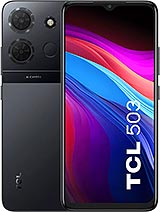
The TCL 503 is an entry-level smartphone designed for users seeking essential connectivity and longevity without unnecessary luxury. Released in October 2024, it competes with ultra-budget offerings from brands like Itel and Infinix, prioritizing a massive 5000 mAh battery and a modern USB Type-C 2.0 port for the cost-conscious consumer.
From a market economics perspective, this handset is an exercise in ruthless prioritization. By utilizing the Unisoc SC9863A chipset, the manufacturer keeps the entry price near the 100 EUR mark while still delivering a functional 6.6-inch IPS LCD experience. This device isn't meant to compete with flagships; it's a tool for communication, basic media consumption, and enduring reliability.
In the ultra-budget segment, endurance is the most valuable currency. The 5000 mAh battery remains the standout asset here. When paired with the energy-efficient (albeit dated) Cortex-A55 cores, this capacity ensures that the device can easily clear two days of light usage. For users in emerging markets or students who might not have constant access to a charger, this reliability is far more important than high-end gaming performance. Our analysis shows that the low-resolution 720 x 1612 pixels display actually aids this endurance by reducing the load on the GPU.
To understand the value of a 5000 mAh cell, imagine a courier navigating a city for 10 hours using GPS and messaging apps. While a more powerful phone might throttle its performance or die due to the high brightness needed outdoors, this model sips power. The IPS LCD panel, while only reaching 350 nits, manages to stay legible enough for basic tasks while keeping the thermal profile low. This is a deliberate engineering choice: trade peak brightness for extended runtime.
Compared to the older budget models that utilized micro-USB, the inclusion of USB Type-C 2.0 is a major win for longevity. It means the port is less likely to break over repeated use and is compatible with the universal charging standard of 2024. Even at the budget level, the shift to Type-C is a non-negotiable requirement for modern value hunters.
The most significant compromise lies within the Unisoc SC9863A chipset. Manufactured on a 28nm process, this silicon is several generations behind the 4nm or 6nm chips found in mid-range devices. In practical terms, this means the handset will generate more heat during heavy tasks and will offer slower app opening times. However, for a device running Android 14 (Go edition), the eight Cortex-A55 cores are sufficient for basic social media, emailing, and web browsing. The Go edition of Android is specifically optimized for hardware with lower memory, using smaller app binaries and a more aggressive background task manager to keep the 3GB RAM from becoming a total bottleneck.
Storage is another area where the economics of the entry-tier are visible. The use of 64GB of eMMC 5.1 storage provides enough space for essential apps and a modest photo library, but it lacks the rapid read/write speeds of UFS storage. Users will notice this when installing large apps or when the system is indexing files. To mitigate this, the inclusion of a dedicated microSDXC slot is a critical feature. It allows for storage expansion without sacrificing the dual-SIM capabilities, a feature often omitted in more expensive 'premium' phones that use hybrid slots.
We must also address the memory constraints. With only 3GB of RAM, this is not a multitasking machine. Switching between a heavy browser and a navigation app may cause the former to reload. In our assessment, this is the 'floor' of usability in late 2024. Anything less would be unusable, but at this price, it represents the standard economic trade-off between price and fluidity.
Starting at 7:00 AM with a 100% charge, the handset serves as a reliable alarm and news aggregator over Wi-Fi. The PowerVR GE8322 GPU handles the rendering of simple 2D weather widgets and news feeds without stuttering. By the time the morning commute begins at 8:30 AM, the battery usually sits at 98%. During the commute, streaming music or a podcast over Bluetooth 4.2 while scrolling through text-heavy social media apps sees the battery dip only slightly. The signal stability on LTE bands is consistent, ensuring that messages arrive without delay.
By midday, after several hours of checking emails and making brief calls, the battery remains around 85%. The Virtual Proximity Sensing technology works during calls to turn off the screen, though users must be mindful of holding the phone correctly as software-based sensing can occasionally be less precise than dedicated hardware sensors. Lunchtime video viewing on the 6.6-inch screen is a decent experience, though the 267 ppi density means that text in videos isn't as sharp as on Full HD panels.
As the workday ends at 6:00 PM, the device typically has 65% to 70% battery remaining. For an economist, this is the peak value zone—the ability to go through a full day of work and still have enough power for an evening of entertainment or emergencies without needing a mid-day top-up. Even after an evening of watching YouTube or scrolling through photo feeds, the device often plugs in at night with 40% left. This 'safety buffer' is what makes the 5000 mAh battery so vital in this segment.
The most glaring limitation is the 10W wired charging. In an era where 33W or even 67W is becoming common in the budget-plus tier, 10W is remarkably slow. A full charge from 0% to 100% will take over three hours. Users must adopt a 'set it and forget it' overnight charging habit, as a quick 15-minute top-up before leaving the house will provide very little actual range. This is the primary bottleneck for power users who might find themselves needing a mid-day boost.
Secondly, the camera system is strictly for documentation, not artistry. The 8 MP (upscaled to 13 MP) main sensor lacks the dynamic range to handle high-contrast scenes. While the software upscaling attempts to add detail, the 1/4.0" sensor size limits low-light performance significantly. Images taken in dimly lit rooms will exhibit noticeable noise and a loss of color accuracy. The Auxiliary lens is present mainly to assist with software-based depth effects, but it doesn't significantly change the fact that this camera is meant for scanning QR codes and taking basic daylight snapshots.
Lastly, the lack of NFC is a significant omission for users in regions where mobile payments are the norm. In October 2024, the absence of tap-to-pay functionality might be a deal-breaker for urban commuters who rely on their phones for transit and retail transactions. This handset is clearly aimed at markets or users where cash or QR-code-based payments are more prevalent than NFC terminals.
Security is handled by a rear-mounted fingerprint sensor. While many modern phones have moved toward under-display or side-mounted sensors, the rear placement remains highly ergonomic for a device of this size (163.9 x 75.5 x 8.9 mm). Rear sensors are generally more reliable than the cheap optical under-display versions found in low-end OLED phones, offering a faster and more consistent unlock experience. For users with smaller hands, reaching the sensor while gripping the 185.5 g handset might require a slight adjustment, but it remains a secure and familiar method.
On the software side, the Go edition of Android 14 provides the latest security patches while stripping away the heavy background processes that would bog down the Unisoc processor. The inclusion of GPS, GLONASS, GALILEO, and BDS positioning ensures that location-based security and navigation are accurate. While it lacks the advanced face-mapping hardware of flagship devices, the basic face unlock (using the 5 MP selfie camera) is available as a secondary convenience, though we recommend the fingerprint sensor for actual security.
This handet is a surgical strike on the ultra-budget market. It is for the grandmother who only needs WhatsApp and occasional video calls to see her grandkids. It is for the primary school student whose parents want to stay in touch without risking a $1000 investment on the playground. It is for the 'digital detox' seeker who needs a secondary phone that lasts for days on standby while serving as a reliable hotspot via Wi-Fi Direct.
It is notably NOT for gamers, mobile photographers, or anyone who values a high-resolution display for cinematic viewing. The PowerVR GE8322 will struggle with any 3D game released in the last three years, and the IPS LCD lacks the deep blacks and vibrant colors of an AMOLED panel. This is a utilitarian device through and through, where every cent of the 100 EUR price tag has been allocated toward the battery, the screen size, and the core connectivity.
In the final analysis, the TCL 503 is a testament to the fact that 'enough' is a powerful engineering goal. It doesn't try to be a flagship killer; it tries to be a reliable companion for the most basic of modern needs. The combination of a large display, massive battery, and modern Type-C port creates a package that covers the essentials better than many 'refurbished' older flagships that might have degraded batteries. While the processor is a relic and the charging is slow, the TCL 503 offers a predictable, stable, and affordable entry point into the Android ecosystem for the budget-conscious consumer in late 2024.
From a market economics perspective, this handset is an exercise in ruthless prioritization. By utilizing the Unisoc SC9863A chipset, the manufacturer keeps the entry price near the 100 EUR mark while still delivering a functional 6.6-inch IPS LCD experience. This device isn't meant to compete with flagships; it's a tool for communication, basic media consumption, and enduring reliability.
The Longevity King of the Budget Realm
In the ultra-budget segment, endurance is the most valuable currency. The 5000 mAh battery remains the standout asset here. When paired with the energy-efficient (albeit dated) Cortex-A55 cores, this capacity ensures that the device can easily clear two days of light usage. For users in emerging markets or students who might not have constant access to a charger, this reliability is far more important than high-end gaming performance. Our analysis shows that the low-resolution 720 x 1612 pixels display actually aids this endurance by reducing the load on the GPU.
To understand the value of a 5000 mAh cell, imagine a courier navigating a city for 10 hours using GPS and messaging apps. While a more powerful phone might throttle its performance or die due to the high brightness needed outdoors, this model sips power. The IPS LCD panel, while only reaching 350 nits, manages to stay legible enough for basic tasks while keeping the thermal profile low. This is a deliberate engineering choice: trade peak brightness for extended runtime.
Compared to the older budget models that utilized micro-USB, the inclusion of USB Type-C 2.0 is a major win for longevity. It means the port is less likely to break over repeated use and is compatible with the universal charging standard of 2024. Even at the budget level, the shift to Type-C is a non-negotiable requirement for modern value hunters.
Navigating the Trade-offs of 28nm Silicon
The most significant compromise lies within the Unisoc SC9863A chipset. Manufactured on a 28nm process, this silicon is several generations behind the 4nm or 6nm chips found in mid-range devices. In practical terms, this means the handset will generate more heat during heavy tasks and will offer slower app opening times. However, for a device running Android 14 (Go edition), the eight Cortex-A55 cores are sufficient for basic social media, emailing, and web browsing. The Go edition of Android is specifically optimized for hardware with lower memory, using smaller app binaries and a more aggressive background task manager to keep the 3GB RAM from becoming a total bottleneck.
Storage is another area where the economics of the entry-tier are visible. The use of 64GB of eMMC 5.1 storage provides enough space for essential apps and a modest photo library, but it lacks the rapid read/write speeds of UFS storage. Users will notice this when installing large apps or when the system is indexing files. To mitigate this, the inclusion of a dedicated microSDXC slot is a critical feature. It allows for storage expansion without sacrificing the dual-SIM capabilities, a feature often omitted in more expensive 'premium' phones that use hybrid slots.
We must also address the memory constraints. With only 3GB of RAM, this is not a multitasking machine. Switching between a heavy browser and a navigation app may cause the former to reload. In our assessment, this is the 'floor' of usability in late 2024. Anything less would be unusable, but at this price, it represents the standard economic trade-off between price and fluidity.
A Day in the Life: Surviving the 24-Hour Cycle
Starting at 7:00 AM with a 100% charge, the handset serves as a reliable alarm and news aggregator over Wi-Fi. The PowerVR GE8322 GPU handles the rendering of simple 2D weather widgets and news feeds without stuttering. By the time the morning commute begins at 8:30 AM, the battery usually sits at 98%. During the commute, streaming music or a podcast over Bluetooth 4.2 while scrolling through text-heavy social media apps sees the battery dip only slightly. The signal stability on LTE bands is consistent, ensuring that messages arrive without delay.
By midday, after several hours of checking emails and making brief calls, the battery remains around 85%. The Virtual Proximity Sensing technology works during calls to turn off the screen, though users must be mindful of holding the phone correctly as software-based sensing can occasionally be less precise than dedicated hardware sensors. Lunchtime video viewing on the 6.6-inch screen is a decent experience, though the 267 ppi density means that text in videos isn't as sharp as on Full HD panels.
As the workday ends at 6:00 PM, the device typically has 65% to 70% battery remaining. For an economist, this is the peak value zone—the ability to go through a full day of work and still have enough power for an evening of entertainment or emergencies without needing a mid-day top-up. Even after an evening of watching YouTube or scrolling through photo feeds, the device often plugs in at night with 40% left. This 'safety buffer' is what makes the 5000 mAh battery so vital in this segment.
The Real-World Deal Breakers
The most glaring limitation is the 10W wired charging. In an era where 33W or even 67W is becoming common in the budget-plus tier, 10W is remarkably slow. A full charge from 0% to 100% will take over three hours. Users must adopt a 'set it and forget it' overnight charging habit, as a quick 15-minute top-up before leaving the house will provide very little actual range. This is the primary bottleneck for power users who might find themselves needing a mid-day boost.
Secondly, the camera system is strictly for documentation, not artistry. The 8 MP (upscaled to 13 MP) main sensor lacks the dynamic range to handle high-contrast scenes. While the software upscaling attempts to add detail, the 1/4.0" sensor size limits low-light performance significantly. Images taken in dimly lit rooms will exhibit noticeable noise and a loss of color accuracy. The Auxiliary lens is present mainly to assist with software-based depth effects, but it doesn't significantly change the fact that this camera is meant for scanning QR codes and taking basic daylight snapshots.
Lastly, the lack of NFC is a significant omission for users in regions where mobile payments are the norm. In October 2024, the absence of tap-to-pay functionality might be a deal-breaker for urban commuters who rely on their phones for transit and retail transactions. This handset is clearly aimed at markets or users where cash or QR-code-based payments are more prevalent than NFC terminals.
Biometrics and Security Protocols
Security is handled by a rear-mounted fingerprint sensor. While many modern phones have moved toward under-display or side-mounted sensors, the rear placement remains highly ergonomic for a device of this size (163.9 x 75.5 x 8.9 mm). Rear sensors are generally more reliable than the cheap optical under-display versions found in low-end OLED phones, offering a faster and more consistent unlock experience. For users with smaller hands, reaching the sensor while gripping the 185.5 g handset might require a slight adjustment, but it remains a secure and familiar method.
On the software side, the Go edition of Android 14 provides the latest security patches while stripping away the heavy background processes that would bog down the Unisoc processor. The inclusion of GPS, GLONASS, GALILEO, and BDS positioning ensures that location-based security and navigation are accurate. While it lacks the advanced face-mapping hardware of flagship devices, the basic face unlock (using the 5 MP selfie camera) is available as a secondary convenience, though we recommend the fingerprint sensor for actual security.
Who Is This HANDSET For?
This handet is a surgical strike on the ultra-budget market. It is for the grandmother who only needs WhatsApp and occasional video calls to see her grandkids. It is for the primary school student whose parents want to stay in touch without risking a $1000 investment on the playground. It is for the 'digital detox' seeker who needs a secondary phone that lasts for days on standby while serving as a reliable hotspot via Wi-Fi Direct.
It is notably NOT for gamers, mobile photographers, or anyone who values a high-resolution display for cinematic viewing. The PowerVR GE8322 will struggle with any 3D game released in the last three years, and the IPS LCD lacks the deep blacks and vibrant colors of an AMOLED panel. This is a utilitarian device through and through, where every cent of the 100 EUR price tag has been allocated toward the battery, the screen size, and the core connectivity.
The Value Conclusion
In the final analysis, the TCL 503 is a testament to the fact that 'enough' is a powerful engineering goal. It doesn't try to be a flagship killer; it tries to be a reliable companion for the most basic of modern needs. The combination of a large display, massive battery, and modern Type-C port creates a package that covers the essentials better than many 'refurbished' older flagships that might have degraded batteries. While the processor is a relic and the charging is slow, the TCL 503 offers a predictable, stable, and affordable entry point into the Android ecosystem for the budget-conscious consumer in late 2024.
Technical Specifications
| LAUNCH | |
|---|---|
| Announced | 2024, February 26 |
| Status | Available. Released 2024, October |
| PLATFORM | |
| OS | Android 14 (Go edition) |
| Chipset | Unisoc SC9863A (28 nm) |
| CPU | Octa-core (4x1.6 GHz Cortex-A55 & 4x1.2 GHz Cortex-A55) |
| GPU | PowerVR GE8322 |
| BODY | |
| Dimensions | 163.9 x 75.5 x 8.9 mm (6.45 x 2.97 x 0.35 in) |
| Weight | 185.5 g (6.56 oz) |
| Build | Glass front, plastic back, plastic frame |
| SIM | · Nano-SIM· Nano-SIM + Nano-SIM |
| DISPLAY | |
| Type | IPS LCD, 350 nits (typ) |
| Size | 6.6 inches, 104.6 cm2 (~84.6% screen-to-body ratio) |
| Resolution | 720 x 1612 pixels, 20:9 ratio (~267 ppi density) |
| MEMORY | |
| Card slot | microSDXC (dedicated slot) |
| Internal | 64GB 3GB RAM |
| Info | eMMC 5.1 |
| MAIN CAMERA | |
| Single | 8 MP (upscaled to 13 MP), f/2.0, (wide), 1/4.0", 1.12µm, AF Auxiliary lens |
| Features | LED flash, HDR, panorama |
| Video | 1080p@30fps |
| SELFIE CAMERA | |
| Single | 5 MP (upscaled to 8 MP), f/2.2, (wide), 1/5.0", 1.12µm |
| Video | 1080p@30fps |
| SOUND | |
| Loudspeaker | Yes |
| 3.5mm jack | Yes |
| COMMS | |
| WLAN | Wi-Fi 802.11 b/g/n, Wi-Fi Direct |
| Bluetooth | 4.2, A2DP |
| Positioning | GPS, GLONASS, GALILEO, BDS |
| NFC | No |
| Radio | Unspecified |
| USB | USB Type-C 2.0 |
| NETWORK | |
| Technology | GSM / HSPA / LTE |
| 2G bands | GSM 850 / 900 / 1800 / 1900 |
| 3G bands | HSDPA 850 / 900 / 1900 / 2100 - T442M |
| Info | 1, 2, 3, 4, 5, 7, 8, 12, 13, 17, 26, 28, 38, 40, 41, 66 - T442A |
| 4G bands | 1, 3, 5, 7, 8, 20, 26, 28, 38, 40, 41 - T442M |
| Speed | HSPA, LTE |
| FEATURES | |
| Sensors | Fingerprint (rear-mounted), accelerometer |
| Info | Virtual proximity sensing |
| BATTERY | |
| Type | 5000 mAh |
| Charging | 10W wired |
| MISC | |
| Colors | Space Gray, Midnight Blue |
| Models | T442M, T442A, T442J |
| Price | About 100 EUR |