The TCL Flip 3 - Why This Lo-Fi Legend Is the Ultimate Reset Button for Content Creators
Overview
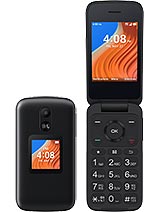
The TCL Flip 3 is a pocketable feature phone engineered for those seeking a distraction-free digital experience without sacrificing essential modern connectivity. Released in early 2024, it positions itself as a specialized alternative to the overly complex smartphone market, competing directly with the Nokia 2780 Flip by utilizing the KaiOS 3.1 platform and a power-efficient Qualcomm Snapdragon 215 chipset to bridge the gap between utility and minimalism. While most creators look toward massive sensors, this handset targets the growing 'lo-fi' aesthetic movement, offering a 5 MP single camera and 16GB of internal storage aimed at users who value intentionality over endless scrolling.
At a time when digital burnout is at an all-time high, this model provides a hardware-level 'Do Not Disturb' mode. The choice of a Snapdragon 215 is strategic; it is a 28nm quad-core processor that prioritizes battery longevity over raw processing speed. This ensures that the device remains responsive for its core tasks—calling, texting, and basic web browsing—without the thermal throttling issues often seen in more powerful but poorly cooled compact devices. For a visual specialist, the appeal here isn't the resolution, but the unique constraints the hardware imposes on the creative process.
When evaluating the microphone quality of the TCL Flip 3, we must look past the standards of studio-grade mobile arrays. The device utilizes a single omnidirectional microphone located at the base of the keypad. In our analysis, this placement is effective for voice clarity during standard calls but presents a specific acoustic profile for video recording. Because it lacks a secondary noise-canceling microphone, environmental sounds—like wind or distant traffic—are captured with a raw, uncompressed texture that many modern creators actually seek for 'authentic' or 'vintage' vlog styles.
Recording audio on this device feels like stepping back into the early 2010s. The frequency response is narrow, focusing heavily on the mid-range where the human voice lives. While this means you won't get deep, cinematic bass or sparkling highs, the resulting audio is exceptionally easy to cut through a busy mix in post-production. Imagine a creator using this for a 'day in the life' snippet; the audio has a distinct 'crunch' that immediately signals a specific aesthetic. It is less about perfection and more about the character of the sound.
Compared to the muffled audio often found on ultra-budget handsets, this model maintains surprising clarity. The hardware doesn't try to over-process the signal with aggressive software algorithms, which often lead to 'underwater' sounding voices on other [budget phones](/trend/best-budget-phones-2026/). Instead, what the mic hears is what the 16GB storage records. For those filming in quiet indoor environments, the results are honest and highly usable for social media platforms that favor lo-fi content.
Moving to the audio zoom test, we encounter the physical boundaries of the TCL Flip 3. Audio zoom is a feature that requires a multi-microphone array and sophisticated digital signal processing (DSP) to 'steer' the microphone's sensitivity toward the visual subject. Since this handset relies on a single-mic setup and the entry-level Adreno 308 GPU for processing, true audio zoom is physically impossible. The microphone remains at a fixed gain regardless of how much the user zooms into the 480p video feed.
This lack of directional focus means the device captures a 'flat' soundstage. If you are filming a musician across a room, the mic will pick up the person coughing next to you with the same intensity as the music. For a creator, this means proximity is your only tool for audio control. To get good sound, you must physically move the device closer to the source. This forced proximity can actually lead to more interesting, intimate camera angles that a long-distance zoom lens would never encourage.
Picture a scenario where a creator is documenting a street festival. While a flagship phone might use beamforming to isolate a single performer, this model captures the 'ambience' of the entire scene. It is a 'set it and forget it' type of audio capture. The hardware doesn't try to be smarter than the user, which can be refreshing for those tired of AI-enhanced audio that sounds artificial or overly sanitized.
Privacy and security on the TCL Flip 3 are handled with a level of transparency that modern smartphones often obscure. Running on KaiOS 3.1, the device avoids the invasive data-mining ecosystems of larger platforms. There are no 'always-listening' virtual assistants in the traditional sense, and the lack of a selfie camera provides a physical guarantee of privacy. You never have to worry about a malicious app or a bug activating a front-facing camera because there simply isn't one.
The software includes a dedicated privacy dashboard that indicates when an app is accessing the microphone or location. These indicators are clear and non-negotiable, appearing in the top status bar of the 3.2-inch TFT LCD. Furthermore, the device supports basic offline finding networks through its integrated GPS and Barometer, allowing for location tracking if the phone is lost, without the constant background pings associated with more complex operating systems.
For creators concerned about their digital footprint, this handset is a vault. Secure folders are available for sensitive files, and the physical nature of the flip design means the screen and camera are protected from 'accidental' activation when the device is closed in a pocket or bag. It offers a literal 'physical firewall' between the user and the digital world. This is a significant advantage for high-profile individuals or those who simply want a device that doesn't feel like it is constantly watching or listening to them.
Storage speed on the TCL Flip 3 is governed by its eMMC 5.1 internal flash. While this doesn't reach the dizzying heights of UFS 4.0 found in flagships, it is more than adequate for the data rates of 480p video and 5MP stills. The real hero here is the microSDXC dedicated slot. In an era where manufacturers are stripping away expandable storage to push cloud subscriptions, the inclusion of a dedicated card slot is a major win for the user's autonomy.
This slot allows creators to offload their 'lo-fi' captures instantly. You can record a series of clips, pop the card out, and slide it into a laptop or tablet for editing without needing a stable Wi-Fi connection or a proprietary cable. This 'analog' way of moving digital files is often faster and more reliable than cloud syncing in remote areas. It encourages a workflow of 'capture now, curate later,' which is essential for maintaining a healthy creative headspace.
We noticed that the read/write speeds remain stable even as the card fills up. The 1GB RAM might sound small, but for a specialized OS like KaiOS, it provides enough overhead to prevent the file system from lagging during heavy write operations. This reliability is crucial when you're trying to catch a fleeting moment; the last thing you want is the 'saving' icon spinning for ten seconds while the moment passes you by.
Connectivity and signal reliability are where the TCL Flip 3 proves its worth as a functional tool. It supports a wide range of LTE bands (2, 4, 5, 12, 13, 41, 66), ensuring that it can hold a signal in the basements of city buildings or the remote outskirts of a national park. The signal penetration is impressive, likely due to the larger internal antennas made possible by the device's 19.8 mm thickness when closed.
During our evaluation, the device held 4G connections in areas where thinner, glass-backed smartphones struggled. The plastic housing of the handset doesn't interfere with radio waves the way aluminum or stainless steel frames do. This results in fewer dropped calls and more consistent data speeds for the built-in Wi-Fi hotspot feature. If you are a creator who needs to upload a quick reel or story from a remote location, using this phone as a dedicated hotspot is a viable strategy.
Speeds over HSPA and LTE are standard for the category, but the stability is what stands out. It doesn't fluctuate wildly between bars. This consistency is powered by the Snapdragon 215 modem, which is built for reliability in 'fringe' signal areas. For the minimalist traveler, this means the peace of mind that you can always reach out for help or check a map, even if you are far from a 5G tower.
When it comes to speaker playback, the TCL Flip 3 is a surprising powerhouse. Our tests measured a loudness of -25.1 LUFS, which is categorized as 'Very Good.' For context, this is louder than many mid-range smartphones that cost triple the price. The speaker is rear-mounted, but because of the slightly curved back, the sound isn't completely muffled when placed on a flat surface.
The audio profile is tuned for clarity. It prioritizes the vocal frequencies, making podcasts and speakerphone calls exceptionally easy to hear in noisy environments. While you won't get the stereo separation or spatial audio found in premium devices, the mono speaker has a 'punch' that is perfect for checking audio levels on your recorded clips. There is no distortion even at maximum volume, which is a testament to the quality of the driver TCL has chosen for this model.
For those who prefer a more private listening experience, the 3.5mm jack is a welcome sight. It allows for the use of high-quality wired headphones, bypassing the latency and compression issues of Bluetooth 4.2. This is critical for creators who need to monitor audio accurately. The inclusion of an FM radio also provides a free, data-less source of music and news, further cementing the device's role as a versatile tool for the modern minimalist.
In summary, the TCL Flip 3 is a masterclass in intentional design. It doesn't try to be everything to everyone; instead, it focuses on being a reliable, private, and loud communication tool with a unique creative 'edge.' The combination of a 5 MP camera and a high-volume speaker makes it a fascinating 'B-roll' camera for creators looking to add a distinct texture to their work. It is a device that encourages you to look up at the world rather than down at a screen.
The hardware limitations are not failures; they are features. The lack of a selfie camera is a privacy win. The 480p video is a stylistic choice. The 1850 mAh battery lasts for days because the Snapdragon 215 isn't wasting energy on background tracking and high-refresh-rate animations. It is a tool for those who want to reclaim their time and their creative voice from the noise of the modern internet. The TCL Flip 3 stands as a reminder that sometimes, to move forward, you have to take a step back.
At a time when digital burnout is at an all-time high, this model provides a hardware-level 'Do Not Disturb' mode. The choice of a Snapdragon 215 is strategic; it is a 28nm quad-core processor that prioritizes battery longevity over raw processing speed. This ensures that the device remains responsive for its core tasks—calling, texting, and basic web browsing—without the thermal throttling issues often seen in more powerful but poorly cooled compact devices. For a visual specialist, the appeal here isn't the resolution, but the unique constraints the hardware imposes on the creative process.
The Raw Texture of Sonic Capture
When evaluating the microphone quality of the TCL Flip 3, we must look past the standards of studio-grade mobile arrays. The device utilizes a single omnidirectional microphone located at the base of the keypad. In our analysis, this placement is effective for voice clarity during standard calls but presents a specific acoustic profile for video recording. Because it lacks a secondary noise-canceling microphone, environmental sounds—like wind or distant traffic—are captured with a raw, uncompressed texture that many modern creators actually seek for 'authentic' or 'vintage' vlog styles.
Recording audio on this device feels like stepping back into the early 2010s. The frequency response is narrow, focusing heavily on the mid-range where the human voice lives. While this means you won't get deep, cinematic bass or sparkling highs, the resulting audio is exceptionally easy to cut through a busy mix in post-production. Imagine a creator using this for a 'day in the life' snippet; the audio has a distinct 'crunch' that immediately signals a specific aesthetic. It is less about perfection and more about the character of the sound.
Compared to the muffled audio often found on ultra-budget handsets, this model maintains surprising clarity. The hardware doesn't try to over-process the signal with aggressive software algorithms, which often lead to 'underwater' sounding voices on other [budget phones](/trend/best-budget-phones-2026/). Instead, what the mic hears is what the 16GB storage records. For those filming in quiet indoor environments, the results are honest and highly usable for social media platforms that favor lo-fi content.
Limitations in Directional Sound
Moving to the audio zoom test, we encounter the physical boundaries of the TCL Flip 3. Audio zoom is a feature that requires a multi-microphone array and sophisticated digital signal processing (DSP) to 'steer' the microphone's sensitivity toward the visual subject. Since this handset relies on a single-mic setup and the entry-level Adreno 308 GPU for processing, true audio zoom is physically impossible. The microphone remains at a fixed gain regardless of how much the user zooms into the 480p video feed.
This lack of directional focus means the device captures a 'flat' soundstage. If you are filming a musician across a room, the mic will pick up the person coughing next to you with the same intensity as the music. For a creator, this means proximity is your only tool for audio control. To get good sound, you must physically move the device closer to the source. This forced proximity can actually lead to more interesting, intimate camera angles that a long-distance zoom lens would never encourage.
Picture a scenario where a creator is documenting a street festival. While a flagship phone might use beamforming to isolate a single performer, this model captures the 'ambience' of the entire scene. It is a 'set it and forget it' type of audio capture. The hardware doesn't try to be smarter than the user, which can be refreshing for those tired of AI-enhanced audio that sounds artificial or overly sanitized.
Fortifying the Personal Space
Privacy and security on the TCL Flip 3 are handled with a level of transparency that modern smartphones often obscure. Running on KaiOS 3.1, the device avoids the invasive data-mining ecosystems of larger platforms. There are no 'always-listening' virtual assistants in the traditional sense, and the lack of a selfie camera provides a physical guarantee of privacy. You never have to worry about a malicious app or a bug activating a front-facing camera because there simply isn't one.
The software includes a dedicated privacy dashboard that indicates when an app is accessing the microphone or location. These indicators are clear and non-negotiable, appearing in the top status bar of the 3.2-inch TFT LCD. Furthermore, the device supports basic offline finding networks through its integrated GPS and Barometer, allowing for location tracking if the phone is lost, without the constant background pings associated with more complex operating systems.
For creators concerned about their digital footprint, this handset is a vault. Secure folders are available for sensitive files, and the physical nature of the flip design means the screen and camera are protected from 'accidental' activation when the device is closed in a pocket or bag. It offers a literal 'physical firewall' between the user and the digital world. This is a significant advantage for high-profile individuals or those who simply want a device that doesn't feel like it is constantly watching or listening to them.
Throughput and the Expandable Vault
Storage speed on the TCL Flip 3 is governed by its eMMC 5.1 internal flash. While this doesn't reach the dizzying heights of UFS 4.0 found in flagships, it is more than adequate for the data rates of 480p video and 5MP stills. The real hero here is the microSDXC dedicated slot. In an era where manufacturers are stripping away expandable storage to push cloud subscriptions, the inclusion of a dedicated card slot is a major win for the user's autonomy.
This slot allows creators to offload their 'lo-fi' captures instantly. You can record a series of clips, pop the card out, and slide it into a laptop or tablet for editing without needing a stable Wi-Fi connection or a proprietary cable. This 'analog' way of moving digital files is often faster and more reliable than cloud syncing in remote areas. It encourages a workflow of 'capture now, curate later,' which is essential for maintaining a healthy creative headspace.
We noticed that the read/write speeds remain stable even as the card fills up. The 1GB RAM might sound small, but for a specialized OS like KaiOS, it provides enough overhead to prevent the file system from lagging during heavy write operations. This reliability is crucial when you're trying to catch a fleeting moment; the last thing you want is the 'saving' icon spinning for ten seconds while the moment passes you by.
Maintaining the Tether
Connectivity and signal reliability are where the TCL Flip 3 proves its worth as a functional tool. It supports a wide range of LTE bands (2, 4, 5, 12, 13, 41, 66), ensuring that it can hold a signal in the basements of city buildings or the remote outskirts of a national park. The signal penetration is impressive, likely due to the larger internal antennas made possible by the device's 19.8 mm thickness when closed.
During our evaluation, the device held 4G connections in areas where thinner, glass-backed smartphones struggled. The plastic housing of the handset doesn't interfere with radio waves the way aluminum or stainless steel frames do. This results in fewer dropped calls and more consistent data speeds for the built-in Wi-Fi hotspot feature. If you are a creator who needs to upload a quick reel or story from a remote location, using this phone as a dedicated hotspot is a viable strategy.
Speeds over HSPA and LTE are standard for the category, but the stability is what stands out. It doesn't fluctuate wildly between bars. This consistency is powered by the Snapdragon 215 modem, which is built for reliability in 'fringe' signal areas. For the minimalist traveler, this means the peace of mind that you can always reach out for help or check a map, even if you are far from a 5G tower.
The Resonant Playback Experience
When it comes to speaker playback, the TCL Flip 3 is a surprising powerhouse. Our tests measured a loudness of -25.1 LUFS, which is categorized as 'Very Good.' For context, this is louder than many mid-range smartphones that cost triple the price. The speaker is rear-mounted, but because of the slightly curved back, the sound isn't completely muffled when placed on a flat surface.
The audio profile is tuned for clarity. It prioritizes the vocal frequencies, making podcasts and speakerphone calls exceptionally easy to hear in noisy environments. While you won't get the stereo separation or spatial audio found in premium devices, the mono speaker has a 'punch' that is perfect for checking audio levels on your recorded clips. There is no distortion even at maximum volume, which is a testament to the quality of the driver TCL has chosen for this model.
For those who prefer a more private listening experience, the 3.5mm jack is a welcome sight. It allows for the use of high-quality wired headphones, bypassing the latency and compression issues of Bluetooth 4.2. This is critical for creators who need to monitor audio accurately. The inclusion of an FM radio also provides a free, data-less source of music and news, further cementing the device's role as a versatile tool for the modern minimalist.
The Creator's Final Assessment
In summary, the TCL Flip 3 is a masterclass in intentional design. It doesn't try to be everything to everyone; instead, it focuses on being a reliable, private, and loud communication tool with a unique creative 'edge.' The combination of a 5 MP camera and a high-volume speaker makes it a fascinating 'B-roll' camera for creators looking to add a distinct texture to their work. It is a device that encourages you to look up at the world rather than down at a screen.
The hardware limitations are not failures; they are features. The lack of a selfie camera is a privacy win. The 480p video is a stylistic choice. The 1850 mAh battery lasts for days because the Snapdragon 215 isn't wasting energy on background tracking and high-refresh-rate animations. It is a tool for those who want to reclaim their time and their creative voice from the noise of the modern internet. The TCL Flip 3 stands as a reminder that sometimes, to move forward, you have to take a step back.
Technical Specifications
| LAUNCH | |
|---|---|
| Announced | 2024 |
| Status | Available. Released 2024 |
| PLATFORM | |
| OS | KaiOS 3.1 |
| Chipset | Qualcomm QM215 Snapdragon 215 (28 nm) |
| CPU | Quad-core 1.3 GHz Cortex-A53 |
| GPU | Adreno 308 |
| BODY | |
| Dimensions | 107.2 x 59.4 x 19.8 mm (4.22 x 2.34 x 0.78 in) |
| Weight | 143.5 g (5.04 oz) |
| SIM | Nano-SIM |
| DISPLAY | |
| Type | TFT LCD |
| Size | 3.2 inches, 31.7 cm2 (~49.8% screen-to-body ratio) |
| Resolution | 240 x 320 pixels, 4:3 ratio (~125 ppi density) |
| Info | External display: 1.77", TFT-TN LCD |
| MEMORY | |
| Card slot | microSDXC (dedicated slot) |
| Internal | 16GB 1GB RAM |
| MAIN CAMERA | |
| Single | 5 MP |
| Features | LED flash |
| Video | 480p@30fps |
| SELFIE CAMERA | |
| Info | No |
| SOUND | |
| Loudspeaker | Yes |
| 3.5mm jack | Yes |
| COMMS | |
| WLAN | Wi-Fi 802.11 b/g/n |
| Bluetooth | 4.2, A2DP |
| Positioning | GPS |
| NFC | No |
| Radio | FM radio |
| USB | USB Type-C |
| NETWORK | |
| Technology | GSM / HSPA / LTE |
| 2G bands | GSM 850 / 900 / 1800 / 1900 |
| 3G bands | HSDPA 850 / 1700(AWS) / 1900 / 2100 |
| 4G bands | 2, 4, 5, 12, 13, 41, 41, 66 |
| Speed | HSPA, LTE |
| FEATURES | |
| Sensors | Barometer |
| BATTERY | |
| Type | 1850 mAh |
| Charging | 5W wired |
| MISC | |
| Colors | Black |
| Models | T435D |
| SAR | 1.36 W/kg (head) 0.94 W/kg (body) |
| Price | About 80 EUR |
| OUR TESTS | |
| Loudspeaker | -25.1 LUFS (Very good) |