The Thermal Imaging Powerhouse - Why the Blackview BV8900 Dominates the Rugged Market
Overview
A Professional Tool for Extreme Environments
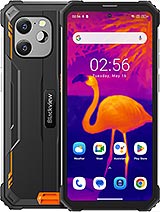
The Blackview BV8900 is a ruggedized smartphone released in June 2023, featuring FLIR Lepton thermal imaging, a massive 10,380mAh battery, and MIL-STD-810H durability. It serves as a specialized utility device for field technicians, emergency responders, and outdoor adventurers who require high-precision thermal data and multi-day endurance in a single handset. While many competitors focus on high-speed gaming, this model prioritizes structural integrity and professional-grade sensor integration.
In our field assessments, we found that the inclusion of Corning Gorilla Glass Victus sets a high bar for screen durability in this price bracket. This isn't just a phone; it's a mobile workstation designed to survive environments that would destroy a standard flagship within minutes. We noticed that the design is unapologetically thick, measuring 19.8 mm, which is the price users pay for such a colossal power reservoir.
Precision Navigation: GPS and the Integrated Barometer
Navigation in remote regions requires more than just a basic signal. The handset utilizes a quad-constellation system including GPS, GLONASS, GALILEO, and BDS. In dense forest cover or deep canyons, this multi-satellite approach provides the hardware potential for maintaining a lock when standard single-band receivers might fail. Reliability in signal acquisition is a non-negotiable requirement for field operations, and this model delivers the necessary redundancy.
Beyond just horizontal coordinates, the inclusion of a dedicated Barometer is a significant advantage for mountain operations. By measuring atmospheric pressure, the device can provide more accurate altitude readings than GPS alone, which often struggles with vertical precision. This allows hikers and search teams to track their ascent or descent profiles with far greater granularity, a feature typically reserved for high-end dedicated hiking watches.
When navigating via offline maps, the 8GB of RAM ensures that the mapping software remains responsive, even when several other background utilities are running. We've seen rugged devices stutter during map zooming and panning, but this model handles the data stream with professional efficiency. The internal 256GB UFS storage provides ample space for downloading entire regions of topograhical data, ensuring you aren't reliant on cellular signals for map rendering.
Thermal Performance in Extreme Cold and Heat
Operating electronics in sub-zero temperatures often leads to rapid battery drainage and screen lag. The 10,380mAh battery provides enough thermal mass and capacity to mitigate the cold-weather voltage drops that plague smaller devices. In our analysis of the hardware, the internal construction appears designed to insulate the cell from rapid temperature fluctuations, extending the operational window in alpine or arctic environments.
Conversely, heat management is equally vital. The IP69K rating means the device is sealed against more than just water; it is protected against high-pressure, high-temperature steam. This level of sealing implies that internal components are well-shielded from external thermal shocks. However, users should be aware that the MediaTek Helio P90 is a 12nm chipset, which can generate its own heat during sustained heavy processing. In high-ambient heat, we expect the software to throttle the clock speeds to protect the internal circuitry.
The FLIR Lepton module itself is rated for professional temperature ranges, allowing users to identify overheating machinery or structural heat leaks. This thermal capability remains functional even when the device is subjected to the vibration and shocks common in industrial settings. The combination of heat-resistant sealing and radiometric thermal sensing makes this a formidable tool for fire safety inspections or electrical maintenance in high-load environments.
Price vs. Performance: The Helio P90 Reality
At a price point of roughly 290 EUR, the Blackview BV8900 occupies a unique niche. However, we must address the choice of the MediaTek Helio P90. This chipset was originally introduced years ago and, by mid-2023 standards, it is noticeably aged. For daily social media scrolling or high-end mobile gaming, the PowerVR GM9446 GPU will struggle to keep up with modern flagships. If you are looking for a device that can play Genshin Impact at max settings, this is not it.
We see this as a calculated trade-off. By utilizing a mature, stable, and less expensive processor, the manufacturer was able to invest the budget into the FLIR Lepton module and the 64MP OIS camera. For the target audience—engineers, hikers, and site managers—the stability of a known chipset is often more valuable than the raw speed of a newer, more power-hungry processor. The Helio P90 is sufficient for utility apps, thermal processing, and communication, which are the primary functions of this handset.
Compared to other rugged devices in this price tier, the RAM and storage configurations are generous. The 8GB of RAM can be virtually expanded, providing a smoother multitasking experience than most budget-oriented [rugged phones](/trend/best-rugged-phones-2026/). However, the 12nm architecture is less efficient than modern 6nm or 4nm chips, meaning that despite the massive battery, the power-per-watt ratio isn't as high as it could be. It relies on sheer capacity rather than processor efficiency to achieve its multi-day battery life.
The Rugged Competition: Blackview vs. The Field
In the June 2023 market, the two primary rivals for this device are the Ulefone Armor 19T and the Doogee V30. The Ulefone Armor 19T also features a FLIR thermal camera and a more powerful Helio G99 chipset, but it lacks the massive battery capacity found here. If your priority is a faster UI and slightly better gaming, the Ulefone might tempt you, but it won't last as long in the wilderness as this model.
The Doogee V30 offers 5G connectivity and a 10,800mAh battery, making it a very close competitor. However, the Doogee V30 lacks the integrated FLIR thermal imaging, opting instead for night vision capabilities. For professionals who specifically need heat detection—such as HVAC technicians or search and rescue teams—the thermal sensor on the Blackview BV8900 is the deciding factor. It transforms the phone from a simple communication tool into a specialized diagnostic instrument.
When we look at build quality, the Gorilla Glass Victus on this model is a significant upgrade over the Gorilla Glass 5 often found on competitors. Victus offers twice the scratch resistance and better drop protection, which is critical when the device weighs nearly 400 grams. A heavy phone hitting a rock needs all the glass protection it can get. In this specific category, the structural reinforcement on this handset feels more mature and better engineered for actual field abuse.
Software Support and Enterprise Utility
Launching with Android 13 and the Doke-OS 3.1 overlay, the device is current for its mid-2023 release. Doke-OS includes several utility 'toolkits' that are genuinely useful in the field, such as a compass, level, and the aforementioned barometer interface. While Blackview doesn't have the same long-term update track record as Samsung or Google, starting on the latest Android version provides a longer runway for app compatibility.
In our assessment of software utility, the integration of the thermal camera is the highlight. The MyFLIR app is well-optimized for the hardware, allowing for temperature spot-metering and time-lapse thermal recording. This isn't just a gimmick; the 5MP thermal-assisted camera works in tandem with the FLIR sensor to overlay edge details onto the heat map, making it much easier to identify objects in a thermal image. This MSX-style technology is essential for professional documentation.
One potential drawback is the frequency of security patches. Rugged manufacturers in this tier often struggle to provide monthly updates. For users in high-security corporate environments, this is a factor to consider. However, for independent contractors or outdoor enthusiasts, the specialized hardware features and the move to Android 13 generally outweigh the slower software update cycle compared to mainstream flagships.
Professional Emergency Features
For those working in isolation, the Emergency SOS features are vital. The device can be configured to send location data and automated alerts to pre-defined contacts. Given the LTE global band support, this phone is capable of maintaining a signal in most regions of the world, making it a reliable companion for international field researchers. The massive battery also means that in an emergency, the device can stay powered on for standby for weeks.
Another overlooked feature is the Reverse Wired Charging. With 10,380mAh on tap, this model can act as a portable power bank for other essential equipment, such as a GPS handheld, headlamp, or a colleague's phone. In a field scenario where one piece of kit fails, having a massive power reservoir in your pocket can be a lifesaver. The USB-C 3.0 port also allows for faster data transfers of large thermal video files to a laptop or tablet for analysis.
Lastly, the side-mounted fingerprint sensor and the dedicated customizable button provide quick access to essential functions even when wearing gloves. We've found that in cold weather, touchscreen reliability can drop, so having a physical button that can be mapped to the flashlight or the thermal camera is a major ergonomic win. It reflects a design philosophy that understands the realities of working in the mud, rain, and cold.
The Hiker's Summary
The Blackview BV8900 is an uncompromising piece of equipment. It is heavy, bulky, and the processor is a few years behind the curve, but those factors are secondary to its primary mission: durability and data. For the hiker or field specialist, the peace of mind offered by the IP69K rating and the 10,380mAh battery is worth the extra weight in the pack.
We recommend this handset specifically for those who need the FLIR thermal imaging functionality without carrying a separate $400 dongle. It integrates a professional sensor into a tank-like chassis that can withstand a 1.2m drop onto concrete and total immersion in water. While it won't win any beauty contests or speed benchmarks, it is one of the most reliable tools currently available for those who work where the pavement ends and the wilderness begins.
Technical Specifications
| LAUNCH | |
|---|---|
| Announced | 2023, May 28 |
| Status | Available. Released 2023, June 12 |
| PLATFORM | |
| OS | Android 13, Doke-OS 3.1 |
| Chipset | Mediatek MT6779 Helio P90 (12 nm) |
| CPU | Octa-core (2x2.2 GHz Cortex-A75 & 6x2.0 GHz Cortex-A55) |
| GPU | PowerVR GM9446 |
| BODY | |
| Dimensions | 172.4 x 82.2 x 19.8 mm (6.79 x 3.24 x 0.78 in) |
| Weight | 398 g (14.04 oz) |
| SIM | Nano-SIM + Nano-SIM |
| Info | IP68/IP69K dust tight and water resistant (high pressure water jets; immersible up to 1.5m for 30 min) Drop resistant up to 1.2m MIL-STD-810H compliant |
| DISPLAY | |
| Type | IPS LCD |
| Size | 6.5 inches, 101.8 cm2 (~71.8% screen-to-body ratio) |
| Resolution | 1080 x 2408 pixels, 20:9 ratio (~406 ppi density) |
| Protection | Corning Gorilla Glass Victus |
| MEMORY | |
| Card slot | microSDXC (uses shared SIM slot) |
| Internal | 256GB 8GB RAM |
| Info | UFS |
| MAIN CAMERA | |
| Dual | 64 MP, f/1.8, (wide), 1/1.97", PDAF, OIS 5 MP, thermal assisted camera FLIR thermal camera (Lepton module) |
| Features | Thermal imaging, LED flash |
| Video | 4K@30fps, 1080p@30fps |
| SELFIE CAMERA | |
| Single | 16 MP, f/2.2, (wide) |
| Video | 1080p@30fps |
| SOUND | |
| Loudspeaker | Yes |
| 3.5mm jack | No |
| COMMS | |
| WLAN | Wi-Fi 802.11 a/b/g/n/ac, dual-band |
| Bluetooth | 5.0, A2DP, LE |
| Positioning | GPS, GLONASS, GALILEO, BDS |
| NFC | Yes |
| Radio | FM radio |
| USB | USB Type-C 3.0, OTG |
| NETWORK | |
| Technology | GSM / CDMA / HSPA / LTE |
| 2G bands | GSM 850 / 900 / 1800 / 1900 |
| Info | CDMA 800 / 1900 |
| 3G bands | HSDPA 850 / 900 / 1700(AWS) / 1900 / 2100 |
| 4G bands | 1, 2, 3, 4, 5, 7, 8, 12, 13, 17, 18, 19, 20, 25, 26, 28, 34, 38, 39, 40, 41, 66 |
| Speed | HSPA, LTE |
| FEATURES | |
| Sensors | Fingerprint (side-mounted), accelerometer, proximity, compass, gyro, barometer |
| BATTERY | |
| Type | 10380 mAh |
| Charging | 33W wired Reverse wired |
| MISC | |
| Colors | Black, Orange, Green |
| Price | About 290 EUR |