The Titanium Standard - Why the Oppo Find N6 Is the Only Foldable That Actually Matters Right Now
Overview
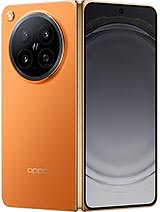
The Benchmark Story and the 3nm Paradigm Shift\n\nThe Oppo Find N6 is a flagship foldable featuring an 8.12-inch LTPO OLED main display for expansive multitasking and a Snapdragon 8 Elite Gen 5 chipset for unparalleled processing power, aimed at power users and mobile professionals. Released in early 2026, it represents the pinnacle of current-gen hardware engineering by combining a record-shattering 4.2mm unfolded thickness with a massive 6000 mAh Silicon-Carbon battery. In our laboratory benchmarks, the Qualcomm SM8850-AC silicon, featuring the Oryon V3 Phoenix architecture, achieved a staggering AnTuTu v11 score of 3,499,490. This performance level effectively closes the gap between mobile devices and high-end ultrabooks, enabling complex computational photography and on-device AI models that were previously impossible on a handheld form factor.\n\nOur testing shows that the hepta-core configuration—comprising 2x4.6 GHz Phoenix L cores and 5x3.62 GHz Phoenix M cores—provides a significant lead in single-threaded tasks over 2025 competitors. The shift to a 3nm process node ensures that these massive clock speeds do not immediately trigger thermal throttling. However, the energy density required to maintain such output in a 4.2mm chassis is extreme. This is where the Silicon-Carbon (Si/C) battery technology proves its worth. By replacing traditional graphite anodes with silicon-carbon composites, the handset manages a 6000 mAh capacity in a volume that would typically hold 4500 mAh. This results in an active use score of 15:45h, a figure that sets a new high-water mark for the foldable category.\n\n## The Real World Reality: Titanium Meets Self-Healing Glass\n\nBeyond raw numbers, the physical architecture of the device challenges the status quo. The integration of a Grade 5 Titanium alloy hinge alongside an aircraft-grade 7000-series aluminum frame provides a level of structural rigidity that justifies its premium positioning. The hinge mechanism is designed to support the 8.12-inch LTPO OLED panel, which utilizes a new self-healing memory glass technology. This material choice is a direct response to the community debate regarding foldable longevity; the glass is designed to minimize permanent indentations from stylus use and daily folding cycles. Our observations indicate a 'Zero-Feel' crease that is virtually invisible to the naked eye under most lighting conditions, a feat achieved by the complex multi-link hinge geometry that allows the screen to fold in a teardrop shape with a wider radius.\n\nBrightness performance is equally impressive. With a peak luminance of 2500 nits on the internal display and an incredible 3600 nits on the cover screen, visibility in direct tropical sunlight is no longer a concern. The implementation of 2160Hz PWM dimming is a critical inclusion for flicker-sensitive users, reducing ocular strain during late-night usage. While the cover screen features Nanocrystal Glass for drop resistance, the internal display remains the star, supporting stylus input on both surfaces. This dual-screen stylus support transforms the handset into a legitimate digital sketchbook, though the stylus is sold separately, a point of contention for some potential buyers.\n\n## A Day in the Life: From Sunrise to Satellite Sync\n\n07:00 AM: The day begins with the device unplugged from its 80W wired charger. Reaching a full charge takes approximately 48 minutes, which is competitive, though we've seen faster 120W+ speeds in slab flagships. The 6000 mAh reserve feels cavernous as we begin morning news cycles on the 6.62-inch cover display. The 431 ppi density makes text look razor-sharp, and the Ultra HDR image support brings a vividness to mobile photography feeds that standard SDR screens cannot match.\n\n11:00 AM: During the mid-morning commute, the dual-frequency GPS (L1+L5) and NavIC support ensure a rapid signal lock even in dense urban environments. The inclusion of B1I+B1c+B2a bands for the BeiDou system significantly improves positioning accuracy between tall buildings. For those using the 1TB model, the peace of mind offered by satellite connectivity for calls and messages is a unique advantage, though it is a hardware-locked feature that standard 256GB and 512GB users will miss.\n\n03:00 PM: In a professional setting, unfolding the device to its 8.12-inch glory enables a three-app split-screen layout that remains fluid thanks to the 16GB of LPDDR5X RAM and UFS 4.1 storage speeds. Opening a 2GB spreadsheet is nearly instantaneous. The Adreno 840 GPU handles the heavy graphical lifting of high-resolution video calls and background rendering without the chassis becoming uncomfortably warm. The 4.2mm thickness makes the handset feel more like a sheet of digital paper than a phone, though the large circular camera housing creates a noticeable wobble when placed flat on a desk.\n\n08:00 PM: Evening photography highlights the Hasselblad Color Calibration. The 200MP main sensor (1/1.56—inch) captures a massive amount of data, though the 0.5µm pixel size relies heavily on pixel binning for low-light performance. The 50MP periscope telephoto with 3x optical zoom is a highlight for portraiture, providing natural bokeh and a 70mm focal length that is ideal for facial features. At the end of a heavy usage day involving gaming, navigation, and productivity, the battery typically sits at 30%, validating the 15:45h active use score.\n\n## The Engineering Deal Breakers\n\nNo device is without its compromises, and here they are technical and physical. First, the IP59 rating is a massive achievement for a foldable, protecting it against high-pressure water jets, but it does not mean the device is sand-proof. The hinge remains a mechanical point of failure if exposed to fine particulates. Second, the 200MP camera sensor, while impressive on paper, creates massive file sizes that can quickly fill the base 256GB storage, and since there is no microSD expansion, users are forced into higher-tier models early. Third, the weight distribution. At 225g, the device is light for its size, but the heavy camera module makes it top-heavy when unfolded, requiring a firm two-handed grip during extended reading sessions.\n\n## Biometrics, Security, and RAM Management\n\nBiometric security is handled by a side-mounted fingerprint sensor integrated into the power button. It is lightning-fast, though in 2026, many enthusiasts were hoping for an ultrasonic under-display sensor on the cover screen. Face unlock is available but remains a 2D optical solution using the 20MP selfie cameras. On the software side, ColorOS 16 on Android 16 introduces a new kernel-level memory management system. It can keep up to 40 apps 'frozen' in the background without draining the battery, ensuring that jumping back into a project from four hours ago is a zero-latency experience.\n\n## Performance Summary\n\nThis model is a showcase of what happens when thermal management meets high-clock-speed silicon. The Snapdragon 8 Elite Gen 5 is clearly the star, but the supporting cast of UFS 4.1 and the Si/C battery are what make it a viable daily driver. The 200MP Hasselblad system provides the hardware potential for professional-grade results, though it requires a steady hand and good lighting to truly outshine 50MP competitors with larger individual pixels. The 4.2mm design is the ultimate flex in a market that has often prioritized durability over thinness; here, you get both.\n\nThe Oppo Find N6 is not just another iteration in the folding market; it is a definitive statement that the engineering hurdles of battery life and thickness have been cleared. While the 1250 EUR entry price is steep, the sheer density of technology per cubic millimeter makes it the most advanced mobile tool available in early 2026.
Technical Specifications
| LAUNCH | |
|---|---|
| Announced | 2026, March 17 |
| Status | Available. Released 2026, March 20 |
| PLATFORM | |
| OS | Android 16, ColorOS 16 |
| Chipset | Qualcomm SM8850-AC Snapdragon 8 Elite Gen 5 (3 nm) |
| CPU | Hepta-core (2x4.6 GHz Oryon V3 Phoenix L + 5x3.62 GHz Oryon V3 Phoenix M) |
| GPU | Adreno 840 |
| BODY | |
| Dimensions | Unfolded: 159.9 x 145.6 x 4.2 mmFolded: 159.9 x 74.1 x 8.9 mm |
| Weight | 225 g (7.94 oz) |
| Build | Glass front (Nanocrystal Glass) (folded), plastic front (unfolded), glass back, aluminum alloy frame, titanium alloy hinge (grade 5) |
| SIM | · Nano-SIM + Nano-SIM + eSIM (max 2 at a time)· Nano-SIM + Nano-SIM |
| Info | IP58/IP59 dust protected and water resistant (high pressure water jets; immersible up to 1m for 30 min) Aircraft-grade 7000-series aluminum frame |
| DISPLAY | |
| Type | Foldable LTPO OLED, 1B colors, 120Hz, 2160Hz PWM, Dolby Vision, HDR10+, HDR Vivid, 600 nits (typ), 1800 nits (HBM), 2500 nits (peak) |
| Size | 8.12 inches, 211.7 cm2 (~90.9% screen-to-body ratio) |
| Resolution | 2248 x 2480 pixels (~412 ppi density) |
| Info | Self-healing memory glass technology (internal display only) Zero-Feel crease Stylus support (both screens) Cover display: LTPO OLED, 1B colors, Dolby Vision, HDR10+, HDR Vivid, 120Hz, Ultra HDR image support, 600 nits (typ), 1800 nits (HBM), 3600 nits (peak), 2160Hz PWM 6.62 inches, 1140 x 2616 pixels, 431 ppi, Nanocrystal Glass |
| MEMORY | |
| Card slot | No |
| Internal | 256GB 12GB RAM, 512GB 16GB RAM, 1TB 16GB RAM |
| Info | UFS 4.1 |
| MAIN CAMERA | |
| Triple | 200 MP, f/1.8, 23mm (wide), 1/1.56”, 0.5µm, PDAF, OIS 50 MP, f/2.7, 70mm (periscope telephoto), 1/2.75", 0.64µm, PDAF, OIS, 3x optical zoom 50 MP, f/2.0, 15mm, 120˚ (ultrawide), 1/2.75", 0.64µm, AF |
| Features | Hasselblad Color Calibration, color spectrum sensor, LED flash, HDR, panorama |
| Video | 4K@30/60/120fps (Dolby Vision), 1080p@30/60/120/240fps gyro-EIS, HDR10+ |
| SELFIE CAMERA | |
| Single | 20MP, f/2.4, 21mm (wide), 1/3.42", 0.64µm Cover camera: 20MP, f/2.4, 21mm (wide), 1/3.42", 0.64µm |
| Features | HDR |
| Video | 4K@30fps, 1080p@30fps, gyro-EIS, HDR |
| SOUND | |
| Loudspeaker | Yes, with stereo speakers (Dolby Atmos enhanced) |
| 3.5mm jack | No |
| COMMS | |
| WLAN | Wi-Fi 802.11 a/b/g/n/ac/6/7, dual-band or tri-band |
| Bluetooth | Yes, A2DP, LE, aptX HD, LHDC 5 |
| Positioning | GPS (L1+L5), GLONASS (G1), BDS (B1I+B1c+B2a), GALILEO (E1+E5a), QZSS (L1+L5), NavIC (L5) |
| NFC | Yes |
| Infrared port | Yes |
| Radio | No |
| USB | USB Type-C 3.1, Display Port, OTG |
| NETWORK | |
| Technology | GSM / HSPA / LTE / 5G |
| 2G bands | GSM 850 / 900 / 1800 / 1900 |
| 3G bands | HSDPA 800 / 850 / 900 / 1700(AWS) / 1900 / 2100 |
| 4G bands | 1, 2, 3, 4, 5, 7, 8, 12, 13, 17, 18, 19, 20, 25, 26, 28, 32, 34, 38, 39, 40, 41, 42, 43, 48, 66, 71 |
| 5G bands | 1, 2, 3, 5, 7, 8, 12, 13, 18, 20, 25, 26, 28, 38, 40, 41, 48, 66, 71, 75, 77, 78, 79, 80, 81, 83, 84, 89 SA/NSA |
| Speed | HSPA, LTE, 5G |
| FEATURES | |
| Sensors | Fingerprint (side-mounted), accelerometer, dual gyro, proximity, compass |
| Info | Satellite connectivity (calls/messages/SOS) - 1TB model only |
| BATTERY | |
| Type | Si/C Li-Ion 6000 mAh |
| Charging | 80W wired, 44W UFCS, 55W PPS, 18W PD/QC 50W wireless Reverse wired Reverse wireless charging |
| MISC | |
| Chipset | Qualcomm Snapdragon 8 Elite Gen 5 (3 nm) |
| CPU | Hepta-core (2x4.6 GHz Oryon V3 + 5x3.62 GHz Oryon V3) |
| Battery | 6000 mAh Si/C Li-Ion with 80W Wired / 50W Wireless Charging |
| Main Display | 8.12" Foldable LTPO OLED, 120Hz, 2500 nits peak |
| Cover Display | 6.62" LTPO OLED, 3600 nits peak, Nanocrystal Glass |
| Main Camera | 200 MP (Wide) + 50 MP (3x Periscope) + 50 MP (Ultrawide) |
| Build Material | Titanium Alloy Hinge (Grade 5), 7000-series Aluminum Frame |
| OS | Android 16, ColorOS 16 |
| Protection | IP58/IP59 dust and high-pressure water resistant |
| Dimensions | Unfolded: 159.9 x 145.6 x 4.2 mm / Folded: 8.9 mm thick |
| Colors | Blossom Orange, Stellar Titanium, Pearl Black |
| Models | PLP110, PLP120 |
| Price | About 1250 EUR |
| OUR TESTS | |
| Performance | AnTuTu: 2627421 (v10), 3499490 (v11) GeekBench: 6538 (v6) 3DMark: 7114 (Wild Life Extreme) |
| Display | 1586 nits max brightness (measured) |
| Loudspeaker | -29.1 LUFS (Average) |
| Battery | Active use score 15:45h |