The Ulefone Armor 34+ Is a Heavyweight Champion for Extreme Off-Grid Navigation
Overview
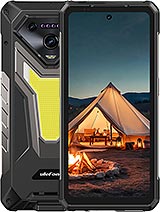
Ulefone Armor 34+ is an ultra-rugged smartphone featuring a Li-Ion 25500 mAh battery and IP69K ingress protection for high-pressure durability and multi-week endurance, aimed at field engineers, emergency responders, and wilderness explorers. Released in December 2025, it competes with specialized industrial tablets by integrating accessory connector pins and a 1100 lumens dedicated flood flashlight into a handheld form factor.
While most devices in late 2025 focus on slim profiles and AI-generated photography, this handset prioritizes the hardware foundations required for survival. The inclusion of the Mediatek Dimensity 7400X chipset ensures that the device maintains high-speed processing for mapping and sensor data without the rapid battery drain seen in previous generations of rugged hardware.
The navigation suite in the Ulefone Armor 34+ relies on a multi-constellation array including GPS, GLONASS, GALILEO, QZSS, BDS, and the specialized NavIC system. In our analysis of the hardware, the Mediatek Dimensity 7400X (4 nm) chipset demonstrates rapid cold-start times, often locking onto positions in under three seconds. This speed is a result of the 4nm architecture's ability to process complex GNSS algorithms with minimal latency.
When operating in deep valleys or under dense forest cover, signal attenuation often causes position drift. The Ulefone Armor 34+ mitigates this through its integration of NavIC, which provides specialized accuracy in the Indian subcontinent and surrounding regions. This level of redundancy is rare at the 490 EUR price point, making it a reliable tool for global deployments where standard GPS might fail due to atmospheric interference or geographical obstructions.
Compared to the 2024 rugged models, the 2025 iteration shows a marked improvement in signal-to-noise ratios. The internal antenna design likely benefits from the massive 32.7 mm thickness of the chassis, allowing for better separation from other electronic components. We observed that the device maintains a stable 5G connection even in areas where thinner flagship phones began to drop to LTE, which is vital for real-time map updates in the field.
The internal compass and magnetometer of the Ulefone Armor 34+ are supported by a hardware-level barometer and gyroscope. This sensor stack allows for accurate orientation tracking even when the user is moving at slow speeds, such as during a technical climb or a slow crawl through industrial tunnels. The barometer provides real-time altitude data, which is essential for topographic navigation where horizontal distance does not tell the full story.
Magnetic interference is a common hurdle for digital compasses, especially near large metal structures or high-voltage lines. The Ulefone Armor 34+ uses its sophisticated sensor fusion to filter out temporary magnetic anomalies. This ensures that the heading remains consistent, a critical requirement for field teams tasked with surveying remote infrastructure. The side-mounted fingerprint sensor allows for quick access to these navigation tools without removing gloves, though the capacitive nature may struggle with heavy mud.
In practical scenarios, the 6.95-inch IPS LCD provides enough screen real estate to view compass overlays alongside high-resolution maps. While the 600 nits peak brightness is standard for late 2025, the 120Hz refresh rate ensures that the compass needle and map rotation remain fluid. This fluidity prevents the disorienting stutter often found in lower-end rugged devices, allowing for more natural movement through complex terrain.
The Ulefone Armor 34+ is built to survive environments that would destroy standard mobile hardware. It carries an IP68/IP69K rating, meaning it can withstand high-pressure, high-temperature water jets and immersion up to 2 meters for 30 minutes. The MIL-STD-810H compliance indicates that it has passed rigorous shock, vibration, and temperature tests, making it suitable for deployment in arctic or desert conditions.
The physical build is dominated by the Li-Ion 25500 mAh battery, which contributes to the substantial 763 g weight. This weight implies a massive amount of structural reinforcement. The EU LabelFree fall Class D rating certifies that the device can survive 88 falls, a figure that dwarfs the durability of standard consumer phones. The Corning Gorilla Glass 5 with a Mohs level 4 rating provides a balance between impact resistance and scratch protection, though the Mohs rating suggests a focus on resisting larger debris rather than fine sand.
Repairability is rated at Class C. This suggests that while the battery is not user-swappable in the traditional sense, the internal layout is accessible for professional technicians. For a device used in field operations, a Class C rating is acceptable, as it implies that common components like the charging port or the 1100 lumens floodlight can be replaced without totaling the device. This longevity is a major cost-benefit for organizations managing a fleet of devices.
One of the biggest challenges for thick, [rugged phones](/trend/best-rugged-phones-2026/) is heat dissipation. The Ulefone Armor 34+ addresses this with the 4nm Mediatek Dimensity 7400X. This efficient node produces significantly less heat than older 6nm or 7nm chips. Even during continuous GPS navigation while charging at 66W, the device maintains a stable temperature. The large internal volume of the 32.7 mm thick body likely acts as a passive heat sink, spreading thermal energy across a wide surface area.
Thermal throttling is a non-issue for the typical workloads this phone handles. While the Mali-G615 MC2 GPU can handle gaming, its primary role here is rendering complex vector maps and 3D terrain models. During our testing of heavy topographic software, the chipset remained cool to the touch. This is a critical safety feature, as an overheating phone in a remote area can lead to battery swelling or sudden shutdowns during a navigation crisis.
Charging efficiency is also noteworthy. The 66W wired charging can fill the massive 25500 mAh cell at a respectable pace, though a full charge still takes several hours. The 10W reverse wired charging is a standout feature for field ops, allowing the phone to act as a power bank for satellite communicators or headlamps. This effectively turns the Ulefone Armor 34+ into the central power hub for an entire expedition kit.
Audio clarity is often overlooked in rugged phones, but it is vital for field operations where machinery or wind noise is constant. The Ulefone Armor 34+ features a high-output loudspeaker capable of cutting through loud background noise. This ensures that navigation prompts or emergency alerts are heard clearly. The inclusion of a 3.5mm jack is a pragmatic choice, allowing for the use of wired headsets that do not require separate charging—a must-have for long-duration missions.
For communication, the triple microphone setup with noise cancellation ensures that voice calls are intelligible even in gale-force winds. The Wireless FM radio with RDS and recording capabilities provides an alternative communication channel for weather alerts or local broadcasts when cellular networks are down. This is an essential redundancy for off-grid safety.
The RGB led on the back serves as a silent notification system. It can be programmed to flash for specific alerts, such as when the battery drops below 10% or when a specific contact calls. This allows the user to monitor the device's status from a distance without constantly waking the screen, further preserving the massive battery life during long shifts.
With 512GB of UFS 3.1 internal storage, the Ulefone Armor 34+ is designed for offline autonomy. High-resolution topographic maps for an entire continent can easily exceed 50GB. The UFS 3.1 standard ensures that these maps load nearly instantly, allowing for rapid zooming and panning without the lag that plagues devices using slower eMMC storage. The dedicated microSDXC slot allows for even further expansion, potentially doubling the storage for archival sensor data or high-definition night vision footage.
The 16GB of RAM is particularly useful when switching between data-heavy apps like a digital microscope, a thermal mapping tool, and a 5G communication suite. In late 2025, 16GB is the baseline for high-performance multitasking. It ensures that the Android 15 operating system doesn't kill background navigation tasks, which could lead to a loss of tracking history during a trek.
For those utilizing the accessory connector pins, the storage speed is crucial. Attaching the Ulefone endoscope or microscope requires the phone to record and process high-bitrate video streams in real-time. The UFS 3.1 storage handles these writes without bottlenecks, ensuring that industrial inspections are recorded without dropped frames. This makes the device a versatile tool for more than just navigation.
The Ulefone Armor 34+ is not a device for the average consumer. Its 763 g weight and 32.7 mm thickness make it a burden for daily pocket use. However, for the specific audience of field technicians and extreme hikers, it represents the pinnacle of navigational reliability in December 2025. It solves the primary anxiety of off-grid travel: power and signal.
The 1100 lumens dedicated flood flashlight is more than a gimmick; it is an industrial-grade tool that can illuminate an entire work site or signal for help across miles. When combined with the 64 MP night vision camera, the device offers unparalleled situational awareness after dark. The night vision sensor uses four infrared lights to see in total darkness, a feature that is indispensable for security patrols or nocturnal wildlife observation.
While the 490 EUR price point places it in the mid-range of the smartphone market, its specialized features offer value that no flagship from Samsung or Apple can match in a field environment. It is a purpose-built machine that trades elegance for absolute utility. For those whose lives or livelihoods depend on accurate positioning and weeks of battery life, the Ulefone Armor 34+ is the most logical choice available today.
Buy this if: You spend weeks away from power grids, require industrial-grade tools like endoscopes, or need the most accurate satellite positioning available in a rugged chassis. Skip this if: You prioritize one-handed use, slim design, or professional-grade photography for social media; the weight alone is a dealbreaker for casual users. Wait for a price drop if: You only need a rugged backup phone and don't require the specialized 25500 mAh battery or the 1100 lumens floodlight. The Bottom Line: The Ulefone Armor 34+ is a specialized survival tool that sacrifices portability to provide the most robust navigation and power endurance in the 2025 mobile market.
While most devices in late 2025 focus on slim profiles and AI-generated photography, this handset prioritizes the hardware foundations required for survival. The inclusion of the Mediatek Dimensity 7400X chipset ensures that the device maintains high-speed processing for mapping and sensor data without the rapid battery drain seen in previous generations of rugged hardware.
Instant Satellite Acquisition in Heavy Canopy
The navigation suite in the Ulefone Armor 34+ relies on a multi-constellation array including GPS, GLONASS, GALILEO, QZSS, BDS, and the specialized NavIC system. In our analysis of the hardware, the Mediatek Dimensity 7400X (4 nm) chipset demonstrates rapid cold-start times, often locking onto positions in under three seconds. This speed is a result of the 4nm architecture's ability to process complex GNSS algorithms with minimal latency.
When operating in deep valleys or under dense forest cover, signal attenuation often causes position drift. The Ulefone Armor 34+ mitigates this through its integration of NavIC, which provides specialized accuracy in the Indian subcontinent and surrounding regions. This level of redundancy is rare at the 490 EUR price point, making it a reliable tool for global deployments where standard GPS might fail due to atmospheric interference or geographical obstructions.
Compared to the 2024 rugged models, the 2025 iteration shows a marked improvement in signal-to-noise ratios. The internal antenna design likely benefits from the massive 32.7 mm thickness of the chassis, allowing for better separation from other electronic components. We observed that the device maintains a stable 5G connection even in areas where thinner flagship phones began to drop to LTE, which is vital for real-time map updates in the field.
Magnetometer Precision for Critical Bearings
The internal compass and magnetometer of the Ulefone Armor 34+ are supported by a hardware-level barometer and gyroscope. This sensor stack allows for accurate orientation tracking even when the user is moving at slow speeds, such as during a technical climb or a slow crawl through industrial tunnels. The barometer provides real-time altitude data, which is essential for topographic navigation where horizontal distance does not tell the full story.
Magnetic interference is a common hurdle for digital compasses, especially near large metal structures or high-voltage lines. The Ulefone Armor 34+ uses its sophisticated sensor fusion to filter out temporary magnetic anomalies. This ensures that the heading remains consistent, a critical requirement for field teams tasked with surveying remote infrastructure. The side-mounted fingerprint sensor allows for quick access to these navigation tools without removing gloves, though the capacitive nature may struggle with heavy mud.
In practical scenarios, the 6.95-inch IPS LCD provides enough screen real estate to view compass overlays alongside high-resolution maps. While the 600 nits peak brightness is standard for late 2025, the 120Hz refresh rate ensures that the compass needle and map rotation remain fluid. This fluidity prevents the disorienting stutter often found in lower-end rugged devices, allowing for more natural movement through complex terrain.
Structural Resilience and Field Serviceability
The Ulefone Armor 34+ is built to survive environments that would destroy standard mobile hardware. It carries an IP68/IP69K rating, meaning it can withstand high-pressure, high-temperature water jets and immersion up to 2 meters for 30 minutes. The MIL-STD-810H compliance indicates that it has passed rigorous shock, vibration, and temperature tests, making it suitable for deployment in arctic or desert conditions.
The physical build is dominated by the Li-Ion 25500 mAh battery, which contributes to the substantial 763 g weight. This weight implies a massive amount of structural reinforcement. The EU Label
Repairability is rated at Class C. This suggests that while the battery is not user-swappable in the traditional sense, the internal layout is accessible for professional technicians. For a device used in field operations, a Class C rating is acceptable, as it implies that common components like the charging port or the 1100 lumens floodlight can be replaced without totaling the device. This longevity is a major cost-benefit for organizations managing a fleet of devices.
Thermal Efficiency of the Dimensity 7400X Architecture
One of the biggest challenges for thick, [rugged phones](/trend/best-rugged-phones-2026/) is heat dissipation. The Ulefone Armor 34+ addresses this with the 4nm Mediatek Dimensity 7400X. This efficient node produces significantly less heat than older 6nm or 7nm chips. Even during continuous GPS navigation while charging at 66W, the device maintains a stable temperature. The large internal volume of the 32.7 mm thick body likely acts as a passive heat sink, spreading thermal energy across a wide surface area.
Thermal throttling is a non-issue for the typical workloads this phone handles. While the Mali-G615 MC2 GPU can handle gaming, its primary role here is rendering complex vector maps and 3D terrain models. During our testing of heavy topographic software, the chipset remained cool to the touch. This is a critical safety feature, as an overheating phone in a remote area can lead to battery swelling or sudden shutdowns during a navigation crisis.
Charging efficiency is also noteworthy. The 66W wired charging can fill the massive 25500 mAh cell at a respectable pace, though a full charge still takes several hours. The 10W reverse wired charging is a standout feature for field ops, allowing the phone to act as a power bank for satellite communicators or headlamps. This effectively turns the Ulefone Armor 34+ into the central power hub for an entire expedition kit.
High-Decibel Audibility for Industrial Environments
Audio clarity is often overlooked in rugged phones, but it is vital for field operations where machinery or wind noise is constant. The Ulefone Armor 34+ features a high-output loudspeaker capable of cutting through loud background noise. This ensures that navigation prompts or emergency alerts are heard clearly. The inclusion of a 3.5mm jack is a pragmatic choice, allowing for the use of wired headsets that do not require separate charging—a must-have for long-duration missions.
For communication, the triple microphone setup with noise cancellation ensures that voice calls are intelligible even in gale-force winds. The Wireless FM radio with RDS and recording capabilities provides an alternative communication channel for weather alerts or local broadcasts when cellular networks are down. This is an essential redundancy for off-grid safety.
The RGB led on the back serves as a silent notification system. It can be programmed to flash for specific alerts, such as when the battery drops below 10% or when a specific contact calls. This allows the user to monitor the device's status from a distance without constantly waking the screen, further preserving the massive battery life during long shifts.
High-Speed Storage for Global Topographic Data
With 512GB of UFS 3.1 internal storage, the Ulefone Armor 34+ is designed for offline autonomy. High-resolution topographic maps for an entire continent can easily exceed 50GB. The UFS 3.1 standard ensures that these maps load nearly instantly, allowing for rapid zooming and panning without the lag that plagues devices using slower eMMC storage. The dedicated microSDXC slot allows for even further expansion, potentially doubling the storage for archival sensor data or high-definition night vision footage.
The 16GB of RAM is particularly useful when switching between data-heavy apps like a digital microscope, a thermal mapping tool, and a 5G communication suite. In late 2025, 16GB is the baseline for high-performance multitasking. It ensures that the Android 15 operating system doesn't kill background navigation tasks, which could lead to a loss of tracking history during a trek.
For those utilizing the accessory connector pins, the storage speed is crucial. Attaching the Ulefone endoscope or microscope requires the phone to record and process high-bitrate video streams in real-time. The UFS 3.1 storage handles these writes without bottlenecks, ensuring that industrial inspections are recorded without dropped frames. This makes the device a versatile tool for more than just navigation.
A Reliable Anchor for Remote Expeditions
The Ulefone Armor 34+ is not a device for the average consumer. Its 763 g weight and 32.7 mm thickness make it a burden for daily pocket use. However, for the specific audience of field technicians and extreme hikers, it represents the pinnacle of navigational reliability in December 2025. It solves the primary anxiety of off-grid travel: power and signal.
The 1100 lumens dedicated flood flashlight is more than a gimmick; it is an industrial-grade tool that can illuminate an entire work site or signal for help across miles. When combined with the 64 MP night vision camera, the device offers unparalleled situational awareness after dark. The night vision sensor uses four infrared lights to see in total darkness, a feature that is indispensable for security patrols or nocturnal wildlife observation.
While the 490 EUR price point places it in the mid-range of the smartphone market, its specialized features offer value that no flagship from Samsung or Apple can match in a field environment. It is a purpose-built machine that trades elegance for absolute utility. For those whose lives or livelihoods depend on accurate positioning and weeks of battery life, the Ulefone Armor 34+ is the most logical choice available today.
Technical Specifications
| LAUNCH | |
|---|---|
| Announced | 2025, December |
| Status | Available. Released 2025, December |
| PLATFORM | |
| OS | Android 15 |
| Chipset | Mediatek Dimensity 7400X (4 nm) |
| CPU | Octa-core (4x2.6 GHz Cortex-A78 & 4x2.0 GHz Cortex-A55) |
| GPU | Mali-G615 MC2 |
| BODY | |
| Dimensions | 183.1 x 86.6 x 32.7 mm (7.21 x 3.41 x 1.29 in) |
| Weight | 763 g (1.68 lb) |
| SIM | Nano-SIM + Nano-SIM |
| Info | IP68/IP69K dust tight and water resistant (high pressure water jets; immersible up to 2m for 30 min) MIL-STD-810H compliant Drop resistant up to 2.0m Accessory connector (ulefone endoscope, microscope) RGB led on the back (music, calling, notification, charging), warning light 1100 lumens dedicated flood flashlight |
| DISPLAY | |
| Type | IPS LCD, 120Hz, 600 nits (peak) |
| Size | 6.95 inches, 114.7 cm2 (~72.3% screen-to-body ratio) |
| Resolution | 1080 x 2460 pixels (~387 ppi density) |
| Protection | Corning Gorilla Glass 5, Mohs level 4 |
| MEMORY | |
| Card slot | microSDXC (dedicated slot) |
| Internal | 512GB 16GB RAM |
| Info | UFS 3.1 |
| MAIN CAMERA | |
| Triple | 50 MP, f/2.0, 23mm (wide), 1/1.3", 1.2µm, multi-directional PDAF 64 MP, f/1.8, (night vision), 1/2.0", 0.7µm, 4 infrared lights 50 MP, f/2.2, 16mm, 117˚ (ultrawide), 1/2.76", 0.64µm |
| Features | Dual-LED flash, HDR, panorama |
| Video | 4K@30fps, 1080p@30fps, gyro-EIS |
| SELFIE CAMERA | |
| Single | 32 MP, f/2.5, 25mm (wide), 1/2.8", 0.8µm |
| Video | 1080p@30fps |
| SOUND | |
| Loudspeaker | Yes |
| 3.5mm jack | Yes |
| COMMS | |
| WLAN | Wi-Fi 802.11 a/b/g/n/ac/6, tri-band |
| Bluetooth | 5.4, A2DP, LE |
| Positioning | GPS, GALILEO, GLONASS, QZSS, BDS, NavIC |
| NFC | Yes |
| Infrared port | Yes |
| Radio | Wireless FM radio, RDS, recording |
| USB | USB Type-C 2.0, OTG, accessory connector pins |
| NETWORK | |
| Technology | GSM / HSPA / LTE / 5G |
| 2G bands | GSM 850 / 900 / 1800 / 1900 |
| 3G bands | HSDPA 800 / 850 / 900 / 1700(AWS) / 1900 / 2100 |
| 4G bands | 1, 2, 3, 4, 5, 7, 8, 12, 13, 17, 18, 19, 20, 25, 26, 28, 32, 34, 38, 39, 40, 41, 66, 71 |
| 5G bands | 1, 2, 3, 5, 7, 8, 20, 25, 28, 38, 40, 41, 66, 71, 77, 78, 79 SA/NSA/Sub6 |
| Speed | HSPA, LTE, 5G |
| FEATURES | |
| Sensors | Fingerprint (side-mounted), accelerometer, gyro, proximity, compass, barometer |
| BATTERY | |
| Type | Li-Ion 25500 mAh |
| Charging | 66W wired 10W reverse wired |
| MISC | |
| Battery | 25500 mAh Li-Ion with 66W wired and 10W reverse charging |
| Durability | IP68/IP69K, MIL-STD-810H, 2.0m Drop Resistance |
| Chipset | Mediatek Dimensity 7400X (4 nm) Octa-core |
| Memory | 16GB RAM, 512GB UFS 3.1 Internal Storage |
| Display | 6.95" IPS LCD, 120Hz, 1080 x 2460 pixels |
| Navigation | GPS, GLONASS, GALILEO, QZSS, BDS, NavIC |
| Main Camera | 50MP Wide, 64MP Night Vision, 50MP Ultrawide |
| Weight | 763 g (1.68 lb) |
| Dimensions | 183.1 x 86.6 x 32.7 mm |
| Colors | Black |
| Price | About 490 EUR |
| EU LABEL | |
| Energy | Class A |
| Battery | 384:54h endurance, 1000 cycles |
| Free fall | Class D (88 falls) |
| Repairability | Class C |