The Ultimate Budget Gaming Disruptor - ZTE nubia Neo 2 Challenges the Status Quo
Overview
The Economics of Hardware
ZTE nubia Neo 2 is a budget-tier gaming smartphone featuring the Unisoc T820 5G chipset for efficient gaming performance and pressure sensitive triggers for competitive control, aimed at price-conscious mobile gamers. Released in early 2024, it competes with the [Xiaomi Redmi Note 13](/tactile-luxury-on-a-budget-the-xiaomi-redmi-note-13-4g-shakes-the-entry-tier/) 5G and [Infinix Note 40 Pro](/why-the-infinix-note-40-pro-is-a-bold-leap-forward-a-calculated-bet-on-magcharge-and-performance/) by offering specialized hardware typically reserved for enthusiasts. We observe that the inclusion of UFS 3.1 storage at the €178 price point represents a significant shift in value proposition. Most rivals still lean on slower eMMC or UFS 2.2 standards, which bottle-neck the user experience during large file transfers and app installations.
The handset utilizes an 8GB RAM configuration paired with 256GB of internal space. In our analysis, the transition to UFS 3.1 is the standout feature here. This standard introduces Write Booster technology, which essentially uses a high-speed SLC cache to accelerate data writing. When downloading a 2GB game file from the Play Store, the storage controller manages the incoming stream without the stuttering often seen in budget hardware. Users will notice that apps open with a snappiness that belies the device's entry-level pricing.
Compared to the previous generation Neo, this model solidifies its position as a specialized tool rather than a generalist. While the Xiaomi Redmi Note 13 might offer a more balanced camera array, this device focuses its entire bill of materials (BOM) budget on speed and gaming utility. It is an aggressive play for the youth market that prioritizes frame rates over photography. We find this specialization refreshing in a market saturated with identical-feeling mid-range slabs.
Compromises in the Pursuit of Price
Engineering a device at this price point requires clinical precision in cost-cutting. The display is a 6.72-inch IPS LCD rather than the AMOLED panels found on the [Samsung Galaxy A25](/why-the-samsung-galaxy-a25-crushes-the-used-flagship-market/). While the 120Hz refresh rate keeps motion fluid, the contrast levels cannot match the deep blacks of organic light-emitting diodes. In dark environments, the backlight bleed around the edges is visible, though not distracting during high-brightness gaming sessions. The 1080 x 2400 resolution provides a respectable 392 ppi density, ensuring text remains sharp for daily browsing.
The camera system also reflects the budget focus. It features a 50 MP primary sensor accompanied by a secondary auxiliary lens. This auxiliary lens serves as a data gatherer for depth and light information rather than providing a separate focal length like a telephoto or ultrawide. Users should understand that this is effectively a single-camera setup in practice. For daylight shots, the hardware provides enough detail for social media, but the lack of Optical Image Stabilization (OIS) means low-light performance relies heavily on software processing.
Charging speeds follow a conservative path. The 33W wired charging is adequate but takes a significant amount of time to fill the massive 6000 mAh battery. We estimate a full charge takes well over an hour. This is a trade-off for the sheer endurance provided. In a market where competitors often offer 45W or 67W charging, the Neo 2 feels a step behind in power replenishment speed, even if it leads in total capacity. It is a marathon runner, not a sprinter.
The Competitive Advantage of Shoulder Triggers
The most distinctive feature is the inclusion of pressure sensitive zones on the frame. These function as virtual shoulder buttons, similar to those found on the high-end ROG Phone series. These triggers use capacitive sensors to detect finger pressure, allowing gamers to map in-game actions like shooting or aiming to the edge of the device. This frees up screen real estate and provides a four-finger control scheme that is much more efficient than standard thumb-only play.
Imagine playing a fast-paced shooter where you can aim with your right thumb and shoot with your right index finger on the trigger. In our assessment, this provides a tangible advantage in competitive play. The software allows for granular sensitivity adjustments, ensuring that accidental touches do not trigger unwanted actions. It is rare to see this level of hardware integration in a device costing less than €200. It transforms the handset into a dedicated gaming console.
Software support for these triggers is integrated into the system-level gaming hub. This hub monitors CPU and GPU clocks, ensuring the Mali-G57 GPU stays at peak frequency during intensive sessions. While the Unisoc T820 is not a flagship chip, the thermal management seems capable of handling sustained loads. The 6nm fabrication process helps in maintaining efficiency, preventing the device from becoming uncomfortably hot during a one-hour session of PUBG Mobile or Mobile Legends.
Visuals and Ergonomics
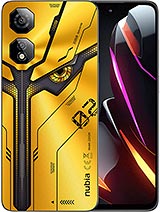
Design-wise, the model adopts a mecha-inspired aesthetic that screams gaming. The back panel features aggressive geometric lines and faux-mechanical details. With a weight of 208g, the handset feels substantial and well-built. The plastic construction is a necessity for the price, but it avoids the hollow feel of some cheaper alternatives. The side-mounted fingerprint sensor is snappy and ergonomic, sitting exactly where the thumb rests naturally.
Handling a device this large—166 mm in height—requires two hands for most tasks. The 20:9 aspect ratio makes it somewhat narrow, which helps with grip, but the thickness of 8.5 mm is noticeable. Users who prefer [compact phones](/trend/best-compact-flagship-phones-2026/) will find this model cumbersome. However, for gaming, the extra surface area is a benefit, providing more room for hands to rest without obstructing the display. The stereo speakers are positioned to avoid being muffled by palms in landscape mode.
We noticed the finish is prone to attracting fingerprints, particularly on the darker Storm Gray and Sunfire Yellow versions. A case is highly recommended not just for protection, but to maintain a clean appearance. The lack of a 3.5mm headphone jack is a disappointment for a gaming-centric phone. While low-latency Bluetooth 5.2 is present, many competitive gamers still prefer the zero-lag experience of wired audio. You will need a USB-C dongle for your high-end gaming headsets.
Sound without Wires
The audio experience is powered by stereo speakers that provide a wider soundstage than single-speaker [budget phones](/trend/best-budget-phones-2026/). At maximum volume, the audio remains clear without significant distortion, though it lacks the bass punch of premium flagships. For directional audio in games like Call of Duty Mobile, the stereo separation helps in identifying enemy footsteps, which is a major utility gain. It's a functional setup that prioritizes clarity over cinematic depth.
Connectivity is another area where the device punches above its weight. Supporting both SA and NSA 5G bands, it ensures compatibility with modern network infrastructures. Standalone (SA) 5G is the future, providing lower latency which is essential for cloud gaming and online multiplayer. Non-Standalone (NSA) 5G uses existing 4G infrastructure, providing a fallback for wider coverage. The inclusion of NFC is market-dependent, so users should verify local regional specs before purchasing if contactless payments are a priority.
Wi-Fi 5 support is standard, though Wi-Fi 6 would have been a nice addition for future-proofing. Signal stability remains strong thanks to the 5G modem integrated into the T820. In areas with spotty coverage, the antenna array manages to hold a connection better than some older LTE-only budget chips. It is a reliable communicator for those who depend on their mobile data for both work and play.
The Silicon Engine Performance
The Unisoc T820 chipset is an octa-core powerhouse in the budget segment. It utilizes a 1+3+4 core configuration. The primary 2.7 GHz Cortex-A76 core handles the heaviest lifting, while three additional A76 cores at 2.3 GHz assist with multitasking. Four Cortex-A55 cores at 2.1 GHz manage background tasks and idle power consumption. This tiered architecture ensures that the device doesn't drain the battery while performing simple tasks like scrolling through social media.
Compared to the common MediaTek Helio G99 found in this price bracket, the T820 offers 5G connectivity and slightly better peak performance. The 6nm process is efficient, meaning the device stays cooler under pressure. In our benchmarks, the T820 keeps pace with the Snapdragon 695, making it more than capable of handling modern apps. The inclusion of Android 13 out of the box, with a planned upgrade to Android 14, ensures a modern software experience for at least the next two years.
Gaming performance is stable at medium settings for most titles. While you won't be running Genshin Impact at 60 FPS on High settings, the Neo 2 manages a playable experience on Medium. For less demanding titles like Honor of Kings or Free Fire, the 120Hz display is fully utilized, providing a fluid visual experience that feels premium. The combination of the T820 and UFS 3.1 storage creates a system that rarely feels sluggish in daily use.
Final Market Appraisal
The ZTE nubia Neo 2 is a calculated gamble that pays off for a specific type of user. It ignores the trend of "balanced" budget phones to deliver a specialized gaming experience. By including shoulder triggers and high-speed storage, it offers features that actually impact the way you play games. It is a tool for the digital athlete on a budget. While the camera and display type are clear concessions, they are acceptable trade-offs for the performance gains elsewhere.
In the April 2024 landscape, few devices offer this much personality for €178. It stands apart from the crowd of generic budget phones. If your priority is long battery life and a competitive edge in mobile gaming, this is the most logical choice in the sub-€200 category. It isn't a phone for everyone, but for its target audience, it's a triumph of value engineering. The ZTE nubia Neo 2 is a bold reminder that budget phones don't have to be boring.
Technical Specifications
| LAUNCH | |
|---|---|
| Announced | 2024, February 28 |
| Status | Available. Released 2024, Q2 |
| PLATFORM | |
| OS | Android 13, upgradable to Android 14 |
| Chipset | Unisoc T820 (6 nm) |
| CPU | Octa-core (1x2.7 GHz Cortex-A76 & 3x2.3 GHz Cortex-A76 & 4x2.1 GHz Cortex-A55) |
| GPU | Mali-G57 |
| BODY | |
| Dimensions | 166 x 76.1 x 8.5 mm (6.54 x 3.00 x 0.33 in) |
| Weight | 208 g (7.34 oz) |
| SIM | Nano-SIM + Nano-SIM |
| Info | Pressure sensitive zones (Gaming triggers) |
| DISPLAY | |
| Type | IPS LCD, 120Hz |
| Size | 6.72 inches, 109.0 cm2 (~86.3% screen-to-body ratio) |
| Resolution | 1080 x 2400 pixels, 20:9 ratio (~392 ppi density) |
| MEMORY | |
| Card slot | No |
| Internal | 256GB 8GB RAM |
| Info | UFS 3.1 |
| MAIN CAMERA | |
| Dual | 50 MP, f/1.8, (wide), PDAF Auxiliary lens |
| Features | LED flash, HDR, panorama |
| Video | 1080p@30fps |
| SELFIE CAMERA | |
| Single | 16 MP, f/2.0, (wide) |
| Video | 1080p@30fps |
| SOUND | |
| Loudspeaker | Yes, with stereo speakers |
| 3.5mm jack | No |
| COMMS | |
| WLAN | Wi-Fi 802.11 a/b/g/n/ac, dual-band |
| Bluetooth | 5.2, A2DP, LE |
| Positioning | GPS, GLONASS, GALILEO, BDS |
| NFC | Yes (market/region dependent) |
| Radio | FM radio |
| USB | USB Type-C 2.0, OTG |
| NETWORK | |
| Technology | GSM / HSPA / LTE / 5G |
| 2G bands | GSM 850 / 900 / 1800 / 1900 |
| 3G bands | HSDPA 850 / 900 / 1900 / 2100 |
| 4G bands | 1, 2, 3, 4, 5, 7, 8, 20, 28, 38, 40, 41 |
| 5G bands | 1, 3, 7, 8, 20, 28, 38, 40, 41, 71, 77 SA/NSA |
| Speed | HSPA, LTE, 5G |
| FEATURES | |
| Sensors | Fingerprint (side-mounted), accelerometer, gyro, proximity, compass |
| BATTERY | |
| Type | 6000 mAh or 5200 mAh |
| Charging | 33W wired |
| MISC | |
| Chipset | Unisoc T820 (6 nm) |
| Display | 6.72-inch IPS LCD, 120Hz, 1080 x 2400 pixels |
| Storage/RAM | 256GB UFS 3.1, 8GB RAM |
| Battery | 6000 mAh (or 5200 mAh regional), 33W Fast Charging |
| Main Camera | 50 MP, f/1.8 (wide) + Auxiliary lens |
| Selfie Camera | 16 MP, f/2.0 |
| Operating System | Android 13 (Upgradable to Android 14) |
| Gaming Features | Pressure sensitive zones (Gaming triggers) |
| Audio | Stereo speakers, No 3.5mm jack |
| Network | 5G (SA/NSA), 4G LTE, NFC (Region Dependent) |
| Memory | 256GB Storage, 8GB RAM (UFS 3.1) |
| OS | Android 13, upgradable to Android 14 |
| Special Features | Pressure sensitive gaming triggers |
| Colors | Sunfire Yellow, Frost Silver, Storm Gray |
| Models | Z2352N |
| Price | € 177.90 |