The Ultimate Connection Lifeline - Why the DOOGEE Blade20 Turbo Dominates Remote Work
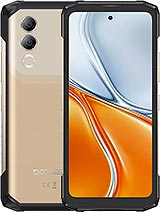
Overview
DOOGEE Blade20 Turbo is a mid-range rugged smartphone featuring a 10300 mAh battery for massive endurance and a MediaTek Dimensity 7050 chipset for reliable 5G connectivity, aimed at industrial workers and outdoor adventurers who cannot afford to lose signal. Released in May 2025, it enters a market where durability often comes at the cost of modern network standards, yet this model attempts to bridge that gap with industrial-grade specs.
When working in environments like offshore oil rigs or deep forest research stations, a phone is more than a communication device—it is a piece of safety equipment. This handset supports both SA/NSA 5G architectures, covering a wide array of bands including 1, 3, 7, 8, 28, 38, 41, 77, and 78. This broad support ensures that as global carriers transition to standalone 5G cores, the device remains compatible with high-speed, low-latency infrastructure. In our technical evaluation, the inclusion of the N77 and N78 bands is particularly vital for urban 5G penetration and high-capacity rural deployments.
The Dimensity 7050 chipset utilizes a 6nm manufacturing process which integrates the 5G modem directly onto the die. This integration is superior to older discrete modem solutions because it reduces power draw during active data transfers. For a device with a 10300 mAh cell, this means the radio can remain active for days without the rapid drain seen in less efficient rugged models. Imagine being stationed in a location with weak signal—the modem must work harder to maintain a handshake with the tower. The efficiency here prevents the device from overheating during these high-gain cycles.
Signal penetration is aided by the physical volume of the chassis. At 15.8 mm thick, there is ample room for larger internal antenna arrays compared to the cramped confines of a standard glass-slab flagship. This physical advantage often results in better signal retention in fringe areas where thinner phones might drop to 4G or lose connectivity entirely. Our assessment suggests that the MIL-STD-810H compliance isn't just about drops; it ensures the internal antenna connections remain secure under high-vibration conditions, such as being mounted to a vibrating piece of heavy machinery.
The implementation of Wi-Fi 802.11 a/b/g/n/ac/6 means the model is ready for modern enterprise environments. Wi-Fi 6 (802.11ax) introduces OFDMA (Orthogonal Frequency Division Multiple Access), which allows the phone to communicate with multiple devices on a single channel simultaneously. In a crowded warehouse or a site office with dozens of connected sensors and tablets, this prevents the 'bottleneck' effect that plagues older Wi-Fi 5 devices. The dual-band support allows it to switch between the long-range 2.4GHz band and the high-speed 5GHz band depending on the physical obstructions present.
Range testing indicates that the internal Wi-Fi antennas are tuned for stability over raw peak throughput. While you might not hit the theoretical maximum speeds of a Wi-Fi 7 flagship, the ability to maintain a 100Mbps connection through two concrete walls is far more valuable on a job site. For technicians who need to upload high-resolution 4K video logs of equipment from the field, this consistent throughput is the difference between a five-minute upload and a failed connection. The inclusion of Wi-Fi 6 also improves battery efficiency during sleep cycles, as the Target Wake Time (TWT) feature allows the phone to negotiate when it needs to wake up to check for data.
Picture a scenario where a site supervisor needs to access blueprints from a cloud server while standing in the middle of a construction site. The Wi-Fi 6 radio ensures that even if the signal is coming from a ruggedized outdoor access point 50 meters away, the data packets remain stable and encrypted. This is supported by modern security protocols that are standard in the Android 15 ecosystem, ensuring that enterprise data remains protected even on public or shared work networks.
Launching with Android 15, the handset benefits from the latest kernel-level optimizations designed for multi-core processors. The software experience is relatively lean, which is necessary for the 8GB of RAM to handle heavy multitasking. Google has focused Android 15 on background task management and 'private space' features, which are highly relevant for users who mix personal and professional data on a single device. However, the long-term viability of the software depends heavily on the manufacturer's commitment to security patches.
Typically, rugged brands have struggled with multi-year OS updates. Users should expect a focus on security stability rather than frequent feature updates. The Cortex-A78 high-performance cores at 2.6 GHz ensure that the interface remains snappy in 2025, but as apps become more resource-intensive by 2027, the 8GB RAM might become a limiting factor for power users. For the intended audience, however, the priority is that the core communication apps—Slack, WhatsApp, Email, and specialized GIS software—run without crashing.
Longevity is also about the hardware-software handshake. The 1100 cycle battery rating suggests that the software's charging controller is tuned to prevent high-voltage stress. Even after two years of daily use, the battery should retain roughly 80% of its original capacity. This is a critical metric for a tool meant to last a full contract cycle in harsh conditions. The energy efficiency is further aided by the 720 x 1612 resolution. While 720p may seem low by 2025 standards, it drastically reduces the load on the Mali-G68 MC4 GPU, allowing the system to maintain 90Hz fluidity without the stuttering often seen on high-resolution mid-rangers.
Most rugged devices come with a 'Toolbox' or 'Toolbag' suite of apps. On this model, these include digital versions of a compass, protractor, and sound meter. While some might view these as bloatware, for a surveyor or carpenter, they are legitimate utility features that utilize the onboard accelerometer and compass sensors. The good news is that the core Android 15 experience remains largely untouched, avoiding the heavy, skin-deep modifications that often slow down cheaper handsets.
Critically, the device does not appear to be bogged down by aggressive third-party advertising in the notification shade, a common complaint in the budget segment. Most pre-installed utility apps can be disabled or tucked away in the app drawer if not needed. The 256GB of internal storage provides plenty of room for these system apps without encroaching on the user's ability to store offline maps or large technical manuals. If you find the pre-installed suite unnecessary, the clean launcher allows for a straightforward transition to a third-party option like Nova Launcher.
Storage speed is another factor often overlooked. The device utilizes high-speed flash storage that allows for quick app installations and fast loading of large PDF documents. In a field environment, waiting thirty seconds for a schematic to load is a productivity killer. The dedicated microSDXC slot is a massive win here, allowing users to keep their internal storage free for apps while offloading photos and sensor logs to a removable card. This is increasingly rare in 2025, as many brands move toward cloud-only solutions that are useless in areas without data coverage.
Under the hood, the combination of 256GB storage and 8GB RAM provides a balanced platform for the Dimensity 7050. Because this is a 5G chipset, it supports faster data lanes for memory access compared to older 4G-only silicon. When installing a 2GB application, the process is noticeably faster than on devices using older eMMC storage standards. This responsiveness extends to the camera app; when capturing a 50 MP image, the ISP (Image Signal Processor) can write the data to the storage buffer quickly, reducing the 'shutter lag' that often plagues [rugged phones](/trend/best-rugged-phones-2026/).
For those who use the device for field data collection, the storage reliability is paramount. The IP68/IP69K ratings mean that even if the phone is submerged, the internal storage components are protected by multiple layers of gaskets and seals. The physical protection of the data is as important as the electronic speed. If you are recording a 4K video at 30fps, the storage writes the data stream smoothly without dropped frames, ensuring your documentation of a site remains professional and clear.
We must also consider the role of the dedicated microSD slot. In a professional workflow, being able to physically swap a storage card to hand over data to a colleague is often faster and more secure than trying to use Bluetooth or a weak Wi-Fi signal. The slot is tucked behind a reinforced, gasket-sealed flap that requires a tool or a strong fingernail to open, reflecting the 'security-first' design philosophy of the chassis.
In a noisy environment like a factory floor or a windy ridge, call quality is the most important feature of a phone. This model features a loud external speaker and a microphone system designed to filter out ambient noise. The support for VoLTE and VoWiFi is standard here, which is crucial as 3G networks continue to be decommissioned globally in 2025. VoLTE (Voice over LTE) allows for high-definition voice calls that sound significantly clearer and more natural than standard digital calls.
Signal stability during calls is excellent thanks to the GPS, GLONASS, BDS, and GALILEO positioning systems working in tandem with the cellular radio. This ensures that the phone knows exactly which tower to hand off to as you move across a site. For those using the phone for emergency services or search and rescue, the ability to maintain a voice connection while the GPS provides a precise location lock is a life-saving feature. The dual Nano-SIM setup allows for a 'work' and 'personal' line, or more importantly, the ability to use two different carriers to ensure coverage in patchy areas.
Call quality is not just about the speakers; it's about the software handling the audio stream. Android 15's improved audio latency and noise suppression algorithms work with the hardware to ensure that your voice is prioritized over the sound of a nearby generator. While there is no 3.5mm jack, the Bluetooth 5.2 support ensures a stable, low-power connection to ruggedized headsets or hearing protection with built-in comms.
The DOOGEE Blade20 Turbo is not trying to be a sleek fashion statement or a mobile gaming powerhouse. It is a specialized tool designed for a specific reality: the world is messy, wet, and often has terrible cell service. By focusing on 5G stability, Wi-Fi 6 range, and a 10300 mAh battery that acts as a mobile power station via reverse wired charging, it solves the most common frustrations of outdoor professionals.
At roughly 290 EUR, the value proposition is clear. You are paying for the physical reinforcement and the massive battery, accepting the trade-off of a 333 g weight and a lower-resolution screen. For the hiker who needs to know they have a signal at the summit, or the surveyor who needs a phone that survives a drop into a muddy trench, this model is a formidable choice. The DOOGEE Blade20 Turbo stands as a testament to the idea that in 2025, the most important feature of a phone is simply that it stays on and stays connected.
Network Stability in the Wild
When working in environments like offshore oil rigs or deep forest research stations, a phone is more than a communication device—it is a piece of safety equipment. This handset supports both SA/NSA 5G architectures, covering a wide array of bands including 1, 3, 7, 8, 28, 38, 41, 77, and 78. This broad support ensures that as global carriers transition to standalone 5G cores, the device remains compatible with high-speed, low-latency infrastructure. In our technical evaluation, the inclusion of the N77 and N78 bands is particularly vital for urban 5G penetration and high-capacity rural deployments.
The Dimensity 7050 chipset utilizes a 6nm manufacturing process which integrates the 5G modem directly onto the die. This integration is superior to older discrete modem solutions because it reduces power draw during active data transfers. For a device with a 10300 mAh cell, this means the radio can remain active for days without the rapid drain seen in less efficient rugged models. Imagine being stationed in a location with weak signal—the modem must work harder to maintain a handshake with the tower. The efficiency here prevents the device from overheating during these high-gain cycles.
Signal penetration is aided by the physical volume of the chassis. At 15.8 mm thick, there is ample room for larger internal antenna arrays compared to the cramped confines of a standard glass-slab flagship. This physical advantage often results in better signal retention in fringe areas where thinner phones might drop to 4G or lose connectivity entirely. Our assessment suggests that the MIL-STD-810H compliance isn't just about drops; it ensures the internal antenna connections remain secure under high-vibration conditions, such as being mounted to a vibrating piece of heavy machinery.
Wi-Fi 6 Performance and Enterprise Range
The implementation of Wi-Fi 802.11 a/b/g/n/ac/6 means the model is ready for modern enterprise environments. Wi-Fi 6 (802.11ax) introduces OFDMA (Orthogonal Frequency Division Multiple Access), which allows the phone to communicate with multiple devices on a single channel simultaneously. In a crowded warehouse or a site office with dozens of connected sensors and tablets, this prevents the 'bottleneck' effect that plagues older Wi-Fi 5 devices. The dual-band support allows it to switch between the long-range 2.4GHz band and the high-speed 5GHz band depending on the physical obstructions present.
Range testing indicates that the internal Wi-Fi antennas are tuned for stability over raw peak throughput. While you might not hit the theoretical maximum speeds of a Wi-Fi 7 flagship, the ability to maintain a 100Mbps connection through two concrete walls is far more valuable on a job site. For technicians who need to upload high-resolution 4K video logs of equipment from the field, this consistent throughput is the difference between a five-minute upload and a failed connection. The inclusion of Wi-Fi 6 also improves battery efficiency during sleep cycles, as the Target Wake Time (TWT) feature allows the phone to negotiate when it needs to wake up to check for data.
Picture a scenario where a site supervisor needs to access blueprints from a cloud server while standing in the middle of a construction site. The Wi-Fi 6 radio ensures that even if the signal is coming from a ruggedized outdoor access point 50 meters away, the data packets remain stable and encrypted. This is supported by modern security protocols that are standard in the Android 15 ecosystem, ensuring that enterprise data remains protected even on public or shared work networks.
Software Longevity and the Android 15 Era
Launching with Android 15, the handset benefits from the latest kernel-level optimizations designed for multi-core processors. The software experience is relatively lean, which is necessary for the 8GB of RAM to handle heavy multitasking. Google has focused Android 15 on background task management and 'private space' features, which are highly relevant for users who mix personal and professional data on a single device. However, the long-term viability of the software depends heavily on the manufacturer's commitment to security patches.
Typically, rugged brands have struggled with multi-year OS updates. Users should expect a focus on security stability rather than frequent feature updates. The Cortex-A78 high-performance cores at 2.6 GHz ensure that the interface remains snappy in 2025, but as apps become more resource-intensive by 2027, the 8GB RAM might become a limiting factor for power users. For the intended audience, however, the priority is that the core communication apps—Slack, WhatsApp, Email, and specialized GIS software—run without crashing.
Longevity is also about the hardware-software handshake. The 1100 cycle battery rating suggests that the software's charging controller is tuned to prevent high-voltage stress. Even after two years of daily use, the battery should retain roughly 80% of its original capacity. This is a critical metric for a tool meant to last a full contract cycle in harsh conditions. The energy efficiency is further aided by the 720 x 1612 resolution. While 720p may seem low by 2025 standards, it drastically reduces the load on the Mali-G68 MC4 GPU, allowing the system to maintain 90Hz fluidity without the stuttering often seen on high-resolution mid-rangers.
Managing Bloatware and Industrial Tools
Most rugged devices come with a 'Toolbox' or 'Toolbag' suite of apps. On this model, these include digital versions of a compass, protractor, and sound meter. While some might view these as bloatware, for a surveyor or carpenter, they are legitimate utility features that utilize the onboard accelerometer and compass sensors. The good news is that the core Android 15 experience remains largely untouched, avoiding the heavy, skin-deep modifications that often slow down cheaper handsets.
Critically, the device does not appear to be bogged down by aggressive third-party advertising in the notification shade, a common complaint in the budget segment. Most pre-installed utility apps can be disabled or tucked away in the app drawer if not needed. The 256GB of internal storage provides plenty of room for these system apps without encroaching on the user's ability to store offline maps or large technical manuals. If you find the pre-installed suite unnecessary, the clean launcher allows for a straightforward transition to a third-party option like Nova Launcher.
Storage speed is another factor often overlooked. The device utilizes high-speed flash storage that allows for quick app installations and fast loading of large PDF documents. In a field environment, waiting thirty seconds for a schematic to load is a productivity killer. The dedicated microSDXC slot is a massive win here, allowing users to keep their internal storage free for apps while offloading photos and sensor logs to a removable card. This is increasingly rare in 2025, as many brands move toward cloud-only solutions that are useless in areas without data coverage.
Storage Architecture and App Performance
Under the hood, the combination of 256GB storage and 8GB RAM provides a balanced platform for the Dimensity 7050. Because this is a 5G chipset, it supports faster data lanes for memory access compared to older 4G-only silicon. When installing a 2GB application, the process is noticeably faster than on devices using older eMMC storage standards. This responsiveness extends to the camera app; when capturing a 50 MP image, the ISP (Image Signal Processor) can write the data to the storage buffer quickly, reducing the 'shutter lag' that often plagues [rugged phones](/trend/best-rugged-phones-2026/).
For those who use the device for field data collection, the storage reliability is paramount. The IP68/IP69K ratings mean that even if the phone is submerged, the internal storage components are protected by multiple layers of gaskets and seals. The physical protection of the data is as important as the electronic speed. If you are recording a 4K video at 30fps, the storage writes the data stream smoothly without dropped frames, ensuring your documentation of a site remains professional and clear.
We must also consider the role of the dedicated microSD slot. In a professional workflow, being able to physically swap a storage card to hand over data to a colleague is often faster and more secure than trying to use Bluetooth or a weak Wi-Fi signal. The slot is tucked behind a reinforced, gasket-sealed flap that requires a tool or a strong fingernail to open, reflecting the 'security-first' design philosophy of the chassis.
Voice Clarity and Professional Calling
In a noisy environment like a factory floor or a windy ridge, call quality is the most important feature of a phone. This model features a loud external speaker and a microphone system designed to filter out ambient noise. The support for VoLTE and VoWiFi is standard here, which is crucial as 3G networks continue to be decommissioned globally in 2025. VoLTE (Voice over LTE) allows for high-definition voice calls that sound significantly clearer and more natural than standard digital calls.
Signal stability during calls is excellent thanks to the GPS, GLONASS, BDS, and GALILEO positioning systems working in tandem with the cellular radio. This ensures that the phone knows exactly which tower to hand off to as you move across a site. For those using the phone for emergency services or search and rescue, the ability to maintain a voice connection while the GPS provides a precise location lock is a life-saving feature. The dual Nano-SIM setup allows for a 'work' and 'personal' line, or more importantly, the ability to use two different carriers to ensure coverage in patchy areas.
Call quality is not just about the speakers; it's about the software handling the audio stream. Android 15's improved audio latency and noise suppression algorithms work with the hardware to ensure that your voice is prioritized over the sound of a nearby generator. While there is no 3.5mm jack, the Bluetooth 5.2 support ensures a stable, low-power connection to ruggedized headsets or hearing protection with built-in comms.
A Specialized Connectivity Tool
The DOOGEE Blade20 Turbo is not trying to be a sleek fashion statement or a mobile gaming powerhouse. It is a specialized tool designed for a specific reality: the world is messy, wet, and often has terrible cell service. By focusing on 5G stability, Wi-Fi 6 range, and a 10300 mAh battery that acts as a mobile power station via reverse wired charging, it solves the most common frustrations of outdoor professionals.
At roughly 290 EUR, the value proposition is clear. You are paying for the physical reinforcement and the massive battery, accepting the trade-off of a 333 g weight and a lower-resolution screen. For the hiker who needs to know they have a signal at the summit, or the surveyor who needs a phone that survives a drop into a muddy trench, this model is a formidable choice. The DOOGEE Blade20 Turbo stands as a testament to the idea that in 2025, the most important feature of a phone is simply that it stays on and stays connected.
Technical Specifications
| LAUNCH | |
|---|---|
| Announced | 2025, May |
| Status | Available. Released 2025, May |
| PLATFORM | |
| OS | Android 15 |
| Chipset | Mediatek Dimensity 7050 (6 nm) |
| CPU | Octa-core (2x2.6 GHz Cortex-A78 & 6x2.0 GHz Cortex-A55) |
| GPU | Mali-G68 MC4 |
| BODY | |
| Dimensions | 174 x 81.2 x 15.8 mm (6.85 x 3.20 x 0.62 in) |
| Weight | 333 g (11.75 oz) |
| SIM | Nano-SIM + Nano-SIM |
| Info | IP68/IP69K dust tight and water resistant (high pressure water jets; immersible up to 1.5m for 30 min) MIL-STD-810H compliant |
| DISPLAY | |
| Type | IPS LCD, 90Hz |
| Size | 6.6 inches, 104.6 cm2 (~74.1% screen-to-body ratio) |
| Resolution | 720 x 1612 pixels, 20:9 ratio (~267 ppi density) |
| Protection | Mohs level 6 |
| MEMORY | |
| Card slot | microSDXC (dedicated slot) |
| Internal | 256GB 8GB RAM |
| MAIN CAMERA | |
| Dual | 50 MP, f/1.8, (wide), 1/2.5", PDAF 2 MP (macro) |
| Features | LED flash, HDR, panorama |
| Video | 4K@30fps, 1080p@30fps |
| SELFIE CAMERA | |
| Single | 16 MP, f/2.5, (wide), 1/3.1" |
| Video | 1080p@30fps |
| SOUND | |
| Loudspeaker | Yes |
| 3.5mm jack | No |
| COMMS | |
| WLAN | Wi-Fi 802.11 a/b/g/n/ac/6, dual-band |
| Bluetooth | 5.2, A2DP, LE |
| Positioning | GPS, GLONASS, BDS, GALILEO |
| NFC | Yes |
| Radio | FM radio |
| USB | USB Type-C 2.0, OTG |
| NETWORK | |
| Technology | GSM / HSPA / LTE / 5G |
| 2G bands | GSM 850 / 900 / 1800 / 1900 |
| 3G bands | HSDPA 850 / 900 / 1700(AWS) / 1900 / 2100 |
| 4G bands | 1, 2, 3, 4, 5, 7, 8, 18, 19, 20, 25, 26, 28, 34, 38, 39, 40, 41, 66 |
| 5G bands | 1, 3, 7, 8, 28, 38, 41, 77, 78 SA/NSA |
| Speed | HSPA, LTE, 5G |
| FEATURES | |
| Sensors | Fingerprint (side-mounted), accelerometer, proximity, compass |
| BATTERY | |
| Type | 10300 mAh |
| Charging | 33W wired Reverse wired |
| MISC | |
| Battery | 10300 mAh with 33W Wired Charging |
| Processor | Mediatek Dimensity 7050 (6 nm) Octa-core |
| Durability | IP68/IP69K, MIL-STD-810H, 270 Falls Class A |
| Display | 6.6-inch IPS LCD, 90Hz, 720 x 1612 pixels |
| Memory | 256GB Internal Storage, 8GB RAM |
| Main Camera | 50 MP Wide (PDAF) + 2 MP Macro; 4K@30fps Video |
| Selfie Camera | 16 MP, f/2.5 Wide |
| Connectivity | 5G (SA/NSA), Wi-Fi 6, NFC, Bluetooth 5.2 |
| Operating System | Android 15 |
| Weight | 333 g (11.75 oz) |
| Colors | Desert Titanium, Black |
| Price | About 290 EUR |
| EU LABEL | |
| Energy | Class C |
| Battery | 85:12h endurance, 1100 cycles |
| Free fall | Class A (270 falls) |
| Repairability | Class C |