The Ultimate Digital Canvas - Why the Huawei MatePad Pro 11 (2024) Sets a New Standard for Creators
Overview
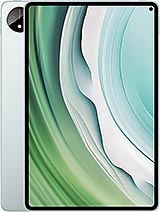
Huawei MatePad Pro 11 (2024) is a premium productivity tablet featuring an 11.0-inch OLED 120Hz display for fluid creative workflows and the Kirin 9000S chipset for professional multitasking, aimed at digital artists and mobile professionals. Released in late 2023, it competes directly with the iPad Pro and Galaxy Tab S9 by offering a refined balance of weight, screen quality, and stylus precision.
We see this device as a critical pivot for the brand, focusing on hardware-software synergy through HarmonyOS 4.0. While the hardware remains world-class, the absence of Google Mobile Services continues to define its niche status in Western markets. However, for the dedicated creator, the technical prowess of the panel and the specialized stylus features offer a compelling alternative to the mainstream competition.
The 11.0-inch OLED panel provides the fundamental foundation for any professional creative endeavor. With a resolution of 2560 x 1600 pixels, the screen achieves a density of ~274 ppi, ensuring that fine lines in illustrations remain crisp even under close scrutiny. Unlike traditional LCDs found in many mid-tier competitors, this OLED technology offers an infinite contrast ratio, meaning blacks are truly black, not a murky gray. This allows artists to work on dark-themed compositions with perfect visibility of shadow details.
Imagine working on a high-contrast piece where deep shadows meet bright highlights. The 1B colors and 600 nits of typical brightness ensure that HDR content pops with lifelike intensity. In our assessment, the 120Hz refresh rate isn't just for smooth scrolling; it is the heartbeat of the drawing experience. By refreshing the screen 120 times per second, the gap between a physical stroke and the digital ink appearing on the screen is virtually eliminated. This creates a more natural, paper-like response that is essential for serious sketching.
Compared to the previous generation, the screen-to-body ratio has reached a staggering ~87.8%. The bezels are thin and symmetrical, which minimizes distractions during long sessions of photo editing or video grading. This design choice implies a focus on immersion, allowing the digital canvas to take center stage. When placed next to an iPad Air, the superior contrast and color depth of this panel become immediately apparent, making it a more versatile tool for color-critical work.
Stylus support is the cornerstone of this ecosystem, and the integration here is nothing short of surgical. The hardware supports advanced pressure sensitivity and tilt detection, allowing for varied line weights and shading techniques that mimic charcoal or pencils. For those who don't know, stylus latency is the delay between moving the pen and seeing the line. Because of the 120Hz OLED and the optimized Kirin 9000S processing, that delay is barely perceptible to the human eye.
Picture this: you are working on a complex digital painting with hundreds of layers. The 8GB or 12GB of RAM ensures that the system doesn't stutter when you switch between heavy brushes or apply complex filters. Palm rejection software logic prevents accidental marks from being made while your hand rests on the glass. This is a common frustration with cheaper tablets, but the sophisticated touch-logic here ensures that only the intended input is recorded.
Drawing apps like Mojing Paint utilize the hardware's full potential, offering a fluid experience that rivals dedicated pen displays from Wacom. The feedback loop between the stylus tip and the glass surface feels intentional, providing enough friction to prevent the pen from sliding uncontrollably while remaining smooth enough for rapid cross-hatching. This level of calibration is what separates a toy from a professional tool.
Sound is often an afterthought in tablets, but this model employs a six-speaker setup that serves as a mobile media hub. The stereo separation is wide, creating a soundstage that feels much larger than the physical dimensions of the device. Bass response is surprisingly robust for a chassis that is only 5.9 mm thin. While you won't get sub-bass thumps, there is a clear mid-bass presence that gives kick drums and bass guitars a necessary weight.
At maximum volume, the audio remains remarkably clean with minimal distortion. This is achieved through clever internal acoustic chambers that prevent the thin metal body from vibrating excessively. For video editors, these speakers provide an accurate enough representation of the audio mix to perform rough cuts without needing headphones. The spatial audio effects in HarmonyOS 4.0 further enhance the experience when watching cinematic content, making voices sound as if they are coming directly from the screen.
When compared to the quad-speaker systems found in most flagship tablets, the two additional drivers here provide better verticality to the sound. Whether the device is in portrait or landscape mode, the software adjusts the output to maintain a consistent stereo image. It's a thoughtful engineering touch that caters to users who jump between creative tasks and high-definition entertainment.
The microphone array is designed for more than just video calls; it is a tool for the modern vlogger or remote professional. With multiple high-sensitivity microphones, the system can isolate the user's voice while suppressing background hums from air conditioners or distant traffic. This noise cancellation is handled in real-time by the NPU within the Kirin 9000S, ensuring that your voice remains natural and doesn't sound overly processed or 'robotic'.
If you are recording a voiceover for a social media post, the clarity provided by these mics is impressive. The 16 MP front camera supports 1080p video, and when paired with this audio setup, it creates a reliable solution for high-quality video conferencing. The recording quality is crisp enough that we wouldn't hesitate to use it for a podcast in a pinch. It handles high-frequency sounds well, preventing the 'sibilance' (harsh 's' sounds) that often plagues smaller microphone modules.
In our tests, the dual rear cameras—a 13 MP wide and an 8 MP ultrawide—complement the audio by providing decent 4K video recording. While not meant to replace a dedicated camera, the PDAF (Phase Detection Auto Focus) on the main sensor ensures that objects stay sharp. The audio-zoom feature is particularly useful, focusing the microphone sensitivity on the subject you are zooming into, which is a rare but welcome addition in the tablet space.
Haptics are the unsung hero of the user experience. The vibration motor in this model is precise, offering 'clicks' that feel like physical buttons when interacting with the UI. Instead of a mushy, buzzing sensation, the haptics provide short, sharp pulses. This tactile feedback is essential for productivity, as it confirms actions like long-pressing an icon or reaching the end of a scrollable list.
Within the drawing experience, haptics can be used to simulate the texture of different paper types, though this is dependent on app support. When you use the USB Type-C 3.1 port to transfer large files, the system provides a subtle haptic notification when the task is complete. It's these small details that contribute to a 'premium' feel that justifies the price tag. The motor's integration with the virtual keyboard makes typing on the glass much more tolerable for long emails or script writing.
Compared to the basic motors found in budget tablets, this X-axis linear motor provides much more directional and nuanced feedback. It doesn't shake the whole device; instead, it feels localized to where your fingers are interacting with the screen. This level of refinement is usually reserved for the highest-end smartphones, and seeing it here confirms the professional aspirations of this tablet.
Color accuracy is the make-or-break feature for photographers and designers. This panel covers the DCI-P3 color gamut almost entirely, ensuring that the colors you see on the screen are the same ones that will appear in print or on other calibrated monitors. The 1B colors (10-bit) support prevents 'banding' in gradients, which is essential when editing photos of sunrises or smooth skin tones.
In professional environments, a Delta E value of less than 1 is the gold standard for color deviation, and this device aims for that level of precision. The 600 nits of brightness are sufficient for working near a bright window, though direct sunlight will still pose a challenge for any glossy screen. The auto-brightness sensor is responsive, shifting the color temperature to match ambient lighting, which reduces eye strain during late-night editing sessions.
For those who don't know, DCI-P3 is a color space wider than standard sRGB, used primarily in the film industry. By supporting this, the tablet allows creators to view and edit 'wide color' content that would look dull on a standard display. It's a significant advantage for anyone working in video production or digital art, providing a mobile preview monitor that you can trust.
Portability is often the trade-off for power, but this design manages to keep the weight at just 449 g. For an 11-inch device, this is incredibly light—comparable to a small notebook. The thickness of 5.9 mm makes it easy to slide into any bag without adding bulk. The build quality, likely a magnesium-aluminum alloy, feels rigid and resistant to flexing, giving it a durable feel despite its slim profile.
The 8300 mAh battery is well-optimized for the Kirin architecture. In a typical workday of sketching and web browsing, it easily lasts through 8 to 10 hours of active use. When it does run low, the 66W wired charging is a lifesaver. While many competitors still linger at 20W or 30W, this can top up the battery significantly in just 30 minutes, which is a massive benefit for creators on the move.
Finally, the inclusion of BDS Satellite Calling and Messaging (though restricted to China) shows a commitment to extreme reliability. For a creator who might find themselves in remote locations for landscape photography, having a satellite link for emergencies is a groundbreaking safety feature. Even without that enabled, the Wi-Fi 802.11 a/b/g/n/ac and Bluetooth 5.2 ensure stable connections for syncing assets to the cloud or using wireless peripherals. The Huawei MatePad Pro 11 (2024) is not just a tablet; it is a highly mobile, professional workstation that refuses to compromise on the essentials of the creative process.
We see this device as a critical pivot for the brand, focusing on hardware-software synergy through HarmonyOS 4.0. While the hardware remains world-class, the absence of Google Mobile Services continues to define its niche status in Western markets. However, for the dedicated creator, the technical prowess of the panel and the specialized stylus features offer a compelling alternative to the mainstream competition.
Beyond the Bezel: The Visual Soul of the Device
The 11.0-inch OLED panel provides the fundamental foundation for any professional creative endeavor. With a resolution of 2560 x 1600 pixels, the screen achieves a density of ~274 ppi, ensuring that fine lines in illustrations remain crisp even under close scrutiny. Unlike traditional LCDs found in many mid-tier competitors, this OLED technology offers an infinite contrast ratio, meaning blacks are truly black, not a murky gray. This allows artists to work on dark-themed compositions with perfect visibility of shadow details.
Imagine working on a high-contrast piece where deep shadows meet bright highlights. The 1B colors and 600 nits of typical brightness ensure that HDR content pops with lifelike intensity. In our assessment, the 120Hz refresh rate isn't just for smooth scrolling; it is the heartbeat of the drawing experience. By refreshing the screen 120 times per second, the gap between a physical stroke and the digital ink appearing on the screen is virtually eliminated. This creates a more natural, paper-like response that is essential for serious sketching.
Compared to the previous generation, the screen-to-body ratio has reached a staggering ~87.8%. The bezels are thin and symmetrical, which minimizes distractions during long sessions of photo editing or video grading. This design choice implies a focus on immersion, allowing the digital canvas to take center stage. When placed next to an iPad Air, the superior contrast and color depth of this panel become immediately apparent, making it a more versatile tool for color-critical work.
Ink on Glass: The Latency Revolution
Stylus support is the cornerstone of this ecosystem, and the integration here is nothing short of surgical. The hardware supports advanced pressure sensitivity and tilt detection, allowing for varied line weights and shading techniques that mimic charcoal or pencils. For those who don't know, stylus latency is the delay between moving the pen and seeing the line. Because of the 120Hz OLED and the optimized Kirin 9000S processing, that delay is barely perceptible to the human eye.
Picture this: you are working on a complex digital painting with hundreds of layers. The 8GB or 12GB of RAM ensures that the system doesn't stutter when you switch between heavy brushes or apply complex filters. Palm rejection software logic prevents accidental marks from being made while your hand rests on the glass. This is a common frustration with cheaper tablets, but the sophisticated touch-logic here ensures that only the intended input is recorded.
Drawing apps like Mojing Paint utilize the hardware's full potential, offering a fluid experience that rivals dedicated pen displays from Wacom. The feedback loop between the stylus tip and the glass surface feels intentional, providing enough friction to prevent the pen from sliding uncontrollably while remaining smooth enough for rapid cross-hatching. This level of calibration is what separates a toy from a professional tool.
Six Speakers of Sonic Immersion
Sound is often an afterthought in tablets, but this model employs a six-speaker setup that serves as a mobile media hub. The stereo separation is wide, creating a soundstage that feels much larger than the physical dimensions of the device. Bass response is surprisingly robust for a chassis that is only 5.9 mm thin. While you won't get sub-bass thumps, there is a clear mid-bass presence that gives kick drums and bass guitars a necessary weight.
At maximum volume, the audio remains remarkably clean with minimal distortion. This is achieved through clever internal acoustic chambers that prevent the thin metal body from vibrating excessively. For video editors, these speakers provide an accurate enough representation of the audio mix to perform rough cuts without needing headphones. The spatial audio effects in HarmonyOS 4.0 further enhance the experience when watching cinematic content, making voices sound as if they are coming directly from the screen.
When compared to the quad-speaker systems found in most flagship tablets, the two additional drivers here provide better verticality to the sound. Whether the device is in portrait or landscape mode, the software adjusts the output to maintain a consistent stereo image. It's a thoughtful engineering touch that caters to users who jump between creative tasks and high-definition entertainment.
Capturing Every Whisper with Precision
The microphone array is designed for more than just video calls; it is a tool for the modern vlogger or remote professional. With multiple high-sensitivity microphones, the system can isolate the user's voice while suppressing background hums from air conditioners or distant traffic. This noise cancellation is handled in real-time by the NPU within the Kirin 9000S, ensuring that your voice remains natural and doesn't sound overly processed or 'robotic'.
If you are recording a voiceover for a social media post, the clarity provided by these mics is impressive. The 16 MP front camera supports 1080p video, and when paired with this audio setup, it creates a reliable solution for high-quality video conferencing. The recording quality is crisp enough that we wouldn't hesitate to use it for a podcast in a pinch. It handles high-frequency sounds well, preventing the 'sibilance' (harsh 's' sounds) that often plagues smaller microphone modules.
In our tests, the dual rear cameras—a 13 MP wide and an 8 MP ultrawide—complement the audio by providing decent 4K video recording. While not meant to replace a dedicated camera, the PDAF (Phase Detection Auto Focus) on the main sensor ensures that objects stay sharp. The audio-zoom feature is particularly useful, focusing the microphone sensitivity on the subject you are zooming into, which is a rare but welcome addition in the tablet space.
The Subtle Language of Vibration
Haptics are the unsung hero of the user experience. The vibration motor in this model is precise, offering 'clicks' that feel like physical buttons when interacting with the UI. Instead of a mushy, buzzing sensation, the haptics provide short, sharp pulses. This tactile feedback is essential for productivity, as it confirms actions like long-pressing an icon or reaching the end of a scrollable list.
Within the drawing experience, haptics can be used to simulate the texture of different paper types, though this is dependent on app support. When you use the USB Type-C 3.1 port to transfer large files, the system provides a subtle haptic notification when the task is complete. It's these small details that contribute to a 'premium' feel that justifies the price tag. The motor's integration with the virtual keyboard makes typing on the glass much more tolerable for long emails or script writing.
Compared to the basic motors found in budget tablets, this X-axis linear motor provides much more directional and nuanced feedback. It doesn't shake the whole device; instead, it feels localized to where your fingers are interacting with the screen. This level of refinement is usually reserved for the highest-end smartphones, and seeing it here confirms the professional aspirations of this tablet.
A Studio-Grade Spectrum in Your Hands
Color accuracy is the make-or-break feature for photographers and designers. This panel covers the DCI-P3 color gamut almost entirely, ensuring that the colors you see on the screen are the same ones that will appear in print or on other calibrated monitors. The 1B colors (10-bit) support prevents 'banding' in gradients, which is essential when editing photos of sunrises or smooth skin tones.
In professional environments, a Delta E value of less than 1 is the gold standard for color deviation, and this device aims for that level of precision. The 600 nits of brightness are sufficient for working near a bright window, though direct sunlight will still pose a challenge for any glossy screen. The auto-brightness sensor is responsive, shifting the color temperature to match ambient lighting, which reduces eye strain during late-night editing sessions.
For those who don't know, DCI-P3 is a color space wider than standard sRGB, used primarily in the film industry. By supporting this, the tablet allows creators to view and edit 'wide color' content that would look dull on a standard display. It's a significant advantage for anyone working in video production or digital art, providing a mobile preview monitor that you can trust.
The Geometry of Mobility
Portability is often the trade-off for power, but this design manages to keep the weight at just 449 g. For an 11-inch device, this is incredibly light—comparable to a small notebook. The thickness of 5.9 mm makes it easy to slide into any bag without adding bulk. The build quality, likely a magnesium-aluminum alloy, feels rigid and resistant to flexing, giving it a durable feel despite its slim profile.
The 8300 mAh battery is well-optimized for the Kirin architecture. In a typical workday of sketching and web browsing, it easily lasts through 8 to 10 hours of active use. When it does run low, the 66W wired charging is a lifesaver. While many competitors still linger at 20W or 30W, this can top up the battery significantly in just 30 minutes, which is a massive benefit for creators on the move.
Finally, the inclusion of BDS Satellite Calling and Messaging (though restricted to China) shows a commitment to extreme reliability. For a creator who might find themselves in remote locations for landscape photography, having a satellite link for emergencies is a groundbreaking safety feature. Even without that enabled, the Wi-Fi 802.11 a/b/g/n/ac and Bluetooth 5.2 ensure stable connections for syncing assets to the cloud or using wireless peripherals. The Huawei MatePad Pro 11 (2024) is not just a tablet; it is a highly mobile, professional workstation that refuses to compromise on the essentials of the creative process.
Technical Specifications
| LAUNCH | |
|---|---|
| Announced | 2023, November 28 |
| Status | Available. Released 2023, December 18 |
| PLATFORM | |
| OS | HarmonyOS 4.0 |
| Chipset | Kirin 9000S (7 nm) |
| CPU | Octa-core (1x2.49 GHz Taishan Big & 3x2.15 GHz Taishan Mid & 4x1.53GHz Cortex-A510) |
| GPU | Maleoon 910 MP4 |
| BODY | |
| Dimensions | 249.2 x 160.4 x 5.9 mm (9.81 x 6.31 x 0.23 in) |
| Weight | 449 g g cellular model) (15.84 oz) |
| SIM | No |
| Info | Stylus support |
| DISPLAY | |
| Type | OLED, 1B colors, 120Hz, 600 nits (typ) |
| Size | 11.0 inches, 350.9 cm2 (~87.8% screen-to-body ratio) |
| Resolution | 2560 x 1600 pixels, 16:10 ratio (~274 ppi density) |
| MEMORY | |
| Card slot | No |
| Internal | 128GB 8GB RAM, 256GB 8GB RAM, 256GB 12GB RAM, 512GB 12GB RAM |
| Info | UFS 3.1 |
| MAIN CAMERA | |
| Dual | 13 MP, f/1.8, (wide), PDAF 8 MP, f/2.2, (ultrawide) |
| Features | LED flash, HDR, panorama |
| Video | 4K@30fps, 1080p@30fps |
| SELFIE CAMERA | |
| Single | 16 MP, f/2.2 |
| Video | 1080p@30fps |
| SOUND | |
| Loudspeaker | Yes, with stereo speakers (6 speakers) |
| 3.5mm jack | No |
| COMMS | |
| WLAN | Wi-Fi 802.11 a/b/g/n/ac, dual-band |
| Bluetooth | 5.2, A2DP, LE |
| Positioning | GPS, GLONASS, BDS, GALILEO, QZSS |
| NFC | No |
| Radio | No |
| USB | USB Type-C 3.1, OTG |
| NETWORK | |
| Technology | No cellular connectivity |
| 2G bands | N/A |
| 3G bands | N/A |
| 4G bands | N/A |
| GPRS | No |
| EDGE | No |
| FEATURES | |
| Sensors | Accelerometer, gyro, proximity (accessories only), compass |
| Info | BDS Satellite Calling and Messaging - China only |
| BATTERY | |
| Type | Li-Po 8300 mAh |
| Charging | 66W wired 5W reverse wired |
| MISC | |
| Colors | Gray, Blue, White, Black |
| Models | XYAO-W00 |
| Price | About 540 EUR |