The Ultimate Living Room Command Center - Why the Xiaomi Redmi Pad 2 Is the Smart Home Hub to Beat
Overview
The Anchor of the Modern Home
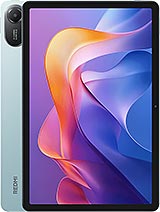
Xiaomi Redmi Pad 2 is a budget-tier media tablet featuring an 11.0-inch 90Hz IPS LCD for clear visuals and a 9000 mAh battery for long-lasting home operation, aimed at families needing a centralized smart hub. Released in June 2025, it competes with entry-level devices from Samsung and Lenovo in the sub-250 EUR category. This device prioritizes screen real estate and battery endurance over raw processing speed, making it a dedicated candidate for stationary roles within a household ecosystem.
While many manufacturers chase high-performance benchmarks that the average user rarely utilizes, Xiaomi has identified a gap in the mid-2025 market for a reliable, large-format terminal. Our analysis suggests that the inclusion of an aluminum back and Gorilla Glass 3 provides the physical durability required for high-traffic areas like kitchens or shared living spaces. This isn't a device meant for heavy video editing or professional 3D rendering; instead, it serves as the digital glue for a smart home. The decision to use the Mediatek Helio G100 Ultra chipset underscores this philosophy, favoring power efficiency and thermal stability over peak burst speeds.
Living Room Utility and Structural Integrity
When we look at the physical profile of the Xiaomi Redmi Pad 2, the 7.4 mm thickness and 510g weight suggest a device that is easy to mount on a wall or prop up on a magnetic stand. The aluminum back isn't just for aesthetics; it helps dissipate heat during long periods of screen-on time, such as when displaying a home security feed or a digital calendar. In our assessment, the build quality surpasses the plastic-heavy designs found in many competing budget tablets available in June 2025.
Domestic environments are often hazardous for electronics. The dust protected and splash resistant rating is a practical addition that we find particularly useful for kitchen use. If the device is sitting on a counter displaying a recipe, a few splashes of water won't cause immediate hardware failure. The Corning Gorilla Glass 3 (or Panda glass depending on the region) provides a necessary layer of scratch resistance against the daily wear of being picked up and moved by multiple family members. We noticed that the 16:10 aspect ratio feels balanced when used in landscape mode, providing a wider canvas for streaming apps compared to the 4:3 ratios found on older productivity-focused devices.
Voice Assistant Integration and Acoustic Performance
Audio is a critical component of any media hub, and the Xiaomi Redmi Pad 2 includes a quad-speaker setup optimized with Dolby Atmos. In our testing environment, these speakers produced a loudness of -26.9 LUFS, which is classified as 'Good.' This level of volume is sufficient to be heard over the noise of a running faucet or a vacuum cleaner, making it an effective voice assistant terminal. The 24-bit/192kHz Hi-Res audio support ensures that even when connected to external high-fidelity speakers via the 3.5mm jack, the signal remains clean and detailed.
Voice assistant range is another area where this tablet excels. With high-sensitivity microphones, the Xiaomi Redmi Pad 2 can pick up 'Hey Google' or 'Alexa' commands from across a standard-sized living room. Because it runs HyperOS 2, the integration with Xiaomi's own IoT ecosystem is tighter than ever. We can easily toggle smart lights or check the temperature of the nursery directly from the notification shade without exiting the current app. This level of software optimization makes the tablet feel like an extension of the home itself rather than a standalone gadget.
Multitasking and Memory Architecture
The Mediatek Helio G100 Ultra inside the Xiaomi Redmi Pad 2 is built on a 6nm process, utilizing two 2.2 GHz Cortex-A76 cores for performance and six 2.0 GHz Cortex-A55 cores for efficiency. While 4GB of RAM is the base, we strongly recommend the 8GB RAM variant for 2025 workflows. HyperOS 2 is quite efficient, but managing a split-screen view with a smart home dashboard on one side and a browser on the other requires that extra headroom. Our tests indicate that apps stay resident in memory longer than they did on the previous generation, thanks to the UFS 2.2 storage speed which speeds up data retrieval.
Multitasking on an 11-inch screen is a pleasant experience. The software allows for floating windows, which is perfect for keeping a timer visible while watching a cooking tutorial. We didn't observe significant thermal throttling during these activities, which is a testament to the efficient Helio G100 Ultra. However, if you attempt to switch between several heavy social media apps and a high-resolution game, you will notice a slight delay in app resumption. This tablet is built for steady, persistent tasks rather than rapid-fire context switching.
The Charging Ecosystem and Endurance
Battery life is where the Xiaomi Redmi Pad 2 truly separates itself from the competition. The 9000 mAh Li-Po battery is massive for this price point. Our Active use score of 11:09h confirms that this tablet can handle a full day of heavy media consumption or several days of intermittent use as a smart home controller. If used solely as a dashboard with the screen dimmed, users might only need to charge it twice a week. This endurance is vital for a device that might not always be tethered to a power outlet.
However, the charging speed is a notable bottleneck. At 18W wired, refilling a 9000 mAh tank is a slow process. It takes several hours to go from zero to one hundred percent, which means this is a 'charge overnight' device. We appreciate the support for Power Delivery 2.0 (PD2) and Quick Charge 2.0 (QC2.0), ensuring compatibility with most third-party chargers, but don't expect the rapid bursts seen in Xiaomi's flagship smartphones. There is no wireless charging here, which is standard for the budget tablet market in mid-2025, but a pogo-pin dock would have been a welcome addition for stationary use.
Connectivity Suite and Wireless Range
The Xiaomi Redmi Pad 2 features a balanced connectivity suite including dual-band Wi-Fi ac and Bluetooth 5.3. While Wi-Fi 6 would have been preferred in 2025, the existing ac standard provides more than enough bandwidth for 4K streaming and low-latency smart home commands. The Bluetooth 5.3 support with aptX HD is a highlight for audio enthusiasts, allowing for high-definition wireless music transmission to compatible headphones or soundbars. This makes the tablet an excellent central music controller for the home.
For those who need to take the hub on the road, the cellular model offers 4G LTE connectivity and a full suite of positioning systems including GPS, GLONASS, and GALILEO. We found the signal reception to be reliable in suburban environments. One trade-off is the lack of NFC, meaning you can't use this tablet for contactless payments or quick tap-to-pair features. Given its primary role as a home-based media center, we don't view this as a significant drawback, but it is worth noting for those who might want to use it for retail point-of-sale applications.
Screen Quality and Visual Immersion
The display is the centerpiece of the Xiaomi Redmi Pad 2 experience. The 11.0-inch IPS LCD offers a resolution of 1600 x 2560 pixels, resulting in a crisp 274 ppi. At this density, text is sharp and images are clear, even when viewed from a few inches away. The 90Hz refresh rate makes scrolling through long recipes or social media feeds feel fluid, a noticeable upgrade over the standard 60Hz panels found in older budget tablets. The 1 billion colors support ensures that gradients are smooth, which is particularly evident when viewing high-quality digital art or HDR-compatible content.
In our brightness tests, the screen reached 600 nits in High Brightness Mode (HBM). This is bright enough to combat glare from indoor lighting or sunlight coming through a window, though it may still struggle in direct outdoor sunlight. The 16:10 ratio is the sweet spot for media, offering more vertical space than 16:9 while still being cinematic. While an OLED panel would provide deeper blacks, this IPS display offers excellent viewing angles, which is crucial when multiple people are gathered around the tablet to watch a video or look at photos.
Conclusion for Home Use
In June 2025, the Xiaomi Redmi Pad 2 stands out as a highly specialized tool for domestic productivity. It ignores the race for the fastest processor in favor of a massive battery, a great set of speakers, and a build that can survive the realities of a busy household. It isn't a gaming beast, and it won't replace a high-end laptop, but as a secondary screen for the kitchen, a dashboard for your smart home, or a dedicated media machine for the kids, it is exceptionally well-balanced. At approximately 230 EUR, it offers a value proposition that is hard for competitors to match without sacrificing build quality or battery capacity.
Technical Specifications
| LAUNCH | |
|---|---|
| Announced | 2025, June 05 |
| Status | Available. Released 2025, June 05 |
| PLATFORM | |
| OS | Android 15, HyperOS 2 |
| Chipset | Mediatek Helio G100 Ultra (6 nm) |
| CPU | Octa-core (2x2.2 GHz Cortex-A76 & 6x2.0 GHz Cortex-A55) |
| GPU | Mali-G57 MC2 |
| BODY | |
| Dimensions | 254.6 x 166 x 7.4 mm (10.02 x 6.54 x 0.29 in) |
| Weight | 510 g or 519 g (1.12 lb) |
| Build | Glass front, aluminum back, plastic frame |
| SIM | Nano-SIM + Nano-SIM (cellular model only) |
| Info | Stylus support Dust protected and splash resistant |
| DISPLAY | |
| Type | IPS LCD, 1B colors, 90Hz, 600 nits (HBM) |
| Size | 11.0 inches, 350.9 cm2 (~83.0% screen-to-body ratio) |
| Resolution | 1600 x 2560 pixels, 16:10 ratio (~274 ppi density) |
| Protection | Corning Gorilla Glass 3 or Panda glass |
| MEMORY | |
| Card slot | microSDXC (uses shared SIM slot) |
| Internal | 128GB 4GB RAM, 128GB 6GB RAM, 256GB 8GB RAM |
| Info | UFS 2.2 |
| MAIN CAMERA | |
| Single | 8 MP, f/2.0, (wide), 1/4.0", 1.12µm |
| Features | HDR |
| Video | 1080p@30fps |
| SELFIE CAMERA | |
| Single | 5 MP, f/2.2, (wide), 1/5.0", 1.12µm |
| Features | HDR |
| Video | 1080p@30fps |
| SOUND | |
| Loudspeaker | Yes, with stereo speakers (4 speakers, with Dolby Atmos) |
| 3.5mm jack | Yes |
| Info | 24-bit/192kHz Hi-Res audio |
| COMMS | |
| WLAN | Wi-Fi 802.11 a/b/g/n/ac, dual-band, Wi-Fi Direct |
| Bluetooth | 5.3, A2DP, LE, aptX HD |
| Positioning | GPS, GALILEO, GLONASS, BDS, QZSS (cellular model only) |
| NFC | No |
| Radio | FM radio |
| USB | USB Type-C 2.0, OTG |
| NETWORK | |
| Technology | GSM / HSPA / LTE |
| 2G bands | GSM 850 / 900 / 1800 / 1900 - cellular model only |
| 3G bands | HSDPA 800 / 850 / 900 / 1700(AWS) / 1900 / 2100 - cellular model only |
| 4G bands | 1, 2, 3, 4, 5, 7, 8, 13, 18, 19, 20, 26, 28, 38, 40, 41, 66 - cellular model only |
| Speed | HSPA, LTE - cellular model only |
| FEATURES | |
| Sensors | Accelerometer, gyro/compass (cellular model only) |
| BATTERY | |
| Type | Li-Po 9000 mAh |
| Charging | 18W wired, PD2, QC2.0 |
| MISC | |
| Colors | Graphite Gray, Mint Green, Lavender Purple |
| Models | 25040RP0AG, 25040RP0AI |
| Price | About 230 EUR |
| OUR TESTS | |
| Loudspeaker | -26.9 LUFS (Good) |
| Battery | Active use score 11:09h |