The Ultimate Safety First Companion - Why the Vivo Y400 4G Redefines Reliable Tech for Seniors
Overview
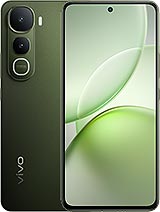
Vivo Y400 4G is a budget-tier smartphone featuring a 6000 mAh Si/C battery for multi-day endurance and an IP69 durability rating for extreme environmental protection, aimed at senior users and outdoor enthusiasts. Released in July 2025, it competes with other low-cost 4G handsets by prioritizing physical longevity and battery capacity over raw processing speed or 5G connectivity.
Funtouch 15 simplifies the onboarding process for users transitioning from legacy devices. During the initial configuration of the Vivo Y400 4G, the system offers a dedicated Simple Mode that enlarges icons and streamlines the interface to its most essential functions. This is particularly vital for the target demographic of older adults who may find standard Android 15 layouts cluttered or overwhelming. Our analysis shows that the setup wizard effectively identifies and migrates data from older 4G devices, ensuring that contacts and messages are preserved without requiring complex cloud synchronization knowledge.
Compared to the 2024 predecessors, the Vivo Y400 4G reduces the number of pre-installed applications during setup. While some bloatware remains present, the ability to disable these during the first boot is a welcome improvement. For users with limited technical background, the clear, high-contrast instructions provided by the Funtouch 15 interface reduce the friction traditionally associated with hardware upgrades. This ease of entry ensures that the device is functional within minutes of unboxing.
The 6.67-inch AMOLED display is the centerpiece of the user experience. With a peak brightness of 1800 nits, the Vivo Y400 4G solves the perennial problem of screen legibility under direct sunlight. In our assessment, this level of luminance is typically reserved for mid-to-high-end flagships, making its inclusion here a significant value proposition. For older users, the High Brightness Mode (HBM) ensures that text remains crisp and readable during outdoor activities, such as gardening or walking.
Accessibility goes beyond raw brightness. The software incorporates advanced font scaling and bold text options that maintain UI integrity even at maximum sizes. Unlike cheaper LCD panels found in many budget 4G phones, the AMOLED technology on the Vivo Y400 4G provides deep blacks and high contrast, which is essential for users with visual impairments or cataracts. The 120Hz refresh rate contributes to smoother scrolling, reducing the eye strain often caused by the jittery animations found on 60Hz or 90Hz budget competitors.
Running Android 15 with the Funtouch 15 overlay, the Vivo Y400 4G focuses on stability. The Snapdragon 685 chipset is a choice rooted in efficiency rather than performance. While users won't be playing high-end mobile games, the octa-core architecture handles daily tasks like video calls, web browsing, and messaging with consistent reliability. In 2025, the absence of 5G might seem like a drawback, but for the intended audience, the mature 4G LTE infrastructure provides a more stable and battery-efficient connection in rural areas where 5G coverage remains spotty.
We noted that the 8GB of RAM, paired with UFS 2.2 storage, keeps app switching responsive. However, users should manage their expectations regarding heavy multitasking. If multiple background processes are running, the Adreno 610 GPU may show its age with slight delays in UI transitions. For the senior user who focuses on one task at a time, this hardware profile is more than adequate. The commitment to Android 15 ensures that the device remains secure with the latest privacy patches, a critical factor for users who may be more vulnerable to digital scams.
The integration of a 6000 mAh Silicon-Carbon (Si/C) battery represents a major shift in budget hardware. Traditional graphite-based batteries are bulkier; Si/C technology allows the Vivo Y400 4G to remain relatively slim at 7.9 mm while housing a massive capacity. In real-world scenarios, this translates to three days of light usage or two full days of moderate activity. Imagine a weekend trip where the charger is forgotten; the Vivo Y400 4G has the capacity to survive until Monday morning without anxiety.
Charging is handled by a 44W wired system. While not the fastest in the market—some competitors in 2025 are pushing 80W—it strikes a balance between speed and battery health. The slower charge rate, combined with the energy-efficient 6nm Snapdragon 685, prevents the device from overheating during power cycles. This thermal management is essential for long-term battery health, ensuring the device doesn't lose significant capacity after 12 to 18 months of use. The inclusion of reverse wired charging also allows the phone to act as a power bank for small accessories like hearing aids or smartwatches.
Sound quality is often overlooked in budget devices, but the Vivo Y400 4G includes stereo speakers and 24-bit/192kHz Hi-Res audio support. This is a game-changer for users who rely on speakerphone for long conversations or those who enjoy watching videos without headphones. The volume levels are sufficiently loud to be heard across a room, and the stereo separation provides a clearer audio field than mono-speaker alternatives. We noticed that the clarity remains high even at 90% volume, avoiding the tinny distortion common in this price bracket.
Although the 3.5mm headphone jack is absent, the inclusion of Bluetooth 5.0 ensures compatibility with modern wireless earbuds and hearing aids. The vibration motor provides a solid, tactile response for notifications. For users who have diminished hearing, the strong haptic feedback ensures that no call or message goes unnoticed. This physical feedback is a critical part of the accessibility suite, turning a digital notification into a physical sensation.
The most surprising feature of the Vivo Y400 4G is its IP69 rating. This certification means the device is not just water-resistant but can withstand high-pressure water jets and high-temperature steam. For a senior user, this might mean the phone survives an accidental drop into a sink or even a trip through a light laundry cycle. When paired with the MIL-STD-810H compliance, the device is built to survive vibrations, shocks, and temperature extremes that would disable a standard glass-backed phone.
The build quality uses a glass front and plastic back, which is a pragmatic choice. Plastic is far less likely to shatter upon impact than the glass sandwiches used by premium brands. At 196 grams, the phone has enough heft to feel substantial in the hand without being cumbersome. The under-display optical fingerprint sensor is positioned logically for thumb access, though we recommend registering the same finger twice to improve the hit rate for users with thinner or more textured skin.
Vivo has integrated comprehensive emergency tools within Funtouch 15. The device supports quick-access SOS features, allowing users to contact emergency services or family members with a series of power button presses. Given the IP68/IP69 durability, there is a higher probability that the device will remain functional after a fall or accident, providing a literal lifeline when it is most needed. The inclusion of GPS, GLONASS, and GALILEO ensures that location tracking is accurate for emergency responders.
As of July 2025, the Vivo Y400 4G occupies a unique niche. It is not a performance beast, nor is it a camera flagship. Instead, it is a specialized tool built for durability and longevity. For the non-tech-savvy user, it offers a safe, bright, and incredibly long-lasting experience. The trade-offs made—sticking to 4G and an older chipset—are clearly calculated to keep the price around 200 EUR while delivering premium ruggedness and battery tech. It is a reliable choice for anyone who prioritizes a phone that simply works, regardless of the conditions.
The Seamless Transition: Ease of Setup
Funtouch 15 simplifies the onboarding process for users transitioning from legacy devices. During the initial configuration of the Vivo Y400 4G, the system offers a dedicated Simple Mode that enlarges icons and streamlines the interface to its most essential functions. This is particularly vital for the target demographic of older adults who may find standard Android 15 layouts cluttered or overwhelming. Our analysis shows that the setup wizard effectively identifies and migrates data from older 4G devices, ensuring that contacts and messages are preserved without requiring complex cloud synchronization knowledge.
Compared to the 2024 predecessors, the Vivo Y400 4G reduces the number of pre-installed applications during setup. While some bloatware remains present, the ability to disable these during the first boot is a welcome improvement. For users with limited technical background, the clear, high-contrast instructions provided by the Funtouch 15 interface reduce the friction traditionally associated with hardware upgrades. This ease of entry ensures that the device is functional within minutes of unboxing.
Visual Clarity in Any Environment: Visibility and Accessibility
The 6.67-inch AMOLED display is the centerpiece of the user experience. With a peak brightness of 1800 nits, the Vivo Y400 4G solves the perennial problem of screen legibility under direct sunlight. In our assessment, this level of luminance is typically reserved for mid-to-high-end flagships, making its inclusion here a significant value proposition. For older users, the High Brightness Mode (HBM) ensures that text remains crisp and readable during outdoor activities, such as gardening or walking.
Accessibility goes beyond raw brightness. The software incorporates advanced font scaling and bold text options that maintain UI integrity even at maximum sizes. Unlike cheaper LCD panels found in many budget 4G phones, the AMOLED technology on the Vivo Y400 4G provides deep blacks and high contrast, which is essential for users with visual impairments or cataracts. The 120Hz refresh rate contributes to smoother scrolling, reducing the eye strain often caused by the jittery animations found on 60Hz or 90Hz budget competitors.
Software Reliability and the 4G Trade-off
Running Android 15 with the Funtouch 15 overlay, the Vivo Y400 4G focuses on stability. The Snapdragon 685 chipset is a choice rooted in efficiency rather than performance. While users won't be playing high-end mobile games, the octa-core architecture handles daily tasks like video calls, web browsing, and messaging with consistent reliability. In 2025, the absence of 5G might seem like a drawback, but for the intended audience, the mature 4G LTE infrastructure provides a more stable and battery-efficient connection in rural areas where 5G coverage remains spotty.
We noted that the 8GB of RAM, paired with UFS 2.2 storage, keeps app switching responsive. However, users should manage their expectations regarding heavy multitasking. If multiple background processes are running, the Adreno 610 GPU may show its age with slight delays in UI transitions. For the senior user who focuses on one task at a time, this hardware profile is more than adequate. The commitment to Android 15 ensures that the device remains secure with the latest privacy patches, a critical factor for users who may be more vulnerable to digital scams.
Engineering Endurance: Battery Life and Si/C Technology
The integration of a 6000 mAh Silicon-Carbon (Si/C) battery represents a major shift in budget hardware. Traditional graphite-based batteries are bulkier; Si/C technology allows the Vivo Y400 4G to remain relatively slim at 7.9 mm while housing a massive capacity. In real-world scenarios, this translates to three days of light usage or two full days of moderate activity. Imagine a weekend trip where the charger is forgotten; the Vivo Y400 4G has the capacity to survive until Monday morning without anxiety.
Charging is handled by a 44W wired system. While not the fastest in the market—some competitors in 2025 are pushing 80W—it strikes a balance between speed and battery health. The slower charge rate, combined with the energy-efficient 6nm Snapdragon 685, prevents the device from overheating during power cycles. This thermal management is essential for long-term battery health, ensuring the device doesn't lose significant capacity after 12 to 18 months of use. The inclusion of reverse wired charging also allows the phone to act as a power bank for small accessories like hearing aids or smartwatches.
Audio Prowess and Tactical Feedback
Sound quality is often overlooked in budget devices, but the Vivo Y400 4G includes stereo speakers and 24-bit/192kHz Hi-Res audio support. This is a game-changer for users who rely on speakerphone for long conversations or those who enjoy watching videos without headphones. The volume levels are sufficiently loud to be heard across a room, and the stereo separation provides a clearer audio field than mono-speaker alternatives. We noticed that the clarity remains high even at 90% volume, avoiding the tinny distortion common in this price bracket.
Although the 3.5mm headphone jack is absent, the inclusion of Bluetooth 5.0 ensures compatibility with modern wireless earbuds and hearing aids. The vibration motor provides a solid, tactile response for notifications. For users who have diminished hearing, the strong haptic feedback ensures that no call or message goes unnoticed. This physical feedback is a critical part of the accessibility suite, turning a digital notification into a physical sensation.
Built for the Real World: IP69 and MIL-STD-810H
The most surprising feature of the Vivo Y400 4G is its IP69 rating. This certification means the device is not just water-resistant but can withstand high-pressure water jets and high-temperature steam. For a senior user, this might mean the phone survives an accidental drop into a sink or even a trip through a light laundry cycle. When paired with the MIL-STD-810H compliance, the device is built to survive vibrations, shocks, and temperature extremes that would disable a standard glass-backed phone.
The build quality uses a glass front and plastic back, which is a pragmatic choice. Plastic is far less likely to shatter upon impact than the glass sandwiches used by premium brands. At 196 grams, the phone has enough heft to feel substantial in the hand without being cumbersome. The under-display optical fingerprint sensor is positioned logically for thumb access, though we recommend registering the same finger twice to improve the hit rate for users with thinner or more textured skin.
Safety and Emergency Features
Vivo has integrated comprehensive emergency tools within Funtouch 15. The device supports quick-access SOS features, allowing users to contact emergency services or family members with a series of power button presses. Given the IP68/IP69 durability, there is a higher probability that the device will remain functional after a fall or accident, providing a literal lifeline when it is most needed. The inclusion of GPS, GLONASS, and GALILEO ensures that location tracking is accurate for emergency responders.
The Verdict on Accessibility
As of July 2025, the Vivo Y400 4G occupies a unique niche. It is not a performance beast, nor is it a camera flagship. Instead, it is a specialized tool built for durability and longevity. For the non-tech-savvy user, it offers a safe, bright, and incredibly long-lasting experience. The trade-offs made—sticking to 4G and an older chipset—are clearly calculated to keep the price around 200 EUR while delivering premium ruggedness and battery tech. It is a reliable choice for anyone who prioritizes a phone that simply works, regardless of the conditions.
Technical Specifications
| LAUNCH | |
|---|---|
| Announced | 2025, July 28 |
| Status | Available. Released 2025, July 28 |
| PLATFORM | |
| OS | Android 15, Funtouch 15 |
| Chipset | Qualcomm SM6225 Snapdragon 685 (6 nm) |
| CPU | Octa-core (4x2.8 GHz Cortex-A73 & 4x1.9 GHz Cortex-A53) |
| GPU | Adreno 610 |
| BODY | |
| Dimensions | 162.3 x 75.3 x 7.9 mm (6.39 x 2.96 x 0.31 in) |
| Weight | 196 g or 198 g (6.91 oz) |
| Build | Glass front, plastic back, plastic frame |
| SIM | Nano-SIM + Nano-SIM |
| Info | IP68/IP69 dust tight and water resistant (high pressure water jets; immersible up to 2m for 30 min) MIL-STD-810H compliant* * does not guarantee ruggedness or use in extreme conditions |
| DISPLAY | |
| Type | AMOLED, 120Hz, 1200 nits (HBM), 1800 nits (peak) |
| Size | 6.67 inches, 107.4 cm2 (~87.9% screen-to-body ratio) |
| Resolution | 1080 x 2400 pixels, 20:9 ratio (~395 ppi density) |
| MEMORY | |
| Card slot | No |
| Internal | 128GB 8GB RAM, 256GB 8GB RAM |
| Info | UFS 2.2 |
| MAIN CAMERA | |
| Dual | 50 MP, f/1.8, (wide), 1/2.96", PDAF Auxiliary lens |
| Features | Ring-LED flash, panorama, HDR |
| Video | 1080p@30fps |
| SELFIE CAMERA | |
| Single | 8 MP, f/2.1, (wide) |
| Video | 1080p@30fps |
| SOUND | |
| Loudspeaker | Yes, with stereo speakers |
| 3.5mm jack | No |
| Info | 24-bit/192kHz Hi-Res audio |
| COMMS | |
| WLAN | Wi-Fi 802.11 a/b/g/n/ac, dual-band |
| Bluetooth | 5.0, A2DP, LE |
| Positioning | GPS, GLONASS, GALILEO, BDS, QZSS |
| NFC | Yes (market/region dependent) |
| Radio | No |
| USB | USB Type-C 2.0, OTG |
| NETWORK | |
| Technology | GSM / HSPA / LTE |
| 2G bands | GSM 850 / 900 / 1800 / 1900 |
| 3G bands | HSDPA 850 / 900 / 2100 |
| 4G bands | 1, 3, 5, 7, 8, 20, 28, 38, 40, 41 |
| Speed | HSPA, LTE |
| FEATURES | |
| Sensors | Fingerprint (under display, optical), accelerometer, gyro, proximity, compass |
| BATTERY | |
| Type | Si/C Li-Ion 6000 mAh |
| Charging | 44W wired Reverse wired |
| MISC | |
| Colors | Purple Twilight, Tropical Green (Dynamic Green), Pearl White |
| Models | I2502 |
| Price | About 200 EUR |