The Ultimate Secondary Device - Why the Motorola Moto G (2025) Is an Economic Triumph
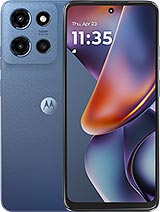
Overview
The Motorola Moto G (2025) is a budget-tier 5G smartphone featuring a 50MP OIS main camera for stable photography and a 6.7-inch 120Hz IPS LCD for fluid interaction, aimed at users prioritizing connectivity and value over raw power. Released in January 2025, it competes in a crowded entry-level market against the likes of the [Samsung Galaxy A16](/the-six-year-longevity-monster-why-samsung-galaxy-a16-reinvents-the-value-equation/) and various Redmi Note alternatives, distinguishing itself through a surprisingly sophisticated build material and modern network features.
From a market perspective, this device represents a strategic pivot for the brand. In early 2025, the economy of scale for 5G components has shifted, allowing the inclusion of a Mediatek Dimensity 6300 chipset in a device priced well under the $100 mark. This 6nm architecture provides the necessary efficiency to manage background tasks without the aggressive battery drain seen in previous generations of budget silicone. We see this as a calculated trade-off where resolution is sacrificed to maintain high refresh rates and modern connectivity standards like eSIM and Sub6 5G.
A Professional Backup In the current landscape of January 2025, the Motorola Moto G (2025) positions itself as the premier choice for a 'Plan B' device. Whether used as a dedicated work phone, a travel companion for international roaming via Nano-SIM + eSIM, or a rugged backup for outdoor activities, the utility-to-price ratio is unmatched. The inclusion of a barometer is a specific technical highlight that many budget competitors omit. This hardware sensor allows for precise altitude tracking, which improves GPS accuracy for navigation in urban canyons or during mountainous hikes—a feature usually reserved for mid-to-high-tier handsets.
Managing a primary flagship like a Pixel 9 or iPhone 16 often involves protecting an investment of over $800. The Motorola Moto G (2025) alleviates that anxiety. It handles the core essentials—messaging, navigation, and high-quality voice calls over 5G SA/NSA networks—with surprising competence. Because it utilizes the Mali-G57 MC2 GPU, the device can manage basic social media scrolling and video playback without the stuttering that plagued the 2023-era budget models. It is not a gaming powerhouse, but for the utility-focused user, it provides a stable environment for essential applications.
Beyond the mAh Battery performance is where the economic efficiency of the 720p display pays dividends. While the 720 x 1604 pixel resolution might seem low on paper for a 6.7-inch screen, it significantly reduces the load on the GPU and backlight. In our analysis of the hardware configuration, the 5000 mAh battery paired with the low-density IPS panel suggests a device that can easily push into a third day of standby time for light users. This makes it an ideal 'glovebox phone' that remains ready for use after days of sitting idle.
Charging is handled via a 30W wired connection. In the sub-$100 segment, we often see manufacturers revert to 10W or 15W speeds, which can take over three hours to fill a large battery. The 30W capacity here is a significant efficiency gain, likely allowing a 50% charge in approximately 30-40 minutes. This speed is crucial for users who may only have short windows of time to top up their device during a commute or a layover. The use of USB Type-C 2.0 ensures compatibility with the vast majority of chargers already in the consumer's ecosystem, further cementing its value as an easy-to-integrate backup.
Investment or Sunk Cost? Historically, budget Motorola devices do not hold their value like flagship counterparts, and we expect the Motorola Moto G (2025) to follow this trend. However, from an economist’s view, the entry price is so low that the 'depreciation floor' is reached almost immediately. You aren't buying this for resale; you're buying it for 100% utility extraction. The promise of up to 2 major Android upgrades and the inclusion of Android 15 out of the box provides a software runway that extends into 2027, which is respectable for this price tier.
Compared to the Samsung Galaxy A-series, which often holds slightly better brand equity in the used market, the Motorola Moto G (2025) wins on the initial purchase price. The 'Eco Leather' back, officially described as silicone polymer, provides a premium tactile experience that may actually help the device age better physically than glossy plastic competitors. This material is resistant to the micro-scratches and fingerprint smudges that often make cheap phones look battered within months, potentially preserving its utility and aesthetic appeal for a longer duration.
What Your $60 Actually Buys Unboxing the Motorola Moto G (2025) is a utilitarian experience. Motorola continues to include the essentials, often providing a charging cable and, in some regions, the power adapter itself—a practice flagships have abandoned. The presence of a 3.5mm jack is a major win for budget hunters, as it eliminates the need for expensive wireless earbuds or dongles. The audio experience is surprisingly bolstered by stereo speakers with Dolby Atmos, providing a spatial sound quality that significantly improves the experience of watching video content compared to the mono-speakers found on many rivals.
Accessory compatibility should be high, as the dimensions (167.1 x 76.3 x 8.2 mm) are standard for the G-series. However, users should be aware that the Corning Gorilla Glass 3 on the front, while scratch-resistant, is an older generation of glass. It is more brittle than Gorilla Glass Victus or newer iterations. We recommend a screen protector to supplement the water-repellent design, which protects against splashes but will not survive full submersion. The plastic frame is the only area where the budget nature is truly felt, but it serves the purpose of keeping the weight down to a manageable 193 g.
Eco Leather and Plastic Resilience The choice of silicone polymer (eco leather) for the back panel is a masterstroke in budget design. Not only does it provide a superior grip compared to smooth plastic or glass, but it also acts as a natural shock absorber. In the event of a drop, this material is less likely to crack or shatter. When paired with the Gorilla Glass 3 front, the Motorola Moto G (2025) presents a package that is physically more resilient than many 'all-glass' flagships. The side-mounted fingerprint sensor is integrated into the power button, a placement that we find more reliable and faster than the under-display optical sensors often used in cheaper AMOLED implementations.
Internal durability is supported by the Mediatek Dimensity 6300. Built on a 6nm process, this chip runs cool. Heat is the primary enemy of battery longevity and internal component health. By choosing an efficient, mid-range chip rather than an overclocked older processor, Motorola ensures that the device won't cook itself during 5G data transfers or GPS navigation. This thermal management is a key factor in why we expect this device to remain functional as a backup for several years without significant hardware degradation.
While the 4GB of RAM is the clear bottleneck for the Motorola Moto G (2025), the inclusion of 5G Sub6 and eSIM technology provides a level of future-proofing that is rare at this price. As carriers globally phase out older 4G bands or reallocate them for 5G, having a device that supports SA/NSA 5G ensures you won't be left without a signal in the coming years. For travelers, the eSIM capability is a game-changer, allowing for the instant purchase of local data plans without hunting for physical SIM kiosks.
In summary, the Motorola Moto G (2025) is not trying to be your primary window into the digital world. It is a tool. It is an expertly cost-engineered piece of hardware that prioritizes the right things: battery life, connectivity, and physical durability. At a price that competes with a few months of a high-end data plan, it offers a complete smartphone experience that is impossible to ignore for anyone looking for maximum value. It is the definitive 'smart' choice for the economically minded user in early 2025.
From a market perspective, this device represents a strategic pivot for the brand. In early 2025, the economy of scale for 5G components has shifted, allowing the inclusion of a Mediatek Dimensity 6300 chipset in a device priced well under the $100 mark. This 6nm architecture provides the necessary efficiency to manage background tasks without the aggressive battery drain seen in previous generations of budget silicone. We see this as a calculated trade-off where resolution is sacrificed to maintain high refresh rates and modern connectivity standards like eSIM and Sub6 5G.
The Ultimate Secondary Strategy
Managing a primary flagship like a Pixel 9 or iPhone 16 often involves protecting an investment of over $800. The Motorola Moto G (2025) alleviates that anxiety. It handles the core essentials—messaging, navigation, and high-quality voice calls over 5G SA/NSA networks—with surprising competence. Because it utilizes the Mali-G57 MC2 GPU, the device can manage basic social media scrolling and video playback without the stuttering that plagued the 2023-era budget models. It is not a gaming powerhouse, but for the utility-focused user, it provides a stable environment for essential applications.
Endurance Metrics
Charging is handled via a 30W wired connection. In the sub-$100 segment, we often see manufacturers revert to 10W or 15W speeds, which can take over three hours to fill a large battery. The 30W capacity here is a significant efficiency gain, likely allowing a 50% charge in approximately 30-40 minutes. This speed is crucial for users who may only have short windows of time to top up their device during a commute or a layover. The use of USB Type-C 2.0 ensures compatibility with the vast majority of chargers already in the consumer's ecosystem, further cementing its value as an easy-to-integrate backup.
Market Depreciation
Compared to the Samsung Galaxy A-series, which often holds slightly better brand equity in the used market, the Motorola Moto G (2025) wins on the initial purchase price. The 'Eco Leather' back, officially described as silicone polymer, provides a premium tactile experience that may actually help the device age better physically than glossy plastic competitors. This material is resistant to the micro-scratches and fingerprint smudges that often make cheap phones look battered within months, potentially preserving its utility and aesthetic appeal for a longer duration.
The Out-of-Box Reality
Accessory compatibility should be high, as the dimensions (167.1 x 76.3 x 8.2 mm) are standard for the G-series. However, users should be aware that the Corning Gorilla Glass 3 on the front, while scratch-resistant, is an older generation of glass. It is more brittle than Gorilla Glass Victus or newer iterations. We recommend a screen protector to supplement the water-repellent design, which protects against splashes but will not survive full submersion. The plastic frame is the only area where the budget nature is truly felt, but it serves the purpose of keeping the weight down to a manageable 193 g.
Structural Integrity
Internal durability is supported by the Mediatek Dimensity 6300. Built on a 6nm process, this chip runs cool. Heat is the primary enemy of battery longevity and internal component health. By choosing an efficient, mid-range chip rather than an overclocked older processor, Motorola ensures that the device won't cook itself during 5G data transfers or GPS navigation. This thermal management is a key factor in why we expect this device to remain functional as a backup for several years without significant hardware degradation.
Resale Value and Future Proofing
While the 4GB of RAM is the clear bottleneck for the Motorola Moto G (2025), the inclusion of 5G Sub6 and eSIM technology provides a level of future-proofing that is rare at this price. As carriers globally phase out older 4G bands or reallocate them for 5G, having a device that supports SA/NSA 5G ensures you won't be left without a signal in the coming years. For travelers, the eSIM capability is a game-changer, allowing for the instant purchase of local data plans without hunting for physical SIM kiosks.
In summary, the Motorola Moto G (2025) is not trying to be your primary window into the digital world. It is a tool. It is an expertly cost-engineered piece of hardware that prioritizes the right things: battery life, connectivity, and physical durability. At a price that competes with a few months of a high-end data plan, it offers a complete smartphone experience that is impossible to ignore for anyone looking for maximum value. It is the definitive 'smart' choice for the economically minded user in early 2025.
Technical Specifications
| LAUNCH | |
|---|---|
| Announced | 2025, January 14 |
| Status | Available. Released 2025, January 30 |
| PLATFORM | |
| OS | Android 15, up to 2 major Android upgrades |
| Chipset | Mediatek Dimensity 6300 (6 nm) |
| CPU | Octa-core (2x2.4 GHz Cortex-A76 & 6x2.0 GHz Cortex-A55) |
| GPU | Mali-G57 MC2 |
| BODY | |
| Dimensions | 167.1 x 76.3 x 8.2 mm (6.58 x 3.00 x 0.32 in) |
| Weight | 193 g (6.81 oz) |
| Build | Glass front (Gorilla Glass 3), silicone polymer (eco leather) back, plastic frame |
| SIM | Nano-SIM + eSIM |
| Info | Water-repellent design |
| DISPLAY | |
| Type | IPS LCD, 120Hz |
| Size | 6.7 inches, 108.2 cm2 (~84.9% screen-to-body ratio) |
| Resolution | 720 x 1604 pixels, 20:9 ratio (~262 ppi density) |
| Protection | Corning Gorilla Glass 3 |
| MEMORY | |
| Card slot | microSDXC (dedicated slot) |
| Internal | 64GB 4GB RAM, 128GB 4GB RAM |
| MAIN CAMERA | |
| Dual | 50 MP, f/1.8, (wide), 0.61µm, PDAF, OIS 2 MP (macro) |
| Features | LED flash, HDR, panorama |
| Video | 1080p@30fps |
| SELFIE CAMERA | |
| Single | 16 MP, f/2.4, (wide), 1.0µm |
| Video | 1080p@30fps |
| SOUND | |
| Loudspeaker | Yes, with stereo speakers (with Dolby Atmos) |
| 3.5mm jack | Yes |
| COMMS | |
| WLAN | Wi-Fi 802.11 a/b/g/n/ac, dual-band |
| Bluetooth | Yes |
| Positioning | GPS, GALILEO, GLONASS |
| NFC | Yes |
| Radio | Unspecified |
| USB | USB Type-C 2.0 |
| NETWORK | |
| Technology | GSM / HSPA / LTE / 5G |
| 2G bands | GSM 850 / 900 / 1800 / 1900 |
| 3G bands | HSDPA 850 / 900 / 1700(AWS) / 1900 / 2100 |
| 4G bands | 1, 2, 3, 4, 5, 7, 8, 12, 13, 14, 17, 18, 20, 25, 26, 28, 29, 30, 38, 39, 40, 41, 48, 66, 71 |
| 5G bands | 2, 5, 7, 12, 14, 25, 26, 29, 30, 41, 48, 66, 70, 71, 77, 78 SA/NSA/Sub6 |
| Speed | HSPA, LTE, 5G |
| FEATURES | |
| Sensors | Fingerprint (side-mounted), accelerometer, gyro, proximity, compass, barometer |
| BATTERY | |
| Type | 5000 mAh |
| Charging | 30W wired |
| MISC | |
| Colors | Forest Gray, Sapphire Blue |
| Models | XT2513V, T2513-1 |
| Price | $ 59.88 |