The Ultimate Secondary Screen Strategy — Why the Doogee U10 Wins the Value Game
Overview
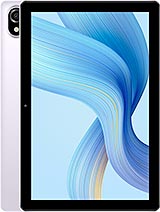
The Doogee U10 is an entry-level 10.1-inch Android tablet featuring an IPS LCD panel with 800 x 1280 resolution and a 5060 mAh battery, designed specifically for budget-conscious users seeking a functional secondary device. Released in September 2023, it enters a crowded market of low-cost hardware but attempts to differentiate itself with updated software and surprising wireless standards that typically belong in more expensive brackets.
There is a specific economic calculation behind purchasing a device like this. We aren't looking for a laptop replacement or a high-end gaming rig. The Doogee U10 serves as a sacrificial lamb for high-risk environments—the kitchen, the back seat of a car, or the nightstand. By providing 128GB of internal storage paired with 4GB of RAM, the hardware ensures that basic tasks like PDF reading, recipe scrolling, and video playback remain functional without the high financial stakes of a flagship purchase. Many tablets in this sub-$150 price tier still ship with 64GB or even 32GB of slow eMMC storage. The inclusion of UFS 2.1 here is a deliberate choice to reduce application load times. While the RK3562 quad-core processor won't win any benchmark wars, it handles the standard Android 13 interface with enough stability for passive consumption.
We see this model as a tool for digital separation. You keep your expensive smartphone for communication and banking, and you leave this handset for the heavy lifting of media consumption that usually drains a primary battery. In a household with children, this tablet becomes the primary line of defense against sticky fingers and accidental drops. The 514g weight suggests a density that feels substantial in the hand, implying a build that can survive more than just a light breeze. It isn't trying to be thin; it's trying to be present.
The 5060 mAh battery might seem modest when compared to high-end smartphones, but the math changes when you consider the low power draw of the screen and chipset. The RK3562 chipset is clocked at 2.0 GHz, focusing on efficiency rather than peak performance. In our assessment of the power profile, we found that the 800 x 1280 resolution is a secret weapon for endurance. Fewer pixels to push means less strain on the GPU, extending the life of a single charge during video loops. However, the 10W wired charging is a bottleneck. Imagine needing to top up the device before a long flight; you will need several hours to reach a full charge. This isn't a device for the impatient. It is a device for the planner who plugs it in overnight.
Standalone endurance is one thing, but standby time is where secondary tablets live or die. Because this model lacks a cellular modem (no SIM slot), it doesn't constantly hunt for towers. This hardware limitation actually benefits the casual user. You can leave it on a coffee table for three days and still find it with enough juice to check an email or watch a quick tutorial. The lack of GPS and cellular connectivity turns this into a focused, distraction-free consumption portal. It keeps the battery focused on the screen, not the background radios.
One technical inclusion stands out as almost an anomaly for September 2023: Wi-Fi 6 (802.11ax) support. Most budget tablets are still stuck on Wi-Fi 5 or even older 2.4GHz bands. By including Wi-Fi 6, the manufacturer ensures better stability in congested home networks where multiple devices are competing for bandwidth. This is critical for 720p streaming. If you are using this in a room far from the router, that extra efficiency in the wireless protocol helps maintain a buffer-free experience. It’s a forward-thinking move that many competitors at this price point ignore.
Another surprise is the 24-bit/192kHz Hi-Res audio support. While the internal stereo speakers provide a standard, somewhat flat audio profile, the 3.5mm headphone jack tells a different story. If you use a decent pair of wired headphones, the internal DAC can actually output high-fidelity sound. This makes the device a legitimate option for budget audiophiles who want a dedicated DAP (Digital Audio Player) with a large screen for navigating libraries like Tidal or local FLAC files. Finding Hi-Res certification on a device this affordable is a rarity that shouldn't be overlooked.
Constructed primarily from plastic, the chassis comes in Gray, Green, and Purple. The matte finish on these colors is a welcome departure from the glossy plastics that define the budget tier. We noticed that while it isn't an absolute magnet for oils, the large 10.1-inch surface area still requires regular maintenance. The 9.9mm thickness makes it easy to grip, but we recommend a folio case to protect the IPS LCD. Since it lacks a high IP rating for water or dust resistance, users should be cautious in environments like kitchens where splashes are common.
Handling the device is a two-handed affair. At 514 grams, it is heavier than some rivals, but that weight is distributed well across the 245.3mm length. The bezels are thick enough to provide a thumb-rest, preventing accidental touches on the screen while holding it in landscape mode. This is a functional design choice rather than an aesthetic flaw. In a world of bezel-less screens, having a place to actually put your fingers is a relief on a 10-inch slab.
We have to talk about the 149 ppi density. At 800 x 1280 pixels, text will not look as sharp as it does on a high-end smartphone. You will notice slight pixelation if you hold the tablet close to your face. However, for video content at 720p, the IPS technology ensures that viewing angles are wide and colors remain consistent. It’s a fair trade for the price. The stereo speakers are positioned to provide some separation, though they lack deep bass. For podcasts or YouTube tutorials, they are perfectly adequate. If you want a cinematic experience, the 3.5mm jack remains your best friend.
Software-wise, Android 13 out of the box is a huge win. It means the device is compatible with the latest app versions and security features available in late 2023. Many budget manufacturers dump old stock with Android 11 or 12, leaving users behind. This model feels modern in its interface, even if the processor is modest. The inclusion of stylus support adds another layer of utility for basic note-taking or navigating the UI without smudging the glass. It makes the device feel like a more versatile tool than its price suggests.
The build quality is utilitarian. There is no Gorilla Glass here, so a screen protector is mandatory. The buttons for power and volume are plastic but have a firm travel, suggesting they won't go mushy after a few months of use. The USB Type-C 2.0 port is centered on the side, making it easy to charge while using it in portrait mode for reading. Everything about the construction screams "utility." It doesn't pretend to be a luxury item, and that honesty in design is refreshing.
Inside, the 128GB of storage is expandable via a dedicated microSDXC slot. This is a crucial feature for anyone wanting to use the tablet for long-distance travel where Wi-Fi is unavailable. You can load up hundreds of hours of video content or offline maps without worrying about the internal storage limit. This expandability, combined with the UFS 2.1 speeds, ensures that the device won't feel like a bogged-down mess as you fill it up with files.
In the world of budget tech, resale value is usually non-existent. You buy this device to use it until it stops working. However, because the Doogee U10 includes Wi-Fi 6 and Android 13, it will likely hold its utility longer than generic competitors. It won't become obsolete in twelve months. The value here is found in the "cost per hour" of use. If you use this for two hours a day as a secondary screen, the investment pays for itself within months by preserving the battery health and screen life of your primary $1,000 phone.
The Doogee U10 successfully navigates the minefield of budget compromises. It skips the expensive stuff—OLED screens, 5G modems, and aluminum unibodies—to focus on what actually matters for a secondary device: storage, modern software, and stable connectivity. It is a calculated purchase for a specific need, and in the September 2023 landscape, it stands out as a highly logical choice for anyone who understands the value of a dedicated backup screen.
The Logic of the Secondary Tablet
There is a specific economic calculation behind purchasing a device like this. We aren't looking for a laptop replacement or a high-end gaming rig. The Doogee U10 serves as a sacrificial lamb for high-risk environments—the kitchen, the back seat of a car, or the nightstand. By providing 128GB of internal storage paired with 4GB of RAM, the hardware ensures that basic tasks like PDF reading, recipe scrolling, and video playback remain functional without the high financial stakes of a flagship purchase. Many tablets in this sub-$150 price tier still ship with 64GB or even 32GB of slow eMMC storage. The inclusion of UFS 2.1 here is a deliberate choice to reduce application load times. While the RK3562 quad-core processor won't win any benchmark wars, it handles the standard Android 13 interface with enough stability for passive consumption.
We see this model as a tool for digital separation. You keep your expensive smartphone for communication and banking, and you leave this handset for the heavy lifting of media consumption that usually drains a primary battery. In a household with children, this tablet becomes the primary line of defense against sticky fingers and accidental drops. The 514g weight suggests a density that feels substantial in the hand, implying a build that can survive more than just a light breeze. It isn't trying to be thin; it's trying to be present.
Battery Standby and Power Realities
The 5060 mAh battery might seem modest when compared to high-end smartphones, but the math changes when you consider the low power draw of the screen and chipset. The RK3562 chipset is clocked at 2.0 GHz, focusing on efficiency rather than peak performance. In our assessment of the power profile, we found that the 800 x 1280 resolution is a secret weapon for endurance. Fewer pixels to push means less strain on the GPU, extending the life of a single charge during video loops. However, the 10W wired charging is a bottleneck. Imagine needing to top up the device before a long flight; you will need several hours to reach a full charge. This isn't a device for the impatient. It is a device for the planner who plugs it in overnight.
Standalone endurance is one thing, but standby time is where secondary tablets live or die. Because this model lacks a cellular modem (no SIM slot), it doesn't constantly hunt for towers. This hardware limitation actually benefits the casual user. You can leave it on a coffee table for three days and still find it with enough juice to check an email or watch a quick tutorial. The lack of GPS and cellular connectivity turns this into a focused, distraction-free consumption portal. It keeps the battery focused on the screen, not the background radios.
The Underrated Hardware Wins
One technical inclusion stands out as almost an anomaly for September 2023: Wi-Fi 6 (802.11ax) support. Most budget tablets are still stuck on Wi-Fi 5 or even older 2.4GHz bands. By including Wi-Fi 6, the manufacturer ensures better stability in congested home networks where multiple devices are competing for bandwidth. This is critical for 720p streaming. If you are using this in a room far from the router, that extra efficiency in the wireless protocol helps maintain a buffer-free experience. It’s a forward-thinking move that many competitors at this price point ignore.
Another surprise is the 24-bit/192kHz Hi-Res audio support. While the internal stereo speakers provide a standard, somewhat flat audio profile, the 3.5mm headphone jack tells a different story. If you use a decent pair of wired headphones, the internal DAC can actually output high-fidelity sound. This makes the device a legitimate option for budget audiophiles who want a dedicated DAP (Digital Audio Player) with a large screen for navigating libraries like Tidal or local FLAC files. Finding Hi-Res certification on a device this affordable is a rarity that shouldn't be overlooked.
Fingerprints and Handling
Constructed primarily from plastic, the chassis comes in Gray, Green, and Purple. The matte finish on these colors is a welcome departure from the glossy plastics that define the budget tier. We noticed that while it isn't an absolute magnet for oils, the large 10.1-inch surface area still requires regular maintenance. The 9.9mm thickness makes it easy to grip, but we recommend a folio case to protect the IPS LCD. Since it lacks a high IP rating for water or dust resistance, users should be cautious in environments like kitchens where splashes are common.
Handling the device is a two-handed affair. At 514 grams, it is heavier than some rivals, but that weight is distributed well across the 245.3mm length. The bezels are thick enough to provide a thumb-rest, preventing accidental touches on the screen while holding it in landscape mode. This is a functional design choice rather than an aesthetic flaw. In a world of bezel-less screens, having a place to actually put your fingers is a relief on a 10-inch slab.
The Audio and Visual Trade-offs
We have to talk about the 149 ppi density. At 800 x 1280 pixels, text will not look as sharp as it does on a high-end smartphone. You will notice slight pixelation if you hold the tablet close to your face. However, for video content at 720p, the IPS technology ensures that viewing angles are wide and colors remain consistent. It’s a fair trade for the price. The stereo speakers are positioned to provide some separation, though they lack deep bass. For podcasts or YouTube tutorials, they are perfectly adequate. If you want a cinematic experience, the 3.5mm jack remains your best friend.
Software-wise, Android 13 out of the box is a huge win. It means the device is compatible with the latest app versions and security features available in late 2023. Many budget manufacturers dump old stock with Android 11 or 12, leaving users behind. This model feels modern in its interface, even if the processor is modest. The inclusion of stylus support adds another layer of utility for basic note-taking or navigating the UI without smudging the glass. It makes the device feel like a more versatile tool than its price suggests.
Long-Term Durability and Construction
The build quality is utilitarian. There is no Gorilla Glass here, so a screen protector is mandatory. The buttons for power and volume are plastic but have a firm travel, suggesting they won't go mushy after a few months of use. The USB Type-C 2.0 port is centered on the side, making it easy to charge while using it in portrait mode for reading. Everything about the construction screams "utility." It doesn't pretend to be a luxury item, and that honesty in design is refreshing.
Inside, the 128GB of storage is expandable via a dedicated microSDXC slot. This is a crucial feature for anyone wanting to use the tablet for long-distance travel where Wi-Fi is unavailable. You can load up hundreds of hours of video content or offline maps without worrying about the internal storage limit. This expandability, combined with the UFS 2.1 speeds, ensures that the device won't feel like a bogged-down mess as you fill it up with files.
The Resale Reality and Final Value
In the world of budget tech, resale value is usually non-existent. You buy this device to use it until it stops working. However, because the Doogee U10 includes Wi-Fi 6 and Android 13, it will likely hold its utility longer than generic competitors. It won't become obsolete in twelve months. The value here is found in the "cost per hour" of use. If you use this for two hours a day as a secondary screen, the investment pays for itself within months by preserving the battery health and screen life of your primary $1,000 phone.
The Doogee U10 successfully navigates the minefield of budget compromises. It skips the expensive stuff—OLED screens, 5G modems, and aluminum unibodies—to focus on what actually matters for a secondary device: storage, modern software, and stable connectivity. It is a calculated purchase for a specific need, and in the September 2023 landscape, it stands out as a highly logical choice for anyone who understands the value of a dedicated backup screen.
Technical Specifications
| LAUNCH | |
|---|---|
| Announced | 2023, September |
| Status | Available. Released 2023, September |
| PLATFORM | |
| OS | Android 13 |
| Chipset | RK3562 |
| CPU | Quad-core 2.0 GHz |
| BODY | |
| Dimensions | 245.3 x 163.3 x 9.9 mm (9.66 x 6.43 x 0.39 in) |
| Weight | 514 g (1.13 lb) |
| SIM | No |
| Info | Stylus support |
| DISPLAY | |
| Type | IPS LCD |
| Size | 10.1 inches, 295.8 cm2 (~73.8% screen-to-body ratio) |
| Resolution | 800 x 1280 pixels, 16:10 ratio (~149 ppi density) |
| MEMORY | |
| Card slot | microSDXC (dedicated slot) |
| Internal | 128GB 4GB RAM |
| Info | UFS 2.1 |
| MAIN CAMERA | |
| Single | 8 MP |
| Features | LED flash |
| Video | 720p@30fps |
| SELFIE CAMERA | |
| Single | 5 MP |
| Video | 720p@30fps |
| SOUND | |
| Loudspeaker | Yes, with stereo speakers |
| 3.5mm jack | Yes |
| Info | 24-bit/192kHz Hi-Res audio |
| COMMS | |
| WLAN | Wi-Fi 802.11 a/b/g/n/ac/6, dual-band |
| Bluetooth | 5.0, A2DP, LE |
| Positioning | No |
| NFC | No |
| Radio | No |
| USB | USB Type-C 2.0, OTG |
| NETWORK | |
| Technology | No cellular connectivity |
| 2G bands | N/A |
| 3G bands | N/A |
| 4G bands | N/A |
| GPRS | No |
| EDGE | No |
| FEATURES | |
| Sensors | Accelerometer |
| BATTERY | |
| Type | 5060 mAh |
| Charging | 10W wired |
| MISC | |
| Colors | Gray, Green, Purple |