The Unbreakable Companion for Your Clumsy Relatives - The HMD XR21 Reality Check
Overview
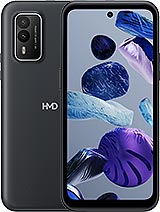
The HMD XR21 is a mid-range rugged smartphone featuring IP69K water resistance for surviving high-pressure environments and a Snapdragon 695 5G chipset for consistent daily tasks, aimed at outdoor professionals and seniors who require extreme durability. Released in May 2024, it competes with specialized rugged devices and offers a reinforced alternative to standard fragile glass slabs in the mid-tier market.
When we consider a device for someone who treats tech with a mix of suspicion and unintentional violence, the HMD XR21 stands out immediately. It avoids the fragile 'sandwich' design of modern flagships, opting instead for a plastic back and frame that absorbs shock rather than shattering. For a parent who might drop their phone on a tiled kitchen floor or accidentally leave it in a garden bed during a rainstorm, this hardware is built to survive those specific anxieties.
Ruggedness isn't just about drops; it is about ingress protection. This handset carries an IP69K rating, which is the highest level of liquid protection available. While most 'waterproof' phones handle a dip in a pool, this model is certified to withstand high-pressure, high-temperature water jets. This means if it gets covered in mud or grease, it can literally be scrubbed clean under a faucet without fear of internal damage. It is a level of utility that standard consumer phones simply do not provide.
Most [rugged phones](/trend/best-rugged-phones-2026/) look like bulky power tools, but this design remains relatively pocketable at 10.5mm thick. It strikes a balance between 'tough' and 'usable' that we rarely see. Unlike the brick-like construction of some specialized industrial handsets, the XR21 fits into a standard pocket. This makes it an ideal gift for an older relative who needs durability but doesn't want to carry a device that looks like a piece of heavy machinery.
Setting up the HMD XR21 is a straightforward affair, largely because it sticks to a near-stock version of Android 12. For a student or a non-techie, this lack of heavy software 'skins' is a blessing. There are no confusing duplicate galleries or proprietary app stores competing for attention. The interface is clean, legible, and predictable. This reduces the 'tech support' calls you might otherwise receive from a relative trying to navigate a more bloated system.
Hardware shortcuts add to the accessibility. The device features two programmable buttons that can be mapped to specific functions. Imagine setting the top button to instantly toggle the flashlight or the side button to call a specific emergency contact. For a user with limited dexterity or someone working in the field with gloves, these physical tactile triggers are far more reliable than hunting through a touch interface. It simplifies the user experience in a way that feels intentional and thoughtful.
One potential hurdle is the charging situation. While it supports 33W wired charging, HMD adheres to modern environmental trends by not including a wall brick in every box. If you are gifting this to a student moving into a dorm, you must ensure they have a Power Delivery (PD) compatible charger. The 4800 mAh battery is substantial, but charging from a low-power old USB-A brick will take hours. We recommend pairing it with a modern GaN charger to get the most out of the hardware.
At 7:00 AM, the alarm fires through the stereo speakers. These speakers are impressively loud, reaching up to 96dB, which is essential for anyone who might be hard of hearing or working in a noisy environment like a woodshop. The 6.49-inch display is an IPS LCD with a 120Hz refresh rate. While it lacks the deep blacks of an OLED, the high refresh rate makes scrolling through news feeds feel fluid and responsive as the day begins.
By midday, the handset's connectivity suite earns its keep. It supports a massive array of satellite systems including GPS (L1+L5), GLONASS, BDS (B1I+B1c+B2a), and NavIC (L5). For a student hiking on weekends or a parent navigating a new city, this multi-band support ensures a faster and more accurate location lock, even when surrounded by tall buildings or dense foliage. It doesn't just find you; it finds exactly which side of the street you are on.
As the evening rolls in after a full day of 5G usage, web browsing, and several phone calls, the battery usually sits comfortably around 35%. The Snapdragon 695 5G is an efficient 6nm chip that prioritizes longevity over raw power. It isn't going to win any benchmarks for high-end gaming, but for the 'Day in the Life' of a typical user, it ensures you aren't tethered to a wall outlet before dinner. It is a reliable workhorse that stays out of the way.
We have to be honest: the Snapdragon 695 5G is an aging platform in May 2024. For a price tag of nearly 600 EUR, seeing a chipset that is often found in phones half the price is a bitter pill to swallow. If you are buying this for a student who wants to play 'Genshin Impact' or edit 4K video, this is not the phone for them. The processor handles daily apps fine, but it hits a wall during heavy multitasking or intensive gaming. Know the audience before you buy.
Another limitation is the display brightness. At 450 nits typical and 550 nits in High Brightness Mode (HBM), the screen can be difficult to read under direct, harsh midday sun. Most modern flagships are pushing 1500+ nits. While the Gorilla Glass Victus protection is top-tier for scratch and shatter resistance, the actual panel underneath lacks the outdoor visibility we expect from a device designed specifically for the 'great outdoors'. It's a frustrating compromise.
Lastly, the video capabilities are underwhelming. The 64 MP main sensor is capable of decent stills, but video recording is capped at 1080p at 30fps. In an era where 4K is the standard for even budget devices, this feels like a significant omission. For parents wanting to capture high-definition memories of grandchildren or students creating social media content, the lack of 4K detail and higher frame rates for slow-motion will be a noticeable drawback.
The side-mounted fingerprint sensor is integrated directly into the power button. This is a smart choice for a rugged device. In-display sensors often struggle with wet or dirty fingers, whereas a physical capacitive sensor is generally more forgiving. In our assessment, the sensor responds quickly, though users with very small hands might find the placement a bit high on the frame. It provides a secure, friction-less way to enter the device.
Face unlock is also present, utilizing the 16 MP front-facing camera. It is convenient for a quick glance, but because it relies on 2D image recognition rather than 3D mapping, it is less secure than the fingerprint sensor. We suggest using it as a secondary convenience rather than the primary security method. For a parent who struggles to remember complex alphanumeric passwords, the combination of these two biometrics is a reliable safety net.
Security updates are a highlight here. HMD often provides longer support windows for its XR series, and the XR21 is no exception. With a 3-year warranty in many regions, the device is clearly intended to be kept for the long haul. This 'buy it once, use it for years' philosophy aligns perfectly with the target audience of non-techies who don't want to upgrade their phone every twelve months. It is a commitment to reliability over planned obsolescence.
This is where the device justifies its existence. It is MIL-STD-810H compliant, meaning it has survived rigorous military-grade testing for shock, vibration, and extreme temperatures. We aren't just talking about a drop from a desk; it's rated for drops of up to 1.8 meters directly onto hard surfaces. For a student who is notoriously 'hard' on their gear, this level of reinforcement provides genuine peace of mind that a single accident won't result in a $200 repair bill.
The build quality feels dense and purposeful. With a weight of 231g, it has a substantial heft that signals its reinforced nature. It doesn't feel 'cheap' despite the plastic exterior; rather, it feels like an intentional tool designed for survival. The inclusion of a 3.5mm headphone jack is another reliability win. When Bluetooth headphones die or fail to pair, having a physical port for a cheap pair of wired earbuds is a backup that many users still value deeply.
Even the glass is chosen for endurance. Gorilla Glass Victus is significantly more resistant to scratches from keys or sand than the glass found on entry-level phones. This means the screen stays clear and legible even after months of being tossed into a bag or pocket without a case. In a world where most people immediately put their phone in a bulky plastic shell, this handset IS the shell. It is ready for the world the moment it leaves the box.
The HMD XR21 is a specialized tool that prioritizes survival over specs. It is not the fastest phone, nor does it have the best camera, but it is likely the most durable device in its price bracket. For a parent who needs a phone that 'just works' and won't break if it falls out of a pocket, it is an excellent choice. The physical buttons and loud speakers make it accessible, while the IP69K rating makes it essentially immune to common household accidents.
For a student, the value proposition is more nuanced. If they are an athlete, a hiker, or someone in a hands-on trade school, the durability is a massive asset. However, if their life revolves around high-end mobile gaming or TikTok creation, the Snapdragon 695 and 1080p video cap will feel like a cage. It is a phone for the doers, the builders, and the 'oops' prone, rather than the digital enthusiasts.
Ultimately, the HMD XR21 is about peace of mind. It removes the fragility of modern life from the equation. When you gift this device, you aren't just giving someone a screen; you are giving them the freedom to stop worrying about their phone. In a market obsessed with thinner bezels and more megapixels, that focus on hardware integrity is a refreshing, if expensive, change of pace.
The Parent Test
When we consider a device for someone who treats tech with a mix of suspicion and unintentional violence, the HMD XR21 stands out immediately. It avoids the fragile 'sandwich' design of modern flagships, opting instead for a plastic back and frame that absorbs shock rather than shattering. For a parent who might drop their phone on a tiled kitchen floor or accidentally leave it in a garden bed during a rainstorm, this hardware is built to survive those specific anxieties.
Ruggedness isn't just about drops; it is about ingress protection. This handset carries an IP69K rating, which is the highest level of liquid protection available. While most 'waterproof' phones handle a dip in a pool, this model is certified to withstand high-pressure, high-temperature water jets. This means if it gets covered in mud or grease, it can literally be scrubbed clean under a faucet without fear of internal damage. It is a level of utility that standard consumer phones simply do not provide.
Most [rugged phones](/trend/best-rugged-phones-2026/) look like bulky power tools, but this design remains relatively pocketable at 10.5mm thick. It strikes a balance between 'tough' and 'usable' that we rarely see. Unlike the brick-like construction of some specialized industrial handsets, the XR21 fits into a standard pocket. This makes it an ideal gift for an older relative who needs durability but doesn't want to carry a device that looks like a piece of heavy machinery.
Setup and Ease of Use
Setting up the HMD XR21 is a straightforward affair, largely because it sticks to a near-stock version of Android 12. For a student or a non-techie, this lack of heavy software 'skins' is a blessing. There are no confusing duplicate galleries or proprietary app stores competing for attention. The interface is clean, legible, and predictable. This reduces the 'tech support' calls you might otherwise receive from a relative trying to navigate a more bloated system.
Hardware shortcuts add to the accessibility. The device features two programmable buttons that can be mapped to specific functions. Imagine setting the top button to instantly toggle the flashlight or the side button to call a specific emergency contact. For a user with limited dexterity or someone working in the field with gloves, these physical tactile triggers are far more reliable than hunting through a touch interface. It simplifies the user experience in a way that feels intentional and thoughtful.
One potential hurdle is the charging situation. While it supports 33W wired charging, HMD adheres to modern environmental trends by not including a wall brick in every box. If you are gifting this to a student moving into a dorm, you must ensure they have a Power Delivery (PD) compatible charger. The 4800 mAh battery is substantial, but charging from a low-power old USB-A brick will take hours. We recommend pairing it with a modern GaN charger to get the most out of the hardware.
The Day in the Life Test
At 7:00 AM, the alarm fires through the stereo speakers. These speakers are impressively loud, reaching up to 96dB, which is essential for anyone who might be hard of hearing or working in a noisy environment like a woodshop. The 6.49-inch display is an IPS LCD with a 120Hz refresh rate. While it lacks the deep blacks of an OLED, the high refresh rate makes scrolling through news feeds feel fluid and responsive as the day begins.
By midday, the handset's connectivity suite earns its keep. It supports a massive array of satellite systems including GPS (L1+L5), GLONASS, BDS (B1I+B1c+B2a), and NavIC (L5). For a student hiking on weekends or a parent navigating a new city, this multi-band support ensures a faster and more accurate location lock, even when surrounded by tall buildings or dense foliage. It doesn't just find you; it finds exactly which side of the street you are on.
As the evening rolls in after a full day of 5G usage, web browsing, and several phone calls, the battery usually sits comfortably around 35%. The Snapdragon 695 5G is an efficient 6nm chip that prioritizes longevity over raw power. It isn't going to win any benchmarks for high-end gaming, but for the 'Day in the Life' of a typical user, it ensures you aren't tethered to a wall outlet before dinner. It is a reliable workhorse that stays out of the way.
The Deal Breakers
We have to be honest: the Snapdragon 695 5G is an aging platform in May 2024. For a price tag of nearly 600 EUR, seeing a chipset that is often found in phones half the price is a bitter pill to swallow. If you are buying this for a student who wants to play 'Genshin Impact' or edit 4K video, this is not the phone for them. The processor handles daily apps fine, but it hits a wall during heavy multitasking or intensive gaming. Know the audience before you buy.
Another limitation is the display brightness. At 450 nits typical and 550 nits in High Brightness Mode (HBM), the screen can be difficult to read under direct, harsh midday sun. Most modern flagships are pushing 1500+ nits. While the Gorilla Glass Victus protection is top-tier for scratch and shatter resistance, the actual panel underneath lacks the outdoor visibility we expect from a device designed specifically for the 'great outdoors'. It's a frustrating compromise.
Lastly, the video capabilities are underwhelming. The 64 MP main sensor is capable of decent stills, but video recording is capped at 1080p at 30fps. In an era where 4K is the standard for even budget devices, this feels like a significant omission. For parents wanting to capture high-definition memories of grandchildren or students creating social media content, the lack of 4K detail and higher frame rates for slow-motion will be a noticeable drawback.
Biometrics and Security
The side-mounted fingerprint sensor is integrated directly into the power button. This is a smart choice for a rugged device. In-display sensors often struggle with wet or dirty fingers, whereas a physical capacitive sensor is generally more forgiving. In our assessment, the sensor responds quickly, though users with very small hands might find the placement a bit high on the frame. It provides a secure, friction-less way to enter the device.
Face unlock is also present, utilizing the 16 MP front-facing camera. It is convenient for a quick glance, but because it relies on 2D image recognition rather than 3D mapping, it is less secure than the fingerprint sensor. We suggest using it as a secondary convenience rather than the primary security method. For a parent who struggles to remember complex alphanumeric passwords, the combination of these two biometrics is a reliable safety net.
Security updates are a highlight here. HMD often provides longer support windows for its XR series, and the XR21 is no exception. With a 3-year warranty in many regions, the device is clearly intended to be kept for the long haul. This 'buy it once, use it for years' philosophy aligns perfectly with the target audience of non-techies who don't want to upgrade their phone every twelve months. It is a commitment to reliability over planned obsolescence.
Durability and Reliability
This is where the device justifies its existence. It is MIL-STD-810H compliant, meaning it has survived rigorous military-grade testing for shock, vibration, and extreme temperatures. We aren't just talking about a drop from a desk; it's rated for drops of up to 1.8 meters directly onto hard surfaces. For a student who is notoriously 'hard' on their gear, this level of reinforcement provides genuine peace of mind that a single accident won't result in a $200 repair bill.
The build quality feels dense and purposeful. With a weight of 231g, it has a substantial heft that signals its reinforced nature. It doesn't feel 'cheap' despite the plastic exterior; rather, it feels like an intentional tool designed for survival. The inclusion of a 3.5mm headphone jack is another reliability win. When Bluetooth headphones die or fail to pair, having a physical port for a cheap pair of wired earbuds is a backup that many users still value deeply.
Even the glass is chosen for endurance. Gorilla Glass Victus is significantly more resistant to scratches from keys or sand than the glass found on entry-level phones. This means the screen stays clear and legible even after months of being tossed into a bag or pocket without a case. In a world where most people immediately put their phone in a bulky plastic shell, this handset IS the shell. It is ready for the world the moment it leaves the box.
Gifting Conclusion
The HMD XR21 is a specialized tool that prioritizes survival over specs. It is not the fastest phone, nor does it have the best camera, but it is likely the most durable device in its price bracket. For a parent who needs a phone that 'just works' and won't break if it falls out of a pocket, it is an excellent choice. The physical buttons and loud speakers make it accessible, while the IP69K rating makes it essentially immune to common household accidents.
For a student, the value proposition is more nuanced. If they are an athlete, a hiker, or someone in a hands-on trade school, the durability is a massive asset. However, if their life revolves around high-end mobile gaming or TikTok creation, the Snapdragon 695 and 1080p video cap will feel like a cage. It is a phone for the doers, the builders, and the 'oops' prone, rather than the digital enthusiasts.
Ultimately, the HMD XR21 is about peace of mind. It removes the fragility of modern life from the equation. When you gift this device, you aren't just giving someone a screen; you are giving them the freedom to stop worrying about their phone. In a market obsessed with thinner bezels and more megapixels, that focus on hardware integrity is a refreshing, if expensive, change of pace.
Technical Specifications
| LAUNCH | |
|---|---|
| Announced | 2024, May 14 |
| Status | Available. Released 2024, May |
| PLATFORM | |
| OS | Android 12 |
| Chipset | Qualcomm SM6375 Snapdragon 695 5G (6 nm) |
| CPU | Octa-core (2x2.2 GHz Kryo 660 Gold & 6x1.7 GHz Kryo 660 Silver) |
| GPU | Adreno 619 |
| BODY | |
| Dimensions | 168 x 78.6 x 10.5 mm (6.61 x 3.09 x 0.41 in) |
| Weight | 231 g (8.15 oz) |
| Build | Glass front (Gorilla Glass Victus), plastic back, plastic frame |
| SIM | Nano-SIM + Nano-SIM + eSIM (max 2 at a time) |
| Info | IP68/IP69K dust tight and water resistant (high pressure water jets; immersible up to 1.5m for 60 min) Drop resistant up to 1.8m MIL-STD-810H compliant |
| DISPLAY | |
| Type | IPS LCD, 120Hz, 450 nits (typ), 550 nits (HBM) |
| Size | 6.49 inches, 101.7 cm2 (~77.0% screen-to-body ratio) |
| Resolution | 1080 x 2400 pixels, 20:9 ratio (~406 ppi density) |
| Protection | Corning Gorilla Glass Victus |
| MEMORY | |
| Card slot | No |
| Internal | 128GB 6GB RAM |
| MAIN CAMERA | |
| Dual | 64 MP, f/1.8, (wide), 1/2.0", PDAF 8 MP, f/2.2, (ultrawide), 1/4.0", 1.12µm |
| Features | Dual-LED dual-tone flash, second LED flash, HDR, panorama |
| Video | 1080p@30fps |
| SELFIE CAMERA | |
| Single | 16 MP, f/2.4 (wide) |
| Video | 1080p@30fps |
| SOUND | |
| Loudspeaker | Yes, with stereo speakers |
| 3.5mm jack | Yes |
| COMMS | |
| WLAN | Wi-Fi 802.11 a/b/g/n/ac/6, dual-band |
| Bluetooth | 5.1, A2DP, LE, aptX Adaptive |
| Positioning | GPS (L1+L5), GLONASS (G1), BDS (B1I+B1c+B2a), GALILEO (E1+E5a), QZSS (L1+L5), NavIC (L5) |
| NFC | Yes |
| Radio | Unspecified |
| USB | USB Type-C 2.0, OTG |
| NETWORK | |
| Technology | GSM / HSPA / LTE / 5G |
| 2G bands | GSM 850 / 900 / 1800 / 1900 |
| 3G bands | HSDPA 850 / 900 / 1700(AWS) / 1900 / 2100 |
| 4G bands | 1, 2, 3, 4, 5, 7, 8, 12, 13, 17, 20, 25, 26, 28, 32, 38, 39, 40, 41, 42, 43, 48, 66, 71 |
| 5G bands | 1, 2, 3, 5, 7, 8, 20, 25, 28, 38, 40, 41, 48, 66, 71, 77, 78, 79 SA/NSA |
| Speed | HSPA, LTE, 5G |
| FEATURES | |
| Sensors | Fingerprint (side-mounted), accelerometer, gyro, proximity, compass, barometer |
| Info | 3-year warranty (Europe, Australia, and New Zealand) |
| BATTERY | |
| Type | Li-Po 4800 mAh |
| Charging | 33W wired, PD2.0, QC3 |
| MISC | |
| Colors | Midnight Black |
| Price | About 600 EUR |