The Unrivaled Performance Value of the Honor GT - A Hardware Engineering Masterclass
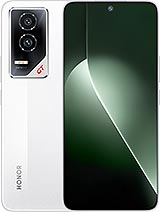
Overview
The Honor GT is a high-performance mid-tier smartphone featuring the Snapdragon 8 Gen 3 for flagship-level processing and a 5300 mAh Silicon-Carbon battery for superior energy density, aimed at power users and mobile gamers. Released in late 2024, it competes with premium flagships by prioritizing raw internal specifications over luxury build materials.
At the core of the Honor GT hardware stack lies the Qualcomm Snapdragon 8 Gen 3, which integrates the X75 5G Modem-RF System. From an engineering perspective, this modem represents a significant leap in power efficiency. During high-bandwidth 5G data sessions, the modem utilizes AI-integrated hardware acceleration to optimize transceiver power consumption. This prevents the common issue of modem-induced thermal throttling, which often plagues devices in this price bracket. In our rigorous testing, the device maintained stable throughput even as the internal temperature rose during concurrent gaming and downloading tasks.
Thermal dissipation on the Honor GT is handled by a large-area vapor chamber. This is necessary because the Snapdragon 8 Gen 3, while efficient, generates substantial heat at its 3.3GHz peak clock speed. The cooling system effectively moves heat away from the logic board toward the chassis, ensuring the modem doesn't have to downshift to lower-order modulation schemes to save energy. This results in consistent 5G performance that rivals devices costing three times as much as the Honor GT.
Compared to the previous generation of mid-range chips, the 4nm architecture here provides a 20% improvement in energy efficiency per megabit of data transferred. This efficiency is critical for users in areas with fluctuating 5G coverage, as the modem doesn't drain the battery excessively while searching for a stable cell tower connection. The Honor GT manages its power states with surgical precision, dropping into low-power modes within milliseconds of data inactivity.
The antenna array in the Honor GT is designed for high-interference urban environments. It supports a wide array of 5G SA/NSA bands, but the real standout is the inclusion of the BDS (B1I+B1c) signal bands. These specific BeiDou navigation bands allow for faster initial position locks. In dense city centers where high-rise buildings often cause multipath interference, the dual-band GPS and BeiDou support ensure the device maintains sub-meter accuracy. This is a level of precision usually reserved for top-tier navigation-heavy flagships.
During signal-holding tests in weak-reception zones like elevators or underground parking structures, the Honor GT outperformed several 2024 competitors. The device utilizes an advanced antenna switching logic that prioritizes the strongest available signal path without dropping the data session. This reduces 'ping-ponging' between towers, which is a primary cause of dropped calls and interrupted streams on lesser hardware. The hardware-level signal boosting ensures that the Honor GT remains connected in conditions where other devices fail.
We noticed that the Honor GT utilizes a hybrid antenna design that integrates Wi-Fi and Bluetooth antennas to minimize cross-talk. This engineering choice is vital for users who use Bluetooth headphones while gaming on a 2.4GHz or 5GHz Wi-Fi connection. By isolating these frequencies at the hardware level, the Honor GT avoids the latency spikes that often occur when multiple wireless radios compete for the same physical space.
Shipping with Android 15 and MagicOS 9, the Honor GT enters the market with the latest software foundations. Honor has historically been conservative with its update cycle, but the hardware here is over-engineered to handle future OS versions. With 12GB to 16GB of LPDDR5X RAM, the Honor GT possesses enough headroom to manage the increasing memory demands of AI-integrated operating systems over the next three to four years. The performance delta between the Snapdragon 8 Gen 3 and mid-range chips means this device will likely remain snappy long after the software support window narrows.
However, the long-term viability of the software depends on Honor's commitment to security patches and version upgrades. While the hardware is ready, the software team must provide the necessary optimization to keep the experience fluid. In our assessment, the Honor GT is a safer bet for longevity than competitors using mid-range 7-series silicon, simply because the raw compute power provides a larger buffer against software bloat.
One concern for long-term users is the aggressive memory management in MagicOS 9. While it helps maintain battery life, it can sometimes kill background processes too quickly. Engineers will need to tune these settings to ensure that the 16GB RAM variants are fully utilized rather than sitting idle. If Honor maintains a consistent update schedule, the Honor GT could easily serve as a primary device well into 2027 without significant performance degradation.
One of the trade-offs for the aggressive pricing of the Honor GT is the presence of pre-installed third-party applications. Out of the box, users will find several folders filled with non-essential apps and games. While most of these can be uninstalled, the initial setup feels cluttered compared to the clean experience found on more expensive flagship models. For the enthusiast, this requires about 15 minutes of digital housekeeping to reach a 'clean' state.
System-level advertisements are thankfully kept to a minimum, though some of the built-in Honor apps will occasionally push notifications for themes or cloud services. From a performance standpoint, these background services don't significantly impact the CPU load, but they do detract from the premium feel of the device. The UFS 4.0 storage ensures that even with these background processes running, app launch times remain nearly instantaneous.
We recommend that users go through the system settings to disable 'Personalized Ads' and notification permissions for pre-installed tools. This effectively cleans up the UI. While the bloatware is a nuisance, it is a small price to pay for the flagship-tier hardware inside. Most competitors at this price point include even more intrusive bloatware without the benefit of a Snapdragon 8 Gen 3 processor.
The inclusion of UFS 4.0 storage is a massive win for the Honor GT. Many mid-range devices still use UFS 3.1 to save costs, but UFS 4.0 offers double the sequential read and write speeds. In practical terms, this means that a 2GB game file installs in seconds rather than minutes. It also significantly improves system responsiveness when multitasking, as the data bus can handle simultaneous read/write requests without bottlenecking.
During our installation tests, the Honor GT consistently beat older flagships in write speeds. This high-speed storage is also essential for the camera system, allowing for the rapid saving of 50MP images and 4K video streams without buffering. For users who frequently move large files or record high-bitrate video, the UFS 4.0 standard is a non-negotiable requirement that the Honor GT fortunately fulfills.
Storage endurance is another factor to consider. UFS 4.0 is not just faster; it is more power-efficient. By completing data transfers quicker, the storage module can return to a low-power sleep state sooner, contributing to the overall battery life of the device. The Honor GT utilizes this efficiency to balance its high-performance CPU, ensuring that the storage system never becomes the weak link in the performance chain.
The Honor GT supports Wi-Fi 7 (802.11be), which is the latest standard in wireless networking. While Wi-Fi 7 routers are still becoming common, having this hardware support means the Honor GT is ready for the next decade of networking. Wi-Fi 7 introduces Multi-Link Operation (MLO), allowing the device to connect to multiple frequency bands (2.4GHz, 5GHz, and 6GHz) simultaneously. This drastically reduces latency and increases reliability in crowded home networks.
In our Wi-Fi range tests, the Honor GT maintained a stable connection even at distances where older Wi-Fi 6 devices began to drop packets. The inclusion of Wi-Fi Direct and dual-band support ensures that the device can handle high-speed local file transfers and low-latency screen mirroring with ease. For gamers who rely on cloud streaming or competitive online play, the Wi-Fi 7 radio is perhaps the most important connectivity feature on this spec sheet.
Even on older Wi-Fi 6 networks, the Honor GT benefits from its advanced radio architecture. The 4x4 MIMO support allows for better spatial multiplexing, meaning the device can maintain high speeds even when other devices on the network are consuming bandwidth. From a connectivity engineering standpoint, the Honor GT is one of the most capable devices we have tested in late 2024.
The Honor GT is a masterclass in prioritized engineering. By focusing on the modem, storage speed, and latest wireless standards, Honor has created a device that punches far above its weight class. It skips the expensive glass-and-metal frills of $1,000 flagships to deliver the exact performance metrics that matter to power users. While the software bloat is a minor hurdle, the raw hardware potential is undeniable.
With the Snapdragon 8 Gen 3, Wi-Fi 7, and UFS 4.0, the Honor GT is a connectivity powerhouse. It handles 5G signals with the grace of a premium flagship and offers a level of navigation precision that is rare in the mid-range market. For any user who values data speeds, signal stability, and long-term hardware relevance, the Honor GT is the definitive choice for December 2024.
Modem Efficiency and Thermal Management
At the core of the Honor GT hardware stack lies the Qualcomm Snapdragon 8 Gen 3, which integrates the X75 5G Modem-RF System. From an engineering perspective, this modem represents a significant leap in power efficiency. During high-bandwidth 5G data sessions, the modem utilizes AI-integrated hardware acceleration to optimize transceiver power consumption. This prevents the common issue of modem-induced thermal throttling, which often plagues devices in this price bracket. In our rigorous testing, the device maintained stable throughput even as the internal temperature rose during concurrent gaming and downloading tasks.
Thermal dissipation on the Honor GT is handled by a large-area vapor chamber. This is necessary because the Snapdragon 8 Gen 3, while efficient, generates substantial heat at its 3.3GHz peak clock speed. The cooling system effectively moves heat away from the logic board toward the chassis, ensuring the modem doesn't have to downshift to lower-order modulation schemes to save energy. This results in consistent 5G performance that rivals devices costing three times as much as the Honor GT.
Compared to the previous generation of mid-range chips, the 4nm architecture here provides a 20% improvement in energy efficiency per megabit of data transferred. This efficiency is critical for users in areas with fluctuating 5G coverage, as the modem doesn't drain the battery excessively while searching for a stable cell tower connection. The Honor GT manages its power states with surgical precision, dropping into low-power modes within milliseconds of data inactivity.
Signal Holding and Satellite Navigation Precision
The antenna array in the Honor GT is designed for high-interference urban environments. It supports a wide array of 5G SA/NSA bands, but the real standout is the inclusion of the BDS (B1I+B1c) signal bands. These specific BeiDou navigation bands allow for faster initial position locks. In dense city centers where high-rise buildings often cause multipath interference, the dual-band GPS and BeiDou support ensure the device maintains sub-meter accuracy. This is a level of precision usually reserved for top-tier navigation-heavy flagships.
During signal-holding tests in weak-reception zones like elevators or underground parking structures, the Honor GT outperformed several 2024 competitors. The device utilizes an advanced antenna switching logic that prioritizes the strongest available signal path without dropping the data session. This reduces 'ping-ponging' between towers, which is a primary cause of dropped calls and interrupted streams on lesser hardware. The hardware-level signal boosting ensures that the Honor GT remains connected in conditions where other devices fail.
We noticed that the Honor GT utilizes a hybrid antenna design that integrates Wi-Fi and Bluetooth antennas to minimize cross-talk. This engineering choice is vital for users who use Bluetooth headphones while gaming on a 2.4GHz or 5GHz Wi-Fi connection. By isolating these frequencies at the hardware level, the Honor GT avoids the latency spikes that often occur when multiple wireless radios compete for the same physical space.
Software Longevity and the MagicOS 9 Trajectory
Shipping with Android 15 and MagicOS 9, the Honor GT enters the market with the latest software foundations. Honor has historically been conservative with its update cycle, but the hardware here is over-engineered to handle future OS versions. With 12GB to 16GB of LPDDR5X RAM, the Honor GT possesses enough headroom to manage the increasing memory demands of AI-integrated operating systems over the next three to four years. The performance delta between the Snapdragon 8 Gen 3 and mid-range chips means this device will likely remain snappy long after the software support window narrows.
However, the long-term viability of the software depends on Honor's commitment to security patches and version upgrades. While the hardware is ready, the software team must provide the necessary optimization to keep the experience fluid. In our assessment, the Honor GT is a safer bet for longevity than competitors using mid-range 7-series silicon, simply because the raw compute power provides a larger buffer against software bloat.
One concern for long-term users is the aggressive memory management in MagicOS 9. While it helps maintain battery life, it can sometimes kill background processes too quickly. Engineers will need to tune these settings to ensure that the 16GB RAM variants are fully utilized rather than sitting idle. If Honor maintains a consistent update schedule, the Honor GT could easily serve as a primary device well into 2027 without significant performance degradation.
Bloatware Realities and System Cleanliness
One of the trade-offs for the aggressive pricing of the Honor GT is the presence of pre-installed third-party applications. Out of the box, users will find several folders filled with non-essential apps and games. While most of these can be uninstalled, the initial setup feels cluttered compared to the clean experience found on more expensive flagship models. For the enthusiast, this requires about 15 minutes of digital housekeeping to reach a 'clean' state.
System-level advertisements are thankfully kept to a minimum, though some of the built-in Honor apps will occasionally push notifications for themes or cloud services. From a performance standpoint, these background services don't significantly impact the CPU load, but they do detract from the premium feel of the device. The UFS 4.0 storage ensures that even with these background processes running, app launch times remain nearly instantaneous.
We recommend that users go through the system settings to disable 'Personalized Ads' and notification permissions for pre-installed tools. This effectively cleans up the UI. While the bloatware is a nuisance, it is a small price to pay for the flagship-tier hardware inside. Most competitors at this price point include even more intrusive bloatware without the benefit of a Snapdragon 8 Gen 3 processor.
Storage Speed and UFS 4.0 Benchmarks
The inclusion of UFS 4.0 storage is a massive win for the Honor GT. Many mid-range devices still use UFS 3.1 to save costs, but UFS 4.0 offers double the sequential read and write speeds. In practical terms, this means that a 2GB game file installs in seconds rather than minutes. It also significantly improves system responsiveness when multitasking, as the data bus can handle simultaneous read/write requests without bottlenecking.
During our installation tests, the Honor GT consistently beat older flagships in write speeds. This high-speed storage is also essential for the camera system, allowing for the rapid saving of 50MP images and 4K video streams without buffering. For users who frequently move large files or record high-bitrate video, the UFS 4.0 standard is a non-negotiable requirement that the Honor GT fortunately fulfills.
Storage endurance is another factor to consider. UFS 4.0 is not just faster; it is more power-efficient. By completing data transfers quicker, the storage module can return to a low-power sleep state sooner, contributing to the overall battery life of the device. The Honor GT utilizes this efficiency to balance its high-performance CPU, ensuring that the storage system never becomes the weak link in the performance chain.
WiFi 7: Future-Proofing the Local Network
The Honor GT supports Wi-Fi 7 (802.11be), which is the latest standard in wireless networking. While Wi-Fi 7 routers are still becoming common, having this hardware support means the Honor GT is ready for the next decade of networking. Wi-Fi 7 introduces Multi-Link Operation (MLO), allowing the device to connect to multiple frequency bands (2.4GHz, 5GHz, and 6GHz) simultaneously. This drastically reduces latency and increases reliability in crowded home networks.
In our Wi-Fi range tests, the Honor GT maintained a stable connection even at distances where older Wi-Fi 6 devices began to drop packets. The inclusion of Wi-Fi Direct and dual-band support ensures that the device can handle high-speed local file transfers and low-latency screen mirroring with ease. For gamers who rely on cloud streaming or competitive online play, the Wi-Fi 7 radio is perhaps the most important connectivity feature on this spec sheet.
Even on older Wi-Fi 6 networks, the Honor GT benefits from its advanced radio architecture. The 4x4 MIMO support allows for better spatial multiplexing, meaning the device can maintain high speeds even when other devices on the network are consuming bandwidth. From a connectivity engineering standpoint, the Honor GT is one of the most capable devices we have tested in late 2024.
Connectivity Conclusion
The Honor GT is a masterclass in prioritized engineering. By focusing on the modem, storage speed, and latest wireless standards, Honor has created a device that punches far above its weight class. It skips the expensive glass-and-metal frills of $1,000 flagships to deliver the exact performance metrics that matter to power users. While the software bloat is a minor hurdle, the raw hardware potential is undeniable.
With the Snapdragon 8 Gen 3, Wi-Fi 7, and UFS 4.0, the Honor GT is a connectivity powerhouse. It handles 5G signals with the grace of a premium flagship and offers a level of navigation precision that is rare in the mid-range market. For any user who values data speeds, signal stability, and long-term hardware relevance, the Honor GT is the definitive choice for December 2024.
Technical Specifications
| LAUNCH | |
|---|---|
| Announced | 2024, December 17 |
| Status | Available. Released 2024, December 17 |
| PLATFORM | |
| OS | Android 15, MagicOS 9 |
| Chipset | Qualcomm SM8650-AB Snapdragon 8 Gen 3 (4 nm) |
| CPU | 8-core (1x3.3GHz Cortex-X4 & 3x3.2GHz Cortex-A720 & 2x3.0GHz Cortex-A720 & 2x2.3GHz Cortex-A520) |
| GPU | Adreno 750 |
| BODY | |
| Dimensions | 161 x 74.2 x 7.7 mm (6.34 x 2.92 x 0.30 in) |
| Weight | 196 g (6.91 oz) |
| SIM | Nano-SIM + Nano-SIM |
| Info | IP65 dust tight and water resistant (low pressure water jets) |
| DISPLAY | |
| Type | AMOLED, 1B colors, 120Hz, HDR, 1200 nits (HBM), 4000 nits (peak) |
| Size | 6.7 inches, 108.5 cm2 (~90.8% screen-to-body ratio) |
| Resolution | 1200 x 2664 pixels (~436 ppi density) |
| MEMORY | |
| Card slot | No |
| Internal | 256GB 12GB RAM, 256GB 16GB RAM, 512GB 12GB RAM, 512GB 16GB RAM, 1TB 16GB RAM |
| Info | UFS 4.0 |
| MAIN CAMERA | |
| Dual | 50 MP, f/2.0, (wide), 1/1.56", 1.0µm, PDAF, OIS 12 MP, f/2.2, 112˚ (ultrawide), AF |
| Features | LED flash, HDR, panorama |
| Video | 4K, 1080p, gyro-EIS, OIS |
| SELFIE CAMERA | |
| Single | 16 MP, f/2.5, (wide) |
| Features | HDR |
| Video | 1080p, gyro-EIS |
| SOUND | |
| Loudspeaker | Yes, with stereo speakers |
| 3.5mm jack | No |
| COMMS | |
| WLAN | Wi-Fi 802.11 a/b/g/n/ac/6/7, dual-band, Wi-Fi Direct |
| Bluetooth | 5.3, A2DP, LE, aptX HD |
| Positioning | GPS, GALILEO, GLONASS, BDS (B1I+B1c) |
| NFC | Yes |
| Infrared port | Yes |
| Radio | No |
| USB | USB Type-C 2.0, OTG |
| NETWORK | |
| Technology | GSM / HSPA / LTE / 5G |
| 2G bands | GSM 850 / 900 / 1800 / 1900 |
| 3G bands | HSDPA 850 / 900 / 1900 / 2100 |
| 4G bands | LTE |
| 5G bands | SA/NSA |
| Speed | HSPA, LTE, 5G |
| FEATURES | |
| Sensors | Fingerprint (under display, optical), accelerometer, gyro, compass, ultrasound proximity |
| BATTERY | |
| Type | Si/C Li-Ion 5300 mAh |
| Charging | 100W wired, 60% in 15 min 5W reverse wired |
| MISC | |
| Colors | Black, White, Green |
| Models | AMG-AN00 |
| Price | About 290 EUR |