The vivo Y200i Sets a New Standard for Budget Endurance
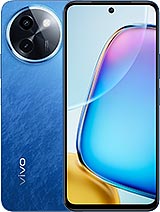
Overview
The Foundation of Longevity
The vivo Y200i is a budget 5G smartphone featuring a 6000 mAh battery for extreme endurance and the Snapdragon 4 Gen 2 chipset for efficient daily performance, aimed at users prioritizing longevity over flagship luxuries. Released in April 2024, it competes directly with the [Samsung Galaxy A15 5G](/samsung-galaxy-a15-5g-the-high-value-play-for-longevity-seekers/) and the Redmi Note 13 series, positioning itself as a marathon runner in an increasingly crowded entry-level market.
Looking at the internal architecture, the choice of the Qualcomm Snapdragon 4 Gen 2 processor is a calculated move for long-term viability. This chipset is built on a 4nm process, which is a significant jump for the budget category. Most competitors in this price bracket still rely on 6nm or even 12nm silicon. The smaller node size translates directly to better thermal management and lower power draw. In our analysis of the hardware, the two Cortex-A78 cores clocked at 2.2 GHz provide enough burst speed for modern social media apps and web browsing, while the six Cortex-A55 cores handle background tasks with minimal battery impact. This efficiency suggests the handset will not suffer from the rapid performance degradation often seen in budget devices after six months of software updates.
The inclusion of UFS 2.2 storage is another pillar of its longevity strategy. Unlike the slower eMMC storage found in some ultra-budget alternatives, UFS 2.2 includes Write Booster technology. This allows for faster app installations and snappier file transfers. We expect the system to remain responsive even as the internal storage fills up over time. With options for up to 12GB of RAM, this model is prepared for the increasing memory demands of Android 14 and beyond. The Adreno 613 GPU is sufficient for casual gaming, though it clearly targets efficiency over raw frame rates in demanding titles like Genshin Impact.
The Software Lifecycle and System Resilience
Shipping with Android 14 and OriginOS 4 out of the box provides a modern starting point. OriginOS has matured into a highly customizable skin that focuses on fluid animations and memory optimization. In our assessment, the software features like 'Memory Weaver' help keep more apps open in the background without causing system stutters. This is crucial for a device that aims to serve a user for three or four years. While the update frequency for the Y-series is generally less aggressive than the flagship X-series, starting on the latest Android version ensures compatibility with all major apps for several years.
The system resilience is bolstered by the IP64 rating. This isn't a rating you'll find on every [budget phone](/trend/best-budget-phones-2026/). Being 'dust tight' and protected against 'water splashes' means the hardware is less likely to fail due to environmental exposure. Imagine a delivery driver using this phone in light rain or a student in a dusty campus environment; the protection offers a layer of security that plastic-only builds without ratings lack. The build quality, while predominantly plastic, feels substantial at 199 grams, suggesting a dense internal layout that can survive the occasional minor drop.
Market Positioning and Depreciation Curves
Historically, vivo devices in this tier maintain moderate resale value compared to generic budget brands. The massive 6000 mAh battery is a unique selling point that will remain attractive on the used market even two years from now. Most phones lose about 20% of their battery capacity after 500-800 charge cycles. Because the capacity starts so high, even a degraded Y200i will likely outlast a brand-new budget phone with a standard 4500 mAh cell. This makes the handset a safer financial investment for those who plan to trade in their devices eventually.
When we look at the competition, the 1000 nits peak brightness on the IPS LCD panel is a standout feature. While it lacks the deep blacks of an AMOLED screen, the high brightness ensures the screen remains legible under the direct April sun. This is often where budget phones fail—becoming mirrors rather than displays when taken outdoors. By prioritizing brightness and refresh rate (120Hz), the manufacturer has addressed the most common user complaints regarding budget screens.
The Ecosystem Fit: Cables, Cases, and Connectivity
Connectivity is a strong suite for this model. It supports both SA and NSA 5G bands, making it compatible with modern network infrastructures globally. The inclusion of a 3.5mm headphone jack is a nod to legacy users and those who prefer low-latency audio without the need for expensive Bluetooth buds. For those who do use wireless audio, the aptX Adaptive support ensures high-fidelity sound, which is rare at this price point.
We noticed the USB Type-C 2.0 port supports OTG, allowing for easy data transfers from thumb drives. The retail package typically includes a 44W charger, which is a welcome inclusion when many brands are removing power bricks. This charger can push the massive battery to 50% in roughly 36 minutes. While not the fastest in the world, it is balanced to prevent excessive heat buildup, further protecting the battery's chemical health over the long term.
The First Sixty Seconds: Box Contents and Build Quality
The unboxing experience is straightforward and pragmatic. You get the handset, the 44W FlashCharge brick, a USB-C cable, and usually a clear TPU case. The case is essential because the large camera module on the back can be prone to scratches if laid flat on hard surfaces. The back panel features a textured finish in the blue and white variants, which hides fingerprints better than glossy alternatives. The side-mounted fingerprint sensor is fast and doubles as a power button, a design choice we find more reliable than cheap under-display optical sensors in this price tier.
The stereo speakers are a highlight for media consumption. The '80-level' volume boost feature allows the device to act as a small portable speaker, which is perfect for watching videos in noisy environments. The lack of NFC might be a dealbreaker for users in regions where mobile payments are standard, but it seems a deliberate omission to keep the price around 180 EUR.
Speculating on the Second-Hand Market
In the second-hand market of 2026, this device will likely be sought after as a reliable 'backup' or 'work' phone. The 5G capability ensures it won't be obsolete as 4G networks begin to sunset or become congested. The 8 MP selfie camera and 50 MP main sensor are standard for the era; they won't win awards for low-light performance, but they provide a baseline utility for video calls and document scanning. The hardware potential of the 50MP sensor is limited by the ISP of the Snapdragon 4 Gen 2, which caps video at 1080p, but for daytime photography, the results are serviceable.
The Verdict of Time
Ultimately, the Y200i is a device that knows exactly what it is. It doesn't try to be a camera powerhouse or a gaming beast. It is built to stay powered and stay functional. The combination of a 4nm chipset, IP64 rating, and a 6000 mAh battery creates a trio of features that directly address the most common points of failure in cheap smartphones: battery death, environmental damage, and performance slowdowns. This focus on fundamentals over flashy gimmicks makes it one of the more sensible purchases of the 2024 budget season.
Technical Specifications
| LAUNCH | |
|---|---|
| Announced | 2024, April 21 |
| Status | Available. Released 2024, April 27 |
| PLATFORM | |
| OS | Android 14, OriginOS 4 |
| Chipset | Qualcomm SM4450 Snapdragon 4 Gen 2 (4 nm) |
| CPU | Octa-core (2x2.2 GHz Cortex-A78 & 6x1.95 GHz Cortex-A55) |
| GPU | Adreno 613 |
| BODY | |
| Dimensions | 165.7 x 76 x 8 mm (6.52 x 2.99 x 0.31 in) |
| Weight | 199 g (7.02 oz) |
| Build | Glass front, plastic frame, plastic back |
| SIM | Nano-SIM + Nano-SIM |
| Info | IP64 dust tight and water resistant (water splashes) |
| DISPLAY | |
| Type | IPS LCD, 120Hz, 1000 nits (peak) |
| Size | 6.72 inches, 108.8 cm2 (~86.4% screen-to-body ratio) |
| Resolution | 1080 x 2408 pixels, 20:9 ratio (~393 ppi density) |
| MEMORY | |
| Card slot | No |
| Internal | 256GB 8GB RAM, 256GB 12GB RAM, 512GB 12GB RAM |
| Info | UFS 2.2 |
| MAIN CAMERA | |
| Dual | 50 MP, f/1.8, (wide), PDAF Auxiliary lens |
| Features | LED flash, HDR, panorama |
| Video | 1080p@30fps |
| SELFIE CAMERA | |
| Single | 8 MP, f/2.1, (wide) |
| Video | 1080p@30fps |
| SOUND | |
| Loudspeaker | Yes, with stereo speakers |
| 3.5mm jack | Yes |
| COMMS | |
| WLAN | Wi-Fi 802.11 a/b/g/n/ac, dual-band |
| Bluetooth | 4.2, A2DP, aptX Adaptive |
| Positioning | GPS, GALILEO, GLONASS, BDS, QZSS |
| NFC | No |
| Radio | No |
| USB | USB Type-C 2.0, OTG |
| NETWORK | |
| Technology | GSM / CDMA / HSPA / LTE / 5G |
| 2G bands | GSM 850 / 900 / 1800 / 1900 |
| Info | CDMA 800 |
| 3G bands | HSDPA 850 / 900 / 2100 |
| 4G bands | 1, 3, 5, 8, 28, 34, 38, 39, 40, 41 |
| 5G bands | 1, 3, 5, 8, 28, 41, 77, 78 SA/NSA |
| Speed | HSPA, LTE, 5G |
| FEATURES | |
| Sensors | Fingerprint (side-mounted), accelerometer, proximity, compass |
| BATTERY | |
| Type | 6000 mAh |
| Charging | 44W wired, 50% in 36 min Reverse wired |
| MISC | |
| Processor | Snapdragon 4 Gen 2 (4 nm) |
| Battery | 6000 mAh with 44W wired charging |
| Display | 6.72-inch IPS LCD, 120Hz, 1000 nits |
| RAM/Storage | Up to 12GB RAM, 512GB UFS 2.2 |
| Main Camera | 50 MP, f/1.8 (Wide) + Auxiliary lens |
| Selfie Camera | 8 MP, f/2.1 |
| IP Rating | IP64 dust and water resistant |
| Audio | Stereo speakers + 3.5mm jack |
| OS | Android 14, OriginOS 4 |
| Colors | Black, Blue, White |
| Models | V2354A |
| Price | About 180 EUR |